


1


Frissítve: november 2026 · rangsorolva népszerűségi pontszámunk alapján (minden mű keresései, látogatásai és megrendelései alapján) · 30 mű Nanni Di Bartolo alkotása a katalógusunkban
Röviden
Brenzoni Monument (1426) az a Nanni Di Bartolo festmény, amely a legtöbb tekintetet felvonja; az eredeti mű a St. Fermo Maggiore gyűjteményében található, Verona. Ezután a tekintet Judgment of Salomon (1424) és Sant'antonio abate, circa, da oratorio del crocifisso, borgo a mozzano, lucca (1450) elemre irányul. A Nanni Di Bartolo 30 műve közül a katalógusunkban megtalálható 18 legnépesebb alkotás, melyeket az év, a múzeum és az örökévalóságának okai kísérnek.


 Attr.), profeta
12
 Attr.), san lorenzo
13
 Attr.), profeta imberbe
14
 Attr.), profeta imberbe
15
 The Work Is Attribuited To Nanni Di Bartolo, Not Nanni Di Banco
16
 Smf, statua in nicchione 01 giosuè (ritratto di poggio bracciolini) by bernardo ciuffagni, donatello (head) and nanni di bartolo
17
 Attr.), madonna col bambino, firenze
18
 Cenacolo Di Ognissanti, Anni Di Bartolo, Madonna Col Bambino
A négy leggyakorobban előforduló téma ebben az eredeti művekben, mindegyik a legkiválóbb példájával.
A 2 olyan múzeum, amely a legtöbb ezen az oldalon szereplő festményet őrzi.
| Múzeum | Város | Nanni Di Bartolo művei | Ebből a listából származó festmények |
|---|---|---|---|
 St. Fermo Maggiore |
Verona | 1 | Brenzoni Monument |
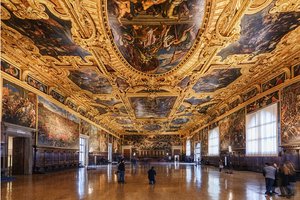 Doge-palota |
Velence | 1 | Judgment of Salomon |
Az összes itt látható, 1450 évszámmal ellátott Nanni Di Bartolo eredeti mű, amely egyetlen évre, 1450-rees sorozatosan vonatkozik: a népszerűség szerint, sorrendben jelennek meg.
Váasszon egy évet az eredetiek megtekintéséhez.
További alkotások 1450
Brenzoni Monument (1426), St. Fermo Maggiore, Verona. Ezután Judgment of Salomon (1424) és Sant'antonio abate, circa, da oratorio del crocifisso, borgo a mozzano, lucca (1450) következik.
Brenzoni Monument, Judgment of Salomon, Sant'antonio abate, circa, da oratorio del crocifisso, borgo a mozzano, lucca, Sant'antonio abate, circa, da oratorio del crocifisso, borgo a mozzano, lucca, Sant'antonio abate, circa, da oratorio del crocifisso, borgo a mozzano, lucca, Plate With Hercules, Nessus And Deianira, Untitled, Madonna Col Bambino, Firenze, Madonna Col Bambino és San Lorenzo. A fenti rangsor a művek évszamarát és a múzeumát jelzi.
Katalógusunkban 30 mű található Nanni Di Bartolo alkotótól.
Leginkább St. Fermo Maggiore (Verona) és Doge-palota (Velence) található. A fenti múzeumi táblázatban mindegyik felsorolásra került.
1450 alatt: a jelen laphonon található 18 műből 3 készült ebben az időszakban, köztük Sant'antonio abate, circa, da oratorio del crocifisso, borgo a mozzano, lucca.
Religious figure (3) és Virgin mary (3), a jelen oldalon található 18 műművészeti alkotás között.
Early renaissance és Renaissance, ezen az oldalon található eredetiek alapján.
In the vibrant, competitive atmosphere of the early 15th-century Italian Renaissance, few figures possess a legacy as intriguing yet enigmatic as Nanni di Bartolo. Known to art historians by the evocative moniker "il Rosso"—a tribute to his distinctive auberm hair—this Florentine sculptor navigated the shifting tides of artistic innovation with remarkable grace. While his precise birthdate remains shrouded in the mists of history, scholarly consensus places his emergence around 1419. He was a man of profound connections, born as the son of a Friar Bartolo, and his early years were shaped by the rigorous traditions of sculpture that were then transforming the landscape of Tuscany.
The artistry of Nanni di Bartolo cannot be understood without acknowledging the shadow of the great Donatello. As a younger contemporary of the maestro, Nanni’s early career was deeply intertwined with the revolutionary currents flowing through Florence. He honed his skills under the tutelage of Giovanni di Pietro Sculorso, a sculptor who had himself been shaped by Donatello's pioneering spirit. This lineage is palpable in Nanni’s work, particularly in his collaborative endeavors for the Duomo Campanile. Working alongside Donatello on these monumental figures of prophets and saints, Nanni embraced a new language of anatomical precision and expressive dynamism, helping to bridge the gap between the lingering elegance of the International Gothic style and the burgeoning humanism of the Renaissance.
Despite his deep roots in the Florentine tradition, Nanni’s career was marked by a significant geographical and stylistic evolution. Historical records suggest that around 1424, perhaps driven by the pressures of debt or a desire to seek new horizons beyond the intense competition of Florence, he departed the city. This period of wandering led him into the Venetian territories and northern Italy, where his role became that of a cultural emissary. In these regions, Nanni performed a delicate balancing act: he spread the sophisticated Florentine style while simultaneously adapting his technique to satisfy the local preference for the graceful, decorative elements of the Gothic tradition.
This synthesis of styles allowed him to leave a lasting imprint on the sculptural landscape of Northern Italy. His output during these years was characterized by a mastery of diverse materials, most notably terracotta and plaster. These mediums allowed for an intimacy and detail that stone often precluded, enabling him to create emotive reliefs and busts of the Virgin Mary and various saints. His ability to breathe life into clay—capturing the soft folds of drapery and the subtle nuances of facial expression—ensured that his work resonated with both the spiritual devotion and the aesthetic sensibilities of a wide audience.
The historical significance of Nanni di Bartolo lies in his role as a vital link in the chain of Renaissance development. While he may not have reached the singular, world-altering heights of Donatello, his contributions were essential to the dissemination of Florentine innovation across the Italian peninsula. His work serves as a testament to the era's transition, embodying the tension between the old and the new.
Reflecting on his body of work, several key elements define his artistic identity:
Though his life ended in 1451, leaving behind a fragmented biographical record, the echoes of "il Rosso" remain etched in the very fabric of Italian art history. Through his sculptures, we glimpse a world in transition—a period where the divine was being reimagined through the lens of human experience and classical revival.


