Minor White portréja

A 19 legnevesebbebb Minor White festmény, mindegyik egyedistens

Frissítve: november 2026 · rangsorolva népszerűségi pontszámunk alapján (minden mű keresései, látogatásai és megrendelései alapján) · 19 mű Minor White alkotása a katalógusunkban

Röviden

Lobos Sandstone, Slit, and Shadow (1949) az a Minor White festmény, amely a legtöbb tekintetet felvonja. Ezután a tekintet Sandstone Lobos, Returning Wave (1950) és Frost Forms The ID Face (1959) elemre irányul. A Minor White 19 műve közül a katalógusunkban megtalálható 19 legnépesebb alkotás, melyeket az év, a múzeum és az örökévalóságának okai kísérnek.

1908 – 1976, Minneapolis A legtöbb mű: San Francisco Museum of Modern Art

A galéria szemével: Minor White legjobb 10 festménye

1
Lobos Sandstone, Slit, and Shadow (1949) (1889) -ja Minor White

Lobos Sandstone, Slit, and Shadow

1949 · Black and White Photography

Lobos Sandstone, Slit, and Shadow is a photograph by Minor White. Created about 1949, the work captures a geological formation of sandstone. The image functions as an abstract study of nature, stripping the stone of its literal context to find a deeper, silent form.

2
Sandstone Lobos, Returning Wave (1950) (1889) -ja Minor White

Sandstone Lobos, Returning Wave

1950 · Charcoal

Sandstone Lobos, Returning Wave is a work by Minor White. Created in 1950, the piece reflects the artist's ongoing investigation into the relationship between the natural world and internal states of being.

3
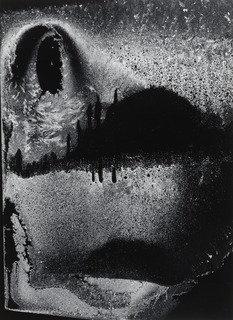
Frost Forms The ID Face (1959) (1889) -ja Minor White

Frost Forms The ID Face

1959 · Photography

Frost Forms The ID Face is a work by the American photographer, theoretician, critic, educator, and editor Minor White. Produced about 1959, the piece reflects the artist's complex engagement with the medium during a period of significant formal experimentation. White was born in Minneapolis, Minnesota, on July 9, 1908, and continued to influence photographic theory and practice until his death in 1976.

4
Rock in Sandstone (1959) (1889) -ja Minor White

Rock in Sandstone

1959 · Photography

Rock in Sandstone is a work by Minor White, created in 1959. The artist, who was born in Minneapolis, United States of America, in 1908, sought to capture the essence of the natural world through a lens that looked beyond mere documentation. This specific piece focuses on a geological formation, utilizing the textures of sandstone to create a study of form and light.

Minor White híres festményei, 11 és 19 között

A témák, amelyek Minor White figyelmét meghúzták

A négy leggyakorobban előforduló téma ebben az eredeti művekben, mindegyik a legkiválóbb példájával.

A műemlékek, amelyek Minor White eredeti műveit őrzik

A 2 olyan múzeum, amely a legtöbb ezen az oldalon szereplő festményet őrzi.

Múzeum Város Minor White művei Ebből a listából származó festmények
San Francisco Museum of Modern Art, San FranciscoSan Francisco Museum of Modern Art San Francisco 1 Aquatic Park, San Francisco
SCAD Museum of Art, SavannahSCAD Museum of Art Savannah 1 Church?St. Martin, Nova Scotia

Minor White évtizedekig: egy egyedi eredeti mű minden évtizedben

Művek évtizedenként

Váassz ki egy évtizedet, hogy megnézhesd az azt meghatározó eredetiműveket.

Minor White festményei: kérdések a galériának

Mi a leghíresebb műve Minor Whitenek?Fedje fel a választ

Lobos Sandstone, Slit, and Shadow (1949). Ezt követi Sandstone Lobos, Returning Wave (1950) és Frost Forms The ID Face (1959).

Milyen életkorában alkotta meg Minor White a(z) Lobos Sandstone, Slit, and Shadow műszt?Fedje fel a választ

41 éves: Lobos Sandstone, Slit, and Shadow 1949-ből származik, Minor White pedig 1908-ben született.

Melyik tíz festménye Minor White a leghíresebb?Fedje fel a választ

Lobos Sandstone, Slit, and Shadow, Sandstone Lobos, Returning Wave, Frost Forms The ID Face, Rock in Sandstone, Farm, Grande Ronde Valley, Oregon, Happy Farmyard, Grande Ronde Valley, Oregon, Two Barns and Shadow, Rochester, Frost Wave és Night Icicle. A fenti rangsor a művek évszamarát és a múzeumát jelzi.

Hány mű alkotása ismert Minor White nevében?Fedje fel a választ

Katalógusunkban 19 mű található Minor White alkotótól, 1941 és 1972 év közötti időszakból.

Hol tekinthetők meg a leghíresebb Minor White eredetijeit?Fedje fel a választ

Leginkább San Francisco Museum of Modern Art (San Francisco) és SCAD Museum of Art (Savannah) található. A fenti múzeumi táblázatban mindegyik felsorolásra került.

Melyik időszakban alkotta Minor White a leghíresebb festményeit?Fedje fel a választ

1950s alatt: a jelen laphonon található 19 műből 12 készült ebben az időszakban, köztük Sandstone Lobos, Returning Wave.

Melyik híres Minor White festmény a legkorábbi, és melyik a legutóbb készült?Fedje fel a választ

Ezen az oldalon a leghitelesebb Farm, Grande Ronde Valley, Oregon (1941), a legutóbbi pedig Church?St. Martin, Nova Scotia (1972).

Milyen témakörket kedvelt Minor White?Fedje fel a választ

Sandstone (3), Rock (2) és Rural landscape (2), a jelen oldalon található 19 műművészeti alkotás között.

Milyen anyagokkal festett leggyakrabban Minor White?Fedje fel a választ

Photography, a jelen oldalon található 19 műből 2 darab esetén.

Minor White: a művész portréja

A Life Illuminated: The Photographic Vision of Minor White

Minor Martin White, born in Minneapolis in 1908, was more than a photographer; he was a visual philosopher who dedicated his life to exploring the spiritual and psychological depths accessible through the lens. His journey began with a simple Brownie camera gifted by his grandfather, sparking an enduring fascination that would evolve from youthful exploration into a profound artistic practice. White’s early life was marked by familial instability – separations and reconciliations between his parents shaped a sensitive disposition and fostered periods of introspection, experiences that subtly informed the emotional resonance within his later work. Initially pursuing botany at the University of Minnesota, he soon gravitated towards writing and photography, recognizing in these mediums a more potent means of expressing his burgeoning inner world. Even during these formative years, White began keeping “Memorable Fancies,” a personal journal revealing early explorations of sexuality and poetic reflections – a testament to a deeply private individual grappling with identity and desire.

From Documentary Roots to Spiritual Exploration

The late 1930s found White in Portland, Oregon, where he began his serious engagement with photography. Working for the Works Progress Administration’s Oregon Art Project, he documented historic buildings and created publicity shots for the Portland Civic Theater – practical assignments that honed his technical skills while providing a crucial foundation in composition and light. However, it was during this period that White's artistic vision truly began to crystallize. He wasn’t content with mere representation; he sought to imbue his photographs with meaning beyond the visible world. Influenced by the mastery of Edward Weston and Ansel Adams, particularly their command of form and tonal range, White nevertheless charted a unique course, one emphasizing subjective interpretation and spiritual exploration. His landscapes weren't simply depictions of place but rather evocative studies of inner states, imbued with a sense of quiet contemplation. He began to see photography not as a mechanical process, but as a means of revealing hidden truths about the self and the universe.

A Legacy Forged in Education and Publication

Minor White’s impact extended far beyond his own photographic output. A pivotal moment arrived in 1952 with the co-founding of Aperture magazine, a publication he tirelessly shaped as editor for many years. Aperture quickly became *the* leading forum for photographic theory and criticism, showcasing both established masters and emerging talents while fostering a vibrant intellectual community. Simultaneously, White dedicated himself to teaching at institutions like the California School of Fine Arts, Rochester Institute of Technology, and MIT. He wasn’t merely imparting technical skills; he was cultivating a way of *seeing* – encouraging students to look beyond surface appearances and discover deeper meaning within their subjects. His workshops and retreats emphasized conceptual thinking, personal expression, and the belief that photography could be a spiritual practice. His figure studies, often depicting men with whom he had relationships or taught, offer poignant glimpses into his private life and the challenges of navigating identity in mid-20th century America – images imbued with both tenderness and a subtle sense of longing.

The Enduring Significance of a Visionary

Today, Minor White is rightfully recognized as one of America’s most important photographers. He challenged conventional notions of objectivity, advocating for a more subjective and expressive approach to the medium. His legacy extends beyond his stunning photographs; it resides in the generations of artists he inspired through his teaching, writing, and editorship of Aperture. His emphasis on “seeing” – truly *looking* at the world with intention and sensitivity – continues to resonate with photographers today. Furthermore, recent years have brought increased recognition to White’s exploration of personal identity and sexuality in his work, contributing to a broader understanding of LGBTQ+ history and artistic expression. He passed away in 1976, leaving behind a body of work that invites us not just to look *at* photographs, but to look *through* them – to glimpse the profound mysteries of existence and the hidden landscapes within ourselves. Minor White’s contribution wasn't simply about capturing images; it was about revealing possibilities.