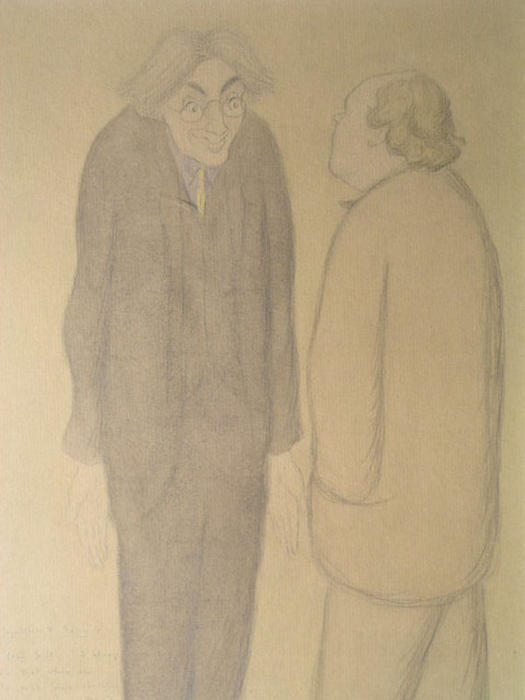
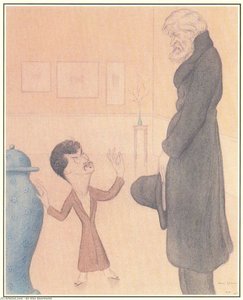
Max Beerbohm portréja

A 45 legnevesebbebb Max Beerbohm festmény, mindegyik egyedistens

Frissítve: november 2026 · rangsorolva népszerűségi pontszámunk alapján (minden mű keresései, látogatásai és megrendelései alapján) · 49 mű Max Beerbohm alkotása a katalógusunkban

Röviden

John S. Sargent az a Max Beerbohm festmény, amely a legtöbb tekintetet felvonja. Ezután a tekintet D.G. Rossetti Precociously Manifesting ... that Queer Indifference to Politics és Untitled (360) elemre irányul. A Max Beerbohm 49 műve közül a katalógusunkban megtalálható 45 legnépesebb alkotás, melyeket az év, a múzeum és az örökévalóságának okai kísérnek.

1872 – 1956, London

A galéria szemével: Max Beerbohm legjobb 10 festménye

Max Beerbohm híres festményei, 11 és 45 között

11Frontispiece (1889) -ja Max BeerbohmFrontispiece 12Boy in a high top-hat (1889) -ja Max BeerbohmBoy in a high top-hat 13Annual Banquet. A Suggestion to the New English Art Club (1889) -ja Max BeerbohmAnnual Banquet. A Suggestion to the New English Art Club 14Miss Cornforth. `Oh, very pleased to meet Mr Ruskin, I'm sure (1889) -ja Max BeerbohmMiss Cornforth. `Oh, very pleased to meet Mr Ruskin, I'm sure 15The Small Hours in the ’Sixties at 16, Cheyne Walk (1889) -ja Max BeerbohmThe Small Hours in the ’Sixties at 16, Cheyne Walk 16Caricature of a man in a frock coat (1889) -ja Max BeerbohmCaricature of a man in a frock coat 17Rossetti in his worldlier daysleaving the Arundel Club with George Augustus Sala (1889) -ja Max BeerbohmRossetti in his worldlier daysleaving the Arundel Club with George Augustus Sala 18An introduction (1889) -ja Max BeerbohmAn introduction 19Mr. Browing brings a lady of rank and fashion to see Mr.Rossetti (1889) -ja Max BeerbohmMr. Browing brings a lady of rank and fashion to see Mr.Rossetti 20A Quiet Morning in the Tate Gallery (1889) -ja Max BeerbohmA Quiet Morning in the Tate Gallery 21Swinburne and Miss Sophia Grimes (1889) -ja Max BeerbohmSwinburne and Miss Sophia Grimes 22A Momentary Vision that once befell Young Millais (1889) -ja Max BeerbohmA Momentary Vision that once befell Young Millais 23Mr. Morley of Blackburn, on an afternoon in the Spring of ’69, introduces Mr. John Stuart Mill (1889) -ja Max BeerbohmMr. Morley of Blackburn, on an afternoon in the Spring of ’69, introduces Mr. John Stuart Mill 24Quis Custodiet Ipsum Custodem (1889) -ja Max BeerbohmQuis Custodiet Ipsum Custodem 25The New English Art Club (1889) -ja Max BeerbohmThe New English Art Club 26Mr. Robert Browning, taking tea with the Browning Society (1889) -ja Max BeerbohmMr. Robert Browning, taking tea with the Browning Society 27Mr. Tennyson reading In Memoriam to his Sovereign (1889) -ja Max BeerbohmMr. Tennyson reading In Memoriam to his Sovereign 28Swinburne, Elizabeth Siddal, and Rossetti (1889) -ja Max BeerbohmSwinburne, Elizabeth Siddal, and Rossetti 29Rossetti’s Courtship. Chatham Place (1889) -ja Max BeerbohmRossetti’s Courtship. Chatham Place 30Mr. William Bell Scott wondering what it is those fellows seem to see in Gabriel (1889) -ja Max BeerbohmMr. William Bell Scott wondering what it is those fellows seem to see in Gabriel 31Lord Halsbury (1889) -ja Max BeerbohmLord Halsbury 32Dante Gabriel Rossetti, in his back garden (1889) -ja Max BeerbohmDante Gabriel Rossetti, in his back garden 33Topsy and Ned Jones, settled on the settle in Red Lion Square (1889) -ja Max BeerbohmTopsy and Ned Jones, settled on the settle in Red Lion Square 34Rossetti (1889) -ja Max BeerbohmRossetti 35Blue China (1889) -ja Max BeerbohmBlue China 36Woolner at Farringford (1889) -ja Max BeerbohmWoolner at Farringford 37The sole remark likely to have been made by Benjamin Jowett about the mural paintings at the Oxford Union. (1889) -ja Max BeerbohmThe sole remark likely to have been made by Benjamin Jowett about the mural paintings at the Oxford Union. 38Ford Madox Brown being patronised by Holman Hunt (1889) -ja Max BeerbohmFord Madox Brown being patronised by Holman Hunt 39Riverside Scene (1889) -ja Max BeerbohmRiverside Scene 40Princeps Triplumiferus (1889) -ja Max BeerbohmPrinceps Triplumiferus 41Untitled (730) (1889) -ja Max BeerbohmUntitled (730) 42Sylvester Herringham vainly endeavouring to enlist D. G. R.’s interest in some singulary interesting experiment (1889) -ja Max BeerbohmSylvester Herringham vainly endeavouring to enlist D. G. R.’s interest in some singulary interesting experiment 43Mr.--- and Miss--- nervously perpetuating the touch of a vanished hand (1889) -ja Max BeerbohmMr.--- and Miss--- nervously perpetuating the touch of a vanished hand 44Rossetti insistently exhorted by George Meredith to come forth into the glorius sun and wind for a walk to Hendon and beyond (1889) -ja Max BeerbohmRossetti insistently exhorted by George Meredith to come forth into the glorius sun and wind for a walk to Hendon and beyond 45The name of Dante Gabriel Rossetti is heard for the first time in the Western States of America (1889) -ja Max BeerbohmThe name of Dante Gabriel Rossetti is heard for the first time in the Western States of America

A témák, amelyek Max Beerbohm figyelmét meghúzták

A négy leggyakorobban előforduló téma ebben az eredeti művekben, mindegyik a legkiválóbb példájával.

Max Beerbohm festményei: kérdések a galériának

Mi a leghíresebb műve Max Beerbohmnek?Fedje fel a választ

John S. Sargent. Ezt követi D.G. Rossetti Precociously Manifesting ... that Queer Indifference to Politics és Untitled (360).

Melyik tíz festménye Max Beerbohm a leghíresebb?Fedje fel a választ

John S. Sargent, D.G. Rossetti Precociously Manifesting ... that Queer Indifference to Politics, Untitled (360), Untitled (428), Mr. Arnold Dolmetsch, The Mirror of the Past 1, The Mirror of the Past, Lord Rosebery, Bravura. Sir William Orpen és Significant Form. A fenti rangsor a művek évszamarát és a múzeumát jelzi.

Hány mű alkotása ismert Max Beerbohm nevében?Fedje fel a választ

Katalógusunkban 49 mű található Max Beerbohm alkotótól.

Milyen témakörket kedvelt Max Beerbohm?Fedje fel a választ

Men (10), Clothing (4) és Caricature (3), a jelen oldalon található 45 műművészeti alkotás között.

Max Beerbohm: a művész portréja

Sir Max Beerbohm: A Master of Wit and Elegant Line

Henry Maximilian Beerbohm, born August 24th, 1872, stands as a singular beacon in the annals of British art—a writer whose prose radiated an unparalleled luminescence of erudition interwoven with playful irony, complemented by an illustrator revered for his exquisitely crafted pen-and-ink drawings that breathed life into Victorian and Edwardian society with breathtaking precision. Unlike many artists of his era consumed by grand narratives or dramatic pronouncements, Beerbohm’s genius resided in compressing profound concepts into deceptively simple forms—delivering stinging social critique veiled beneath a shimmering façade of aristocratic grace. Early Life & Education: Born to German parents in Munich, Beerbohm benefited from a privileged upbringing at Eton and Trinity College Cambridge, where he excelled in Classics and Literature. These formative years nurtured within him an abiding fascination with language and intellectual sparring—influences that would indelibly shape his literary endeavors and artistic vision. His meticulous attention to detail and scholarly pursuits foreshadowed the precision characteristic of both his writing and drawing style. Literary Career: Beerbohm’s literary output encompassed essays, novels, and plays, establishing him as one of the foremost satirists of his time. His celebrated masterpiece ‘Zuleika Dobson,’ a fantastical transposition of Shakespeare's Twelfth Night, demonstrated his masterful command of parody and linguistic virtuosity—a testament to his ability to transform established conventions into delightfully subversive explorations. He garnered considerable acclaim for his contributions to ‘Saturday Review,’ where he honed his satirical prowess and cemented his reputation as a staunch defender of intellectual honesty—a stance that reflected his unwavering belief in the power of reasoned discourse. Illustrative Style & Technique: Beerbohm’s artistic style was instantly recognizable—characterized by a harmonious blend of naive realism and stylized elegance. Employing painstaking pen and ink drawings, he achieved remarkable textural depth while maintaining an ethereal luminescence that conveyed mood and emotion with subtle grace. His technique involved layering lines to sculpt forms, utilizing hatching and stippling to modulate tonal variations, and applying careful shading to imbue his subjects with palpable presence—a testament to his artistic discipline and unwavering commitment to craftmanship. He meticulously rendered portraits and landscapes alike, capturing the essence of his subjects with remarkable sensitivity and stylistic innovation. Notable Works: Among Beerbohm’s most enduring achievements were portraits of prominent figures – Lord Halsbury, a poignant watercolor capturing the melancholy spirit of Victorian aristocracy; and ‘The New English Art Club,’ an iconic pen and ink drawing reflecting the burgeoning artistic avant-garde movement. These pieces exemplify his ability to distill complex psychological states into visually arresting compositions—a hallmark of his distinctive artistic legacy. Legacy & Influence: Sir Max Beerbohm’s influence extended far beyond his immediate contemporaries, shaping the trajectory of British satire and establishing a precedent for witty observation combined with artistic sophistication. His work continues to inspire artists and writers today, demonstrating the enduring power of intellectual humor and stylistic innovation—a legacy secured as one of the most distinctive voices in Victorian and Edwardian art history. He remains an exemplar of artistic integrity and imaginative brilliance, ensuring his place among the titans of British cultural heritage.