


1


Frissítve: november 2026 · rangsorolva népszerűségi pontszámunk alapján (minden mű keresései, látogatásai és megrendelései alapján) · 36 mű Maurice Bompard alkotása a katalógusunkban
Röviden
El Kantara (also known as La Rivière d'el Kantara) (1892) az a Maurice Bompard festmény, amely a legtöbb tekintetet felvonja. Ezután a tekintet Harem (1900) és La Fontaine du Pincio à Rome elemre irányul. A Maurice Bompard 36 műve közül a katalógusunkban megtalálható 36 legnépesebb alkotás, melyeket az év, a múzeum és az örökévalóságának okai kísérnek.


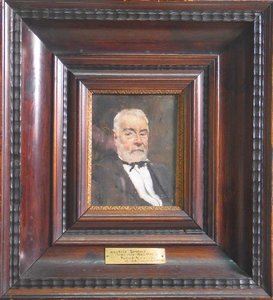 Portrait de mon père
12
 L'Eglise fortifiée d'Inières
13
 La Place St Marc à VeniseMusée Denys-Puech
14
 Rassemblement pour la procession (titre d'usage)
15
 PRIERE A LA MADONE
16
 Ouled Nail de BiskraMusée Denys-Puech
17
 LE REPOS DU MODELE
18
 Le Pont de Layoule
19
 Villa d'Este (Fontaine)
20
 La Villa Médicis
21
 Nature morte
22
 Nature morte aux cuivres
23
 Maison fleurie
24
 Etude de fleurs
25
 Jardin de la villa Médicis
26
 Vue de Venise
27
 Cathédrale de Rodez
28
 Nature morte aux poissons
29
 Nature morte au plat vert
30
 Le Palais du bassin St Marc à Venise
31
 Fontaine (Paysage au bassin)
32
 Causse Comtal (Le causse sur la route d'Espalion)Te Whare O Rehua Sarjeant Gallery
33
 L'Etang d'Olemps (La mare verte)
34
 La Place de Sébazac
35
 La Porte fortifiée de Clairvaux (Vielle porte sarrasine)
36
 Canal à Venise
A 2 olyan múzeum, amely a legtöbb ezen az oldalon szereplő festményet őrzi.
| Múzeum | Város | Maurice Bompard művei | Ebből a listából származó festmények |
|---|---|---|---|
 Musée Denys-Puech |
Rodez | 2 | La Place St Marc à Venise, Ouled Nail de Biskra |
 Te Whare O Rehua Sarjeant Gallery |
1 | Causse Comtal (Le causse sur la route d'Espalion) |
Maurice Bompard eredeti művei, amelyek itt láthatóak, körülbelül tíz év alatt, 1892 és 1900 között terjeszkednek ki: a tekintet évenként követi őket.
Váasszon egy évet az eredetiek megtekintéséhez.
El Kantara (also known as La Rivière d'el Kantara) (1892). Ezt követi Harem (1900) és La Fontaine du Pincio à Rome.
35 éves: El Kantara (also known as La Rivière d'el Kantara) 1892-ből származik, Maurice Bompard pedig 1857-ben született.
El Kantara (also known as La Rivière d'el Kantara), Harem, La Fontaine du Pincio à Rome, L'Infante, Femme à sa toilette (de dos), Intérieur d'un patricien vénitien, Villa d'Este, Le Repos du modèle, Femme à sa toilette (De face) és Les Chasseurs sur le Causse (Mr Broussy et Mr Fraysse). A fenti rangsor a művek évszamarát és a múzeumát jelzi.
Katalógusunkban 36 mű található Maurice Bompard alkotótól, 1892 és 1900 év közötti időszakból.
Leginkább Musée Denys-Puech (Rodez) és Te Whare O Rehua Sarjeant Gallery található. A fenti múzeumi táblázatban mindegyik felsorolásra került.
Ezen az oldalon a leghitelesebb El Kantara (also known as La Rivière d'el Kantara) (1892), a legutóbbi pedig Harem (1900).
Orientalism, ezen az oldalon található eredetiek alapján.
La Place St Marc à Venise és Ouled Nail de Biskra: a Musée Denys-Puech, Rodez 2 művet őrzi ezen az oldalon.
Maurice Bompard entered the world in Rodez, France, on February 11, 1857. His early years were shaped by a significant change in scenery when his family moved to Marseille in 1865. It was in this coastal setting that his innate inclinations toward the visual arts first found a steady direction. Under the guidance of Dominique Antoine Magaud, he began to learn the fundamental language of painting, developing the technical discipline required for a professional life in art.
As his ambitions grew, the pull of the capital became impossible to ignore. He moved to Paris to seek higher instruction at the École Nationale Supérieure des Beaux-Arts. This period of intense study brought him into the studios of influential figures who would leave a lasting mark on his technique. He became a student of the Orientalist Gustave Boulanger and the history painter Jules Lefebvre, absorbing their distinct approaches to composition and narrative. These mentors provided him with the tools to translate the world around him onto canvas, preparing him for the travels and observations that would define his career.
After his early studies, a grant provided Bompard with the means to travel through Germany, Italy, and Spain, eventually leading him toward the shores of Tunisia. This period of movement prepared him for the profound shifts that would define his later years. In 1889, his life took a more personal turn when he married Amélie Perretti. The couple soon sought out the heat and light of the desert, setting off for a three-month stay in Biskra. This excursion was not a fleeting curiosity but the beginning of a seasonal ritual. For several years, he returned to Biskra every winter, remaining there until 1893.
His time in North Africa allowed him to observe the rhythms of daily life with a keen eye. He focused his brush on the people and the customs he encountered, seeking to capture the essence of Saharan existence. These scenes were not mere fantasies but were rooted in the actual movements and interactions of the local populations. His work from this era reflects a deep engagement with the atmosphere of the region, moving away from the academic traditions of his youth toward a more direct observation of the world.
After his time in North Africa, Bompard sought a different kind of light. From 1893 until 1908, he returned to Venice every winter, finding a steady rhythm in the city's seasonal shifts. He spent these years wandering through the labyrinthine streets, watching how the sun moved across the stone and water. This long residency allowed him to move past mere observation and into a deep understanding of the local atmosphere.
His canvases from this period focus on the quiet dignity of the city's architecture. He produced a series of paintings that capture the canals and the grand palaces, seeking to fix their fleeting appearances onto the cloth. There is a particular sensitivity to how light interacts with the Venetian surfaces, a skill that reflects his formal training. He did not merely paint buildings; he painted the way the light clings to them. His work from these years reveals a mastery of color and a keen eye for the subtle changes in the lagoon's reflection.
As the years passed, the artist's focus shifted away from the seasonal migrations between the North African sands and the Venetian lagoons. He eventually settled into a life in Paris, where he worked as a free-lance artist. This period of his life was marked by a steady presence in the French capital, far from the intense heat of Biskra or the salt air of the Adriatic. He continued to paint, maintaining his connection to the visual world through his independent practice.
The end of his life came in Paris. While some records suggest he passed away on April 7, 1936, other accounts place his death on April 30, 1936. Regardless of the exact day, his departure in 1936 marked the conclusion of a long career that had spanned the changing landscapes of the late nineteenth and early twentieth centuries. He left behind a body of work that captured the light of distant places through a lens of careful observation.
The influence of Maurice Bompard extended far beyond the canvas, reaching into the very organization of his peers. He helped establish the Société des Peintres Orientalistes Français, a collective that sought to define and promote the genre. This commitment to his craft ensured that his vision of distant lands and quiet canals would be preserved for those who followed. His presence in the art world was felt not only through his individual output but through this shared purpose among his contemporaries.
Today, his paintings reside in several significant collections, allowing his hand to be studied by those who seek the light of his specific subjects. One may find his work within the walls of the Musée d'Orsay, while other pieces are held by the Musée des Beaux-Arts de Marseille. His art also finds a home in the Musée Denys-Puech. These institutions protect the visual records of his travels and his observations of life in North Africa and Italy.
In his home region, his hand remains visible in a more communal setting. The Grand Hôtel Broussy in Rodez contains his decorative murals, which adorn the common areas such as the lounge and the dining room. These works bring his aesthetic into the daily life of the hotel, offering a sense of his presence to those passing through the space. Through these various repositories, his life's work remains accessible, bridging the gap between the private studio and the public eye.
