Master Mateo portréja

A 44 legnevesebbebb Master Mateo festmény, mindegyik egyedistens

Frissítve: október 2026 · rangsorolva népszerűségi pontszámunk alapján (minden mű keresései, látogatásai és megrendelései alapján) · 44 mű Master Mateo alkotása a katalógusunkban

Röviden

The disappeared façade at the end of the Camino (1211) az a Master Mateo festmény, amely a legtöbb tekintetet felvonja; az eredeti mű a A Santiago de Compostela katedrális alapítványi múzeum gyűjteményében található, Santiago de Compostela. Ezután a tekintet Base of the mullion of the Portico of Glory (1188) és Trinity of the Portico of Glory (1188) elemre irányul. A Master Mateo 44 műve közül a katalógusunkban megtalálható 44 legnépesebb alkotás, melyeket az év, a múzeum és az örökévalóságának okai kísérnek.

1161 – 1217 Romanesque A legtöbb mű: A Santiago de Compostela katedrális alapítványi múzeum

A galéria szemével: Master Mateo legjobb 10 festménye

2
Base of the mullion of the Portico of Glory (1188) szerzője Master Mateo

Base of the mullion of the Portico of Glory

1188 · Stone · A Santiago de Compostela katedrális alapítványi múzeum, Santiago de Compostela

To stand before the Portico of Glory is to witness a profound shift in the language of stone. This specific base of the mullion, carved around 1188, offers a glimpse into the transition from the rigid forms of the Romanesque to a more fluid, naturalistic sensibility. Here, the stone does not merely exist; it breathes. The sculptor, Master Mateo, utilized a technique known as trabajo vivo, layering limestone to create…

3
Trinity of the Portico of Glory (1188) szerzője Master Mateo

Trinity of the Portico of Glory

1188 · Stone · A Santiago de Compostela katedrális alapítványi múzeum, Santiago de Compostela

Divine Presence in Stone The capital features God the Father holding the Christ child upon his lap. Above them, the Holy Spirit takes form as a dove at the peak of the composition. Angels surround these central figures, carrying incense burners to complete the celestial scene. This sculptural arrangement uses the trabajo vivo technique, layering stone slabs to create textures that mimic flesh and fabric. The result is a sense…
4
Statue-column of king David (1188) szerzője Master Mateo

Statue-column of king David

1188 · Stone · A Santiago de Compostela katedrális alapítványi múzeum, Santiago de Compostela

In the hallowed atmosphere of the Santiago Cathedral, where history and spirituality converge, stands a figure of profound majesty: the Statue-column of King David. Carved by the legendary Master Mateo around 1188, this Romanesque masterpiece is far more than a mere architectural ornament; it is a window into the soul of the twelfth century. The sculpture captures the biblical monarch in a moment of eternal resonance, seated upon a cross-frame…

5
The Glory, Central Arch, Portico of Glory (1211) szerzője Master Mateo

The Glory, Central Arch, Portico of Glory

1211 · Stone · A Santiago de Compostela katedrális alapítványi múzeum, Santiago de Compostela

The Glory, Central Arch, Portico of Glory is a sculptural work by Master Mateo. It forms a primary component of the Portico of Glory, located at the Cathedral of Santiago de Compostela in Spain. This specific section of the portal was part of a complete three-piece set that reached its conclusion in 1211. The work is currently held at The Catedral de Santiago Foundation in Santiago de Compostela.

6
The Elders holding instruments, Central Arch, Portico of Glory (1211) szerzője Master Mateo

The Elders holding instruments, Central Arch, Portico of Glory

1211 · Stone · A Santiago de Compostela katedrális alapítványi múzeum, Santiago de Compostela

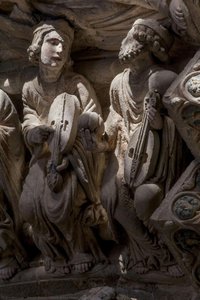
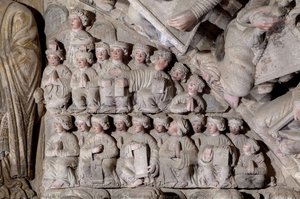
Within the sacred shadows of the Portico of Glory, a profound scene unfolds in stone. The Elders holding instruments, Central Arch, Portico of Glory emerges from the limestone, appearing as if caught in a moment of eternal preparation. This work, created by the hands of Master Mateo, brings the figures of the Apocalypse into a tangible, breathing presence. They sit amidst the radial archivolts, their bodies leaning toward one another…

8
Saint Matthew, Central Arch, Portico of Glory (1211) szerzője Master Mateo

Saint Matthew, Central Arch, Portico of Glory

1211 · Stone · A Santiago de Compostela katedrális alapítványi múzeum, Santiago de Compostela

The stone breathes under the soft, diffuse light of the cathedral, revealing a figure caught in a moment of eternal devotion. Here, within the central arch of the Portico of Glory, Saint Matthew sits with a quiet, heavy presence. He is a winged presence, his form emerging from the granite with a startling sense of life. He leans over a desk, his knees supporting the weight of his task, as…

9
Saint Luke, Central Arch, Portico of Glory (1211) szerzője Master Mateo

Saint Luke, Central Arch, Portico of Glory

1211 · Stone · A Santiago de Compostela katedrális alapítványi múzeum, Santiago de Compostela

The limestone relief of Saint Luke, carved around 1211, occupies a central position within the Portico of Glory at the Cathedral of Santiago de Compostela in Spain. The figure is depicted reclining on his right side, a posture that suggests both physical repose and deep introspection. In his left hand, he holds a book, while his head rests upon a lamb, a direct reference to his role as an Evangelist…

10
Arma Christi, Central Arch, Portico of Glory (1211) szerzője Master Mateo

Arma Christi, Central Arch, Portico of Glory

1211 · Stone · A Santiago de Compostela katedrális alapítványi múzeum, Santiago de Compostela

The relief known as Arma Christi, Central Arch, Portico of Glory is a sculptural work by the artist Master Mateo. This specific piece is situated within the Central Arch of the Portico of Glory. It was created in 1211. The work is part of a larger architectural and sculptural program located at the Santiago de Compostela Cathedral in Galicia, Spain.

Master Mateo híres festményei, 11 és 44 között

11Santo dos Croques of the Portico of Glory (1200) szerzője Master MateoSanto dos Croques of the Portico of Glory1200 · A Santiago de Compostela katedrális alapítványi múzeum 12Saint Matthew (1200) szerzője Master MateoSaint Matthew1200 · A Santiago de Compostela katedrális alapítványi múzeum 13Statues of David and Solomon (1188) szerzője Master MateoStatues of David and Solomon1188 · A Santiago de Compostela katedrális alapítványi múzeum 14Portico de la Gloria (1168) szerzője Master MateoPortico de la Gloria1168 · Cathedral 15Portico de la Gloria (detail) (1168) szerzője Master MateoPortico de la Gloria (detail)1168 · Cathedral 16Portico de la Gloria (1168) szerzője Master MateoPortico de la Gloria1168 · Cathedral 17Portico de la Gloria (detail) (1168) szerzője Master MateoPortico de la Gloria (detail)1168 · Cathedral 18Right arch of the Portico of Glory. Iconography of the condemned (1188) szerzője Master MateoRight arch of the Portico of Glory. Iconography of the condemned1188 · A Santiago de Compostela katedrális alapítványi múzeum 19Right arch of the Portico of Glory (1188) szerzője Master MateoRight arch of the Portico of Glory1188 · A Santiago de Compostela katedrális alapítványi múzeum 20Left arch of the Portico of Glory (1188) szerzője Master MateoLeft arch of the Portico of Glory1188 · A Santiago de Compostela katedrális alapítványi múzeum 21Right columns of the central arch of the Portico of Gloryh (1188) szerzője Master MateoRight columns of the central arch of the Portico of Gloryh1188 · A Santiago de Compostela katedrális alapítványi múzeum 22Saint Marcus, Central Arch, Portico of Glory (1211) szerzője Master MateoSaint Marcus, Central Arch, Portico of Glory1211 · A Santiago de Compostela katedrális alapítványi múzeum 23Saint John, Central Arch, Portico of Glory (1211) szerzője Master MateoSaint John, Central Arch, Portico of Glory1211 · A Santiago de Compostela katedrális alapítványi múzeum 24Ordo Prophetarum, The counter facade, Portico of Glory (1211) szerzője Master MateoOrdo Prophetarum, The counter facade, Portico of Glory1211 · A Santiago de Compostela katedrális alapítványi múzeum 25The Sybil, The counter facade, Portico of Glory (1211) szerzője Master MateoThe Sybil, The counter facade, Portico of Glory1211 · A Santiago de Compostela katedrális alapítványi múzeum 26Right arch of the Portico of Glory. Iconography of the blessed (1211) szerzője Master MateoRight arch of the Portico of Glory. Iconography of the blessed1211 · A Santiago de Compostela katedrális alapítványi múzeum 27Detail of the Elders, Central Arch, Portico of Glory (1211) szerzője Master MateoDetail of the Elders, Central Arch, Portico of Glory1211 · A Santiago de Compostela katedrális alapítványi múzeum 28Tribune of Portico of Glory (1211) szerzője Master MateoTribune of Portico of Glory1211 · A Santiago de Compostela katedrális alapítványi múzeum 29Angels, The Tribune, Portico of Glory (1211) szerzője Master MateoAngels, The Tribune, Portico of Glory1211 · A Santiago de Compostela katedrális alapítványi múzeum 30Portico of Glory (1211) szerzője Master MateoPortico of Glory1211 · A Santiago de Compostela katedrális alapítványi múzeum 31Keystones from Portico of the Glory (1211) szerzője Master MateoKeystones from Portico of the Glory1211 · A Santiago de Compostela katedrális alapítványi múzeum 32Detail Maiestas Domini of The Portico of Glory (1211) szerzője Master MateoDetail Maiestas Domini of The Portico of Glory1211 · A Santiago de Compostela katedrális alapítványi múzeum 33Arma Christi, Central Arch, Portico of Glory (1211) szerzője Master MateoArma Christi, Central Arch, Portico of Glory1211 · A Santiago de Compostela katedrális alapítványi múzeum 34The Just, Central Arch, Portico of Glory (1211) szerzője Master MateoThe Just, Central Arch, Portico of Glory1211 · A Santiago de Compostela katedrális alapítványi múzeum 35Detail of the Elders, Central Arch, Portico of Glory (1211) szerzője Master MateoDetail of the Elders, Central Arch, Portico of Glory1211 · A Santiago de Compostela katedrális alapítványi múzeum 36Detail of the Blessed, Central Arch, Portico of Glory (1211) szerzője Master MateoDetail of the Blessed, Central Arch, Portico of Glory1211 · A Santiago de Compostela katedrális alapítványi múzeum 37Central Arch of The Portico of Glory (1211) szerzője Master MateoCentral Arch of The Portico of Glory1211 · A Santiago de Compostela katedrális alapítványi múzeum 38Organistrum, Central Arch, Portico of Glory (1211) szerzője Master MateoOrganistrum, Central Arch, Portico of Glory1211 · A Santiago de Compostela katedrális alapítványi múzeum 39Drawing José Vega y Verdugo (1656-1657) Archivo de la Catedral (1657) szerzője Master MateoDrawing José Vega y Verdugo (1656-1657) Archivo de la Catedral1657 · A Santiago de Compostela katedrális alapítványi múzeum 40Left arch of the Portico of Glory. Iconography (1188) szerzője Master MateoLeft arch of the Portico of Glory. Iconography1188 · A Santiago de Compostela katedrális alapítványi múzeum 41Estatuas-columna de dos profetas procedentes de la desaparecida fachada exterior del Pórtico de la Gloria\n\n- Isaac (1188) szerzője Master MateoEstatuas-columna de dos profetas procedentes de la desaparecida fachada exterior del Pórtico de la Gloria\n\n- Isaac1188 · A Santiago de Compostela katedrális alapítványi múzeum 42Rose window (1200) szerzője Master MateoRose window1200 · A Santiago de Compostela katedrális alapítványi múzeum 43Stony choir reconstruction (1211) szerzője Master MateoStony choir reconstruction1211 · A Santiago de Compostela katedrális alapítványi múzeum 44Lintels Central Arch of The Portico of Glory (1188) szerzője Master MateoLintels Central Arch of The Portico of Glory1188 · A Santiago de Compostela katedrális alapítványi múzeum

A témák, amelyek Master Mateo figyelmét meghúzták

A négy leggyakorobban előforduló téma ebben az eredeti művekben, mindegyik a legkiválóbb példájával.

A műemlékek, amelyek Master Mateo eredeti műveit őrzik

A 2 olyan múzeum, amely a legtöbb ezen az oldalon szereplő festményet őrzi.

Múzeumok Város Master Mateo művei Ebből a listából származó festmények
A Santiago de Compostela katedrális alapítványi múzeum, Santiago de CompostelaA Santiago de Compostela katedrális alapítványi múzeum Santiago de Compostela 40 The disappeared façade at the end of the Camino, Base of the mullion of the Portico of Glory, Trinity of the Portico of Glory
Cathedral, Santiago de CompostelaCathedral Santiago de Compostela 4 Portico de la Gloria, Portico de la Gloria (detail), Portico de la Gloria

Master Mateo évtizedekig: egy egyedi eredeti mű minden évtizedben

Művek évtizedenként

Váassz ki egy évtizedet, hogy megnézhesd az azt meghatározó eredetiműveket.

Master Mateo festményei: kérdések a galériának

Mi a leghíresebb műve Master Mateonek?Fedje fel a választ

The disappeared façade at the end of the Camino (1211), A Santiago de Compostela katedrális alapítványi múzeum, Santiago de Compostela. Ezután Base of the mullion of the Portico of Glory (1188) és Trinity of the Portico of Glory (1188) következik.

Milyen életkorában alkotta meg Master Mateo a(z) The disappeared façade at the end of the Camino műszt?Fedje fel a választ

50 éves: The disappeared façade at the end of the Camino 1211-ből származik, Master Mateo pedig 1161-ben született.

Melyik tíz festménye Master Mateo a leghíresebb?Fedje fel a választ

The disappeared façade at the end of the Camino, Base of the mullion of the Portico of Glory, Trinity of the Portico of Glory, Statue-column of king David, The Glory, Central Arch, Portico of Glory, The Elders holding instruments, Central Arch, Portico of Glory, Voussoirs with the punishment of lust, Saint Matthew, Central Arch, Portico of Glory, Saint Luke, Central Arch, Portico of Glory és Arma Christi, Central Arch, Portico of Glory. A fenti rangsor a művek évszamarát és a múzeumát jelzi.

Hány mű alkotása ismert Master Mateo nevében?Fedje fel a választ

Katalógusunkban 44 mű található Master Mateo alkotótól, 1188 és 1211 év közötti időszakból.

Hol tekinthetők meg a leghíresebb Master Mateo eredetijeit?Fedje fel a választ

Leginkább A Santiago de Compostela katedrális alapítványi múzeum (Santiago de Compostela) és Cathedral (Santiago de Compostela) található. A fenti múzeumi táblázatban mindegyik felsorolásra került.

Melyik időszakban alkotta Master Mateo a leghíresebb festményeit?Fedje fel a választ

1210s alatt: a jelen laphonon található 44 műből 24 készült ebben az időszakban, köztük The disappeared façade at the end of the Camino.

Melyik híres Master Mateo festmény a legkorábbi, és melyik a legutóbb készült?Fedje fel a választ

Ezen az oldalon a leghitelesebb Base of the mullion of the Portico of Glory (1188), a legutóbbi pedig The disappeared façade at the end of the Camino (1211).

Milyen témakörket kedvelt Master Mateo?Fedje fel a választ

Sculpture (6), Medieval art (5) és Stone (4), a jelen oldalon található 44 műművészeti alkotás között.

Milyen anyagokkal festett leggyakrabban Master Mateo?Fedje fel a választ

Stone, a jelen oldalon található 44 műből 11 darab esetén.

Mely művészeti irányba tartozik Master Mateo műve?Fedje fel a választ

Romanesque, ezen az oldalon található eredetiek alapján.

Milyen Master Mateo eredeti műveket láthatok a A Santiago de Compostela katedrális alapítványi múzeum kiállításaiban?Fedje fel a választ

The disappeared façade at the end of the Camino, Base of the mullion of the Portico of Glory és Trinity of the Portico of Glory: a A Santiago de Compostela katedrális alapítványi múzeum, Santiago de Compostela 40 művet őrzi ezen az oldalon.

Master Mateo: a művész portréja

Santiago dicsőségeinek lelke

Master Mateo, egy olyan szobrász, akinek neve tovahigján a titokba burkolózott, annak ellenére, hogy monumentális hozzájárulást fogalt a Santiago de Compostela székesegyház építéséhez, Spanyolország románikus művészetének egyik legemesebb alakjává vált. Bár életének pontos részletei kevéssek, körülbelül 1161 körül született Galíciában, Mateo öröksége elsősorban egyetlen, összehasonlíthatatlan teljesítményen nyugszik: a Portico de la Gloria-n. Ez a lélegzetelállító építészeti csodamű uralja a székesegyház homlokzatát, és megtestesíti a tizenkettedik század spirituális lelkesedését. Szobrászként egy olyan korszakban jött létre, amelyet mély vallási devóció és művészeti innováció markolt, egy olyan világba lépve, ahol a Santiago felé vezető zarándinapút már ezerszer átalakító utazás volt a léleknek.

Legnagyobb művének kialakulása körülbelül 1188-ban kezdődött, amikor feladatul rovatták neki a háromajtós portikus létrehozását, amely később magnum opusává vált. Maga a székesegyház projekt már évtizedekkel korábban született meg, amelyet VIII. Alfonsó király indított be, és a helyszín óriási vallási jelentősége töltött fel energiával. Ezen a szent keretben Mateo nem csupán követet karcolt; életet lehelte a kőbe. Része volt a Portico de la Adamant alkotásának, amely egy isteni feladat volt, átalakítva a szerkezeti szükségletet egy olyan teológiai narratívává, amely ma is lenyűgözi a zarándosokat és a művészettörténészeket egyaránt.

Szimfónia a kövön: Technika és stílus

Mateo szobrászati stílusát egy figyelemre méltó realizmus jellemzi, amely mély szakadozást jelentett a korábbi, merevebb románikus konvencióktól. Miközben kortársaik gyakran stiliszált, lapos alakákra alapoztak, Mateo apró részletekig tanulmányozta az emberi anatómiát és a szövetek összetett mozgását, lenyűgöző pontosságot érve el ábrázolásaiban. A mészkavarrás mesterléta összehasonlíthatatlan volt, különösen a trabajo vivo néven ismert technika használatával. Ez a módszer a kőfalak rétegezését alkalmazta a textúrázott felületek létrehozására, amelyek a hús és az anyag megjelenését másolta, mozgás és vitalitás érzését kölcsönözve a statikus közegnek.

Ez az innovatív megközelítés lehetővé tette számára, hogy áthidalja a földi és a istenit közötti szakadékot. Műveit megfigyelve látható, hogyan alkalmazta a fény-árnyék játékát a riliefek mélységének fokozására. Képes volt a követ úgy manipulálni, hogy azt sugallja, mint egy szent köpenyének puhasága vagy egy bibliai alak izmuszainak feszültsége, ami mesteri tudását egy olyan kifinomultszintre emelte, amelyet a középkorban ritkán láttak. Ez a technikai zsenialitás biztosította, hogy alakjai ne csupán szimbólumok legyenek, hanem érezhető jelenlétként tűnjenjennek fel a székesegyház bejáratán.

A Portico de la Gloria: Bizonyt proof a hitedről

A Portico de la Gloria szolgál Master Mateo művészeti és spirituális látásmódjának végső bizonyítékaként. Központi panelvein az evangéliumi jelenetek mély tartalma olvasható – beleértve a születést, az üzenetet és a keresztbeszenytést –, olyan módon elrendezve, amely a nézőt a szent történelemen vezeti végig. Az ikonográfia hatalmas és összetett, kiemelve a következőket:

  • A központi ív: olyan ikonikus alakokat mutat be, mint Szent Lőrinc, ahol a bonyolult románikus szobrászat mély vallási szimbolikát mutat be.
  • A bal ív: a 12. századi spanyol domborművészet mesterdarabja, amely részletes bibliai narratívákat mutat be.
  • A jobb ív: az összetett szépség kiállítása, amely bemutatja képességét a komplex építészeti és szobrászati integráció kezelésére.

E műveken keresztül Mateo olyan történelmi jelentőséget értelmezett el, amely meghaladja születése korát. Átalakította a románikus stílust a gótikus stílus fejlődő eleganciája felé, olyan örökséget hagyva hátra, amely Santiago de Compostela szíve maradt. Műve álló hídként szolgál a középkori gondolkodás és az örökvalóság között, biztosítva, hogy 1217-es halála után is, évszázadokmal később, kőből zsongó szimfóniája továbbra is awe-t keltő csodát rejtsen.