


1

Frissítve: november 2026 · rangsorolva népszerűségi pontszámunk alapján (minden mű keresései, látogatásai és megrendelései alapján) · 10 mű Margot Sandeman alkotása a katalógusunkban
Röviden
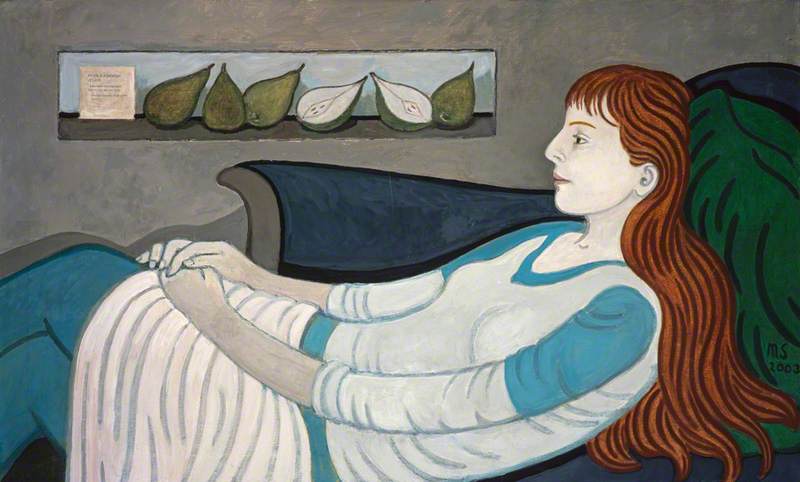
Margot Sandeman hagyatékából a leghíresebb alkotás Anna Contemplating 'Pear'. Röviddel ezután követik őket Two Figures in a Landscape és Sheep (1946). Katalógusunkban 10 mű található Margot Sandeman alkotótól; a galéria megőrizte a világ által leginkább csodált 10 darabot, melyeket a dátummal, a múzeummal és a történetükkel együtt mutatunk be.


A 3 olyan múzeum, amely a legtöbb ezen az oldalon szereplő festményet őrzi.
| Múzeum | Város | Margot Sandeman művei | Ebből a listából származó festmények |
|---|---|---|---|
 New Hall Art Collection |
Cambridge | 1 | Pears and White Jug |
 Scottish National Gallery of Modern Art |
Edinburgh | 1 | High Tide |
 University of Stirling |
Stirling | 1 | Sheep Resting on the Shore |
1946-től 1997-ig, Margot Sandeman 52 év alatt alkotott: a válogatás az évtizedek során megvalósult hosszú pályát követi, a legkiváltóbb eredeti művei through.
Váasszon egy évet az eredetiek megtekintéséhez.
Anna Contemplating 'Pear'. Ezt követi Two Figures in a Landscape és Sheep (1946).
Anna Contemplating 'Pear', Two Figures in a Landscape, Sheep, Pears and White Jug, Bramble Picking II, High Tide, Sheep Resting on the Shore, Still Life with Jug and Berries, Still Life with Three Objects és Newborn Calf. A fenti rangsor a művek évszamarát és a múzeumát jelzi.
Katalógusunkban 10 mű található Margot Sandeman alkotótól, 1946 és 1997 év közötti időszakból.
Leginkább New Hall Art Collection (Cambridge), Scottish National Gallery of Modern Art (Edinburgh) és University of Stirling (Stirling) található. A fenti múzeumi táblázatban mindegyik felsorolásra került.
1997 alatt: a jelen laphonon található 10 műből 2 készült ebben az időszakban, köztük High Tide.
Ezen az oldalon a leghitelesebb Sheep (1946), a legutóbbi pedig High Tide (1997).
Margot Sandeman (May 27, 1922 – January 17, 2009) remains a quietly compelling figure in British art, often overshadowed by the more flamboyant personalities of her contemporaries but possessing a profound depth and sensitivity that rewards patient observation. Born into an artistic lineage—her mother, Muriel Boyd Sandeman, was a renowned embroiderer influenced by the Arts and Crafts movement, and her father, Archibald Sandeman, a chemist with a passion for watercolour—Margot’s early life was steeped in creative stimulation. Growing up in Bearsden, a leafy suburb of Glasgow, she absorbed the aesthetic principles of William Morris and the broader ethos of handcrafted beauty, shaping her artistic sensibility from its very foundations.
Her formal training at the Glasgow School of Art during World War II proved pivotal. Under the tutelage of Hugh Adam Crawford, Head of Drawing and Painting, Sandeman was afforded a rare opportunity—a ‘three-year’ course within a two-year program, recognizing her exceptional potential. This intensive period allowed her to hone her skills and develop a distinctive style characterized by meticulous observation, subtle color palettes, and an almost meditative approach to depicting the natural world. Crucially, she forged a deep friendship with Joan Eardley, another talented student at GSA, a relationship that profoundly influenced both artists’ work and provided a vital source of mutual support.
Sandeman's artistic focus centered predominantly on the landscapes of West Coast Scotland, particularly the island of Arran. This wasn’t merely a matter of picturesque representation; she sought to capture something far more elusive—the essence of place, imbued with memory, atmosphere, and a quiet sense of spirituality. Her paintings are not grand pronouncements but intimate studies, revealing subtle shifts in light, texture, and color that evoke the feeling of being present within a specific moment in time. The recurring motifs – sheep grazing on windswept hillsides, solitary figures contemplating the coastline, humble domestic interiors—suggest a deep connection to rural life and a reverence for the rhythms of nature.
Her technique was deceptively simple yet remarkably effective. She often worked *en plein air*, directly from observation, allowing her brushstrokes to be guided by instinct and intuition. Sandeman favored acrylics and inks, employing a limited palette—muted greens, blues, browns, and ochres—to create a sense of harmony and understated beauty. Her compositions are typically balanced and carefully arranged, with an emphasis on detail that draws the viewer into the scene. She was particularly adept at capturing the fleeting effects of light, transforming ordinary landscapes into canvases of shimmering color and atmospheric depth.
While often perceived as a solitary artist, Sandeman’s creative life was interwoven with those of other significant figures in the Scottish art scene. Her close friendship with Joan Eardley provided a constant source of inspiration and mutual encouragement. Furthermore, she developed a long-standing collaboration with poet Ian Hamilton Finlay, creating a series of paintings based on his evocative texts from his Wild Hawthorn Press. These collaborations extended beyond mere illustration; they represented a shared aesthetic sensibility—a fascination with folklore, mythology, and the power of language to evoke emotion.
The influence of William Morris and the Arts and Crafts movement is palpable in Sandeman’s work, particularly her attention to detail, her appreciation for handcrafted objects, and her desire to create art that embodies a sense of beauty and craftsmanship. However, she transcends mere imitation, forging her own unique voice—a quiet, contemplative expression of Scottish identity rooted in the landscape and imbued with a profound sense of personal connection.
Despite often operating outside the mainstream art world, Margot Sandeman’s work has gained increasing recognition in recent years. Her paintings are now included in prominent public collections across Scotland and internationally, testament to their enduring quality and artistic merit. The National Galleries of Scotland, the Fleming Collection, and Glasgow Life Museums all hold significant examples of her oeuvre. Her retrospective at the Richard Demarco Gallery in Edinburgh in 1974 marked a turning point in her career, bringing her work to a wider audience.
Sandeman’s legacy lies not only in the beauty of her paintings but also in her quiet determination to pursue her artistic vision with integrity and passion. She represents a vital thread in the tapestry of Scottish art—a testament to the power of observation, memory, and the enduring allure of the natural world. Her work continues to resonate with viewers who appreciate its understated elegance, profound emotional depth, and subtle celebration of the beauty that can be found in the simplest of things.
