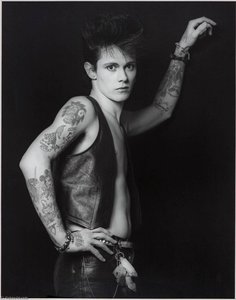
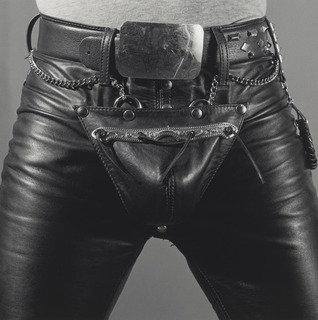
Mapplethorpe Robert portréja

A 31 legnevezesebb Mapplethorpe Robert festmény, egy galériaválaszték

Frissítve: november 2026 · rangsorolva népszerűségi pontszámunk alapján (minden mű keresései, látogatásai és megrendelései alapján) · 32 mű Mapplethorpe Robert alkotása a katalógusunkban

Röviden

Mapplethorpe Robert hagyatékából a leghíresebb alkotás Ajitto, amely a Rochester városi George Eastman Múzeum gyűjteményében található. Röviddel ezután követik őket Ajitto és Patti Smith (1976). Katalógusunkban 32 mű található Mapplethorpe Robert alkotótól; a galéria megőrizte a világ által leginkább csodált 31 darabot, melyeket a dátummal, a múzeummal és a történetükkel együtt mutatunk be.

1948 – 1989, Dallas Contemporary realism A legtöbb mű: SCAD Museum of Art

Mapplethorpe Robert legjobb 10 festménye: a galéria válogatása

1
Ajitto (1889) -ja Mapplethorpe Robert

Ajitto

Black and White Photography · George Eastman Múzeum, Rochester

This arresting monochrome photograph, titled Ajitto, immediately draws the viewer into an intimate space defined by shadow and exquisite form. It is a study in stillness, capturing a nude male figure seated upon a simple stool. The composition itself speaks to a deliberate sense of balance; the subject occupies the center, lending the piece a formal gravity that belies the vulnerability of the pose. Shot from a slightly elevated angle,…

2
Ajitto (1889) -ja Mapplethorpe Robert

Ajitto

Gelatin Silver Print · George Eastman Múzeum, Rochester

Robert Mapplethorpe's "Ajitto," created in 1981, is not merely a photograph; it’s a distilled essence of vulnerability and introspection. The image, rendered in stark black and white gelatin silver print, depicts a young man seated on a simple stool, his hands clasped together between his legs – a pose that immediately evokes both shame and profound contemplation. The blurred background subtly emphasizes the subject's isolation, drawing our attention entirely to…

3
Patti Smith (1976) (1889) -ja Mapplethorpe Robert

Patti Smith

1976 · Black and White Photography

A stark, monochrome stillness settles over the frame as Patti Smith meets the lens. She stands in a moment of quiet intensity, her presence filling the space with a raw, unadorned energy. The light, descending from above and slightly to the left, carves out the contours of her face, casting deep shadows that lend a sculptural quality to her features. There is a directness in her eyes, a steady and…

4
Lily with Bud (1989) (1889) -ja Mapplethorpe Robert

Lily with Bud

1989 · Black and White Photography · SCAD Museum of Art, Savannah

In the quiet, monochromatic realm of Robert Mapplethorpe’s "Lily with Bud," beauty is not merely observed; it is sculpted from light and shadow. Created in 1989, this profound photograph serves as a masterclass in the art of the still life, capturing a single lily plant that stands as a testament to the artist's singular ability to find the divine within the organic. The composition is deceptively simple, presenting a fully…

5
Tulip (1984) (1889) -ja Mapplethorpe Robert

Tulip

1984 · Giclée Print · Dulwich Picture Gallery, London

Robert Mapplethorpe’s Tulip, executed in 1984, isn’t merely a photograph; it's an arresting distillation of form, color, and mood. Against a relentlessly black background – a void that seems to absorb all light – two tulips stand as beacons of delicate beauty. The image immediately commands attention, not with vibrant hues but through the masterful manipulation of tonal values, creating a dramatic interplay of light and shadow that elevates the…

6
Orchids (1985) (1889) -ja Mapplethorpe Robert

Orchids

1985 · Digital Photography · Dulwich Picture Gallery, London

Robert Mapplethorpe's "Orchids" is not merely a photograph; it’s an arresting distillation of form, light, and a quietly profound sense of stillness. Executed in 1985, this black-and-white image transcends the commonplace, transforming three orchids into subjects of almost sculptural intensity. It speaks to a world where beauty is rigorously defined, where precision reigns supreme, and where even the most delicate floral arrangement can evoke a powerful emotional response.

7
Lily (1984) (1889) -ja Mapplethorpe Robert

Lily

1984 · Gelatin Silver Print · SCAD Museum of Art, Savannah

In the quiet, monochromatic realm of Robert Mapplethorpe’s Lily, beauty is sculpted from light and shadow. Executed in 1984, this striking black and white photograph presents a highly stylized still life that focuses intensely on the flower’s form and texture. The composition centers on a single white lily positioned slightly off-center against a dense, dark background. A slender stem ascends diagonally across the frame, guiding the viewer’s gaze towards the…

8
Blue Rose (1988) (1889) -ja Mapplethorpe Robert

Blue Rose

1988 · Acrylic On Canvas · Dulwich Picture Gallery, London

Robert Mapplethorpe’s “Blue Rose”: A Study in Contrasts The photograph "Blue Rose" by Robert Mapplethorpe stands as an arresting testament to the artist's singular vision—a stark black and white depiction of a solitary blue rose against a velvety dark background. More than just a botanical subject, it embodies Mapplethorpe’s fascination with formal beauty intertwined with unsettling psychological depth, reflecting his broader exploration of desire and taboo subjects within the realm…

9
Lisa Lyon_9 (1889) -ja Mapplethorpe Robert

Lisa Lyon_9

Black and White Photography · Borusan Contemporary, Istanbul

The artwork titled Lisa Lyon_9 is a black and white photographic portrait created by the artist Robert Yarber. This specific piece features Lisa Lyon, a figure known for her work as a bodybuilder and actress. The image captures the subject in a monochrome palette, utilizing a range of grey tones, blacks, and whites to define the form.

10
Robert Mapplethorpe 1970-1983 (1889) -ja Mapplethorpe Robert

Robert Mapplethorpe 1970-1983

Black and White Photography · Modern Art Oxford, Oxford

The work titled Robert Mapplethorpe 1970-1983 emerges from the creative vision of Robert Yarber. This piece occupies a specific place within the artist's catalog, existing as a distinct entry in his ongoing body of work. It carries a presence that demands attention, inviting a close look at the way Yarber interprets his subject matter through his unique lens.

A Mapplethorpe Robert válogatás folytatódik: 11 – 31

Mapplethorpe Robert híres festményei, korszakonként

A témák, amelyek Mapplethorpe Robert figyelmét meghúzták

A négy leggyakorobban előforduló téma ebben az eredeti művekben, mindegyik a legkiválóbb példájával.

A műemlékek, amelyek Mapplethorpe Robert eredeti műveit őrzik

A 5 olyan múzeum, amely a legtöbb ezen az oldalon szereplő festményet őrzi.

Múzeum Város Mapplethorpe Robert művei Ebből a listából származó festmények
SCAD Museum of Art, SavannahSCAD Museum of Art Savannah 3 Lily with Bud, Lily, Orchid
Dulwich Picture Gallery, LondonDulwich Picture Gallery London 3 Tulip, Orchids, Blue Rose
Modern Art Oxford, OxfordModern Art Oxford Oxford 3 Robert Mapplethorpe 1970-1983, Robert Mapplethorpe 1970-1983, Robert Mapplethorpe 1970-1983
George Eastman Múzeum, RochesterGeorge Eastman Múzeum Rochester 2 Ajitto, Ajitto
Borusan Contemporary, IstanbulBorusan Contemporary Istanbul 1 Lisa Lyon_9

Mapplethorpe Robert év évtizedéja: az egyes éveket meghatározó eredeti művek

A válogatás Mapplethorpe Robert pályafutását követi 14 évig, 1976től 1989ig, az egyes évek legkiválóbb eredeti műveit megőrizve.

Művek évszáma szerint

Váasszon egy évet az eredetiek megtekintéséhez.

Gyűjtői kérdések Mapplethorpe Robert festményeivel kapcsolatban

Melyik művel a(z) Mapplethorpe Robert a leghíresebb?Fedje fel a választ

Ajitto, George Eastman Múzeum, Rochester. Ezután Ajitto és Patti Smith (1976) következik.

Melyek a tíz leghíresebb Mapplethorpe Robert festmény?Fedje fel a választ

Ajitto, Ajitto, Patti Smith, Lily with Bud, Tulip, Orchids, Lily, Blue Rose, Lisa Lyon_9 és Robert Mapplethorpe 1970-1983. A fenti rangsor a művek évszamarát és a múzeumát jelzi.

Hány festményet hagyott hátra Mapplethorpe Robert?Fedje fel a választ

Katalógusunkban 32 mű található Mapplethorpe Robert alkotótól, 1976 és 1989 év közötti időszakból.

Mely múzeumokban állnak Mapplethorpe Robert remekművei?Fedje fel a választ

Leginkább SCAD Museum of Art (Savannah), Dulwich Picture Gallery (London) és Modern Art Oxford (Oxford) található. A fenti múzeumi táblázatban mindegyik felsorolásra került.

Mely években festette Mapplethorpe Robert leghíresebb műveit?Fedje fel a választ

1976 alatt: a jelen laphonon található 31 műből 4 készült ebben az időszakban, köztük Patti Smith.

Mikszétek az első és az utolsó híres eredeti műve a(z) Mapplethorpe Robert alkotótól?Fedje fel a választ

Ezen az oldalon a leghitelesebb Patti Smith (1976), a legutóbbi pedig Lily with Bud (1989).

Milyen témaköröket választott leggyakrabban Mapplethorpe Robert?Fedje fel a választ

Black and white (8), Photography (5) és Portraits (3), a jelen oldalon található 31 műművészeti alkotás között.

Melyik technikát alkalmazta leggyakrabban Mapplethorpe Robert?Fedje fel a választ

Black and White Photography, a jelen oldalon található 31 műből 5 darab esetén.

Mely művészeti irányba tartozik Mapplethorpe Robert?Fedje fel a választ

Contemporary realism, ezen az oldalon található eredetiek alapján.

Mely Mapplethorpe Robert művei láthatóak a SCAD Museum of Art kiállتításán?Fedje fel a választ

Lily with Bud, Lily és Orchid: a SCAD Museum of Art, Savannah 3 művet őrzi ezen az oldalon.

Mapplethorpe Robert: életmű és életút

A Life Forged in Form: The World of Robert Mapplethorpe

Robert Mapplethorpe, a name inextricably linked to both breathtaking beauty and profound controversy, remains one of the most influential photographers of the 20th century. Born in Floral Park, New York, in 1946, his journey was not one of immediate artistic recognition but rather a gradual evolution fueled by experimentation, mentorship, and an unwavering commitment to exploring the boundaries of form and desire. Initially drawn to graphic arts at Pratt Institute, Mapplethorpe quickly found himself chafing against traditional academic constraints, ultimately leaving before completing his degree. This departure wasn’t a rejection of art itself, but a search for a medium that could more directly translate his burgeoning vision – a vision deeply influenced by artists like Joseph Cornell and Marcel Duchamp, whose embrace of the found object and conceptual play resonated with his own developing aesthetic sensibilities. These early years were marked by mixed-media collages, intricate assemblages born from salvaged materials and cut images, hinting at the formal precision and thematic concerns that would later define his photographic work.

The Polaroid Genesis and a Creative Partnership

The pivotal moment arrived with the acquisition of a Polaroid camera in 1970. This wasn’t merely a change in tools; it was a revelation. The immediacy of the Polaroid process allowed Mapplethorpe to bypass traditional darkroom techniques, focusing instead on composition, light, and shadow – elements that would become hallmarks of his style. Initially, these Polaroids were integrated into his collages, but they soon began to assert their independence, revealing a unique power in their stark black and white tonality. Simultaneously, a deeply significant relationship blossomed with poet and musician Patti Smith. Their connection, spanning from 1967 to 1972, was one of mutual artistic support and inspiration. Smith became a frequent subject for Mapplethorpe’s lens, her raw energy and bohemian spirit captured in images that possess an intimate vulnerability. This period wasn't just about romantic partnership; it was a crucible where both artists honed their craft, challenging each other to push creative boundaries. They shared a studio space, experimenting with visual and literary expression, creating a dynamic environment of artistic exchange.

Mastering the Form: Style, Subjects, and Controversy

Mapplethorpe’s photographic style is characterized by a rigorous formalism – an emphasis on composition, symmetry, and the interplay of light and shadow reminiscent of classical sculpture. He wasn't simply documenting his subjects; he was *constructing* them, elevating everyday objects and human forms to iconic status through meticulous technique. His subject matter was remarkably diverse: celebrity portraits featuring figures like Andy Warhol and Deborah Harry, exquisitely rendered floral still lifes – particularly orchids and calla lilies – and strikingly intimate self-portraits. However, it was his exploration of the BDSM subculture in 1970s and 80s New York City that ignited significant controversy. These images, unflinching in their depiction of sexuality and power dynamics, challenged conventional notions of taste and morality, sparking debates about censorship and artistic freedom. Mapplethorpe didn’t shy away from these controversies; he embraced them as an inherent part of his artistic practice, believing that art should provoke thought and challenge societal norms. He frequently referenced religious or classical imagery within his work, creating a compelling dialogue between contemporary subjects and historical art forms, further complicating interpretations and adding layers of meaning. The influence of artists like Duchamp is evident in Mapplethorpe’s deliberate use of everyday objects as artistic statements, elevating the mundane to the level of high art.

Influences and Development

Mapplethorpe's early work was profoundly shaped by several key influences. Joseph Cornell’s box constructions, with their carefully arranged found objects and symbolic imagery, instilled in him a fascination with assemblage and the creation of miniature worlds. Marcel Duchamp’s conceptual approach to art – challenging traditional notions of beauty and authorship – encouraged Mapplethorpe to question established artistic conventions. Furthermore, his exposure to the vibrant counterculture scene of 1960s New York, fueled by artists like Warhol and the burgeoning music scene, provided a fertile ground for experimentation and self-expression. He initially experimented with collage techniques, combining photographs, text, and other materials into layered compositions that reflected his interest in both visual and literary narratives. The transition to Polaroid photography marked a crucial turning point, allowing him to prioritize composition and light over the technical complexities of traditional darkroom processes.

Legacy and Lasting Impact

The mentorship of art curator Sam Wagstaff proved instrumental in Mapplethorpe’s career trajectory, providing crucial financial support and guidance during his formative years. Throughout the 1980s, Mapplethorpe exhibited extensively, gaining increasing recognition within the art world culminating in a major retrospective at the Whitney Museum of American Art in 1988 – a landmark achievement that solidified his position as a significant contemporary artist. However, this success was shadowed by controversy surrounding *Robert Mapplethorpe: The Perfect Moment* exhibition, which ignited fierce debates about public funding for art deemed obscene. Tragically, Mapplethorpe succumbed to AIDS in 1989, leaving behind a vast and complex body of work that continues to resonate today. Following his death, the Robert Mapplethorpe Foundation was established to preserve his artistic legacy, support medical research related to HIV/AIDS, and promote photography as an art form. His influence extends far beyond the realm of photography, impacting generations of artists with his bold exploration of sexuality, formalist approach, and unwavering commitment to pushing creative boundaries. Robert Mapplethorpe’s work remains a subject of ongoing discussion and analysis, cementing his place as one of the most – and often challenging – American artists of the 20th century. He elevated photography to a respected art form, proving that it could be more than just documentation; it could be sculpture, poetry, and provocation all rolled into one striking image.