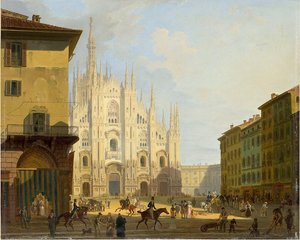
Luca Carlevarijs portréja

Luca Carlevarijs festményei: A 14 leghíresebb alkotás, egy galéria szemével

Frissítve: november 2026 · rangsorolva népszerűségi pontszámunk alapján (minden mű keresései, látogatásai és megrendelései alapján) · 15 mű Luca Carlevarijs alkotása a katalógusunkban

Röviden

A galéria szerint Luca Carlevarijs leghíresebb festménye a Venice, Doge's Palace (1690). Reception of the Venetian Ambassadors at the Tower in London (1707) és A Caprice Landscape with a Fountain and an Artist Sketching (1704) kiegészítik azt a triót, amelyet minden szem felismer. A katalógusunkban szereplő 15 művész Luca Carlevarijs alkotásából a galéria az alábbi 14 leghíresebbet mutatja be, amelyek mind egyedi originális művek, a készítés évszámával, a múzeum megnevezésével és a különlegességük leírásával.

1663 – 1730, Udine A legtöbb mű: Buckingham-palota

A galéria top 10 Luca Carlevarijs festménye

Luca Carlevarijs festményei, 11. helyezéstől 14. helyezésig

A műemlékek, amelyek Luca Carlevarijs eredeti műveit őrzik

A 8 olyan múzeum, amely a legtöbb ezen az oldalon szereplő festményet őrzi.

Múzeum Város Luca Carlevarijs művei Ebből a listából származó festmények
Buckingham-palota, LondonBuckingham-palota London 3 A Caprice Landscape with a Fountain and an Artist Sketching, A Caprice View of a Seaport, A Caprice View with a Shipyard
J. Paul Getty Múzeum, Los AngelesJ. Paul Getty Múzeum Los Angeles 2 The Bucintoro Departing from the Bacino di San Marco, Regatta on the Grand Canal in Honor of Frederick IV, King of Denmark
Bavári Állami Festırménygyűjtemények, MunchenBavári Állami Festırménygyűjtemények Munchen 1 Reception of the Venetian Ambassadors at the Tower in London
Hampton Court Palace, LondonHampton Court Palace London 1 A Seaport with a Fountain and Ruins
Metropolitan Művészeti Múzeum, New YorkMetropolitan Művészeti Múzeum New York 1 The Molo, Venice, from the Bacino di San Marco
Royal Collection, LondonRoyal Collection London 1 A Caprice View of a Harbour
Fondazione Cariplo, MilánFondazione Cariplo Milán 1 Capriccio with Scenes of Life in a Seaport
Ca' Rezzonico – a 18. századi velencei művészet múzeuma, VelenceCa' Rezzonico – a 18. századi velencei művészet múzeuma Velence 1 Caprice with an arch

Luca Carlevarijs, egy aláírott festmény évtizedenként

Művek évtizedenként

Váassz ki egy évtizedet, hogy megnézhesd az azt meghatározó eredetiműveket.

Luca Carlevarijs festményei: a galéria válaszai

Melyik Luca Carlevarijs festmény a leghíresebb?Fedje fel a választ

Venice, Doge's Palace (1690). Ezt követi Reception of the Venetian Ambassadors at the Tower in London (1707) és A Caprice Landscape with a Fountain and an Artist Sketching (1704).

Hány éves volt Luca Carlevarijs, amikor elkészítette a(t): Venice, Doge's Palace?Fedje fel a választ

27 éves: Venice, Doge's Palace 1690-ből származik, Luca Carlevarijs pedig 1663-ben született.

Melyek Luca Carlevarijs top 10 festménye?Fedje fel a választ

Venice, Doge's Palace, Reception of the Venetian Ambassadors at the Tower in London, A Caprice Landscape with a Fountain and an Artist Sketching, A Seaport with a Fountain and Ruins, A Caprice View of a Seaport, The Molo, Venice, from the Bacino di San Marco, The Bucintoro Departing from the Bacino di San Marco, A Caprice View with a Shipyard, A Caprice View of a Harbour és Regatta on the Grand Canal in Honor of Frederick IV, King of Denmark. A fenti rangsor a művek évszamarát és a múzeumát jelzi.

Hány műve született Luca Carlevarijs nevére?Fedje fel a választ

Katalógusunkban 15 mű található Luca Carlevarijs alkotótól, 1690 és 1726 év közötti időszakból.

Hol találhatóak Luca Carlevarijs leghíresebb eredeti művei?Fedje fel a választ

Leginkább Buckingham-palota (London), J. Paul Getty Múzeum (Los Angeles) és Bavári Állami Festırménygyűjtemények (Munchen) található. A fenti múzeumi táblázatban mindegyik felsorolásra került.

Mikor festette Luca Carlevarijs le leghíresebb műveit?Fedje fel a választ

1700s alatt: a jelen laphonon található 14 műből 5 készült ebben az időszakban, köztük Reception of the Venetian Ambassadors at the Tower in London.

Melyek Luca Carlevarijs legkorábbi és legutóbbi híres művei?Fedje fel a választ

Ezen az oldalon a leghitelesebb Venice, Doge's Palace (1690), a legutóbbi pedig View of Place Saint-Marc with Charlatans (1726).

Mely Luca Carlevarijs eredeti műveit őrzi a Buckingham-palota?Fedje fel a választ

A Caprice Landscape with a Fountain and an Artist Sketching, A Caprice View of a Seaport és A Caprice View with a Shipyard: a Buckingham-palota, London 3 művet őrzi ezen az oldalon.

Luca Carlevarijs: a művész

Luca Casanobrio or Luca di Ca Zenobri: The Pioneer of Venetian Cityscapes

Luca Casanobrio, more commonly known as Luca Carlevarijs or Carlevaris, stands as a pivotal figure in the history of art, particularly renowned for his groundbreaking contributions to the genre of *vedute* – cityscapes – of Venice. Born in Udine, Italy, on January 20, 1663, and passing away in Venice itself in 1730, Carlevaris’s artistic journey was one of meticulous observation, mathematical precision, and a profound appreciation for the unique beauty of his adopted city. His work wasn't merely a depiction of buildings; it was an attempt to capture the very essence of Venetian life, its light, its atmosphere, and its intricate urban fabric – a legacy that profoundly influenced generations of artists, most notably Canaletto and Francesco Guardi.

Early Life and Artistic Foundations

Carlevaris’s early career unfolded within the vibrant artistic milieu of Venice, a city steeped in tradition yet constantly evolving. He began his training immersed in the established Venetian school of painting, absorbing its characteristic emphasis on rich color palettes, dramatic lighting, and a focus on everyday life. However, Carlevaris quickly distinguished himself through an increasingly acute interest in perspective and architectural detail. This fascination stemmed partly from his own mathematical inclinations – a trait that would become central to his artistic approach. He wasn’t simply painting what he saw; he was meticulously reconstructing it within the framework of accurate representation. His early works demonstrate this burgeoning skill, hinting at the groundbreaking *vedute* that were yet to come.

The Development of the Veduta Style

Carlevaris's true artistic breakthrough occurred with his pioneering exploration of the *veduta*, a genre that had roots in earlier Italian landscape painting but was being refined and elevated by him. Unlike previous depictions, Carlevaris’s cityscapes weren’t romanticized or idealized; they were rigorously observed and rendered with an almost photographic precision. He employed techniques borrowed from Dutch perspective painters like Caspar van Wittel, who had established a tradition of meticulously detailed urban views in Rome. This influence is evident in the careful use of linear perspective, the precise rendering of architectural elements, and the inclusion of small details that brought the scenes to life – bustling markets, individual figures going about their daily routines, and the subtle play of light on water and stone. His series of etched views published in 1703 became a seminal work, establishing a new standard for urban landscape painting.

Notable Works and Artistic Achievements

Among Carlevaris’s most celebrated works is “Capriccio with Scenes of Life in a Seaport,” a captivating composition that masterfully balances architectural grandeur with the dynamism of maritime activity. This piece, available to explore on OriginalUniqueArt.com, exemplifies his ability to create a sense of depth and atmosphere through careful use of light, color, and perspective. Other significant works include “The Bucintoro Returning to the Molo on Ascension Day,” offering a vibrant depiction of Venetian life during a religious festival, and numerous views of key landmarks such as the Rialto Bridge and the Doge’s Palace. His meticulous documentation of Venice's architecture and urban landscape has ensured his place in art history. His work is also featured in prestigious institutions like the Fondazione Cariplo in Milan and the National Gallery of Art in Washington, D.C., testament to its enduring value and artistic merit.

Legacy and Influence

Luca Carlevaris’s impact on Venetian art and beyond cannot be overstated. He didn't simply create beautiful cityscapes; he fundamentally altered the way Venice was perceived and represented in art. His rigorous approach to perspective and his commitment to accurate observation paved the way for artists like Canaletto, who built upon his foundation to produce some of the most iconic images of Venice. Francesco Guardi, too, drew inspiration from Carlevaris’s work, adopting a similar style characterized by atmospheric effects and a focus on capturing the mood of the city. Carlevaris's legacy extends far beyond Venice; he is recognized as a key figure in the development of landscape painting across Europe, demonstrating that even seemingly mundane subjects – the streets and buildings of a bustling city – could be rendered with extraordinary beauty and artistic significance. His work continues to inspire artists today, reminding us of the power of observation and the enduring appeal of capturing the essence of a place.