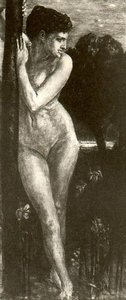
Klinger Max portréja

Klinger Max festményei: A 100 leghíresebb alkotás, egy galéria szemével

Frissítve: november 2026 · rangsorolva népszerűségi pontszámunk alapján (minden mű keresései, látogatásai és megrendelései alapján) · 281 mű Klinger Max alkotása a katalógusunkban

Röviden

A galéria szerint Klinger Max leghíresebb festménye a The death peeing. The Isle of the Dead és Presa kiegészítik azt a triót, amelyet minden szem felismer. A katalógusunkban szereplő 281 művész Klinger Max alkotásából a galéria az alábbi 100 leghíresebbet mutatja be, amelyek mind egyedi originális művek, a készítés évszámával, a múzeum megnevezésével és a különlegességük leírásával.

1857 – 1920, Lipcse Symbolism A legtöbb mű: Bavári Állami Festırménygyűjtemények

A galéria top 10 Klinger Max festménye

1
The death peeing (1889) -ja Klinger Max

The death peeing

Painting

The air hangs heavy near the riverbank where a skeletal figure stands, stripped of the terrifying dignity often assigned to the Grim Reaper. This figure, a personification of death, occupies the shoreline with a startlingly mundane presence. He stands with legs apart, facing the water, engaged in the most basic of biological functions. The act of urination into the stream demystifies the specter, pulling the concept of mortality away from…

2
The Isle of the Dead (1889) -ja Klinger Max

The Isle of the Dead

Painting

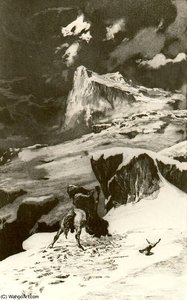
The Isle of the Dead emerges from the vision of Max Klinger, a German artist who leaves a profound mark on the landscape of late 19th-century thought. Born in Leipzig in 1857, Klinger moves through a world of shifting aesthetics, eventually passing away in 1920. In this specific work, titled The Isle of the Dead, he captures a moment that feels suspended in a quiet, heavy stillness.

3
Presa (1889) -ja Klinger Max

Presa

Lithograph

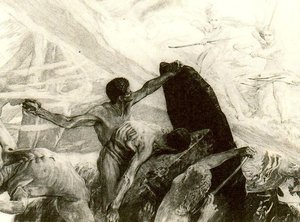
The artwork presents a monochrome scene rendered in grayscale, utilizing a range of black, white, and gray tones. At the bottom center of the frame, a reclining nude female figure is positioned as the primary focal point. Above her, a large group of men in formal attire occupies the upper portion of the composition. These figures are partially obscured by shadow, creating a sense of depth through overlapping forms. The…

4
Y sin embargo! (1889) -ja Klinger Max

Y sin embargo!

Graphite

Max Klinger, born in Leipzig in 1857, produced Y sin embargo! as part of a career that bridged the transition from Realism to Symbolism. The artist, who died in 1920, was a significant figure in German art, known for his ability to move beyond mere visual representation to explore the psychological and the subconscious. This specific work reflects his interest in the intersection of the human form and the natural…

5
Rescue (1889) -ja Klinger Max

Rescue

Etching

The artwork titled Rescue (also known as Rettung) is a significant work by the German artist Max Klinger. It exists as the fourth plate within the larger series known as Paraphrase on the Finding of a Glove. This specific piece is part of the Glove (Ein Handschuh) series, a collection that explores the fragmented, dreamlike nature of memory and loss. The work emerged from the artist's creative period between 1878/1880…

6
Mermaid holding a shell up (1889) -ja Klinger Max

Mermaid holding a shell up

Oil On Canvas

Mermaid holding a shell up is a work by Max Klinger. The artist was born in 1857 in Leipzig, Germany, and continued to produce art until his death in 1920.

7
the philosopher (1889) -ja Klinger Max

the philosopher

Etching

The artwork titled the philosopher is a creation of Max Klinger. Born in Leipzig, Germany, in 1857, the artist spent his life navigating the quiet spaces between the visible world and the internal landscape of the mind. He remained a significant presence in the German art scene until his death in 1920.

8
Venus in the Shell Carriage. Part of the Wall Decoration of Villa Albers in Berlin-Steglitz (1884) (1889) -ja Klinger Max

Venus in the Shell Carriage. Part of the Wall Decoration of Villa Albers in Berlin-Steglitz

1884 · Oil · Alte Nationalgalerie, Berlin

The scene unfolds within the panoramic expanse of Venus in the Shell Carriage. Part of the Wall Decoration of Villa Albers in Berlin-Steglitz. This mythological oil painting captures a moment of mythic movement, pulling the viewer into a world where the boundaries between sea and sky blur. The work emerges from the hand of Max Klinger, an artist who navigates the shifting currents between the tangible world and the realm…

9
Evening (1879) (1889) -ja Klinger Max

Evening

1879 · Oil On Canvas · National Gallery Prague, Prága

The artwork titled Evening was produced by the artist Max Klinger. This painting originated from the period when Klinger was active in the late nineteenth century. The piece was created about 1879.

10
Play in the meadow (1882) (1889) -ja Klinger Max

Play in the meadow

1882 · Oil On Canvas

The meadow breathes with a rhythmic, restless energy. Under a pale sky, four figures move through the tall grass, caught in a moment of sudden, fluid motion. A woman in a light, flowing gown leans away from the group, her body twisting as if escaping a sudden breeze or a playful command. To her right, a man reaches out, his arm extended toward her, holding a floral wreath aloft like…

Klinger Max festményei, 11. helyezéstől 100. helyezésig

11At the Beach (1890) (1889) -ja Klinger MaxAt the Beach1890 · Bavári Állami Festırménygyűjtemények 12Portrait of a Roman Woman on a Flat Roof in Rome (1891) (1889) -ja Klinger MaxPortrait of a Roman Woman on a Flat Roof in Rome1891 · Städel Múzeum 13Christ in Olympus (1897) (1889) -ja Klinger MaxChrist in Olympus1897 14Female Nude (1910) (1889) -ja Klinger MaxFemale Nude1910 15Bathing Women (1912) (1889) -ja Klinger MaxBathing Women1912 16A legation (1889) -ja Klinger MaxA legation 17Plague (1889) -ja Klinger MaxPlague 18Workers at a House Construction (1889) (1889) -ja Klinger MaxWorkers at a House Construction1889 19Seaside Idyl (1889) -ja Klinger MaxSeaside IdylBavári Állami Festırménygyűjtemények 20Female Study Head (1889) -ja Klinger MaxFemale Study Head 21Portrait of a Gentleman (1889) -ja Klinger MaxPortrait of a Gentleman 22Cupid (1889) -ja Klinger MaxCupid 23Salvation (1889) -ja Klinger MaxSalvation 24The source (1889) -ja Klinger MaxThe source 25An Max Klinger (1889) -ja Klinger MaxAn Max Klinger 26untitled (336) (1889) -ja Klinger Maxuntitled (336) 27untitled (1870) (1889) -ja Klinger Maxuntitled (1870) 28untitled (5707) (1889) -ja Klinger Maxuntitled (5707) 29untitled (7927) (1889) -ja Klinger Maxuntitled (7927) 30untitled (4077) (1889) -ja Klinger Maxuntitled (4077) 31untitled (5205) (1889) -ja Klinger Maxuntitled (5205) 32untitled (4640) (1889) -ja Klinger Maxuntitled (4640) 33untitled (1160) (1889) -ja Klinger Maxuntitled (1160) 34untitled (5386) (1889) -ja Klinger Maxuntitled (5386) 35untitled (5714) (1889) -ja Klinger Maxuntitled (5714) 36untitled (9844) (1889) -ja Klinger Maxuntitled (9844) 37untitled (3585) (1889) -ja Klinger Maxuntitled (3585) 38untitled (5586) (1889) -ja Klinger Maxuntitled (5586) 39untitled (3254) (1889) -ja Klinger Maxuntitled (3254) 40untitled (5191) (1889) -ja Klinger Maxuntitled (5191) 41untitled (1133) (1889) -ja Klinger Maxuntitled (1133) 42Venus in the sea (1889) -ja Klinger MaxVenus in the sea 43Cupido (1889) -ja Klinger MaxCupido 44Angustias (1889) -ja Klinger MaxAngustias 45Old love. initial stamps (1889) -ja Klinger MaxOld love. initial stamps 46untitled (5140) (1889) -ja Klinger Maxuntitled (5140) 47Scene (1889) -ja Klinger MaxScene 48Venus and Mercury (1889) -ja Klinger MaxVenus and Mercury 49psyche bathing (1889) -ja Klinger Maxpsyche bathing 50Phriam And Thisbe I (1889) -ja Klinger MaxPhriam And Thisbe I 51untitled (2692) (1889) -ja Klinger Maxuntitled (2692) 52Abduction (1889) -ja Klinger MaxAbduction 53Venus and Psyche (1889) -ja Klinger MaxVenus and Psyche 54Zephyr carrying his sisters (1889) -ja Klinger MaxZephyr carrying his sisters 55The wedding party of Psyche (1889) -ja Klinger MaxThe wedding party of Psyche 56Sister jumping from a rock (1889) -ja Klinger MaxSister jumping from a rock 57Psyche and Ceres (1889) -ja Klinger MaxPsyche and Ceres 58Love, death and extramundos (1889) -ja Klinger MaxLove, death and extramundos 59untitled (9745) (1889) -ja Klinger Maxuntitled (9745) 60Mother I (1889) -ja Klinger MaxMother I 61Pan comforting Psyche (1889) -ja Klinger MaxPan comforting Psyche 62Psyche crossing the Acheron (1889) -ja Klinger MaxPsyche crossing the Acheron 63Desire (1889) -ja Klinger MaxDesire 64Psyche on a rock (1889) -ja Klinger MaxPsyche on a rock 65Jupiter and Venus (1889) -ja Klinger MaxJupiter and Venus 66Psyche and Arundo (1889) -ja Klinger MaxPsyche and Arundo 67Farmer planting misery (1889) -ja Klinger MaxFarmer planting misery 68The childhood of Amor (1889) -ja Klinger MaxThe childhood of Amor 69Satire (1889) -ja Klinger MaxSatire 70Intermezzo 1 (1889) -ja Klinger MaxIntermezzo 1 71Phriam And Thisbe II (1889) -ja Klinger MaxPhriam And Thisbe II 72Charon (1889) -ja Klinger MaxCharon 73untitled (1999) (1889) -ja Klinger Maxuntitled (1999) 74Time and glory (1889) -ja Klinger MaxTime and glory 75Psyche on the road to Tartarus (1889) -ja Klinger MaxPsyche on the road to Tartarus 76Venus presents Psyche the Love (1889) -ja Klinger MaxVenus presents Psyche the Love 77Titan (1889) -ja Klinger MaxTitan 78Psyche venerated by the people (1889) -ja Klinger MaxPsyche venerated by the people 79Psyche and Venus (1889) -ja Klinger MaxPsyche and Venus 80Parade (1889) -ja Klinger MaxParade 81Death knight (1889) -ja Klinger MaxDeath knight 82The priestesses of Venus (1889) -ja Klinger MaxThe priestesses of Venus 83untitled (8812) (1889) -ja Klinger Maxuntitled (8812) 84Rockfall (1889) -ja Klinger MaxRockfall 85Naked woman under a tree (1889) -ja Klinger MaxNaked woman under a tree 86Cold Hand (1889) -ja Klinger MaxCold Hand 87Captive (1889) -ja Klinger MaxCaptive 88violation (1889) -ja Klinger Maxviolation 89The great goddess (1889) -ja Klinger MaxThe great goddess 90Psyche and Juno (1889) -ja Klinger MaxPsyche and Juno 91Night 1 (1889) -ja Klinger MaxNight 1 92untitled (2269) (1889) -ja Klinger Maxuntitled (2269) 93Preface II (1889) -ja Klinger MaxPreface II 94One Step (1889) -ja Klinger MaxOne Step 95PYRAMUS and THISBE (1889) -ja Klinger MaxPYRAMUS and THISBE 96Prometheus Unbound (1889) -ja Klinger MaxPrometheus Unbound 97In the park (1889) -ja Klinger MaxIn the park 98Days Of March III (1889) -ja Klinger MaxDays Of March III 99Psyche on the Tartarus (1889) -ja Klinger MaxPsyche on the Tartarus 100Mother II (1889) -ja Klinger MaxMother II

Klinger Max híres festményei, korszakonként

Symbolist Period

3 mű ebben a listában

A témák, amelyek Klinger Max figyelmét meghúzták

A négy leggyakorobban előforduló téma ebben az eredeti művekben, mindegyik a legkiválóbb példájával.

A műemlékek, amelyek Klinger Max eredeti műveit őrzik

A 4 olyan múzeum, amely a legtöbb ezen az oldalon szereplő festményet őrzi.

Múzeum Város Klinger Max művei Ebből a listából származó festmények
Bavári Állami Festırménygyűjtemények, MunchenBavári Állami Festırménygyűjtemények Munchen 2 At the Beach, Seaside Idyl
Alte Nationalgalerie, BerlinAlte Nationalgalerie Berlin 3 Venus in the Shell Carriage. Part of the Wall Decoration of Villa Albers in Berlin-Steglitz
National Gallery Prague, PrágaNational Gallery Prague Prága 1 Evening
Städel Múzeum, FrankfurtStädel Múzeum Frankfurt 1 Portrait of a Roman Woman on a Flat Roof in Rome

Klinger Max, egy aláírott festmény évtizedenként

Művek évtizedenként

Váassz ki egy évtizedet, hogy megnézhesd az azt meghatározó eredetiműveket.

Klinger Max festményei: a galéria válaszai

Melyik Klinger Max festmény a leghíresebb?Fedje fel a választ

The death peeing. Ezt követi The Isle of the Dead és Presa.

Melyek Klinger Max top 10 festménye?Fedje fel a választ

The death peeing, The Isle of the Dead, Presa, Y sin embargo!, Rescue, Mermaid holding a shell up, the philosopher, Venus in the Shell Carriage. Part of the Wall Decoration of Villa Albers in Berlin-Steglitz, Evening és Play in the meadow. A fenti rangsor a művek évszamarát és a múzeumát jelzi.

Hány műve született Klinger Max nevére?Fedje fel a választ

Katalógusunkban 281 mű található Klinger Max alkotótól, 1879 és 1912 év közötti időszakból.

Hol találhatóak Klinger Max leghíresebb eredeti művei?Fedje fel a választ

Leginkább Bavári Állami Festırménygyűjtemények (Munchen), Alte Nationalgalerie (Berlin) és National Gallery Prague (Prága) található. A fenti múzeumi táblázatban mindegyik felsorolásra került.

Mikor festette Klinger Max le leghíresebb műveit?Fedje fel a választ

1880s alatt: a jelen laphonon található 100 műből 3 készült ebben az időszakban, köztük Venus in the Shell Carriage. Part of the Wall Decoration of Villa Albers in Berlin-Steglitz.

Melyek Klinger Max legkorábbi és legutóbbi híres művei?Fedje fel a választ

Ezen az oldalon a leghitelesebb Evening (1879), a legutóbbi pedig Bathing Women (1912).

Mely témakörökkel foglaltaszkodott a legtöbbször Klinger Max?Fedje fel a választ

Trees (7), Gods (7) és Sky (6), a jelen oldalon található 100 műművészeti alkotás között.

Melyik technikával foglalt leginkább Klinger Max?Fedje fel a választ

Oil On Canvas, a jelen oldalon található 100 műből 4 darab esetén.

Mely művészeti irányhoz tartozik Klinger Max?Fedje fel a választ

Symbolism, ezen az oldalon található eredetiek alapján.

Mely Klinger Max eredeti műveit őrzi a Bavári Állami Festırménygyűjtemények?Fedje fel a választ

At the Beach és Seaside Idyl: a Bavári Állami Festırménygyűjtemények, Munchen 2 művet őrzi ezen az oldalon.

Klinger Max: a művész

The Shadowed World of Max Klinger: A Pioneer of Symbolism

Max Klinger, born in Leipzig in 1857, emerged as a pivotal figure bridging the gap between Realism and the burgeoning world of Symbolism. His artistic journey wasn’t one of immediate recognition but rather a gradual unfolding of a unique vision—a descent into the psychological depths that would profoundly influence modern art. Klinger's early training at the Academy of Fine Arts in Karlsruhe, under Karl Gussow, provided him with a solid foundation in traditional techniques, yet it was his fascination with the etchings of artists like Menzel and Goya that truly ignited his imagination. These masters demonstrated the power of printmaking to convey not merely visual representation but also narrative complexity and emotional intensity—qualities Klinger would masterfully employ throughout his career. He wasn’t content simply to depict the world as it appeared; he sought to unveil its hidden currents, its anxieties, and its dreams.

From Realism's Embrace to Symbolic Depths

Klinger’s artistic evolution was marked by a deliberate shift away from straightforward realism towards a more subjective and symbolic language. Initially, his work reflected the prevailing aesthetic of the time—detailed depictions of everyday life. However, this phase proved merely a stepping stone. The turning point came with his series of etchings, Paraphrase on the Finding of a Glove (1881). This ambitious project, comprising ten plates, wasn’t a literal illustration of an event but rather a fragmented, dreamlike exploration of desire, loss, and the complexities of human relationships. The glove itself became a potent symbol—a relic imbued with memory and longing. This series established Klinger as a leading voice in the Symbolist movement, demonstrating his ability to transform ordinary objects into vehicles for profound psychological insight. He wasn’t interested in simply showing what things looked like; he wanted to convey what they *felt* like, what they represented on a deeper, more subconscious level.

Sculpture, Printmaking and the Exploration of Myth

Klinger's artistic output was remarkably diverse, encompassing painting, sculpture, and printmaking—though it’s arguably in the realm of graphic arts that he achieved his most enduring legacy. His prints are characterized by their meticulous technique, dramatic use of light and shadow, and haunting imagery. He wasn’t afraid to tackle challenging themes—mortality, sexuality, and the darker aspects of the human psyche. Beyond Paraphrase on the Finding of a Glove, works like his depictions of Faustian bargains and mythological scenes reveal a fascination with archetypal narratives and universal human struggles. His sculptural work, though less prolific than his prints, was equally ambitious. A prime example is his monumental installation in homage to Beethoven at the Vienna Secession in 1902—a powerful testament to the composer’s genius and a bold statement of artistic innovation. Klinger's sculptures were often deliberately unsettling, challenging conventional notions of beauty and form.

Influences and Artistic Development

Klinger’s artistic development was shaped by a confluence of influences. His early training at Karlsruhe instilled in him a respect for traditional techniques, but it was his exposure to the works of Menzel, Goya, and the German Romantic painters that truly awakened his imagination. He deeply admired the etchings of Rembrandt and Dürer, recognizing their ability to convey profound emotion through subtle variations in line and tone. The writings of Arthur Schopenhauer and Friedrich Nietzsche also exerted a significant influence on Klinger’s thinking, particularly his exploration of themes such as pessimism, alienation, and the search for meaning. He was drawn to the Symbolist movement's emphasis on subjective experience and its rejection of traditional artistic conventions. His time in Paris exposed him to new ideas and techniques, further broadening his artistic horizons.

Legacy and Influence: A Bridge to Modernity

Max Klinger’s influence extended far beyond his own lifetime. He paved the way for Expressionism, Surrealism, and other avant-garde movements that sought to explore the inner world of human experience. His emphasis on symbolism, psychological depth, and subjective interpretation resonated with artists grappling with the anxieties and uncertainties of the modern age. The artist’s exploration of dreamlike states and subconscious desires anticipated the work of later Surrealists like Salvador Dalí and René Magritte. Even in more recent times, Klinger's ideas continue to inspire contemporary artists. In 1991, the Moscow art collective Inspection Medical Hermeneutics created “Klinger’s Boxes,” an installation directly inspired by his work—a testament to the enduring power of his vision. He remains a crucial figure in understanding the transition from 19th-century academic traditions to the radical experimentation of the 20th century. His art invites us to confront our own shadows, to delve into the mysteries of the human psyche, and to recognize the profound beauty that can be found even in the darkest corners of existence.