Joseph Henry Sharp portréja

A 92 legnevesebbebb Joseph Henry Sharp festmény, mindegyik egyedistens

Frissítve: október 2026 · rangsorolva népszerűségi pontszámunk alapján (minden mű keresései, látogatásai és megrendelései alapján) · 106 mű Joseph Henry Sharp alkotása a katalógusunkban

Röviden

Wolf Ear, (painting) (1900) az a Joseph Henry Sharp festmény, amely a legtöbb tekintetet felvonja. Ezután a tekintet Comming Elk, Cheyenne (1898) és The Harvest Dance of the Pueblo Indians (1893) elemre irányul. A Joseph Henry Sharp 106 műve közül a katalógusunkban megtalálható 92 legnépesebb alkotás, melyeket az év, a múzeum és az örökévalóságának okai kísérnek.

1859 – 1953, Bridgeport Contemporary realism A legtöbb mű: Smithsonian American Art Museum

A galéria szemével: Joseph Henry Sharp legjobb 10 festménye

1
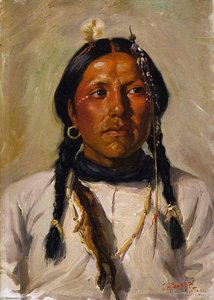
Wolf Ear, (painting) (1900) szerzője Joseph Henry Sharp

Wolf Ear, (painting)

1900 · Oil On Canvas

Wolf Ear, (painting) is a portrait created by the artist Joseph Henry Sharp. This work, dated 1900, depicts a Native American man. The subject is shown with long hair and a beard. A single feather is placed in his hair, and a necklace rests around his neck.

Joseph Henry Sharp híres festményei, 11 és 92 között

11Blackfoot Girl (1905) szerzője Joseph Henry SharpBlackfoot Girl1905 · Smithsonian American Art Museum 12The Voice of the Great Spirit, (painting) (1906) szerzője Joseph Henry SharpThe Voice of the Great Spirit, (painting)1906 13Apache Camp in Hondo Cañon, New Mexico (1920) szerzője Joseph Henry SharpApache Camp in Hondo Cañon, New Mexico1920 14Portrait Of Louise Zaring szerzője Joseph Henry SharpPortrait Of Louise Zaring 15Godiva Disrobing to Ride through Coventry (1887) szerzője Joseph Henry SharpGodiva Disrobing to Ride through Coventry1887 · Herbert Art Gallery - Museum 16Fountain Square Pantomime (1892) szerzője Joseph Henry SharpFountain Square Pantomime1892 17Running Horse, (painting) (1897) szerzője Joseph Henry SharpRunning Horse, (painting)1897 18Running Horse (1897) szerzője Joseph Henry SharpRunning Horse1897 · Smithsonian American Art Museum 19Twilight (Hopi Girl) (1896) szerzője Joseph Henry SharpTwilight (Hopi Girl)1896 · Smithsonian American Art Museum 20Wolf Ear, Sioux (1900) szerzője Joseph Henry SharpWolf Ear, Sioux1900 · Metropolitan Művészeti Múzeum 21Hand, (painting) (1900) szerzője Joseph Henry SharpHand, (painting)1900 22Blackfoot Indian Girl, (painting) (1905) szerzője Joseph Henry SharpBlackfoot Indian Girl, (painting)1905 23Spotted Elk, Chief (1900) szerzője Joseph Henry SharpSpotted Elk, Chief1900 24Hand (1900) szerzője Joseph Henry SharpHand1900 · Smithsonian American Art Museum 25Strong Left Hand (1900) szerzője Joseph Henry SharpStrong Left Hand1900 · Smithsonian American Art Museum 26Two Dogs (1900) szerzője Joseph Henry SharpTwo Dogs1900 · Smithsonian American Art Museum 27Fireside (1900) szerzője Joseph Henry SharpFireside1900 · Museum of Art 28Yellow Wings (1900) szerzője Joseph Henry SharpYellow Wings1900 · Smithsonian American Art Museum 29Do Ree Tah (1900) szerzője Joseph Henry SharpDo Ree Tah1900 · Smithsonian American Art Museum 30White Swan (1900) szerzője Joseph Henry SharpWhite Swan1900 · Smithsonian American Art Museum 31Chief Flat Iron (1905) szerzője Joseph Henry SharpChief Flat Iron1905 · Smithsonian American Art Museum 32Blackfoot Indian Girl (1905) szerzője Joseph Henry SharpBlackfoot Indian Girl1905 · Smithsonian American Art Museum 33PORTRAIT OF AN INDIAN szerzője Joseph Henry SharpPORTRAIT OF AN INDIANCincinnati Art Museum 34Rio Hondo Canyon, Taos County, New Mexico szerzője Joseph Henry SharpRio Hondo Canyon, Taos County, New MexicoCincinnati Art Museum 35BILL JONES szerzője Joseph Henry SharpBILL JONESCincinnati Art Museum 36A Group Of Approximately 430 Works Published By The Limited Editions Club szerzője Joseph Henry SharpA Group Of Approximately 430 Works Published By The Limited Editions Club 37Eagle Feather szerzője Joseph Henry SharpEagle Feather 38Crucita szerzője Joseph Henry SharpCrucita 39The Tribal Meeting szerzője Joseph Henry SharpThe Tribal Meeting 40Wife Of Chief Little Wolf szerzője Joseph Henry SharpWife Of Chief Little Wolf 41Indian Tepees, (painting) szerzője Joseph Henry SharpIndian Tepees, (painting) 42Bear nose-sioux szerzője Joseph Henry SharpBear nose-sioux 43At A Pueblo Window szerzője Joseph Henry SharpAt A Pueblo Window 44White Paint Mountain - Taos Indian szerzője Joseph Henry SharpWhite Paint Mountain - Taos Indian 45Missal, In Latin, Illuminated Manuscript On Vellum szerzője Joseph Henry SharpMissal, In Latin, Illuminated Manuscript On Vellum 46Chief Of The Taos Pueblo szerzője Joseph Henry SharpChief Of The Taos Pueblo 47Book Of Hours, Use Of Sarum, In Latin And English, Illuminated Manuscript On Vellum szerzője Joseph Henry SharpBook Of Hours, Use Of Sarum, In Latin And English, Illuminated Manuscript On Vellum 48The Voice of the Great Spirit (1906) szerzője Joseph Henry SharpThe Voice of the Great Spirit1906 · Smithsonian American Art Museum 49Medicine Shield, Crow Squaw (1906) szerzője Joseph Henry SharpMedicine Shield, Crow Squaw1906 · Smithsonian American Art Museum 50Encampment of Crow Indians (1908) szerzője Joseph Henry SharpEncampment of Crow Indians1908 · Smithsonian American Art Museum 51Clearing After Storm, Taos (1913) szerzője Joseph Henry SharpClearing After Storm, Taos1913 · Dallas Museum of Art 52Making Sweet Grass Medicine, Blackfoot Ceremony (1920) szerzője Joseph Henry SharpMaking Sweet Grass Medicine, Blackfoot Ceremony1920 53Sunset Dance Ceremony to the Evening Sun (1924) szerzője Joseph Henry SharpSunset Dance Ceremony to the Evening Sun1924 54Little Wolf (1900) szerzője Joseph Henry SharpLittle Wolf1900 · Smithsonian American Art Museum 55Indian Hunters in the Aspen Forest szerzője Joseph Henry SharpIndian Hunters in the Aspen ForestCincinnati Art Museum 56INDIAN VILLAGE szerzője Joseph Henry SharpINDIAN VILLAGECincinnati Art Museum 57Western Landscape szerzője Joseph Henry SharpWestern Landscape 58Indian encampment szerzője Joseph Henry SharpIndian encampment 59Blackfeet Water Hole, Glacier Park szerzője Joseph Henry SharpBlackfeet Water Hole, Glacier Park 60The Medicine Teepee szerzője Joseph Henry SharpThe Medicine Teepee 61Roberto szerzője Joseph Henry SharpRoberto 62Teepee Reflection szerzője Joseph Henry SharpTeepee Reflection 63Early Winter On Crow Reservation, Montana szerzője Joseph Henry SharpEarly Winter On Crow Reservation, Montana 64Chief Deaf Bull, Crow szerzője Joseph Henry SharpChief Deaf Bull, Crow 65The Drum Beat szerzője Joseph Henry SharpThe Drum Beat 66Taos Studio szerzője Joseph Henry SharpTaos Studio 67White Irises szerzője Joseph Henry SharpWhite Irises 68Apple Blossoms szerzője Joseph Henry SharpApple Blossoms 69Aspens At Twining szerzője Joseph Henry SharpAspens At Twining 70Palo Flechado szerzője Joseph Henry SharpPalo Flechado 71Autumn In West Virginia szerzője Joseph Henry SharpAutumn In West Virginia 72The War Bonnet Maker szerzője Joseph Henry SharpThe War Bonnet Maker 73Saint Paul Imprisoned At Philippi szerzője Joseph Henry SharpSaint Paul Imprisoned At Philippi 74Landscape szerzője Joseph Henry SharpLandscape 75Bawling Deer ^ Son, Black Deer-taos szerzője Joseph Henry SharpBawling Deer ^ Son, Black Deer-taos 76Taos Forest - szerzője Joseph Henry SharpTaos Forest - 77Portrait of an indian szerzője Joseph Henry SharpPortrait of an indian 78Making Sweet Grass Medicine, Blackfoot Ceremony szerzője Joseph Henry SharpMaking Sweet Grass Medicine, Blackfoot Ceremony 79Taos Forest - szerzője Joseph Henry SharpTaos Forest - 80Chief duck man szerzője Joseph Henry SharpChief duck man 81Rabbit hunt, taos valley szerzője Joseph Henry SharpRabbit hunt, taos valley 82Late Summer Flowers szerzője Joseph Henry SharpLate Summer Flowers 83Rolling Hills szerzője Joseph Henry SharpRolling Hills 84Chief Two Leggins szerzője Joseph Henry SharpChief Two Leggins 85Winter Landscape szerzője Joseph Henry SharpWinter Landscape 86Fireside szerzője Joseph Henry SharpFireside 87The War Bonnet szerzője Joseph Henry SharpThe War Bonnet 88Wolf Ear (1900) szerzője Joseph Henry SharpWolf Ear1900 · Smithsonian American Art Museum 89Hunting song szerzője Joseph Henry SharpHunting song 90Y yut mat (1900) szerzője Joseph Henry SharpY yut mat1900 91The Harvest Dance (1894) szerzője Joseph Henry SharpThe Harvest Dance1894 · Cincinnati Art Museum 92Chief American Horse szerzője Joseph Henry SharpChief American Horse

Joseph Henry Sharp híres festményei, korszakonként

A témák, amelyek Joseph Henry Sharp figyelmét meghúzták

A négy leggyakorobban előforduló téma ebben az eredeti művekben, mindegyik a legkiválóbb példájával.

A műemlékek, amelyek Joseph Henry Sharp eredeti műveit őrzik

A 7 olyan múzeum, amely a legtöbb ezen az oldalon szereplő festményet őrzi.

Múzeumok Város Joseph Henry Sharp művei Ebből a listából származó festmények
Smithsonian American Art Museum, Washington, D.C.Smithsonian American Art Museum Washington, D.C. 20 White Swan, Chief Flat Iron, Two Leggins, Crow Chief
Cincinnati Art Museum, CincinnatiCincinnati Art Museum Cincinnati 6 PORTRAIT OF AN INDIAN, Rio Hondo Canyon, Taos County, New Mexico, BILL JONES
New Britain Museum of American Art, New BritainNew Britain Museum of American Art New Britain 1 Comming Elk, Cheyenne
Herbert Art Gallery - Museum, CoventryHerbert Art Gallery - Museum Coventry 1 Godiva Disrobing to Ride through Coventry
Metropolitan Művészeti Múzeum, New YorkMetropolitan Művészeti Múzeum New York 1 Wolf Ear, Sioux
Museum of Art, San DiegoMuseum of Art San Diego 1 Fireside
Dallas Museum of Art, DallasDallas Museum of Art Dallas 1 Clearing After Storm, Taos

Joseph Henry Sharp évtizedekig: egy egyedi eredeti mű minden évtizedben

Művek évtizedenként

Váassz ki egy évtizedet, hogy megnézhesd az azt meghatározó eredetiműveket.

Joseph Henry Sharp festményei: kérdések a galériának

Mi a leghíresebb műve Joseph Henry Sharpnek?Fedje fel a választ

Wolf Ear, (painting) (1900). Ezt követi Comming Elk, Cheyenne (1898) és The Harvest Dance of the Pueblo Indians (1893).

Milyen életkorában alkotta meg Joseph Henry Sharp a(z) Wolf Ear, (painting) műszt?Fedje fel a választ

41 éves: Wolf Ear, (painting) 1900-ből származik, Joseph Henry Sharp pedig 1859-ben született.

Melyik tíz festménye Joseph Henry Sharp a leghíresebb?Fedje fel a választ

Wolf Ear, (painting), Comming Elk, Cheyenne, The Harvest Dance of the Pueblo Indians, White Swan, Chief Flat Iron, Quinnah, (painting), Do Ree Tah, (painting), Two Leggins, Crow Chief, Quinnah és Chief Spotted Elk. A fenti rangsor a művek évszamarát és a múzeumát jelzi.

Hány mű alkotása ismert Joseph Henry Sharp nevében?Fedje fel a választ

Katalógusunkban 106 mű található Joseph Henry Sharp alkotótól, 1887 és 1924 év közötti időszakból.

Hol tekinthetők meg a leghíresebb Joseph Henry Sharp eredetijeit?Fedje fel a választ

Leginkább Smithsonian American Art Museum (Washington, D.C.), Cincinnati Art Museum (Cincinnati) és New Britain Museum of American Art (New Britain) található. A fenti múzeumi táblázatban mindegyik felsorolásra került.

Melyik időszakban alkotta Joseph Henry Sharp a leghíresebb festményeit?Fedje fel a választ

1900s alatt: a jelen laphonon található 92 műből 29 készült ebben az időszakban, köztük Wolf Ear, (painting).

Melyik híres Joseph Henry Sharp festmény a legkorábbi, és melyik a legutóbb készült?Fedje fel a választ

Ezen az oldalon a leghitelesebb Godiva Disrobing to Ride through Coventry (1887), a legutóbbi pedig Sunset Dance Ceremony to the Evening Sun (1924).

Milyen témakörket kedvelt Joseph Henry Sharp?Fedje fel a választ

Native american (9), Portrait (8) és Native american portrait (5), a jelen oldalon található 92 műművészeti alkotás között.

Mely művészeti irányba tartozik Joseph Henry Sharp műve?Fedje fel a választ

Contemporary realism, ezen az oldalon található eredetiek alapján.

Milyen Joseph Henry Sharp eredeti műveket láthatok a Smithsonian American Art Museum kiállításaiban?Fedje fel a választ

White Swan, Chief Flat Iron és Two Leggins, Crow Chief: a Smithsonian American Art Museum, Washington, D.C. 20 művet őrzi ezen az oldalon.

Joseph Henry Sharp: a művész portréja

Joseph Henry Sharp: A Life Dedicated to Capturing the Spirit of the American West

Joseph Henry Sharp, a name synonymous with authentic portrayals of Native American life and landscapes, stands as a pivotal figure in both Western art history and the development of the Taos artistic community. Born in 1859 in Bridgeport, Ohio, to Irish immigrant parents, his early years were marked by both hardship and an unwavering fascination with the cultures beyond his immediate surroundings. A childhood accident resulted in profound hearing loss, a challenge that shaped his life but ultimately seemed to sharpen his visual acuity and deepen his empathetic connection to those he depicted. While conventional schooling proved difficult, Sharp’s innate artistic talent propelled him forward, first through studies at the McMicken School of Design in Cincinnati, then on an extended journey across Europe – Antwerp, Munich, and Paris – where he honed his skills under the tutelage of renowned masters and absorbed the influences of both the Barbizon school and Impressionism. These formative years instilled in him a mastery of realism while simultaneously fostering an appreciation for capturing fleeting moments of light and shadow, techniques that would later define his signature style.

The Western Beckoning: Portraits of a Vanishing World

Sharp’s artistic trajectory took a decisive turn westward, driven by a lifelong fascination with Native American cultures. His initial journeys to the West in the 1880s sparked an enduring commitment to documenting their lives and traditions before they faded into history. Unlike many artists of his time who romanticized or stereotyped Indigenous peoples, Sharp strived for accuracy and dignity in his portrayals. He sought not just to capture physical likenesses but also to convey a sense of individual character and cultural identity. This dedication led to significant commissions, most notably from President Theodore Roosevelt, who tasked him with painting 200 portraits of Native American warriors who survived the Battle of Little Bighorn – a monumental undertaking that underscored Sharp’s reputation and his commitment to preserving this vital historical record. To further immerse himself in the culture he sought to depict, Sharp constructed the "Absarokee Hut" on Crow Agency land in Montana, dedicating years to living amongst the Crow people and meticulously observing their daily lives. This immersive approach allowed him to move beyond superficial representations and create portraits imbued with a profound sense of understanding and respect.

Artistic Influences and Techniques

While Sharp’s subject matter was uniquely his own, his artistic style reflected a blend of European training and American sensibilities. The influence of the Barbizon school is evident in his commitment to realism and his preference for depicting scenes from everyday life. He embraced Impressionism's emphasis on capturing fleeting moments of light and shadow, using broad brushstrokes and a vibrant palette to create a sense of immediacy and atmosphere. His portraits are characterized by their meticulous attention to detail – the intricate beadwork on clothing, the weathered lines etched onto faces, the subtle nuances of expression that reveal individual personalities. Sharp’s ability to render flesh tones with remarkable accuracy was honed during his studies in Munich under Frank Duveneck, a technique he carried with him throughout his career. He skillfully employed direct painting techniques – applying wet paint onto wet surfaces – creating richly layered and fluid compositions that breathed life into his subjects.

Legacy and Recognition: A Founding Father of Taos Art

Joseph Henry Sharp’s contributions to the art world extended far beyond his individual paintings. He is widely recognized as a founding member of the Taos Society of Artists, playing a crucial role in establishing Taos, New Mexico, as a vibrant artistic hub. His early visits to Taos in the 1890s inspired Ernest Blumenschein and Bert Phillips to relocate there, laying the groundwork for the society’s formation. Throughout his long career, Sharp garnered significant recognition from prominent patrons, including industrialist Joseph G. Butler, philanthropist Phoebe Apperson Hearst, and collector Thomas Gilcrease, whose extensive collection of Sharp's work at the Gilcrease Institute provides a comprehensive overview of his artistic journey. His dedication to documenting Native American culture earned him accolades from institutions like the Smithsonian Institution, which recognized his portraits for their ethnographic value. Joseph Henry Sharp passed away in 1953 at the remarkable age of 94, leaving behind a legacy as one of America’s most important and respected Western artists – a man who dedicated his life to capturing the spirit of a vanishing world with unwavering skill and profound empathy.