John Francis Murphy portréja

John Francis Murphy festményei: A 39 leghíresebb alkotás, egy galéria szemével

Frissítve: november 2026 · rangsorolva népszerűségi pontszámunk alapján (minden mű keresései, látogatásai és megrendelései alapján) · 41 mű John Francis Murphy alkotása a katalógusunkban

Röviden

A galéria szerint John Francis Murphy leghíresebb festménye a Indian Summer (1903), amelynek eredeti példája a Smithsonian American Art Museum múzeumában található, Washington, D.C. városában. Woods Clearing (1914) és Sunset Landscape kiegészítik azt a triót, amelyet minden szem felismer. A katalógusunkban szereplő 41 művész John Francis Murphy alkotásából a galéria az alábbi 39 leghíresebbet mutatja be, amelyek mind egyedi originális művek, a készítés évszámával, a múzeum megnevezésével és a különlegességük leírásával.

1853 – 1921, Oswego A legtöbb mű: Smithsonian American Art Museum

A galéria top 10 John Francis Murphy festménye

1
Indian Summer (1903) (1889) -ja John Francis Murphy

Indian Summer

1903 · Oil On Canvas · Smithsonian American Art Museum, Washington, D.C.

We are looking at Indian Summer, a work painted by John Francis Murphy in 1903. This oil on canvas captures a specific, quiet moment in the American landscape, rendered with a sensitivity that defines much of Murphy's output during this period. The scale of the piece is intimate, measuring 16 1/4 x 22 in. (41.2 x 56.0 cm), inviting a close, personal observation of its subtle tonal shifts.

2
Woods Clearing (1914) (1889) -ja John Francis Murphy

Woods Clearing

1914 · Oil On Canvas

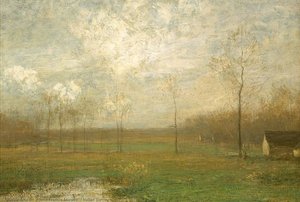
Woods Clearing, painted by John Francis Murphy in 1914, presents a natural landscape centered on a field populated by trees. The work captures a specific moment in the seasonal cycle, focusing on the quietude of the terrain.

3
Sunset Landscape (1889) -ja John Francis Murphy

Sunset Landscape

Oil On Canvas

The sun sinks behind a curtain of haze, leaving only the memory of light. In this oil on canvas, the sky holds a pale, luminous glow that presses against the darkening silhouettes of trees. A body of water rests nearby, catching the final, muted reflections of a day retreating into shadow. The air feels heavy, thick with the moisture of a settling dusk. It is a scene of quietude, where…

4
Eos (1848) (1889) -ja John Francis Murphy

Eos

1848

This statue portrays Prince Albert’s pet greyhound, Eos. The Prince was given her as six-week-old puppy. Although he was only 14 at the time, he brought her up and trained her himself, and she remained his companion until she died on 31 July 1844, when she was ten and a half years old. John Francis, a favourite sculptor of Queen Victoria, exhibited this bronze at the Royal Academy in 1848.

5
October Mist (1902) (1889) -ja John Francis Murphy

October Mist

1902

A Poetic Vision of Autumn: John Francis Murphy's "October Mist" John Francis Murphy’s “October Mist,” painted in 1902, is a captivating example of American Tonalism. This evocative landscape transports the viewer to a serene rural scene, dominated by a solitary tree standing sentinel within a lush field veiled in atmospheric mist. The painting isn't merely a depiction of nature; it's an exploration of mood and feeling, capturing the quiet melancholy…

6
Landscape (1880) (1889) -ja John Francis Murphy

Landscape

1880 · Oil · Metropolitan Művészeti Múzeum, New York

is a painting by John Francis Murphy, created about 1880. The artist, who was born in Oswego, United States, in 1853, produced this work during a period of transition in American landscape painting. Murphy lived until 1921, leaving behind a body of work that reflects his specific approach to the natural environment.

John Francis Murphy festményei, 11. helyezéstől 39. helyezésig

A témák, amelyek John Francis Murphy figyelmét meghúzták

A négy leggyakorobban előforduló téma ebben az eredeti művekben, mindegyik a legkiválóbb példájával.

A műemlékek, amelyek John Francis Murphy eredeti műveit őrzik

A 8 olyan múzeum, amely a legtöbb ezen az oldalon szereplő festményet őrzi.

Múzeum Város John Francis Murphy művei Ebből a listából származó festmények
Smithsonian American Art Museum, Washington, D.C.Smithsonian American Art Museum Washington, D.C. 5 Indian Summer, The Path to the Village, Small Landscape
Dallas Museum of Art, DallasDallas Museum of Art Dallas 5 Fence Corner, Landscape, Morning in October
Indianapolis Művészeti Múzeum, IndianapolisIndianapolis Művészeti Múzeum Indianapolis 3 Under Gray Skies, Early Autumn, Landscape
Metropolitan Művészeti Múzeum, New YorkMetropolitan Művészeti Múzeum New York 2 Landscape, The Old Barn
Művészeti Múzeum, Boston, BostonMűvészeti Múzeum, Boston Boston 2 Rocky Fields, Sunset
New Britain Museum of American Art, New BritainNew Britain Museum of American Art New Britain 2 New England Meadow in Spring, Afternoon in October
Toledo Művészeti Múzeum, ToledoToledo Művészeti Múzeum Toledo 1 Sunset
Buffalo AKG Art Museum, BuffaloBuffalo AKG Art Museum Buffalo 1 Neglected Lands

John Francis Murphy, egy aláírott festmény évtizedenként

Művek évtizedenként

Váassz ki egy évtizedet, hogy megnézhesd az azt meghatározó eredetiműveket.

John Francis Murphy festményei: a galéria válaszai

Melyik John Francis Murphy festmény a leghíresebb?Fedje fel a választ

Indian Summer (1903), Smithsonian American Art Museum, Washington, D.C.. Ezután Woods Clearing (1914) és Sunset Landscape következik.

Hány éves volt John Francis Murphy, amikor elkészítette a(t): Indian Summer?Fedje fel a választ

50 éves: Indian Summer 1903-ből származik, John Francis Murphy pedig 1853-ben született.

Melyek John Francis Murphy top 10 festménye?Fedje fel a választ

Indian Summer, Woods Clearing, Sunset Landscape, Eos, October Mist, Landscape, The Path to the Village, Rocky Fields, Wooded River Landscape és Small Landscape. A fenti rangsor a művek évszamarát és a múzeumát jelzi.

Hány műve született John Francis Murphy nevére?Fedje fel a választ

Katalógusunkban 41 mű található John Francis Murphy alkotótól, 1880 és 1917 év közötti időszakból.

Hol találhatóak John Francis Murphy leghíresebb eredeti művei?Fedje fel a választ

Leginkább Smithsonian American Art Museum (Washington, D.C.), Dallas Museum of Art (Dallas) és Indianapolis Művészeti Múzeum (Indianapolis) található. A fenti múzeumi táblázatban mindegyik felsorolásra került.

Mikor festette John Francis Murphy le leghíresebb műveit?Fedje fel a választ

1900s alatt: a jelen laphonon található 39 műből 11 készült ebben az időszakban, köztük Indian Summer.

Melyek John Francis Murphy legkorábbi és legutóbbi híres művei?Fedje fel a választ

Ezen az oldalon a leghitelesebb Landscape (1880), a legutóbbi pedig Early Autumn (1917).

Mely témakörökkel foglaltaszkodott a legtöbbször John Francis Murphy?Fedje fel a választ

Landscape (6), Trees (3) és Sky (3), a jelen oldalon található 39 műművészeti alkotás között.

Melyik technikával foglalt leginkább John Francis Murphy?Fedje fel a választ

Oil On Canvas, a jelen oldalon található 39 műből 3 darab esetén.

Mely John Francis Murphy eredeti műveit őrzi a Smithsonian American Art Museum?Fedje fel a választ

Indian Summer, The Path to the Village és Small Landscape: a Smithsonian American Art Museum, Washington, D.C. 5 művet őrzi ezen az oldalon.

John Francis Murphy: a művész

A Poet of the American Landscape: The Life and Art of John Francis Murphy

John Francis Murphy, born in Oswego, New York, in 1853, emerged as a pivotal figure in American landscape painting during a period of profound artistic transition. His name is inextricably linked with Tonalism, yet to define his work solely by this movement would be to diminish the subtle evolution and quiet innovation that characterized his career. Murphy’s journey began not amidst palettes and easels, but as a sign painter in Chicago – a practical trade that ultimately proved unsatisfying for a spirit yearning for more expressive pursuits. This early experience, however, instilled a foundational understanding of form and color which would later inform his delicate compositions. Dissatisfied with commercial art, he bravely relocated to New York City in 1875, embarking on a path of largely self-directed artistic education. He immersed himself in the study of the masters, frequenting museums and honing his skills through dedicated practice.

From Barbizon Influences to Tonalist Mastery

Murphy’s initial forays into landscape painting were deeply influenced by the Barbizon school – a group of French painters who championed realism and direct observation of nature. He quickly gained recognition, exhibiting at the National Academy of Design as early as 1876. However, it was through his engagement with artists like Alexander Wyant and George Inness that Murphy truly found his artistic voice. These figures emphasized tonal values – the subtle gradations of light and shadow – and atmospheric effects, principles which resonated profoundly with Murphy’s own sensibilities. He wasn't merely replicating what he saw; he sought to capture the *feeling* of a place, the mood evoked by the interplay of light, air, and form. Around 1900, his style began to shift, incorporating more modern approaches to depicting light and atmosphere while retaining the core tenets of Tonalism. This period witnessed a refinement of his technique, marked by increasingly sparse compositions and a masterful use of muted colors – browns, grays, and greens that lent his paintings an air of serene contemplation.

The Pakatakan Artist Colony and Artistic Recognition

In 1887, Murphy established the Pakatakan Artist Colony in Arkville, New York, nestled within the picturesque Catskill Mountains. This haven became a gathering place for artists seeking inspiration from the natural beauty of the region and fostering a collaborative artistic environment. The colony’s influence on Murphy's work is undeniable; the landscapes he produced during his time there are imbued with a sense of quiet intimacy and profound connection to the land. His dedication and talent did not go unnoticed. He was elected an associate of the National Academy of Design in 1885, becoming a full academician just two years later. Further accolades followed, including membership in the Society of American Artists and the American Watercolor Society, as well as prestigious awards like a gold medal at Charleston (1902) and the Inness Medal in 1910. These honors cemented his position as a leading figure in the American art world.

A Legacy of Atmospheric Depth and Poetic Sentiment

Murphy’s paintings are not grand statements or dramatic narratives; they are subtle meditations on the beauty and tranquility of the natural world. Works like October, held by the Corcoran Gallery of Art, and The Path to the Village and Indian Summer, both residing in the National Gallery of Art, exemplify his mastery of atmospheric perspective – creating a convincing illusion of depth and distance through subtle shifts in tone and color. His canvases often depict rural scenes – weathered barns, quiet fields, and winding paths – imbued with a sense of poetic sentiment. He wasn’t simply painting landscapes; he was evoking emotions, inviting viewers to share in his experience of the natural world. His ability to capture the essence of a place, rather than merely its appearance, is what sets him apart. His influence extended beyond his immediate circle, inspiring subsequent generations of artists to explore the expressive possibilities of Tonalism and atmospheric landscape painting. Though he passed away in New York City in 1921 from pneumonia, John Francis Murphy’s legacy endures through the enduring appeal of his paintings – a testament to the power of quiet observation, subtle technique, and profound artistic vision.