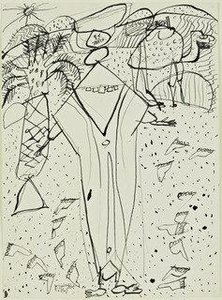
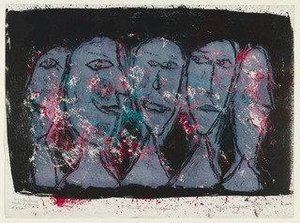
Jean Dubuffet portréja

A 100 legnevesebbebb Jean Dubuffet festmény, mindegyik egyedistens

Frissítve: november 2026 · rangsorolva népszerűségi pontszámunk alapján (minden mű keresései, látogatásai és megrendelései alapján) · 441 mű Jean Dubuffet alkotása a katalógusunkban

Röviden

Grand Maitre of the Outsider (1947) az a Jean Dubuffet festmény, amely a legtöbb tekintetet felvonja. Ezután a tekintet The Cow With The Subtle Nose (1954) és Monsieur Plume with Creases in his Trousers (Portrait of Henri Michaux) (1947) elemre irányul. A Jean Dubuffet 441 műve közül a katalógusunkban megtalálható 100 legnépesebb alkotás, melyeket az év, a múzeum és az örökévalóságának okai kísérnek.

1901 – 1985, Le Havre Art brut A legtöbb mű: Izraeli Múzeum

A galéria szemével: Jean Dubuffet legjobb 10 festménye

1
Grand Maitre of the Outsider (1947) (1889) -ja Jean Dubuffet

Grand Maitre of the Outsider

1947 · Oil On Canvas

The canvas confronts the viewer with a face that seems to have been pulled directly from the earth. It is a portrait, yet it mocks the very idea of a formal likeness. An older male figure emerges from a deep, dark void, his features rendered in crude, simple shapes that feel urgent and unpolished. His eyes are wide, fixed in a stare that radiates annoyance, while his mouth hangs slightly…

2
The Cow With The Subtle Nose (1954) (1889) -ja Jean Dubuffet

The Cow With The Subtle Nose

1954 · Enamel

The Cow With The Subtle Nose is an artwork by Jean Dubuffet. Created in 1954, this work belongs to the Vaches series. It is also categorized within the Petites statues de la vie précaire series.

3
Monsieur Plume with Creases in his Trousers (Portrait of Henri Michaux) (1947) (1889) -ja Jean Dubuffet

Monsieur Plume with Creases in his Trousers (Portrait of Henri Michaux)

1947 · Oil On Canvas

The gaze of Monsieur Plume with Creases in his Trousers (Portrait of Henri Michaux) meets the viewer from across the years, a silent encounter frozen in 1947. Jean Dubuffet captures the essence of Henri Michaux within this singular frame, presenting a face that seems to hold a world of unspoken thought. The portrait exists as a direct confrontation between the subject and the observer, stripped of any unnecessary ornament.

4
Bodies of Women (Corps de dames) (1950) (1889) -ja Jean Dubuffet

Bodies of Women (Corps de dames)

1950 · Lithograph

The lithograph titled Bodies of Women (Corps de dames) was created by the artist Jean Dubuffet. This work is a black and white print produced in 1950. The piece belongs to a period in the artist's career where he explored various graphic and material expressions.

5
Grand jazz band (1889) -ja Jean Dubuffet

Grand jazz band

Oil On Canvas

Grand jazz band, also known as Grand Jazz Band (New Orleans), is a painting by the French artist Jean Dubuffet. The work was created in December 1944. It depicts six African-American musicians performing as part of a jazz orchestra. The composition focuses on these figures as they engage with their instruments.

6
Place for Awakenings (1960) (1889) -ja Jean Dubuffet

Place for Awakenings

1960 · Mixed Media

The surface of Place for Awakenings feels alive, a rugged terrain of brown tones that seems to pulse with a quiet, ancient energy. It is a landscape not of geography, but of matter. The composition is a dense, textured expanse where the distinction between painting and sculpture begins to dissolve. Small, scattered circles drift across this earthy plane, varying in size and position as if they are celestial bodies caught…

7
Logologie (1974) (1889) -ja Jean Dubuffet

Logologie

1974 · Screenprint · Izraeli Múzeum, Jeruzsálem

In this 1974 work, titled Logologie, we find ourselves drawn into a scene of quiet, concentrated intensity. A group of men is gathered around a table, their bodies leaning inward as if caught in a moment of profound significance. The composition is anchored by a deep, saturated cobalt blue backdrop that meets a textured, tan-colored wall, creating a sharp, theatrical contrast. This division of space directs the eye immediately to…

Jean Dubuffet híres festményei, 11 és 100 között

11Rue de l'Entourloupe (1963) (1889) -ja Jean DubuffetRue de l'Entourloupe1963 12Times and places (1979) (1889) -ja Jean DubuffetTimes and places1979 13Grande traite solitaire (The Large Solitary Milking) (1943) (1889) -ja Jean DubuffetGrande traite solitaire (The Large Solitary Milking)1943 14The Grand Arab (He Only Has Sand) (1947) (1889) -ja Jean DubuffetThe Grand Arab (He Only Has Sand)1947 · Art Institute of Chicago 15Man Eating a Small Stone (Homme mangeant une petite pierre) (1944) (1889) -ja Jean DubuffetMan Eating a Small Stone (Homme mangeant une petite pierre)1944 16Mangeurs d'oiseaux from Matière et mémoire ou les lithographies à l'école (1945) (1889) -ja Jean DubuffetMangeurs d'oiseaux from Matière et mémoire ou les lithographies à l'école1945 17Wall and Man (Mur et homme) (1945) (1889) -ja Jean DubuffetWall and Man (Mur et homme)1945 18Group of Faces IV (Suite de visages IV) (variant) (1946) (1889) -ja Jean DubuffetGroup of Faces IV (Suite de visages IV) (variant)1946 19Snack for Two (1945) (1889) -ja Jean DubuffetSnack for Two1945 20Decayed Walls at 34 Rue Lhomond (Les Murs vétustes du 34 rue Lhomond), rejected plate for the book Les Murs by Eugène Guillevic (1945) (1889) -ja Jean DubuffetDecayed Walls at 34 Rue Lhomond (Les Murs vétustes du 34 rue Lhomond), rejected plate for the book Les Murs by Eugène Guillevic1945 21Limbour as a Crustacean (1946) (1889) -ja Jean DubuffetLimbour as a Crustacean1946 22Woman II (Corps de dame II) (1950) (1889) -ja Jean DubuffetWoman II (Corps de dame II)1950 23Woman V (Corps de dame V) (1950) (1889) -ja Jean DubuffetWoman V (Corps de dame V)1950 24Woman VI (Corps de dame VI) (1950) (1889) -ja Jean DubuffetWoman VI (Corps de dame VI)1950 25The Poacher (Le Braconnier) (1953) (1889) -ja Jean DubuffetThe Poacher (Le Braconnier)1953 26Landscape with Ghosts (Paysage aux fantasmes) (1953) (1889) -ja Jean DubuffetLandscape with Ghosts (Paysage aux fantasmes)1953 27Landscape with Bulldog (Paysage au bouledogue) (1953) (1889) -ja Jean DubuffetLandscape with Bulldog (Paysage au bouledogue)1953 28Personnage (Femme nue) (1951) (1889) -ja Jean DubuffetPersonnage (Femme nue)1951 29Traveler in rich soil (1954) (1889) -ja Jean DubuffetTraveler in rich soil1954 30Eater (Mangeur) (1954) (1889) -ja Jean DubuffetEater (Mangeur)1954 31(Turbulent) Texturologie XXXII (Texturologie XXXII (turbulente)) (1958) (1889) -ja Jean Dubuffet(Turbulent) Texturologie XXXII (Texturologie XXXII (turbulente))1958 · Izraeli Múzeum 32Statue of a Shadow (1958) (1889) -ja Jean DubuffetStatue of a Shadow1958 · Izraeli Múzeum 33Clear Song of Soil (Claire Chanson du sol) (1960) (1889) -ja Jean DubuffetClear Song of Soil (Claire Chanson du sol)1960 · Izraeli Múzeum 34Six Characters, Landscape Background (1961) (1889) -ja Jean DubuffetSix Characters, Landscape Background1961 35Figure, Black Background (Personnage fond noir) (1961) (1889) -ja Jean DubuffetFigure, Black Background (Personnage fond noir)1961 36Figure in a Landscape (1960) (1889) -ja Jean DubuffetFigure in a Landscape1960 37Site Plan (Plan de site) from the portfolio Eléments, Moments from Phenomena (Les Phénomènes) (1958) (1889) -ja Jean DubuffetSite Plan (Plan de site) from the portfolio Eléments, Moments from Phenomena (Les Phénomènes)1958 38Decoding (Déchiffrement) from the portfolio Scrap Plates II (Planches de rebut II) from Phenomena (Les Phénomènes) (1960) (1889) -ja Jean DubuffetDecoding (Déchiffrement) from the portfolio Scrap Plates II (Planches de rebut II) from Phenomena (Les Phénomènes)1960 39Figure with Hat in a Landscape (Personnage au chapeau dans un paysage) (1960) (1889) -ja Jean DubuffetFigure with Hat in a Landscape (Personnage au chapeau dans un paysage)1960 40Le Vin de barbe (1959) (1889) -ja Jean DubuffetLe Vin de barbe1959 41Stains (Salissures) from the portfolio Textures from Phenomena (Les Phénomènes) (1959) (1889) -ja Jean DubuffetStains (Salissures) from the portfolio Textures from Phenomena (Les Phénomènes)1959 42Torrent from the portfolio Waters, Stones, Sand (Eaux, Pierres, Sable) from Phenomena (Les Phénomènes) (1959) (1889) -ja Jean DubuffetTorrent from the portfolio Waters, Stones, Sand (Eaux, Pierres, Sable) from Phenomena (Les Phénomènes)1959 43Poster for As tu cueilli la fleur de barbe, Galerie Daniel Cordier, Paris, April 27 May 31, 1960 (1960) (1889) -ja Jean DubuffetPoster for As tu cueilli la fleur de barbe, Galerie Daniel Cordier, Paris, April 27 May 31, 19601960 44Disque no. 6 from Expériences musicales (1961) (1889) -ja Jean DubuffetDisque no. 6 from Expériences musicales1961 45Disque no. 2 from Expériences musicales (1961) (1889) -ja Jean DubuffetDisque no. 2 from Expériences musicales1961 46Ground Soil (Dispositif au sol) from the portfolio Clean Slates (Tables rases) from Phenomena (Les Phénomènes) (1958) (1889) -ja Jean DubuffetGround Soil (Dispositif au sol) from the portfolio Clean Slates (Tables rases) from Phenomena (Les Phénomènes)1958 47Le Mirivis des Naturgies (1962) (1889) -ja Jean DubuffetLe Mirivis des Naturgies1962 48Frontispiece from Le Mirivis de Naturgies by André Martel (1962) (1889) -ja Jean DubuffetFrontispiece from Le Mirivis de Naturgies by André Martel1962 49Comings and goings (1965) (1889) -ja Jean DubuffetComings and goings1965 50Trémolo sur l'oeil (1963) (1889) -ja Jean DubuffetTrémolo sur l'oeil1963 51Meal for Four III (1962) (1889) -ja Jean DubuffetMeal for Four III1962 52Comments (1978) (1889) -ja Jean DubuffetComments1978 53Memorable Facts III (Fiats mémorables III) from the series Memorable Facts (1978) (1889) -ja Jean DubuffetMemorable Facts III (Fiats mémorables III) from the series Memorable Facts1978 54Scenic triplex (1982) (1889) -ja Jean DubuffetScenic triplex1982 55Site visited (1981) (1889) -ja Jean DubuffetSite visited1981 56Joë Bousquet in Bed (1889) -ja Jean DubuffetJoë Bousquet in Bed 57Triumph and Glory (1889) -ja Jean DubuffetTriumph and Glory 58Six Fish and Bird (1943) (1889) -ja Jean DubuffetSix Fish and Bird1943 · Tel Aviv Művészeti Múzeum 59Apartment Houses, Paris (1946) (1889) -ja Jean DubuffetApartment Houses, Paris1946 60The Cow with the Subtile Nose (1889) -ja Jean DubuffetThe Cow with the Subtile Nose 61Double-Barreled Shotgun (1966) (1889) -ja Jean DubuffetDouble-Barreled Shotgun1966 · Art Institute of Chicago 62Portrait of a Man (1889) -ja Jean DubuffetPortrait of a ManMetropolitan Művészeti Múzeum 63Spinning round (1889) -ja Jean DubuffetSpinning round 64Weaver's vision (1889) -ja Jean DubuffetWeaver's vision 65Landscape of Algeria (1919) (1889) -ja Jean DubuffetLandscape of Algeria1919 66Walk in the forest (1921) (1889) -ja Jean DubuffetWalk in the forest1921 67Lecciones Botanica (1925) (1889) -ja Jean DubuffetLecciones Botanica1925 68Two female heads in profile (1934) (1889) -ja Jean DubuffetTwo female heads in profile1934 69Nu bedecked (1943) (1889) -ja Jean DubuffetNu bedecked1943 70Subway (1943) (1889) -ja Jean DubuffetSubway1943 71Arab with Footprints (1948) (1889) -ja Jean DubuffetArab with Footprints1948 · Staatliche Kunsthalle Karlsruhe 72The Villager with Close-Cropped Hair (1947) (1889) -ja Jean DubuffetThe Villager with Close-Cropped Hair1947 · Des Moines Art Center 73Large Black Landscape (Grand Paysage noir) (1946) (1889) -ja Jean DubuffetLarge Black Landscape (Grand Paysage noir)1946 74Untitled (1946) (1889) -ja Jean DubuffetUntitled1946 75It flute on the bump (1947) (1889) -ja Jean DubuffetIt flute on the bump1947 76Bedouin on a donkey (1948) (1889) -ja Jean DubuffetBedouin on a donkey1948 77Desert and Bedouin (1948) (1889) -ja Jean DubuffetDesert and Bedouin1948 78Arab camel saddled (1948) (1889) -ja Jean DubuffetArab camel saddled1948 79Joë Bousquet in Bed (1947) (1889) -ja Jean DubuffetJoë Bousquet in Bed1947 80Wall with Parachute (Mur au parachute) (1945) (1889) -ja Jean DubuffetWall with Parachute (Mur au parachute)1945 81Group of Faces VI (Suite de visages VI) (variant) (1946) (1889) -ja Jean DubuffetGroup of Faces VI (Suite de visages VI) (variant)1946 82Beach with Bathers (Plage aux baigneurs) (1944) (1889) -ja Jean DubuffetBeach with Bathers (Plage aux baigneurs)1944 83Portrait of Henri Michaux (1947) (1889) -ja Jean DubuffetPortrait of Henri Michaux1947 84Group of Faces I (Suite de visages I) (variant) (1946) (1889) -ja Jean DubuffetGroup of Faces I (Suite de visages I) (variant)1946 85Pierre Benoit (1946) (1889) -ja Jean DubuffetPierre Benoit1946 86Figure, Tree, House (Personnage, arbre, maison) (1946) (1889) -ja Jean DubuffetFigure, Tree, House (Personnage, arbre, maison)1946 87Group of Faces III (Suite de visages III) (variant) (1946) (1889) -ja Jean DubuffetGroup of Faces III (Suite de visages III) (variant)1946 88Misty Wall (Mur embué), rejected plate for the book Les Murs by Eugène Guillevic (1945) (1889) -ja Jean DubuffetMisty Wall (Mur embué), rejected plate for the book Les Murs by Eugène Guillevic1945 89Madame Mouche (1945) (1889) -ja Jean DubuffetMadame Mouche1945 90Arab (1948) (1889) -ja Jean DubuffetArab1948 91Building Facades (1946) (1889) -ja Jean DubuffetBuilding Facades1946 92Bedouin, Chevrier (1948) (1889) -ja Jean DubuffetBedouin, Chevrier1948 93Group of Suntanned Faces (Suite de visages bronzes) (1946) (1889) -ja Jean DubuffetGroup of Suntanned Faces (Suite de visages bronzes)1946 94Landscape with Onlooker (Paysage au veilleur) (1944) (1889) -ja Jean DubuffetLandscape with Onlooker (Paysage au veilleur)1944 95Wall with Black Borders (Mur aux marges noires), rejected plate for the book Les Murs by Eugène Guillevic (1945) (1889) -ja Jean DubuffetWall with Black Borders (Mur aux marges noires), rejected plate for the book Les Murs by Eugène Guillevic1945 96Léautaud sorcerer Redskin (1946) (1889) -ja Jean DubuffetLéautaud sorcerer Redskin1946 97Wall with Inscriptions (1945) (1889) -ja Jean DubuffetWall with Inscriptions1945 98Footprints in the Sand, page from the sketchbook El Golea, II (1948) (1889) -ja Jean DubuffetFootprints in the Sand, page from the sketchbook El Golea, II1948 99View of Paris, small business (1944) (1889) -ja Jean DubuffetView of Paris, small business1944 100Sketchbook El Golea, II (1948) (1889) -ja Jean DubuffetSketchbook El Golea, II1948

Jean Dubuffet híres festményei, korszakonként

Contemporary

1943 – 1978 · 3 mű ebben a listában

A témák, amelyek Jean Dubuffet figyelmét meghúzták

A négy leggyakorobban előforduló téma ebben az eredeti művekben, mindegyik a legkiválóbb példájával.

A műemlékek, amelyek Jean Dubuffet eredeti műveit őrzik

A 6 olyan múzeum, amely a legtöbb ezen az oldalon szereplő festményet őrzi.

Múzeum Város Jean Dubuffet művei Ebből a listából származó festmények
Izraeli Múzeum, JeruzsálemIzraeli Múzeum Jeruzsálem 7 Logologie, (Turbulent) Texturologie XXXII (Texturologie XXXII (turbulente)), Statue of a Shadow
Art Institute of Chicago, ChicagoArt Institute of Chicago Chicago 2 The Grand Arab (He Only Has Sand), Double-Barreled Shotgun
Staatliche Kunsthalle Karlsruhe, KarlsruheStaatliche Kunsthalle Karlsruhe Karlsruhe 2 Arab with Footprints
Tel Aviv Művészeti Múzeum, Tel AvivTel Aviv Művészeti Múzeum Tel Aviv 1 Six Fish and Bird
Metropolitan Művészeti Múzeum, New YorkMetropolitan Művészeti Múzeum New York 1 Portrait of a Man
Des Moines Art Center, Des MoinesDes Moines Art Center Des Moines 1 The Villager with Close-Cropped Hair

Jean Dubuffet évtizedekig: egy egyedi eredeti mű minden évtizedben

Művek évtizedenként

Váassz ki egy évtizedet, hogy megnézhesd az azt meghatározó eredetiműveket.

Jean Dubuffet festményei: kérdések a galériának

Mi a leghíresebb műve Jean Dubuffetnek?Fedje fel a választ

Grand Maitre of the Outsider (1947). Ezt követi The Cow With The Subtle Nose (1954) és Monsieur Plume with Creases in his Trousers (Portrait of Henri Michaux) (1947).

Milyen életkorában alkotta meg Jean Dubuffet a(z) Grand Maitre of the Outsider műszt?Fedje fel a választ

46 éves: Grand Maitre of the Outsider 1947-ből származik, Jean Dubuffet pedig 1901-ben született.

Melyik tíz festménye Jean Dubuffet a leghíresebb?Fedje fel a választ

Grand Maitre of the Outsider, The Cow With The Subtle Nose, Monsieur Plume with Creases in his Trousers (Portrait of Henri Michaux), Bodies of Women (Corps de dames), Grand jazz band, Place for Awakenings, Logologie, Head of a Girl from the Assemblages d'empreintes series, Verbal Agreement Six Figures és Arab palm trees. A fenti rangsor a művek évszamarát és a múzeumát jelzi.

Hány mű alkotása ismert Jean Dubuffet nevében?Fedje fel a választ

Katalógusunkban 441 mű található Jean Dubuffet alkotótól, 1919 és 1982 év közötti időszakból.

Hol tekinthetők meg a leghíresebb Jean Dubuffet eredetijeit?Fedje fel a választ

Leginkább Izraeli Múzeum (Jeruzsálem), Art Institute of Chicago (Chicago) és Staatliche Kunsthalle Karlsruhe (Karlsruhe) található. A fenti múzeumi táblázatban mindegyik felsorolásra került.

Melyik időszakban alkotta Jean Dubuffet a leghíresebb festményeit?Fedje fel a választ

1940s alatt: a jelen laphonon található 100 műből 46 készült ebben az időszakban, köztük Grand Maitre of the Outsider.

Melyik híres Jean Dubuffet festmény a legkorábbi, és melyik a legutóbb készült?Fedje fel a választ

Ezen az oldalon a leghitelesebb Landscape of Algeria (1919), a legutóbbi pedig Scenic triplex (1982).

Milyen témakörket kedvelt Jean Dubuffet?Fedje fel a választ

Abstract figures (4), Men (3) és Human figures (3), a jelen oldalon található 100 műművészeti alkotás között.

Milyen anyagokkal festett leggyakrabban Jean Dubuffet?Fedje fel a választ

Oil On Canvas, a jelen oldalon található 100 műből 4 darab esetén.

Mely művészeti irányba tartozik Jean Dubuffet műve?Fedje fel a választ

Art brut, ezen az oldalon található eredetiek alapján.

Milyen Jean Dubuffet eredeti műveket láthatok a Izraeli Múzeum kiállításaiban?Fedje fel a választ

Logologie, (Turbulent) Texturologie XXXII (Texturologie XXXII (turbulente)) és Statue of a Shadow: a Izraeli Múzeum, Jeruzsálem 4 művet őrzi ezen az oldalon.

Jean Dubuffet: a művész portréja

Early Life, Family and Training

Jean Philippe Arthur Dubuffet was born on July 31, 1901, in Le Havre, France. He was raised within the comfortable confines of the wealthy bourgeoisie, the son of wholesale wine merchants. This stable, prosperous upbringing provided a backdrop of material security that stood in quiet contrast to the raw, unrefined impulses that would later define his creative output. His early years in Le Havre were shaped by this domestic stability before the pull of the capital drew him toward a different kind of existence.

In 1918, Dubuffet moved to Paris to pursue formal training at the Académie Julian. It was an environment defined by the rigid structures of academic tradition, a setting designed to instill the polished standards of the era. However, the formal constraints of the institution did not sit well with him. After only six months, he chose to leave the Académie, finding the prescribed methods of academic training to be distasteful. This early rejection of established pedagogical norms signaled a fundamental preference for independent exploration over the safety of sanctioned technique.

The Development of Art Brut

Dubuffet’s departure from the formal constraints of the academy was driven by a profound dissatisfaction with the established art scene. He perceived the prevailing cultural institutions as sterile environments that stifled genuine humanistic expression. To him, the polished standards of the era were a veneer that obscured the raw, unadulterated impulses of the human spirit. This conviction led him to seek a more authentic mode of creation, one that existed entirely outside the reach of academic tradition.

To define this pursuit, he invented the term art brut, or raw art. This concept was not merely a stylistic preference but a radical rejection of the idea that art required formal training or societal validation to possess meaning. He became fascinated by the spontaneous, direct works produced by those untouched by cultural conventions, including children, prisoners, and psychiatric patients. His interest lay in the purity of their vision, unburdened by the weight of tradition or the desire for professional recognition.

His commitment to this philosophy moved beyond mere observation. In 1948, he founded the Compagnie de l’Art Brut to promote the study and preservation of these untamed expressions. Through this organization, he sought to provide a platform for the outsider, ensuring that the unrefined energy of the untrained creator was recognized as a vital force in human creativity. His efforts helped shift the focus from the polished perfection of the salon to the visceral power of the unmediated impulse.

Technique and Artistic Style

Dubuffet’s approach to the canvas was defined by a rejection of the smooth, polished surfaces favored by the academic tradition. During the 1940s and 1950s, his work took on a heavy, tactile presence. He sought to move beyond mere representation by creating dense, materially worked surfaces that demanded physical attention. To achieve this, he turned to the earth itself, incorporating unconventional substances such as sand, gravel, asphalt, mud, and coal dust into his paint. These additions transformed the medium from a simple pigment into a gritty, sculptural substance that mirrored the raw textures of the physical world.

This preoccupation with texture eventually gave way to a different kind of visual language. In 1962, a chance doodle made during a telephone conversation sparked the development of the Hourloupe style. This period marked a departure from the thick impasto of his earlier years, moving instead toward a more graphic and structural aesthetic. The Hourloupe cycle is characterized by flat, interlocking forms that appear to weave through one another. These shapes are defined by heavy black outlines, creating a sense of spatial complexity that feels both architectural and spontaneous.

Key Works and Major Commissions

The evolution of his visual language is marked by a shift from the primal to the structural. In 1943, he produced Six Fish and Bird, a work that reflects his early commitment to the raw energy of the outsider. By 1961, his focus had transitioned toward the more graphic and simplified forms seen in Figure in Red (Personnage au costume rouge). This lithograph utilizes a bold, singular color to present a figure that embodies the unsettling, stripped-back essence of his mid-career explorations.

His later years saw a move into the public and the monumental. In 1972, he completed Group of Four Trees, an abstract outdoor sculpture. This work was commissioned by the American banker David Rockefeller for a public plaza in Manhattan. It represents a departure from his earlier, dense textures, moving instead toward the Hourloupe style. This approach utilized clean black lines to form interlocking cells, a method he developed from chance doodles made during a telephone conversation. These sculptures were designed to be viewed as drawings extended into three-dimensional space.

International Success and Recognition

The momentum of his career shifted significantly during the mid-1940s. Following his first solo exhibition at the Galerie René Drouin in Paris in 1944, his presence began to extend beyond the French capital. By 1947, the Pierre Matisse Gallery provided him with his first solo show in New York, introducing his unconventional approach to the American art market. This period marked a transition from a localized movement to a presence that commanded attention across the Atlantic.

His engagement with the United States deepened when he lived in New York from 1951 to 1952. This residency allowed for a closer connection to the international scene, further cementing his reputation outside of Europe. The recognition of his evolving vision continued through the decade, leading to a retrospective of his work at the Cercle Volney in 1954. These years established him as a figure of significant interest to collectors and institutions alike.

Legacy and Artistic Influence

Dubuffet’s impact on the visual landscape is rooted in his rejection of academic polish. By championing the concept of Art Brut, he redirected the gaze of the art world toward the unrefined expressions of children, prisoners, and the mentally ill. This pursuit of a more authentic, humanistic approach to image-making bridged the gap between the structured traditions of the École de Paris and the raw, untamed energy of the outsider. He sought to find truth in the unadulterated, moving away from the sterile refinements of established institutions to embrace a more visceral form of creation.

His influence persists through a radical approach to materiality. By incorporating sand, gravel, and coal dust into his canvases, he challenged the boundaries of what constitutes a painting. These unconventional techniques transformed the surface into a tactile, physical presence. This willingness to experiment with the grit of everyday life continues to provide a template for artists seeking to bypass traditional standards of beauty in favor of something more primal.

Later Years and Death

The final decades of Dubuffet's life were marked by a continued, prolific output that bridged the gap between his European roots and his significant presence in America. He remained a constant figure in the international exhibition circuit, presenting his evolving visions to diverse audiences across both continents. His ability to maintain such a high level of production ensured that his presence in the contemporary art landscape remained steady and undeniable until his final days.

In his later years, his focus shifted toward the spatial and the monumental. This period saw him moving beyond the canvas to engage with the environment through large-scale works. His Hourloupe style, which emerged from a chance doodle during a telephone conversation, led to significant architectural and sculptural projects. These works, characterized by interlocking forms and heavy black outlines, transformed his two-dimensional experiments into three-dimensional realities that occupied public spaces.

Dubuffet passed away in Paris on May 12, 1985. He left behind a body of work that had fundamentally challenged the boundaries of what was considered acceptable for fine art. His commitment to the raw and the unrefined remained the central pillar of his creative identity until the very end.