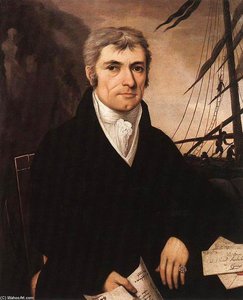
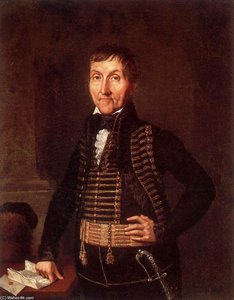
Rombauer János portréja

A 26 legnevesebbebb Rombauer János festmény, mindegyik egyedistens

Frissítve: november 2026 · rangsorolva népszerűségi pontszámunk alapján (minden mű keresései, látogatásai és megrendelései alapján) · 34 mű Rombauer János alkotása a katalógusunkban

Röviden

Portrait of P.Ushakov (1825) az a Rombauer János festmény, amely a legtöbb tekintetet felvonja; az eredeti mű a Hermitaeus-múzeum gyűjteményében található, Szentpétervár. Ezután a tekintet Portrait of A.F. Klokachev (1825) és Portrait of Major General I.I. Sabir (1814) elemre irányul. A Rombauer János 34 műve közül a katalógusunkban megtalálható 26 legnépesebb alkotás, melyeket az év, a múzeum és az örökévalóságának okai kísérnek.

1782 – 1849, Lőcse A legtöbb mű: Szlovák Nemzeti Galéria

A galéria szemével: Rombauer János legjobb 10 festménye

1
Portrait of P.Ushakov (1825) (1889) -ja Rombauer János

Portrait of P.Ushakov

1825 · Oil · Hermitaeus-múzeum, Szentpétervár

In this 1825 oil portrait, we encounter a man defined by the weight of his station. The subject, a high-ranking military officer, is presented in a formal, dignified manner that avoids the bombast often found in Napoleonic-era imagery. He sits with a calm, steady gaze, his blue eyes meeting the viewer with a subtle, composed expression. The composition is framed within an oval format, a choice that focuses our attention…

2
Portrait of A.F. Klokachev (1825) (1889) -ja Rombauer János

Portrait of A.F. Klokachev

1825 · Oil On Canvas · Hermitaeus-múzeum, Szentpétervár

A single light source carves the face of A.F. Klokachev from a heavy, dark void. The man sits in a three-quarter pose, his gaze directed toward the left, away from the viewer. He wears the rigid architecture of a military uniform, where the sharp lines of the collar meet the soft, organic curves of a human jaw. Deep shadows swallow the background, pushing the subject forward into a space of…

4
Portrait of a Lady in Black (1804) (1889) -ja Rombauer János

Portrait of a Lady in Black

1804 · Oil On Canvas · Vychodoslovenské Galéria, Košice

In this formal, three-quarter length portrait of a woman, titled Portrait of a Lady in Black, János Rombauer presents a study in quiet elegance. The composition is centered, focusing our attention on the subject's torso and head against a neutral, dark background. This arrangement creates a sense of stillness, drawing the eye directly to the sitter. The perspective is set at eye-level, establishing a direct engagement with the viewer that…

5
Madonna and Child (1800) (1889) -ja Rombauer János

Madonna and Child

1800 · Oil On Panel · Szlovák Nemzeti Galéria, Pozsony

In this vertical portrait, we encounter the Virgin Mary and the Christ Child in a moment of quiet, sacred stillness. The composition is centered and intimate, presenting the Madonna from the waist up as she holds her child. She is draped in a voluminous red mantle lined with green, which rests over a blue tunic. The child, partially wrapped in a pinkish-red cloth, faces the viewer directly. There is a…

6
Young Man in a Landscape (1804) (1889) -ja Rombauer János

Young Man in a Landscape

1804 · Oil On Canvas · Vychodoslovenské Galéria, Košice

A gentleman sits in repose, positioned slightly off-center against a tranquil backdrop of water and rolling hills. The composition places the figure in the immediate foreground, establishing a sense of intimacy between the subject and the viewer. Soft, diffused light suggests an overcast sky, casting a gentle glow over the scene and minimizing harsh shadows. The landscape recedes through atmospheric perspective, where distant mountains and trees appear paler and less…

7
Salvator Mundi (1810) (1889) -ja Rombauer János

Salvator Mundi

1810 · Oil On Panel · Szlovák Nemzeti Galéria, Pozsony

The figure of Christ emerges from a luminous, gilded background, appearing to exist in a space beyond the reach of earthly shadows. He is presented from the waist up, a formal and reverent portrait that commands immediate attention through its centered, frontal composition. A deep blue mantle drapes over his shoulders, contrasting sharply against a vibrant red tunic that catches the light. His right hand is raised in a gesture…

8
Saint John the Evangelist (1810) (1889) -ja Rombauer János

Saint John the Evangelist

1810 · Oil On Panel · Szlovák Nemzeti Galéria, Pozsony

This religious oil painting is titled Saint John the Evangelist and was executed by the artist János Rombauer. The work dates to 1810. The subject is depicted in a moment of divine inspiration, positioned in a way that directs the viewer's attention toward the source of his contemplation.

9
Saint (1810) (1889) -ja Rombauer János

Saint

1810 · Tempera On Panel · Szlovák Nemzeti Galéria, Pozsony

The air in the room seems to thicken with the weight of gold as the figure emerges from a shimmering, embossed background. An elderly man, marked by a soft grey beard and hair, gazes outward with a steady, quiet authority. He is a man of high station, perhaps a bishop, draped in deep blue garments that contrast sharply against the warmth of his pink stole. Red crosses adorn the fabric,…

10
Portrait of Countess Barkóczy (1820) (1889) -ja Rombauer János

Portrait of Countess Barkóczy

1820 · Oil On Canvas · Szlovák Nemzeti Galéria, Pozsony

The Countess Barkóczy sits in a quiet, dignified stillness, her presence commanding the space through a soft, directional light that spills from the upper left. She is a vision of 1820s opulence, her figure emerging from a dark, undifferentiated background that forces the viewer to focus entirely on her composed expression and the sheer wealth of her attire. A heavy, midnight blue bodice anchors the composition, its texture suggesting the…

Rombauer János híres festményei, 11 és 26 között

A témák, amelyek Rombauer János figyelmét meghúzták

A négy leggyakorobban előforduló téma ebben az eredeti művekben, mindegyik a legkiválóbb példájával.

A műemlékek, amelyek Rombauer János eredeti műveit őrzik

A 7 olyan múzeum, amely a legtöbb ezen az oldalon szereplő festményet őrzi.

Múzeum Város Rombauer János művei Ebből a listából származó festmények
Szlovák Nemzeti Galéria, PozsonySzlovák Nemzeti Galéria Pozsony 12 Madonna and Child, Salvator Mundi, Saint John the Evangelist
Vychodoslovenské Galéria, KošiceVychodoslovenské Galéria Košice 4 Portrait of a Lady in Black, Young Man in a Landscape, Portrait of a Young Lady in Pink Dress with a Rose
Hermitaeus-múzeum, SzentpétervárHermitaeus-múzeum Szentpétervár 3 Portrait of P.Ushakov, Portrait of A.F. Klokachev, Portrait of Major General I.I. Sabir
Slovenská Národná Galéria, BratislavaSlovenská Národná Galéria Bratislava 1 Portrait of Sámuel Steinhübl, Merchant of Eperjes
Magyar Tudományos Akadémia, BudapestMagyar Tudományos Akadémia Budapest 1 Portrait of Historian Ignacius Aurelius Fessler
Déri Múzeum, DebrecenDéri Múzeum Debrecen 1 Portrait of a Man
Mestská Galeria, KošiceMestská Galeria Košice 1 Spring (Flora, May)

Rombauer János évtizedekig: egy egyedi eredeti mű minden évtizedben

Művek évtizedenként

Váassz ki egy évtizedet, hogy megnézhesd az azt meghatározó eredetiműveket.

Rombauer János festményei: kérdések a galériának

Mi a leghíresebb műve Rombauer Jánosnek?Fedje fel a választ

Portrait of P.Ushakov (1825), Hermitaeus-múzeum, Szentpétervár. Ezután Portrait of A.F. Klokachev (1825) és Portrait of Major General I.I. Sabir (1814) következik.

Milyen életkorában alkotta meg Rombauer János a(z) Portrait of P.Ushakov műszt?Fedje fel a választ

43 éves: Portrait of P.Ushakov 1825-ből származik, Rombauer János pedig 1782-ben született.

Melyik tíz festménye Rombauer János a leghíresebb?Fedje fel a választ

Portrait of P.Ushakov, Portrait of A.F. Klokachev, Portrait of Major General I.I. Sabir, Portrait of a Lady in Black, Madonna and Child, Young Man in a Landscape, Salvator Mundi, Saint John the Evangelist, Saint és Portrait of Countess Barkóczy. A fenti rangsor a művek évszamarát és a múzeumát jelzi.

Hány mű alkotása ismert Rombauer János nevében?Fedje fel a választ

Katalógusunkban 34 mű található Rombauer János alkotótól, 1800 és 1846 év közötti időszakból.

Hol tekinthetők meg a leghíresebb Rombauer János eredetijeit?Fedje fel a választ

Leginkább Szlovák Nemzeti Galéria (Pozsony), Vychodoslovenské Galéria (Košice) és Hermitaeus-múzeum (Szentpétervár) található. A fenti múzeumi táblázatban mindegyik felsorolásra került.

Melyik időszakban alkotta Rombauer János a leghíresebb festményeit?Fedje fel a választ

1820s alatt: a jelen laphonon található 26 műből 11 készült ebben az időszakban, köztük Portrait of P.Ushakov.

Melyik híres Rombauer János festmény a legkorábbi, és melyik a legutóbb készült?Fedje fel a választ

Ezen az oldalon a leghitelesebb Madonna and Child (1800), a legutóbbi pedig Portrait of a Man (1846).

Milyen témakörket kedvelt Rombauer János?Fedje fel a választ

Man (9), Woman (8) és Dark background (6), a jelen oldalon található 26 műművészeti alkotás között.

Milyen anyagokkal festett leggyakrabban Rombauer János?Fedje fel a választ

Oil On Canvas, a jelen oldalon található 26 műből 13 darab esetén.

Milyen Rombauer János eredeti műveket láthatok a Szlovák Nemzeti Galéria kiállításaiban?Fedje fel a választ

Madonna and Child, Salvator Mundi és Saint John the Evangelist: a Szlovák Nemzeti Galéria, Pozsony 12 művet őrzi ezen az oldalon.

Rombauer János: a művész portréja

The Enduring Vision of János Rombauer: A Portraitist of Hungarian Nobility

János Rombauer (1782-1849) stands as a pivotal figure in the artistic landscape of 18th and early 19th century Hungary, a master portraitist whose meticulous detail and subtle psychological insight continue to captivate viewers today. Born in Lőcse (Levoča), Slovakia – then part of the Kingdom of Hungary – Rombauer’s life was inextricably linked to the shifting political currents of Central Europe, shaping both his artistic development and his career trajectory. His early years were marked by a family rooted in craftsmanship; his father, David Rombauer, was a skilled woodcarver, instilling in János an appreciation for precision and material quality that would later inform his painting style. While formal training remained elusive, Rombauer’s talent quickly emerged, leading him to establish himself as a portraitist in Pest (Budapest) by the age of nineteen. Rombauer's artistic journey took a dramatic turn when he encountered Józef August Iliński, a Polish aristocrat serving the Russian government. Impressed by Rombauer’s burgeoning abilities, Iliński invited him to his estate near Romaniv, Ukraine, offering an unparalleled opportunity to hone his craft within the opulent circles of European nobility. This period in Saint Petersburg proved transformative, exposing Rombauer to the refined tastes and artistic conventions of Imperial Russia. He became a member of the Imperial Academy of Arts, participating in prestigious exhibitions and absorbing influences from renowned artists like Vladimir Borovikovsky and Orest Kiprensky. The influence of these masters is particularly evident in his later portraits – a subtle blending of classical formality with a heightened sense of psychological realism.

A Portraiture of Hungarian Society: Themes and Techniques

Rombauer’s oeuvre is overwhelmingly defined by portraiture, yet it transcends mere likeness to offer profound glimpses into the social fabric and individual personalities of his subjects. He meticulously captured the nuances of aristocratic life – the leisurely pursuits, the intricate rituals, and the subtle power dynamics that governed Hungarian society. His portraits frequently depict members of the nobility, including landowners, merchants like the prominent Eperjes Merchant Art, and even visiting dignitaries from Russia. His ability to convey character through carefully observed details—the angle of a hand, the expression in an eye, the drape of clothing—is remarkable. Technically, Rombauer’s work is characterized by a meticulous attention to detail and a masterful use of light and shadow. He employed a refined technique reminiscent of the Biedermeier style – a popular artistic movement emphasizing realism and intimacy. His portraits are often executed in miniature format, requiring extraordinary precision and control. The delicate rendering of fabrics, the subtle gradations of color, and the meticulous portrayal of facial features all contribute to the overall sense of realism and immediacy. The “English Garden in the Csáky Castle at Hotkóc” exemplifies this skill, showcasing a grid-like composition filled with miniature Baroque landscapes, demonstrating his ability to create complex scenes within a limited space.

Key Works and Notable Commissions

Among Rombauer’s most celebrated works are “Spring (Flora, May)” – a vibrant depiction of springtime in bloom – and “Young Man in a Landscape,” which captures the elegance and leisure of the Hungarian aristocracy. His portrait of Saint John the Baptist, housed at the Slovak National Gallery, is considered one of his finest achievements, demonstrating his mastery of composition and psychological insight. The meticulous detail with which he portrays the figure’s contemplative expression and the symbolic significance of the landscape surrounding him speaks volumes about Rombauer's artistic vision. He also undertook numerous commissions for Hungarian nobility, including portraits of faculty members at the Lutheran College in Pest, further solidifying his position as a leading portraitist within the kingdom.

Legacy and Historical Significance

János Rombauer’s legacy extends beyond his individual artistic achievements. He played a crucial role in shaping the development of Hungarian portraiture during a period of significant social and political change. His work provides invaluable insights into the lives, customs, and values of Hungarian nobility throughout the early 19th century. His portraits are not merely representations of individuals; they are windows into a bygone era, offering a tangible connection to Hungary’s rich cultural heritage. Today, his paintings reside in prestigious collections across Europe, including the Hermitage Museum and the Tretyakov Gallery, ensuring that his enduring vision continues to inspire and captivate audiences worldwide. His influence can still be felt in contemporary portraiture, demonstrating the lasting impact of this remarkable artist.

Further Resources