Jan Baptist Weenix portréja

A 78 legnevezesebb Jan Baptist Weenix festmény, egy galériaválaszték

Frissítve: november 2026 · rangsorolva népszerűségi pontszámunk alapján (minden mű keresései, látogatásai és megrendelései alapján) · 86 mű Jan Baptist Weenix alkotása a katalógusunkban

Röviden

Jan Baptist Weenix hagyatékából a leghíresebb alkotás Tobit, asleep under a vine, is blinded (1642), amely a Rotterdam városi Museum Boijmans Van Beuningen gyűjteményében található. Röviddel ezután követik őket Italian landscape with shelter and antiques ruins (1658) és Still Life with a Dead Swan (1651). Katalógusunkban 86 mű található Jan Baptist Weenix alkotótól; a galéria megőrizte a világ által leginkább csodált 78 darabot, melyeket a dátummal, a múzeummal és a történetükkel együtt mutatunk be.

1621 – 1659, Amszterdam Dutch golden age A legtöbb mű: Bavári Állami Festırménygyűjtemények

Jan Baptist Weenix legjobb 10 festménye: a galéria válogatása

1
Tobit, asleep under a vine, is blinded (1642) (1889) -ja Jan Baptist Weenix

Tobit, asleep under a vine, is blinded

1642 · Oil On Canvas · Museum Boijmans Van Beuningen, Rotterdam

A single man reclines in the heavy shade of a vine. He is Tobit, lost to a deep, unsuspecting sleep. The air around him feels thick, weighted by the muted tones of ochre and forest green. Sunlight does not flood this scene; instead, it pierces through the foliage in sharp, controlled beams, illuminating the textures of his slumped posture and the coarse fabric of his clothing. He rests amidst a…

2
Italian landscape with shelter and antiques ruins (1658) (1889) -ja Jan Baptist Weenix

Italian landscape with shelter and antiques ruins

1658 · Oil On Panel · Mauritshuis, Haag

The oil on panel painting titled Italian landscape with shelter and antiques ruins was executed by the artist Jan Baptist Weenix in 1658. This landscape painting depicts a specific pastoral setting within an Italianate environment. The scene is populated by a group of peasants and various livestock, including sheep and goats. These figures are situated near a rustic cottage and several ancient architectural ruins that occupy the landscape.

3
Still Life with a Dead Swan (1651) (1889) -ja Jan Baptist Weenix

Still Life with a Dead Swan

1651 · Oil On Canvas · Detroit Institute of Arts, Detroit

The painting Still Life with a Dead Swan by Jan Baptist Weenix captures a heavy, silent moment of the hunt. Created about 1651, the work presents a collection of fallen game as a trophy of the chase. A white swan rests at the center, its pale plumage a stark contrast to the darker forms surrounding it. This central figure is accompanied by a turkey, two partridges, and a small finch,…

4
Tobit Sleeping Under the Vine (1641) (1889) -ja Jan Baptist Weenix

Tobit Sleeping Under the Vine

1641 · Oil · Museum Catharijneconvent, Utrecht

In this work, titled Tobit Sleeping Under the Vine, we encounter a significant piece by the Dutch Golden Age painter Jan Baptist Weenix. Created around 1642, the painting belongs to the Baroque period, a time when the interplay of light and shadow began to define the dramatic tension of Northern European art. Weenix, born in Amsterdam, Netherlands, brought a disciplined approach to his subjects, often blending meticulous observation with a…

5
The Scissors Grinder (1641) (1889) -ja Jan Baptist Weenix

The Scissors Grinder

The air feels heavy with the scent of damp stone and the rhythmic, metallic scrape of steel against stone. Under a vast, expansive sky, a group of figures gathers within the skeletal remains of a classical ruin. A man leans into his work, operating a grinding wheel that cuts through the quietude of the scene. Beside him, a woman sits in repose, while a small child stands close by, watching…

6
Hunters Near Ruins (1648) (1889) -ja Jan Baptist Weenix

Hunters Near Ruins

1648 · Oil On Canvas · Cleveland Museum of Art, Cleveland

Hunters Near Ruins is an oil on canvas painting by Jan Baptist Weenix. The work is dated 1648. This piece belongs to the Dutch Golden Age, a period during which the artist developed a specific approach to landscape and human figures.

7
Portrait of René Descartes (1647) (1889) -ja Jan Baptist Weenix

Portrait of René Descartes

1647 · Oil · Centraal Museum, Utrecht

In this 1647 oil painting, Jan Baptist Weenix captures the French philosopher René Descartes. The subject appears in a medium close-up, his presence defined by a heavy, somber stillness. He is an elderly man, his face marked by the weight of thought and the passage of years. A bright white collar cuts through the darkness of his attire, framing a pale countenance that emerges from a deep, umber shadow.

8
Monument at a Harbour (1648) (1889) -ja Jan Baptist Weenix

Monument at a Harbour

1648 · Oil · Statens Museum for Kunst, Koppenhága

The composition relies on strong vertical elements, primarily through imposing columns and a central, highly ornate pedestal topped with a large urn. These structures anchor the scene, providing a sense of scale against the scattered human figures in the foreground and middle ground. Through a use of deep recession, the perspective draws the eye past a colonnade toward a distant, hazy horizon where the masts of ships are visible.

9
Harbour with Antique Ruins (1648) (1889) -ja Jan Baptist Weenix

Harbour with Antique Ruins

1648 · Oil On Canvas · Nationalmuseum, Stockholm

The scene unfolds in 1648, a moment captured in the oil on canvas known as Harbour with Antique Ruins. This work belongs to the hand of Jan Baptist Weenix, an artist who brings the weight of history into a living, breathing maritime setting. The painting presents a world where the weathered stone of classical antiquity meets the constant, rhythmic movement of a working harbor. It is a vision of a…

10
The Angel Raphael Leaving Tobias's Family (1648) (1889) -ja Jan Baptist Weenix

The Angel Raphael Leaving Tobias's Family

1648 · Oil · Nationalmuseum, Stockholm

In "The Angel Raphael Leaving Tobias's Family" by Jan Baptist Weenix, a divine departure unfolds with sudden, celestial energy. The scene captures the exact moment the Angel Raphael ascends toward the heavens, leaving the family below in a state of profound awe and reverence. A powerful diagonal movement pulls the eye from the lower left foreground upward toward the upper left, where the angelic figure climbs into a swirling formation…

A Jan Baptist Weenix válogatás folytatódik: 11 – 78

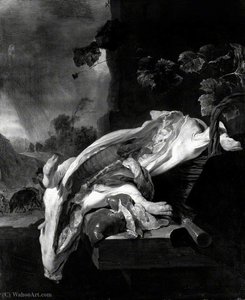
11vegetable-sellers at the house-door, 5 figures (1646) (1889) -ja Jan Baptist Weenixvegetable-sellers at the house-door, 5 figures1646 12caravane near the shore (1646) (1889) -ja Jan Baptist Weenixcaravane near the shore1646 13Mother and Child (1647) (1889) -ja Jan Baptist WeenixMother and Child1647 14Circumcision of Moses' son (1640) (1889) -ja Jan Baptist WeenixCircumcision of Moses' son1640 · Varsói Nemzeti Múzeum 15Still Life with Game, Hunter and Two Dogs (1652) (1889) -ja Jan Baptist WeenixStill Life with Game, Hunter and Two Dogs1652 · Bavári Állami Festırménygyűjtemények 16Butterfly Dog and Dead Bird (1649) (1889) -ja Jan Baptist WeenixButterfly Dog and Dead Bird1649 · Museum Mayer van den Bergh 17Pleasure boating (1650) (1889) -ja Jan Baptist WeenixPleasure boating1650 18The Sleeping Shepherdess (1658) (1889) -ja Jan Baptist WeenixThe Sleeping Shepherdess1658 · National Gallery of Ireland 19Roman Tinker (1656) (1889) -ja Jan Baptist WeenixRoman Tinker1656 · Städel Múzeum 20The love letter (1650) (1889) -ja Jan Baptist WeenixThe love letter1650 · National Museum of Art, Architecture and Design 21Italian Harbour (1651) (1889) -ja Jan Baptist WeenixItalian Harbour1651 · Hermitaeus-múzeum 22Italian Peasants among Ruins (1650) (1889) -ja Jan Baptist WeenixItalian Peasants among Ruins1650 · Detroit Institute of Arts 23Sleeping girl (1656) (1889) -ja Jan Baptist WeenixSleeping girl1656 · Bavári Állami Festırménygyűjtemények 24Rest on the Flight into Egypt (1657) (1889) -ja Jan Baptist WeenixRest on the Flight into Egypt1657 · Museum Boijmans Van Beuningen 25Merry Company on a Ferry (1649) (1889) -ja Jan Baptist WeenixMerry Company on a Ferry1649 · Museum Gouda 26Battle at the foot of the mountain. (1650) (1889) -ja Jan Baptist WeenixBattle at the foot of the mountain.1650 · Varsói Nemzeti Múzeum 27Christina Lepper de Kempenaer and Her Children (1653) (1889) -ja Jan Baptist WeenixChristina Lepper de Kempenaer and Her Children1653 28Italian port scene, 1649 (1649) (1889) -ja Jan Baptist WeenixItalian port scene, 16491649 · Centraal Museum 29Italian Landscape with Horsemen by a Spring (1657) (1889) -ja Jan Baptist WeenixItalian Landscape with Horsemen by a Spring1657 · Centraal Museum 30Before the walls of Rome (1650) (1889) -ja Jan Baptist WeenixBefore the walls of Rome1650 · National Museum in Wrocław 31Portrait of a man with a letter (1650) (1889) -ja Jan Baptist WeenixPortrait of a man with a letter1650 · Agnes Etherington Art Center 32A Landscape with a Ford (1660) (1889) -ja Jan Baptist WeenixA Landscape with a Ford1660 · Regional Gallery in Liberec 33In the Campagna (1669) (1889) -ja Jan Baptist WeenixIn the Campagna1669 · National Gallery of Ireland 34Dead Fowl Being Eaten by a Cat (1653) (1889) -ja Jan Baptist WeenixDead Fowl Being Eaten by a Cat1653 · Städel Múzeum 35Departure of an Oriental Entourage (1647) (1889) -ja Jan Baptist WeenixDeparture of an Oriental Entourage1647 · Louvre Múzeum 36Display of Dead Game (1641) (1889) -ja Jan Baptist WeenixDisplay of Dead Game1641 · Petit Palais 37Dead Game (1641) (1889) -ja Jan Baptist WeenixDead Game1641 38River Landscape with a Ferry (1650) (1889) -ja Jan Baptist WeenixRiver Landscape with a Ferry1650 · Montreal Museum of Fine Arts 39Still Life with Dead Game and Poultry (1656) (1889) -ja Jan Baptist WeenixStill Life with Dead Game and Poultry1656 · Centraal Museum 40Still Life with Fowl (1650) (1889) -ja Jan Baptist WeenixStill Life with Fowl1650 · Ghent Művészeti Múzeum (MSK) 41Marine with a Venetian Bucintoro (1650) (1889) -ja Jan Baptist WeenixMarine with a Venetian Bucintoro1650 · Staatliche Kunsthalle Karlsruhe 42The Dutch Ambassador on his Way to Isfahan, Jan Baptist Weenix, 1653 - 1659 (1659) (1889) -ja Jan Baptist WeenixThe Dutch Ambassador on his Way to Isfahan, Jan Baptist Weenix, 1653 - 16591659 · Rijksmuseum 43After the Hunt, Jan Baptist Weenix, c. 1656 (1656) (1889) -ja Jan Baptist WeenixAfter the Hunt, Jan Baptist Weenix, c. 16561656 · Rijksmuseum 44Still Life with White Mouse (1680) (1889) -ja Jan Baptist WeenixStill Life with White Mouse1680 · Ernest Zmeták Művészeti Galéria 45Still Life with Game (1889) -ja Jan Baptist WeenixStill Life with GameHarvard Art Museums 46The Ford in the River (1647) (1889) -ja Jan Baptist WeenixThe Ford in the River1647 · Hermitaeus-múzeum 47Harbor View with Rider in Oriental Dress, (1889) -ja Jan Baptist WeenixHarbor View with Rider in Oriental Dress,Groninger Museum 48The Holy Women at the Tomb (1889) -ja Jan Baptist WeenixThe Holy Women at the TombNational Gallery of Ireland 49An Italian Seaport (1889) -ja Jan Baptist WeenixAn Italian SeaportAntwerpeni Királyi Szépművészeti Múzeum 50Architectural interior with foreign shippers, ruins and a shipyard beyond (1889) -ja Jan Baptist WeenixArchitectural interior with foreign shippers, ruins and a shipyard beyond 51Study of a sheep (1889) -ja Jan Baptist WeenixStudy of a sheep 52A pig's carcase (1889) -ja Jan Baptist WeenixA pig's carcase 53The Tinker and His Dog (1889) -ja Jan Baptist WeenixThe Tinker and His Dog 54Landscape with Peasants and Animals (1889) -ja Jan Baptist WeenixLandscape with Peasants and Animals 55Dead Partridge (1650) (1889) -ja Jan Baptist WeenixDead Partridge1650 · Mauritshuis 56Goat Lying Down, Jan Baptist Weenix, 1645 - 1660 (1660) (1889) -ja Jan Baptist WeenixGoat Lying Down, Jan Baptist Weenix, 1645 - 16601660 · Rijksmuseum 57A Dog and a Cat near a partially disembowelled Deer, Jan Baptist Weenix, 1645 - 1660 (1660) (1889) -ja Jan Baptist WeenixA Dog and a Cat near a partially disembowelled Deer, Jan Baptist Weenix, 1645 - 16601660 · Rijksmuseum 58Still Life with Dead Poultry, Lidded Pitcher and Passglas (1889) -ja Jan Baptist WeenixStill Life with Dead Poultry, Lidded Pitcher and PassglasBavári Állami Festırménygyűjtemények 59Game-piece (1889) -ja Jan Baptist WeenixGame-pieceNational Gallery of Ireland 60Dead game and hunting tackle in landscape (1889) -ja Jan Baptist WeenixDead game and hunting tackle in landscape 61Hound with a Joint of Meat and a Cat Looking on (1889) -ja Jan Baptist WeenixHound with a Joint of Meat and a Cat Looking on 62Bouquet of flowers (1889) -ja Jan Baptist WeenixBouquet of flowersGemäldegalerie 63Shipping in Harbour (1889) -ja Jan Baptist WeenixShipping in Harbour 64Herons and Lapwings (1889) -ja Jan Baptist WeenixHerons and Lapwings 65Still Life of Dead Game in a Landscape with a Huntsman (1889) -ja Jan Baptist WeenixStill Life of Dead Game in a Landscape with a Huntsman 66An italian port scene (1889) -ja Jan Baptist WeenixAn italian port scene 67Shepherds and Flocks among Classical Ruins (1889) -ja Jan Baptist WeenixShepherds and Flocks among Classical Ruins 68A Coast Scene with Classical Ruins (1889) -ja Jan Baptist WeenixA Coast Scene with Classical RuinsWallace Collection 69Still Life with Dead Game (1889) -ja Jan Baptist WeenixStill Life with Dead Game 70Hounds and an Owl with Dead Birds and Sculptures in a Landscape (1889) -ja Jan Baptist WeenixHounds and an Owl with Dead Birds and Sculptures in a Landscape 71Still Life with Dead Birds (1889) -ja Jan Baptist WeenixStill Life with Dead Birds 72Family in a Mediterranean Seaport (1889) -ja Jan Baptist WeenixFamily in a Mediterranean Seaport 73Figures near a Seaport (1889) -ja Jan Baptist WeenixFigures near a SeaportScottish National Gallery 74A Huntsman cutting up a Dead Deer, with Two Deerhounds (1889) -ja Jan Baptist WeenixA Huntsman cutting up a Dead Deer, with Two DeerhoundsNational Gallery 75Ancient Ruins (1889) -ja Jan Baptist WeenixAncient RuinsSzépművészeti Múzeum 76Figures among ruins (1889) -ja Jan Baptist WeenixFigures among ruinsThe Kremer Collection 77Ancient Ruins (detail) (1889) -ja Jan Baptist WeenixAncient Ruins (detail)Szépművészeti Múzeum 78Girl as Shepherdess (1650) (1889) -ja Jan Baptist WeenixGirl as Shepherdess1650 · Musée de Picardie

Jan Baptist Weenix híres festményei, korszakonként

A témák, amelyek Jan Baptist Weenix figyelmét meghúzták

A négy leggyakorobban előforduló téma ebben az eredeti művekben, mindegyik a legkiválóbb példájával.

A műemlékek, amelyek Jan Baptist Weenix eredeti műveit őrzik

A 8 olyan múzeum, amely a legtöbb ezen az oldalon szereplő festményet őrzi.

Múzeum Város Jan Baptist Weenix művei Ebből a listából származó festmények
Bavári Állami Festırménygyűjtemények, MunchenBavári Állami Festırménygyűjtemények Munchen 4 The Scissors Grinder, Still Life with Game, Hunter and Two Dogs, Sleeping girl
Centraal Museum, UtrechtCentraal Museum Utrecht 4 Portrait of René Descartes, Italian port scene, 1649, Italian Landscape with Horsemen by a Spring
National Gallery of Ireland, DublinNational Gallery of Ireland Dublin 4 The Sleeping Shepherdess, In the Campagna, The Holy Women at the Tomb
Rijksmuseum, AmsterdamRijksmuseum Amsterdam 4 The Dutch Ambassador on his Way to Isfahan, Jan Baptist Weenix, 1653 - 1659, After the Hunt, Jan Baptist Weenix, c. 1656, Goat Lying Down, Jan Baptist Weenix, 1645 - 1660
Museum Boijmans Van Beuningen, RotterdamMuseum Boijmans Van Beuningen Rotterdam 2 Tobit, asleep under a vine, is blinded, Rest on the Flight into Egypt
Mauritshuis, HaagMauritshuis Haag 2 Italian landscape with shelter and antiques ruins, Dead Partridge
Detroit Institute of Arts, DetroitDetroit Institute of Arts Detroit 2 Still Life with a Dead Swan, Italian Peasants among Ruins
Nationalmuseum, StockholmNationalmuseum Stockholm 2 Harbour with Antique Ruins, The Angel Raphael Leaving Tobias's Family

Jan Baptist Weenix év évtizedéja: az egyes éveket meghatározó eredeti művek

1640-től 1659-ig, Jan Baptist Weenix 20 év alatt alkotott: a válogatás az évtizedek során megvalósult hosszú pályát követi, a legkiváltóbb eredeti művei through.

Művek évszáma szerint

Váasszon egy évet az eredetiek megtekintéséhez.

Gyűjtői kérdések Jan Baptist Weenix festményeivel kapcsolatban

Melyik művel a(z) Jan Baptist Weenix a leghíresebb?Fedje fel a választ

Tobit, asleep under a vine, is blinded (1642), Museum Boijmans Van Beuningen, Rotterdam. Ezután Italian landscape with shelter and antiques ruins (1658) és Still Life with a Dead Swan (1651) következik.

Hány éves volt Jan Baptist Weenix, amikor a Tobit, asleep under a vine, is blinded készült?Fedje fel a választ

21 éves: Tobit, asleep under a vine, is blinded 1642-ből származik, Jan Baptist Weenix pedig 1621-ben született.

Melyek a tíz leghíresebb Jan Baptist Weenix festmény?Fedje fel a választ

Tobit, asleep under a vine, is blinded, Italian landscape with shelter and antiques ruins, Still Life with a Dead Swan, Tobit Sleeping Under the Vine, The Scissors Grinder, Hunters Near Ruins, Portrait of René Descartes, Monument at a Harbour, Harbour with Antique Ruins és The Angel Raphael Leaving Tobias's Family. A fenti rangsor a művek évszamarát és a múzeumát jelzi.

Hány festményet hagyott hátra Jan Baptist Weenix?Fedje fel a választ

Katalógusunkban 86 mű található Jan Baptist Weenix alkotótól, 1640 és 1659 év közötti időszakból.

Mely múzeumokban állnak Jan Baptist Weenix remekművei?Fedje fel a választ

Leginkább Bavári Állami Festırménygyűjtemények (Munchen), Centraal Museum (Utrecht) és National Gallery of Ireland (Dublin) található. A fenti múzeumi táblázatban mindegyik felsorolásra került.

Mely években festette Jan Baptist Weenix leghíresebb műveit?Fedje fel a választ

1650 alatt: a jelen laphonon található 78 műből 11 készült ebben az időszakban, köztük Pleasure boating.

Mikszétek az első és az utolsó híres eredeti műve a(z) Jan Baptist Weenix alkotótól?Fedje fel a választ

Ezen az oldalon a leghitelesebb Circumcision of Moses' son (1640), a legutóbbi pedig The Dutch Ambassador on his Way to Isfahan, Jan Baptist Weenix, 1653 - 1659 (1659).

Milyen témaköröket választott leggyakrabban Jan Baptist Weenix?Fedje fel a választ

Landscape (18), Ruins (17) és Sky (13), a jelen oldalon található 78 műművészeti alkotás között.

Melyik technikát alkalmazta leggyakrabban Jan Baptist Weenix?Fedje fel a választ

Oil On Canvas, a jelen oldalon található 78 műből 30 darab esetén.

Mely művészeti irányba tartozik Jan Baptist Weenix?Fedje fel a választ

Dutch golden age és Baroque, ezen az oldalon található eredetiek alapján.

Mely Jan Baptist Weenix művei láthatóak a Bavári Állami Festırménygyűjtemények kiállتításán?Fedje fel a választ

The Scissors Grinder, Still Life with Game, Hunter and Two Dogs és Sleeping girl: a Bavári Állami Festırménygyűjtemények, Munchen 4 művet őrzi ezen az oldalon.

Jan Baptist Weenix: életmű és életút

A holland aranykor visionáriusa

Jan Baptist Weenix egyedülálló alakként áll ki a holland aranykor történetéből, híres hírnevet szerzett aprólékos megfigyelőkészségének és képzelő erejének különleges ötvözetéről. Bár művészeti terméksége viszonylag szerény volt olyan kortársaihoz képest, mint Rembrandt vagy Vermeer, Weenix hozzájárulása a holland művészettörténethez vitathatatlan – különösen az emberi alakokkal átszőtt olasz tájak felfedezése, amely stilisztikai precedenst teremtett, amely a következő generációk egész életében visszhangzott. 1621-ben született Amsterdam közelében, a nyüzsgő kikötő mellett; Weenix épületészek családjából származott, egy olyan családi örökségből, amely valószínűleg formálta korai éveit az akkori intellektuális és strukturális virágzás közepette.

Bár személyes nehézségekkel is kellett szembennie – a feljegyzések szerint egy betegség miatt beszéds kesulitanéssel küzdött –, Weenix mély szenvedélye volt az irodalom és a művészet, amit édesanyja támogatott, aki aktívan szervezte számára az apprendságságot Jan Micker, Rembrandt sógora alatt. Ez a korai képzés fegyelmezett rajzi és megfigyelési módszert tanított neki, amely később művészetének jellegzetessé vált. Készségeit Utrechtben továbbfejlesztette Abraham Bloemaert irányítása alatt, majd Amsterdamba tért, hogy Claes Cornélisz Moeyaert mellett tanuljon, ezzel is megszilárdítva alapokat a holland művészet aktuális áramlatain.

Utazás a fény és a táj világában

Weenix pályafutása alapjaiban változott meg utazásai során, legfőképpen 1643-ban tett római utazása révén, Nicolaes Pieterszoon Berchem társaságában. Ez az kirándulás lehetővé tette számára, hogy találkozzon a Bentvueghels céh vibráló intellektuális és művészeti környezetével, egy olyan élmény, amely szélesebb stilisztikai repertoár felé terelte. Rómában felvette az olasz stílust, amelyet a meleg, aranyló fény és a klasszikus tájak jellemznek, amelyek gyönyörű kontrasztot alkottak a hagyományos holland festészet hűvösebb, komolyabb tónusaihoz képest. A római hatás ebben az időszakban lehetővé tette számára, hogy mesterévé váljon az „olaszos tájnak”, ahol Dél-Európa vadregényes szépsége észak-európai lencsén keresztül született meg újra.

Ebben az időszakban alkotásai gyakran ötvözték a klasszikus környezetek monumentális erejét az intimebb, emberi elemekkel. Legyen szó a tengeri kereskedelemről suttogó kikötői jelenetekről vagy az öröklegességet sugalló hatalmas tájképekről, Weenix egyedülálló képességgel rendelkezett egy hely hangulatának megörökítésére. Mesteressége nem korlátozódott a tágas horizontokra; ugyanilyen ügyesen képes volt az élet csendes, gyakran húsba vágó valóságát is átadni még tĩnhaszt (still life) művein keresztül. Az vadászvad és az állatok ábrázolása megdöbbentő realizmusról tett tanúskodást, ahol minden textúra – a vadászkutya durva szőrzetétől a tollak finom fényességéig – lélegzetelző pontossággal készült.

A realizmus és az alkotóiesség öröksége

Jan Baptist Weenix jelentőssége abban rejlik, hogy képes volt áthidalni a szakadékot a holland hagyomány nyers realizmusa és az olasz stílus idealizált szépsége között. Sokoldalúsága lehetővé tette számára, hogy változatos témák között mozogjon, a A vadászat után című művében található drámai feszültségtől kezdve állatstudijainak csendes, szinte melankolikus intenzitásáig. Ecsetje révén a néző egy olyan világba hívatja magát, ahol a megfigyelt természet és a képzelt klasszikus múlt határai gyönyörűen elmosódnak.

Ahogy művész életére és munkásságára visszagondolunk, néhány kulcsfontosságú elem határozza meg tartós jelentőségét:

  • Stilisztikai innováció: Ő volt a pionér, aki az olasz tájképi elemeket integrálta a hollandi hagyományba, új vizuális nyelvet teremtve kortársai számára.
  • Fegyelmezett képzése rendkívüli részletgazdagságot teszt lehetővé mind a nagysz scale tájképeken, mind az intimebb tĩnhaszt művekben.
  • Sokoldalúság: Képes volt zökkenőmentesen váltani a kikötői jelenetek, a vadászati motívumok és az állatportrék között, ami ritka tehetségességét bizonyítja.
  • Történelmi hatás: A Bentvueghels tagjaként segített elősegíteni a művészeti ötletek nemzetközi cserefolyamatát, amely meghatározta a 17. századi művészeti világot.

Bár élete viszonylag rövid volt, 1661-ben véget téve, Jan Baptist Weenix nyoma továbbra is látható a tájképi festészet fejlődésében. Megtanította a jövő generációinak, hogy ne csak egy határozt mint a horizont, hanem mint egy vászon a fénynek, a történelmi emlékezetnek és az emberi érzelmeknek.