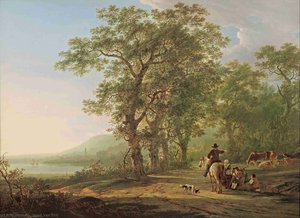
Jacob Van Strij portréja

A 39 legnevesebbebb Jacob Van Strij festmény, mindegyik egyedistens

Frissítve: november 2026 · rangsorolva népszerűségi pontszámunk alapján (minden mű keresései, látogatásai és megrendelései alapján) · 41 mű Jacob Van Strij alkotása a katalógusunkban

Röviden

A rotterdami kambra tartozó holland keleti indiai vállalatja (VOC) üdvözli az egyik indiamustát és egy holland savaşihajót Hellevoetsluis bólyozatán. az a Jacob Van Strij festmény, amely a legtöbb tekintetet felvonja; az eredeti mű a Maritime Museum Rotterdam gyűjteményében található, Rotterdam. Ezután a tekintet Landscape with Cattle (1800) és Dutch River landscape with cows (1781) elemre irányul. A Jacob Van Strij 41 műve közül a katalógusunkban megtalálható 39 legnépesebb alkotás, melyeket az év, a múzeum és az örökévalóságának okai kísérnek.

1756 – 1815, Dordrecht A legtöbb mű: Dordrechts Museum

A galéria szemével: Jacob Van Strij legjobb 10 festménye

1
A rotterdami kambra tartozó holland keleti indiai vállalatja (VOC) üdvözli az egyik indiamustát és egy holland savaşihajót Hellevoetsluis bólyozatán. (1889) -ja Jacob Van Strij

A rotterdami kambra tartozó holland keleti indiai vállalatja (VOC) üdvözli az egyik indiamustát és egy holland savaşihajót Hellevoetsluis bólyozatán.

Olajfestmény vászonon · Maritime Museum Rotterdam, Rotterdam

A 17. században a Holland Kezdi Indiai Vállalat (VOC) a világ egyik legmeghatározóbb kereskedelmi birodalma volt. A vállalat monopóliuma volt a Európa és Ázsia közötti kereskedelem felett, hajói pedig a globuszt házonkereszten át vándoroltak, hogy egzotikus kincseket, például fűszereket, teát és textilanyagokat hozzanak vissza a távoli díóka.

2
Landscape with Cattle (1800) (1889) -ja Jacob Van Strij

Landscape with Cattle

Landscape with Cattle is an artwork by Jacob van Strij. The painting was created probably ca. 1800. This work is an oil on wood composition that measures 80 x 107.3 cm. The artist, Jacob van Strij, was born in Dordrecht, Dutch Republic, and lived from 2 October 1756 to 4 February 1815.

3
Dutch River landscape with cows (1781) (1889) -ja Jacob Van Strij

Dutch River landscape with cows

1781 · Oil On Canvas

The composition centers on a riverbank in the Dutch countryside, where the land meets a wide, open sky. In the foreground, several figures and livestock occupy the immediate space. Two women and a man are positioned near a group of cows and sheep, tending to the animals. The livestock is rendered with attention to texture, from the coarse fur of the cows to the soft wool of the sheep. To…

4
Equestrian Portrait of Cornelis (1639–1680) and Michiel Pompe van Meerdervoort (1638–1653) with Their Tutor and Coachman ("Starting for the Hunt") (1794) (1889) -ja Jacob Van Strij

Equestrian Portrait of Cornelis (1639–1680) and Michiel Pompe van Meerdervoort (1638–1653) with Their Tutor and Coachman ("Starting for the Hunt")

1794 · Oil On Canvas · Dordrechts Museum, Dordrecht

In this 1652 oil on canvas, we find ourselves observing a quiet, yet charged, moment of preparation. Two young men, Cornelis and Michiel Pompe van Meerdervoort, sit astride their horses, poised for a hunt. There is a certain stillness in their posture that suggests the anticipation of movement. They are accompanied by a tutor and a coachman, figures who ground the composition and provide a sense of social order. The…

5
Cows at Pasture (1800) (1889) -ja Jacob Van Strij

Cows at Pasture

The landscape unfolds in muted, naturalistic tones, where ochre and sienna earth meets a hazy, atmospheric sky of soft blues and greys. In the center-right, a large, light-colored cow is rendered in profile, its anatomical details—ribs and udder—suggested through precise, painterly brushstrokes. To the far left, a second cow rests upon the ground, while on the far right, a seated figure appears partially obscured, tending to the task at hand.…

6
Meadow Landscape with Cattle (1793) (1889) -ja Jacob Van Strij

Meadow Landscape with Cattle

1793 · Oil On Canvas · Rijksmuseum Twenthe, Enschede

This work, titled Meadow Landscape with Cattle, was painted by Jacob van Strij in 1793. It offers a quiet glimpse into the pastoral traditions of the Netherlands, a country that deeply informed the artist's perspective. Van Strij, who was born in Dordrecht, Netherlands, spent much of his life observing the subtle shifts of the Dutch landscape, a practice that defines the character of this piece.

7
Winter Landscape with Children on the Ice under a Bridge (1795) (1889) -ja Jacob Van Strij

Winter Landscape with Children on the Ice under a Bridge

1795 · Oil On Canvas · Dordrechts Museum, Dordrecht

In this vertically oriented work, Winter Landscape with Children on the Ice under a Bridge, Jacob van Strij organizes the frozen scene through a clear, structural hierarchy. An arched stone bridge acts as the central anchor, dividing the composition into distinct registers. Upon the top of this bridge, two small figures interact near a wooden post, their presence adding a sense of scale to the architecture. Through the opening of…

8
Mountainous Landscape with River (1793) (1889) -ja Jacob Van Strij

Mountainous Landscape with River

1793 · Oil On Canvas · Dordrechts Museum, Dordrecht

In "Mountainous Landscape with River" by Jacob van Strij, a tranquil river valley unfolds under the soft light of dawn or dusk. The composition is asymmetrical, anchored by a large, detailed cluster of trees that dominates the right foreground and midground. These dark, textured masses frame the view, pushing the eye toward the left side of the scene. A winding river cuts through the landscape, its path mirroring the organic…

9
Summer Landscape outside Dordrecht (1793) (1889) -ja Jacob Van Strij

Summer Landscape outside Dordrecht

1793 · Oil On Canvas · Dordrechts Museum, Dordrecht

In Summer Landscape outside Dordrecht, Jacob van Strij organizes a serene pastoral scene through a structured arrangement of natural and man-made elements. A massive, detailed deciduous tree dominates the upper half of the frame, positioned slightly right of center. Its sprawling canopy provides a heavy visual anchor against a luminous sky filled with voluminous, pale yellow and white clouds. To the right, a rustic brick cottage with a tiled roof…

10
Harbor View with Ships in Calm Water near a Quay (1795) (1889) -ja Jacob Van Strij

Harbor View with Ships in Calm Water near a Quay

1795 · Oil · Dordrechts Museum, Dordrecht

In this large-scale maritime oil painting, titled Harbor View with Ships in Calm Water near a Quay, we encounter a serene moment of naval stillness. The work is attributed to the Dutch artist Jacob van Strij, a painter who demonstrated a profound sensitivity to the atmospheric shifts of the Netherlands. This particular composition captures a quiet harbor scene, where various sailing vessels rest anchored in the stillness near a quay.

Jacob Van Strij híres festményei, 11 és 39 között

11Landscape with cows resting a the bank of the river (Oude) Maas, in the backgrouns Dordrecht (1793) (1889) -ja Jacob Van StrijLandscape with cows resting a the bank of the river (Oude) Maas, in the backgrouns Dordrecht1793 · Dordrechts Museum 12River landscape near Dordrecht, with a horseman and cattle (1793) (1889) -ja Jacob Van StrijRiver landscape near Dordrecht, with a horseman and cattle1793 · Dordrechts Museum 13Cattle resting on a bank (1793) (1889) -ja Jacob Van StrijCattle resting on a bank1793 · Amsterdam Museum 14Cattle in a Landscape (1800) (1889) -ja Jacob Van StrijCattle in a Landscape1800 · Attingham Park 15Landscape with River and Trees in the Vicinity of Dordrecht (1810) (1889) -ja Jacob Van StrijLandscape with River and Trees in the Vicinity of Dordrecht1810 · Dordrechts Museum 16The Discharge of Water from the Alblasserwaard Flooded on 30 January 1809 through the Sluices of Elshout (1809) (1889) -ja Jacob Van StrijThe Discharge of Water from the Alblasserwaard Flooded on 30 January 1809 through the Sluices of Elshout1809 · Dordrechts Museum 17Landscape with Cows near a Ruin (1807) (1889) -ja Jacob Van StrijLandscape with Cows near a Ruin1807 · Rijksmuseum 18Landscape with Figures (1889) -ja Jacob Van StrijLandscape with FiguresDordrechts Museum 19Italianizing Landscape with Shepherd, Shepherd Boy and Cows (1889) -ja Jacob Van StrijItalianizing Landscape with Shepherd, Shepherd Boy and CowsDordrechts Museum 20Italianizing Landscape with Rider and Some Resting Travelers and a Building on the Left in the Background (1889) -ja Jacob Van StrijItalianizing Landscape with Rider and Some Resting Travelers and a Building on the Left in the BackgroundDordrechts Museum 21Italianizing Landscape with a Ruin and a Three-Masted Ship in the Background (1889) -ja Jacob Van StrijItalianizing Landscape with a Ruin and a Three-Masted Ship in the BackgroundDordrechts Museum 22Pastoral scene (1889) -ja Jacob Van StrijPastoral sceneVarsói Nemzeti Múzeum 23Figures in a forest landscape (1889) -ja Jacob Van StrijFigures in a forest landscapeArt Gallery of South Australia 24Landscape with a Shepherd (1800) (1889) -ja Jacob Van StrijLandscape with a Shepherd1800 · Rijksmuseum 25Dutch Landscape with Cattle near Farmhouse (1889) -ja Jacob Van StrijDutch Landscape with Cattle near FarmhouseDordrechts Museum 26Landscape with Entrance Gate to a Castle (1889) -ja Jacob Van StrijLandscape with Entrance Gate to a CastleDordrechts Museum 27Cattle near a River (1889) -ja Jacob Van StrijCattle near a RiverDulwich Picture Gallery 28Pastoral scene (1889) -ja Jacob Van StrijPastoral sceneVarsói Nemzeti Múzeum 29Untitled (494) (1889) -ja Jacob Van StrijUntitled (494)Dordrechts Museum 30Two Boeiers and a Cat under Sail (1889) -ja Jacob Van StrijTwo Boeiers and a Cat under Sail 31Landscape with Cattle, Sheep, and Herders (1889) -ja Jacob Van StrijLandscape with Cattle, Sheep, and Herders 32Autumn Landscape (1889) -ja Jacob Van StrijAutumn LandscapeDordrechts Museum 33Wooded Landscape with Resting Cattle (1889) -ja Jacob Van StrijWooded Landscape with Resting Cattle 34Landscape with cattle driver and shepherd. (1889) -ja Jacob Van StrijLandscape with cattle driver and shepherd.Rijksmuseum 35Milking time (1889) -ja Jacob Van StrijMilking timeRijksmuseum 36Pastureland with cattle (1889) -ja Jacob Van StrijPastureland with cattleRijksmuseum 37Cattle and a Donkey in a Landscape (1889) -ja Jacob Van StrijCattle and a Donkey in a Landscape 38Dutch Landscape with Figures (1889) -ja Jacob Van StrijDutch Landscape with FiguresSmithsonian American Art Museum 39Landscape with Cattle (1889) -ja Jacob Van StrijLandscape with CattleMetropolitan Művészeti Múzeum

Jacob Van Strij híres festményei, korszakonként

A témák, amelyek Jacob Van Strij figyelmét meghúzták

A négy leggyakorobban előforduló téma ebben az eredeti művekben, mindegyik a legkiválóbb példájával.

A műemlékek, amelyek Jacob Van Strij eredeti műveit őrzik

A 8 olyan múzeum, amely a legtöbb ezen az oldalon szereplő festményet őrzi.

Múzeum Város Jacob Van Strij művei Ebből a listából származó festmények
Dordrechts Museum, DordrechtDordrechts Museum Dordrecht 17 Equestrian Portrait of Cornelis (1639–1680) and Michiel Pompe van Meerdervoort (1638–1653) with Their Tutor and Coachman ("Starting for the Hunt"), Winter Landscape with Children on the Ice under a Bridge, Mountainous Landscape with River
Rijksmuseum, AmsterdamRijksmuseum Amsterdam 5 Landscape with Cows near a Ruin, Landscape with a Shepherd, Landscape with cattle driver and shepherd.
Metropolitan Művészeti Múzeum, New YorkMetropolitan Művészeti Múzeum New York 2 Landscape with Cattle, Landscape with Cattle
Varsói Nemzeti Múzeum, VarsóVarsói Nemzeti Múzeum Varsó 2 Pastoral scene, Pastoral scene
Maritime Museum Rotterdam, RotterdamMaritime Museum Rotterdam Rotterdam 1 A rotterdami kambra tartozó holland keleti indiai vállalatja (VOC) üdvözli az egyik indiamustát és egy holland savaşihajót Hellevoetsluis bólyozatán.
Krakói Művészeti Nemzeti Múzeum, KrakovKrakói Művészeti Nemzeti Múzeum Krakov 1 Cows at Pasture
Rijksmuseum Twenthe, EnschedeRijksmuseum Twenthe Enschede 1 Meadow Landscape with Cattle
Amsterdam Museum, AmsterdamAmsterdam Museum Amsterdam 1 Cattle resting on a bank

Jacob Van Strij évtizedekig: egy egyedi eredeti mű minden évtizedben

Művek évtizedenként

Váassz ki egy évtizedet, hogy megnézhesd az azt meghatározó eredetiműveket.

Jacob Van Strij festményei: kérdések a galériának

Mi a leghíresebb műve Jacob Van Strijnek?Fedje fel a választ

A rotterdami kambra tartozó holland keleti indiai vállalatja (VOC) üdvözli az egyik indiamustát és egy holland savaşihajót Hellevoetsluis bólyozatán., Maritime Museum Rotterdam, Rotterdam. Ezután Landscape with Cattle (1800) és Dutch River landscape with cows (1781) következik.

Melyik tíz festménye Jacob Van Strij a leghíresebb?Fedje fel a választ

A rotterdami kambra tartozó holland keleti indiai vállalatja (VOC) üdvözli az egyik indiamustát és egy holland savaşihajót Hellevoetsluis bólyozatán., Landscape with Cattle, Dutch River landscape with cows, Equestrian Portrait of Cornelis (1639–1680) and Michiel Pompe van Meerdervoort (1638–1653) with Their Tutor and Coachman ("Starting for the Hunt"), Cows at Pasture, Meadow Landscape with Cattle, Winter Landscape with Children on the Ice under a Bridge, Mountainous Landscape with River, Summer Landscape outside Dordrecht és Harbor View with Ships in Calm Water near a Quay. A fenti rangsor a művek évszamarát és a múzeumát jelzi.

Hány mű alkotása ismert Jacob Van Strij nevében?Fedje fel a választ

Katalógusunkban 41 mű található Jacob Van Strij alkotótól, 1781 és 1810 év közötti időszakból.

Hol tekinthetők meg a leghíresebb Jacob Van Strij eredetijeit?Fedje fel a választ

Leginkább Dordrechts Museum (Dordrecht), Rijksmuseum (Amsterdam) és Metropolitan Művészeti Múzeum (New York) található. A fenti múzeumi táblázatban mindegyik felsorolásra került.

Melyik időszakban alkotta Jacob Van Strij a leghíresebb festményeit?Fedje fel a választ

1790s alatt: a jelen laphonon található 39 műből 9 készült ebben az időszakban, köztük Equestrian Portrait of Cornelis (1639–1680) and Michiel Pompe van Meerdervoort (1638–1653) with Their Tutor and Coachman ("Starting for the Hunt").

Melyik híres Jacob Van Strij festmény a legkorábbi, és melyik a legutóbb készült?Fedje fel a választ

Ezen az oldalon a leghitelesebb Dutch River landscape with cows (1781), a legutóbbi pedig Landscape with River and Trees in the Vicinity of Dordrecht (1810).

Milyen témakörket kedvelt Jacob Van Strij?Fedje fel a választ

Sky (13), Landscape (12) és Grass (9), a jelen oldalon található 39 műművészeti alkotás között.

Milyen anyagokkal festett leggyakrabban Jacob Van Strij?Fedje fel a választ

Oil On Canvas, a jelen oldalon található 39 műből 11 darab esetén.

Milyen Jacob Van Strij eredeti műveket láthatok a Dordrechts Museum kiállításaiban?Fedje fel a választ

Equestrian Portrait of Cornelis (1639–1680) and Michiel Pompe van Meerdervoort (1638–1653) with Their Tutor and Coachman ("Starting for the Hunt"), Winter Landscape with Children on the Ice under a Bridge és Mountainous Landscape with River: a Dordrechts Museum, Dordrecht 17 művet őrzi ezen az oldalon.

Jacob Van Strij: a művész portréja

The Master of Winter’s Embrace: The Life and Legacy of Jacob van Strij

In the quiet, frost-touched landscapes of the late eighteenth century, few artists captured the ephemeral beauty of the Dutch seasonal cycle as poignantly as Jacob van Strij. Born in the historic city of Dordrecht on October 2, 1756, Van Strij was a painter whose soul seemed inextricably linked to the atmospheric shifts of the Netherlands. He emerged from a lineage of artistic devotion, the son of Leendert van Strij, a respected painter and draftsman who provided his early education. This familial foundation, combined with the presence of his brother Abraham—a founding member of the prestigious Pictura Dordrecht drawing society—ensured that Jacob’s upbringing was steeped in the rigorous traditions of Dutch visual artistry.

His journey toward artistic maturity took him beyond the borders of his homeland to the vibrant academic atmosphere of Antwerp. Between 1774 and 1776, Van Strij attended the classes of Andries Cornelis Lens at the Academy of Fine Arts. It was during this formative period that his technical prowess began to coalesce with a profound sensitivity to light. Under the guidance of such mentors, he mastered the classical principles of composition and the delicate interplay of shadow, skills that would later allow him to breathe life into the frozen rivers and misty pastures that became his hallmark.

A Vision Rooted in the Golden Age

While Van Strij lived and worked during the transition from the late Baroque to the early Rococo era, his artistic heart remained anchored in the reverence of the Dutch Golden Age. He looked backward to the masters of the seventeenth century to find a way forward, drawing immense inspiration from the atmospheric perspective of Aelbert Cuyp and the dramatic chiaroscibility of Rembrandt van Rijn. This connection to the past is evident in his ability to manipulate light, using it not merely as an illumination of form, but as a vessel for emotion and seasonal mood.

His oeuvre is characterized by a remarkable versatility in subject matter, though he is most celebrated for specific genres that evoke a sense of timeless tranquility:

  • Winter Landscapes: Perhaps his most enduring contribution, these works capture the stillness of a world blanketed in snow, where the biting cold is softened by the warmth of subtle, glowing light.
  • Marine Paintings: Demonstrating a keen eye for the maritime heritage of the Netherlands, he rendered the movement of water and the majesty of vessels with great precision.
  • Pastoral Scenes: His depictions of cattle, shepherds, and rural life reflect a deep respect for the rhythms of nature and the quiet dignity of the countryside.

Artistic Achievement and Historical Significance

Beyond his technical skill as a painter, printmaker, and draftsman, Jacob van Strij was regarded by his contemporaries as a man of great intellect and culture. He was a well-read individual who contributed to the intellectual life of Dordrecht, delivering lectures at the Teekengenootschap Pictura on the complexities of mythology and the enduring brilliance of the Old Masters. This duality—the meticulous observer of nature and the scholarly custodian of art history—allowed him to create works that were both visually captivating and intellectually grounded.

Though his life ended in 1815, Van Strij’s influence persists through the many collections that house his treasures, from the Dordrechts Museum to the Smithsonian American Art Museum. His ability to transform a simple landscape into a profound meditation on light and season ensures his place in the canon of Dutch art. He did not merely paint what he saw; he painted the feeling of the wind, the weight of the snow, and the enduring peace of the Dutch landscape, leaving behind a legacy that continues to evoke a sense of wonder in all who behold it.