


1


Frissítve: november 2026 · rangsorolva népszerűségi pontszámunk alapján (minden mű keresései, látogatásai és megrendelései alapján) · 4 mű Henry Pierce Bone alkotása a katalógusunkban
Röviden
Full-Length Portrait of Henry-Philip Hope (1802) az a Henry Pierce Bone festmény, amely a legtöbb tekintetet felvonja; az eredeti mű a Musée Cognacq-Jay gyűjteményében található, Paris. Ezután a tekintet Portrait of the Countess of Bedford, after Anton Van Dyck (1844) és Portrait of William, Earl of Craven (1852) elemre irányul. A Henry Pierce Bone 4 műve közül a katalógusunkban megtalálható 4 legnépesebb alkotás, melyeket az év, a múzeum és az örökévalóságának okai kísérnek.


This meticulously crafted hand-painted reproduction captures the essence of Sir Henry De la Beche, a prominent figure within the Geological Society of London in 1848. Engraved by Walker after the original miniature painted by the esteemed Henry Pierce Bone, this artwork offers a window into the intellectual fervor and burgeoning scientific exploration characteristic of Victorian England. The image isn't merely a likeness; it’s a testament to the era’s fascination with…
A 3 olyan múzeum, amely a legtöbb ezen az oldalon szereplő festményet őrzi.
| Múzeum | Város | Henry Pierce Bone művei | Ebből a listából származó festmények |
|---|---|---|---|
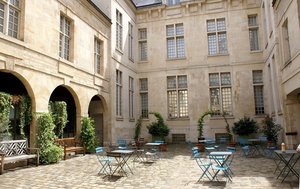 Musée Cognacq-Jay |
Paris | 2 | Full-Length Portrait of Henry-Philip Hope, Portrait of the Countess of Bedford, after Anton Van Dyck |
 Rhode Island School of Design Museum of Art |
Providence | 1 | Portrait of William, Earl of Craven |
 Science Múzeum |
London | 1 | Sir Henry De la Beche V.P.R.S. |
Váassz ki egy évtizedet, hogy megnézhesd az azt meghatározó eredetiműveket.
Full-Length Portrait of Henry-Philip Hope (1802), Musée Cognacq-Jay, Paris. Ezután Portrait of the Countess of Bedford, after Anton Van Dyck (1844) és Portrait of William, Earl of Craven (1852) következik.
23 éves: Full-Length Portrait of Henry-Philip Hope 1802-ből származik, Henry Pierce Bone pedig 1779-ben született.
Katalógusunkban 4 mű található Henry Pierce Bone alkotótól, 1802 és 1852 év közötti időszakból.
Leginkább Musée Cognacq-Jay (Paris), Rhode Island School of Design Museum of Art (Providence) és Science Múzeum (London) található. A fenti múzeumi táblázatban mindegyik felsorolásra került.
1840s alatt: a jelen laphonon található 4 műből 2 készült ebben az időszakban, köztük Portrait of the Countess of Bedford, after Anton Van Dyck.
Ezen az oldalon a leghitelesebb Full-Length Portrait of Henry-Philip Hope (1802), a legutóbbi pedig Portrait of William, Earl of Craven (1852).
Full-Length Portrait of Henry-Philip Hope és Portrait of the Countess of Bedford, after Anton Van Dyck: a Musée Cognacq-Jay, Paris 2 művet őrzi ezen az oldalon.
In the delicate, luminous world of nineteenth-century British art, few names evoke the meticulous precision and royal splendor associated with enamel painting quite like Henry Pierce Bone. Born in London on November 6, 1779, Bone was destined for a life steeped in artistic tradition. As the son of the celebrated enamel painter Henry Bone and Elizabeth van der Meulen—a descendant of the illustrious battle-painter Adam Frans van der Meulen—his very lineage was woven from the threads of fine art. This heritage provided him with an early, intimate education in the demanding techniques of his craft, a foundation that would eventually lead him to serve the highest echelons of the British monarchy.
Bone’s artistic journey was one of evolution and stylistic shifts. While he initially trained under his father's guidance, his early forays into the medium of oils allowed him to explore a broader range of expression. By the age of twenty, he had already begun exhibiting portraits that showcased a burgeoning talent for capturing character and light. However, it was in 1806 that Bone embarked on a significant period of creative exploration, turning his attention toward classical subjects. For nearly three decades, he immersed himself in the themes of antiquity, utilizing bold and skillful designs to breathe life into classical and scripture-based narratives. This era of his career demonstrated a profound ability to translate grand, epic tales onto much more intimate scales.
In 1833, Bone made a pivotal decision to return to the specialized art form of his father: enameling. This transition marked a period where his technical skill met a refined sense of decorative elegance. Enamel painting is an arduous process, requiring the application of pigmented glass to metal surfaces and subsequent firing in a kiln—a method that demands absolute precision, as even a single error can ruin the piece. While art historians often note that Bone’s enamels did not quite reach the transcendent heights of his father's legendary works, they nonetheless possess a remarkable vitality. His ability to act as a rapid sketcher allowed him to infuse his small-scale works with a sense of movement and spontaneity that is rare in such a rigid medium.
The brilliance of Bone’s work lies in the intersection of his classical training and the luminous properties of enamel. His compositions, often centered on scripture and mythological motifs, utilized the inherent glow of the medium to create a sense of divine or heroic light. This mastery of color and detail did not go unnoticed by the era's most influential figures. His talent earned him prestigious appointments, serving as the enamel painter to Adelaide of Saxe-Meiningen and later to the iconic duo of Queen Victoria and Prince Albert. To be entrusted with the portraiture and decorative arts of the royal court was the ultimate testament to his skill and social standing within the London art scene.
Though the era of grand enamel painting eventually gave way to new artistic movements, the contributions of Henry Pierce Bone remain a vital chapter in the history of British decorative arts. His work serves as a bridge between the classical traditions of the eighteenth century and the refined, ornamental tastes of the Victorian age. Through his portraits and religious subjects, he captured the spirit of an era that valued both historical continuity and exquisite craftsmanship.
Today, the traces of Bone’s artistry can be found in prestigious institutions, ensuring his place in the annals of art history:
Henry Pierce Bone passed away on October 21, 1855, leaving behind a body of work that reflects a life dedicated to the pursuit of beauty within the smallest of canvases. His ability to marry the grand scale of classical storytelling with the delicate intimacy of enamel remains a profound achievement in the history of English painting.