Zille, Heinrich portréja

Zille, Heinrich festményei: A 53 leghíresebb alkotás, egy galéria szemével

Frissítve: november 2026 · rangsorolva népszerűségi pontszámunk alapján (minden mű keresései, látogatásai és megrendelései alapján) · 53 mű Zille, Heinrich alkotása a katalógusunkban

Röviden

A galéria szerint Zille, Heinrich leghíresebb festménye a Restoration (1910). Untitled (AQREDC) (1909) és Untitled (AQRECJ) (1919) kiegészítik azt a triót, amelyet minden szem felismer. A katalógusunkban szereplő 53 művész Zille, Heinrich alkotásából a galéria az alábbi 53 leghíresebbet mutatja be, amelyek mind egyedi originális művek, a készítés évszámával, a múzeum megnevezésével és a különlegességük leírásával.

1859 – 1933, Kassel Contemporary realism A legtöbb mű: Augustiner Museum

A galéria top 10 Zille, Heinrich festménye

1
Restoration (1910) (1889) -ja Zille, Heinrich

Restoration

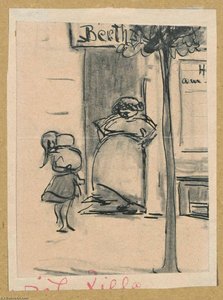
1910 · Ink On Paper

Restoration is a black and white illustration created by Heinrich Hoffmann. The work dates to about 1910 and presents a monochromatic view of an urban environment. The scene focuses on a bustling city street, capturing a specific moment of daily activity within a metropolitan setting. The central subject involves a restaurant that is currently undergoing restoration work, providing a focal point for the surrounding movement.

2
Untitled (AQREDC) (1909) (1889) -ja Zille, Heinrich

Untitled (AQREDC)

1909 · Etching

Untitled (AQREDC) by Heinrich Hoffmann depicts a bustling scene within a modest, crowded living space. The composition is dynamic and somewhat chaotic, with figures clustered together to fill most of the frame. A central grouping of people is arranged around a table, while other individuals are scattered throughout the room. Some figures are standing, while others are seated or lying down. In the background, a window provides a glimpse of…

3
Untitled (AQRECJ) (1919) (1889) -ja Zille, Heinrich

Untitled (AQRECJ)

1919 · Drawing

This black and white drawing, dated 1919, depicts a group of at least twelve children positioned in a shared space. The figures are arranged in layers, with several children standing in the immediate foreground while others are situated further back in the composition. These children appear to be engaged in conversation or play. Two teddy bears are placed within the scene: one is located near the center, and the other…

4
Untitled (AQREBC) (1917) (1889) -ja Zille, Heinrich

Untitled (AQREBC)

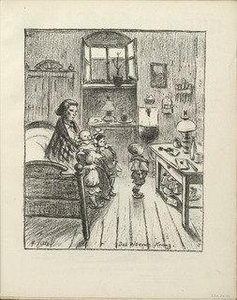
1917 · Drawing

In this black and white drawing, Untitled (AQREBC) by Heinrich Hoffmann presents a quiet, domestic scene from about 1917. The composition centers on a woman seated in a chair, surrounded by her children. She holds a baby in her arms, while the other children settle onto her lap or gather closely around her. There is a palpable sense of intimacy in the way the figures are clustered together, creating a…

5
Untitled (AQREDE) (1884) (1889) -ja Zille, Heinrich

Untitled (AQREDE)

1884 · Pencil

In this work from 1884, Heinrich Hoffmann invites us into the quiet, lived-in atmosphere of a traditional German tavern or beer hall. The scene captures a specific moment of social interaction and conviviality, focusing on a group of figures gathered around a long table. There is a sense of shared experience here, as patrons engage in conversation and drink within the interior space. It is a glimpse into a communal…

6
Going to Church in the Black Forest (1905) (1889) -ja Zille, Heinrich

Going to Church in the Black Forest

1905 · Oil On Canvas · Augustiner Museum, Freiburg

In "Going to Church in the Black Forest" by Heinrich Hoffmann, we find ourselves observing a quiet moment of communal devotion. The scene, painted about 1905, centers on a group of women gathered at the entrance of a rustic stone church. They are dressed in traditional German folk costume, their attire providing a focal point of deep blues, blacks, and intricate patterns. This central gathering is framed by the environment:…

7
Untitled (AQREC6) (1900) (1889) -ja Zille, Heinrich

Untitled (AQREC6)

1900 · Black and White Photography

Untitled (AQREC6) by Heinrich Hoffmann features a monochrome photographic study of a nude female figure. The composition is centered on the human subject, who is positioned in the foreground within an indoor studio setting. To the left of the central figure, a marble statue of a draped woman is placed, creating a juxtaposition between the living model and the carved stone. The background is composed of dark fabric draped over…

8
Untitled (AQREDJ) (1905) (1889) -ja Zille, Heinrich

Untitled (AQREDJ)

1905 · Pencil

This 1905 pencil drawing on paper presents a spontaneous, quick sketch of two figures, appearing to be women, within a garden setting. The composition is asymmetrical and dynamic, with the figures positioned diagonally across the frame; one figure is taller than the other, and they seem to be engaged in conversation or a shared activity. The artwork is characterized by a loose, energetic quality, utilizing expressive lines, hatching, and cross-hatching…

9
Untitled (AQRECN) (1903) (1889) -ja Zille, Heinrich

Untitled (AQRECN)

1903 · Etching

The scene unfolds within the lines of Untitled (AQRECN), an etching created by Heinrich Hoffmann. This work captures a specific, unvarnished moment from 1903, freezing a wrestling match in a state of constant motion. The figures strain against one another, caught in a struggle that feels immediate and raw. Onlookers gather around, their presence adding a layer of communal energy to the central conflict.

10
Untitled (AQREBN) (1905) (1889) -ja Zille, Heinrich

Untitled (AQREBN)

1905 · Woodcut

This monochrome woodcut print, created in 1905, presents a densely packed and realistic portrayal of a crowded marketplace. The scene is set within an indoor environment, appearing to be a covered bazaar or market, where a multitude of figures are engaged in various activities such as buying, selling, and observing. The composition is tightly structured, utilizing strong, directional lines to define both the individual forms of the people and the…

Zille, Heinrich festményei, 11. helyezéstől 53. helyezésig

11Untitled (AQRECC) (1900) (1889) -ja Zille, HeinrichUntitled (AQRECC)1900 12Untitled (AQRECL) (1910) (1889) -ja Zille, HeinrichUntitled (AQRECL)1910 13Untitled (AQRECY) (1910) (1889) -ja Zille, HeinrichUntitled (AQRECY)1910 14Untitled (AQRECE) (1910) (1889) -ja Zille, HeinrichUntitled (AQRECE)1910 15The Iron Cross (Das eiserne Kreuz) (plate, folio 17) from the periodical Der Bildermann, vol. 1, no. 8 (June 1916) (1916) (1889) -ja Zille, HeinrichThe Iron Cross (Das eiserne Kreuz) (plate, folio 17) from the periodical Der Bildermann, vol. 1, no. 8 (June 1916)1916 16Standing in Line for Potatoes (Kartoffelstehen) (plate, folio 25) from the periodical Der Bildermann, vol. 1, no. 12 (September 1916) (1916) (1889) -ja Zille, HeinrichStanding in Line for Potatoes (Kartoffelstehen) (plate, folio 25) from the periodical Der Bildermann, vol. 1, no. 12 (September 1916)1916 17Untitled (AQREBW) (1919) (1889) -ja Zille, HeinrichUntitled (AQREBW)1919 18Untitled (AQRECA) (1919) (1889) -ja Zille, HeinrichUntitled (AQRECA)1919 19Untitled (AQREBE) (1930) (1889) -ja Zille, HeinrichUntitled (AQREBE)1930 20Untitled (AQREB6) (1898) (1889) -ja Zille, HeinrichUntitled (AQREB6)1898 21Untitled (AQREBL) (1905) (1889) -ja Zille, HeinrichUntitled (AQREBL)1905 22Untitled (AQRECU) (1902) (1889) -ja Zille, HeinrichUntitled (AQRECU)1902 23Untitled (AQRED4) (1903) (1889) -ja Zille, HeinrichUntitled (AQRED4)1903 24Untitled (AQREC4) (1901) (1889) -ja Zille, HeinrichUntitled (AQREC4)1901 25Spinning Room in the Black Forest (1889) -ja Zille, HeinrichSpinning Room in the Black ForestAugustiner Museum 26Untitled (AQREAU) (1910) (1889) -ja Zille, HeinrichUntitled (AQREAU)1910 27Untitled (AQREC2) (1909) (1889) -ja Zille, HeinrichUntitled (AQREC2)1909 28Untitled (AQREB2) (1910) (1889) -ja Zille, HeinrichUntitled (AQREB2)1910 29Untitled (AQRECS) (1911) (1889) -ja Zille, HeinrichUntitled (AQRECS)1911 30Untitled (AQREC8) (1910) (1889) -ja Zille, HeinrichUntitled (AQREC8)1910 31Untitled (AQREAS) (1910) (1889) -ja Zille, HeinrichUntitled (AQREAS)1910 32Untitled (AQRED2) (1916) (1889) -ja Zille, HeinrichUntitled (AQRED2)1916 33Untitled (AQRED6) (1913) (1889) -ja Zille, HeinrichUntitled (AQRED6)1913 34Untitled (AQREBA) (1914) (1889) -ja Zille, HeinrichUntitled (AQREBA)1914 35Untitled (AQRECW) (1916) (1889) -ja Zille, HeinrichUntitled (AQRECW)1916 36Untitled (AQREBJ) (1915) (1889) -ja Zille, HeinrichUntitled (AQREBJ)1915 37Untitled (AQREB4) (1915) (1889) -ja Zille, HeinrichUntitled (AQREB4)1915 38On Vacation (Auf Urlaub) (front cover, folio 26) from the periodical Der Bildermann, vol. 1, no. 13 (October 1916) (1916) (1889) -ja Zille, HeinrichOn Vacation (Auf Urlaub) (front cover, folio 26) from the periodical Der Bildermann, vol. 1, no. 13 (October 1916)1916 39Schnapps Saloon (Schnapsdestille) (plate, folio 33) from the periodical Der Bildermann, vol. 1, no. 16 (November 1916) (1916) (1889) -ja Zille, HeinrichSchnapps Saloon (Schnapsdestille) (plate, folio 33) from the periodical Der Bildermann, vol. 1, no. 16 (November 1916)1916 40Study with Singing Children (Studienblatt mit singenden Kindern) (plate, folio 11) from the periodical Der Bildermann, vol. 1, no. 5 (June 1916) (1916) (1889) -ja Zille, HeinrichStudy with Singing Children (Studienblatt mit singenden Kindern) (plate, folio 11) from the periodical Der Bildermann, vol. 1, no. 5 (June 1916)1916 41Untitled (AQREBU) (1919) (1889) -ja Zille, HeinrichUntitled (AQREBU)1919 42Untitled (AQREBQ) (1919) (1889) -ja Zille, HeinrichUntitled (AQREBQ)1919 43Untitled (AQRECG) (1919) (1889) -ja Zille, HeinrichUntitled (AQRECG)1919 44Untitled (AQREAW) (1919) (1889) -ja Zille, HeinrichUntitled (AQREAW)1919 45Untitled (AQREDA) (1919) (1889) -ja Zille, HeinrichUntitled (AQREDA)1919 46Untitled (AQRED8) (1919) (1889) -ja Zille, HeinrichUntitled (AQRED8)1919 47Untitled (AQRECQ) (1920) (1889) -ja Zille, HeinrichUntitled (AQRECQ)1920 48Untitled (AQREB8) (1919) (1889) -ja Zille, HeinrichUntitled (AQREB8)1919 49Untitled (AQREAY) (1924) (1889) -ja Zille, HeinrichUntitled (AQREAY)1924 50Untitled (AQREAQ) (1960) (1889) -ja Zille, HeinrichUntitled (AQREAQ)1960 51Alte Frau mit Hundefuhrwerk (1910) (1889) -ja Zille, HeinrichAlte Frau mit Hundefuhrwerk1910 52Untitled (AQREBY) (1889) -ja Zille, HeinrichUntitled (AQREBY) 53Untitled (AQREDG) (1889) -ja Zille, HeinrichUntitled (AQREDG)

A témák, amelyek Zille, Heinrich figyelmét meghúzták

A négy leggyakorobban előforduló téma ebben az eredeti művekben, mindegyik a legkiválóbb példájával.

A műemlékek, amelyek Zille, Heinrich eredeti műveit őrzik

A múzeum, amely ezen az oldalon szereplő festmények többségét őrzi.

Múzeum Város Zille, Heinrich művei Ebből a listából származó festmények
Augustiner Museum, FreiburgAugustiner Museum Freiburg 2 Going to Church in the Black Forest, Spinning Room in the Black Forest

Zille, Heinrich, egy aláírott festmény évtizedenként

Művek évtizedenként

Váassz ki egy évtizedet, hogy megnézhesd az azt meghatározó eredetiműveket.

Zille, Heinrich festményei: a galéria válaszai

Melyik Zille, Heinrich festmény a leghíresebb?Fedje fel a választ

Restoration (1910). Ezt követi Untitled (AQREDC) (1909) és Untitled (AQRECJ) (1919).

Hány éves volt Zille, Heinrich, amikor elkészítette a(t): Restoration?Fedje fel a választ

51 éves: Restoration 1910-ből származik, Zille, Heinrich pedig 1859-ben született.

Melyek Zille, Heinrich top 10 festménye?Fedje fel a választ

Restoration, Untitled (AQREDC), Untitled (AQRECJ), Untitled (AQREBC), Untitled (AQREDE), Going to Church in the Black Forest, Untitled (AQREC6), Untitled (AQREDJ), Untitled (AQRECN) és Untitled (AQREBN). A fenti rangsor a művek évszamarát és a múzeumát jelzi.

Hány műve született Zille, Heinrich nevére?Fedje fel a választ

Katalógusunkban 53 mű található Zille, Heinrich alkotótól, 1884 és 1930 év közötti időszakból.

Hol találhatóak Zille, Heinrich leghíresebb eredeti művei?Fedje fel a választ

Leginkább Augustiner Museum (Freiburg) található. A fenti múzeumi táblázatban mindegyik felsorolásra került.

Mikor festette Zille, Heinrich le leghíresebb műveit?Fedje fel a választ

1910s alatt: a jelen laphonon található 53 műből 32 készült ebben az időszakban, köztük Restoration.

Melyek Zille, Heinrich legkorábbi és legutóbbi híres művei?Fedje fel a választ

Ezen az oldalon a leghitelesebb Untitled (AQREDE) (1884), a legutóbbi pedig Untitled (AQREBE) (1930).

Mely témakörökkel foglaltaszkodott a legtöbbször Zille, Heinrich?Fedje fel a választ

People (7), Social commentary (6) és Figures (5), a jelen oldalon található 53 műművészeti alkotás között.

Melyik technikával foglalt leginkább Zille, Heinrich?Fedje fel a választ

Ink On Paper, a jelen oldalon található 53 műből 3 darab esetén.

Mely művészeti irányhoz tartozik Zille, Heinrich?Fedje fel a választ

Contemporary realism, ezen az oldalon található eredetiek alapján.

Mely Zille, Heinrich eredeti műveit őrzi a Augustiner Museum?Fedje fel a választ

Going to Church in the Black Forest és Spinning Room in the Black Forest: a Augustiner Museum, Freiburg 2 művet őrzi ezen az oldalon.

Zille, Heinrich: a művész

A Chronicler of Berlin’s Soul: The Life and Art of Heinrich Zille

Rudolf Heinrich Zille, im Herzen Berlins liebevoll als “Pinselheinrich” – Pinsel Heinrich – bekannt, war weit mehr als nur ein Künstler; er war ein visuelles Geschichtsbuch, ein mitfühlender Beobachter und ein satirischer Chronist einer Stadt, die einem seismischen Wandel unterging. Geboren 1858 in Radeburg, Deutschland, spiegelte Zilles Leben die aufkeimende Industrialisierung und die soziale Unruhe wider, die das Ende des 19. und den Beginn des 20. Jahrhunderts in Berlin prägten. Seine Familie zog 1867 in die Hauptstadt um, was ihn tief in eine Welt der scharren Kontraste – luxuriöses Wachstum neben erbarmungsloser Armut – eintauchte. Diese Dichotomie würde sich zu seinem künstlerischen Blickwinkel entwickeln. Zunächst wurde er 1872 als Lithograflehrling ausgebildet, wodurch ihm frühzeitig die Beherrschung von Linie und Form vermittelt wurden, die später die Grundlage für seine Werke bildeten. Obwohl sein Vater eine konventionellere Berufung – vielleicht das Metzgetöchter – sah, war Heinrichs Leidenschaft für das Zeichnen unbestreitbar, gefördert durch einen Lehrer, der sein wachsendes Talent erkannte. Diese Hingabe an die Kunst war jedoch nicht sofort gegeben; sie entwickelte sich nach seiner Entlassung im Jahr 1910 aus Notwendigkeit heraus, ermutigt von Max Liebermann, und ermöglichte ihm, seine künstlerische Berufung voll auszuleben.

The “Milljöh” and a City Revealed

Zilles bleibendes Erbe liegt in seiner Fähigkeit, die Essenz des Berlins’ “Milljöh” einzufangen – ein einzigartig deutsches Konzept, das das alltägliche Leben, die Atmosphäre und das soziale Gefüge der Stadt, insbesondere in seinen Arbeiterwohnvierteln, umfasste. Er idealisierte oder romantisierte die Realität nicht; stattdessen präsentierte er eine unverblümte Darstellung von Mietkasernen (“Mietskaserne”), überfüllten Straßen und dem Leben derer, die darum kämpften, zu überleben. Seine Zeichnungen waren keine bloßen Darstellungen von Armut; sie waren mitfühlende Studien der menschlichen Widerstandsfähigkeit, des Humors und der Würde angesichts der Notlage. Bettler, Prostituierte, Arbeiter und ihre Kinder bevölkerten seine Welt, dargestellt mit einem scharfen Blick für Details und oft mit einer bissigen Ironie. Er porträtierte erkennbare Stereotypen, ja, aber immer mit einem Verständnis, ohne in Boshaftigkeit abzudriften. Zilles bevorzugte Medien – Lithografie, Bleistiftzeichnungen und gelegentlich Holzschnitte – eigneten sich perfekt für diesen intimen Stil. Seine meisterhafte Verwendung von Schattierung und Kreuzschattierung schuf Textur, Tiefe und ein spürbares Gefühl der Atmosphäre in seinen monochromen Werken, zog den Betrachter direkt ins Herz Berlins’ Untergrund.

A Path of Artistic Development

Zilles Karriere begann nicht mit Ruhm oder Anerkennung. Nach seiner Entlassung als Lithograf bei der Photographischen Gesellschaft im Jahr 1910 fand er sich in einer schwierigen finanziellen Lage wieder. Es war erst die Ermutigung von Max Liebermann, die ihn dazu brachte, seine künstlerische Leidenschaft wiederzuentdecken und sich ganz der Kunst zu widmen. Er begann, Szenen aus dem Leben der Arbeiterklasse zu zeichnen – ein Thema, das ihn bei der Gesellschaft zur Folge hatte – und fand schnell seinen Nischenmarkt in satirischen Zeitschriften und Zeitungen. Seine Arbeiten wurden zunehmend von Verlagen für Bücher und Zeitungen angefragt, was ihm ermöglichte, seine Technik zu perfektionieren und einen markanten Stil zu entwickeln, der als “beobachtetes Zeichnen” bekannt wurde. Seine Drucke erschienen in einer Vielzahl von Magazinen, darunter *Simplicissimus* und *Jugend*. Die Redaktionen suchten nicht nur nach Darstellungen von Wohnungsnot, Kriminalität und Alkoholismus. Die Leser sollten sich auch darin wiedererkennen.

Recognition and Artistic Evolution

Zilles künstlerische Produktion war jedoch nicht auf soziale Realismus beschränkt; ein weniger bekanntes Element seines Œuvres offenbart eine Reihe erotischer Zeichnungen, die das alltägliche Leben darstellen. Diese Werke, heute im Beate Uhse Erotischen Museum in Berlin ausgestellt, bieten einen Einblick in eine privatere und spielerischere Seite des Künstlers. Trotzdem ist es seine breitere Werkübersicht, die seinen Platz in der deutschen Kunstgeschichte sichert. Zilles Fähigkeit, sowohl den Humor als auch die Notlage der Arbeiterklasse mit Empathie und Geschick einzufangen, bot wertvolle Einblicke in das Leben Berlins im späten 19. und frühen 20. Jahrhundert. Er gab eine Stimme denen, die von der Mainstream-Gesellschaft oft übersehen wurden, und präsentierte ein eindringliches und dauerhaftes Porträt einer Stadt am Rande der Moderne.

Lasting Impact

  • Social Commentary: Zille’s work served as a potent form of social commentary, exposing the harsh realities of urban poverty and inequality.
  • Artistic Influence: His distinctive style influenced subsequent generations of artists interested in depicting everyday life and social issues.
  • Historical Documentation: Zille’s drawings provide invaluable historical documentation of Berlin during a period of rapid transformation.
  • Cultural Icon: He remains a beloved cultural icon in Berlin, celebrated for his ability to capture the city's unique character and spirit.