Frank Stella portréja

A 42 legnevesebbebb Frank Stella festmény, mindegyik egyedistens

Frissítve: november 2026 · rangsorolva népszerűségi pontszámunk alapján (minden mű keresései, látogatásai és megrendelései alapján) · 55 mű Frank Stella alkotása a katalógusunkban

Röviden

Hyena Stomp (1962) az a Frank Stella festmény, amely a legtöbb tekintetet felvonja. Ezután a tekintet Die Fahne Hoch! (1959) és Gran Cairo (1962) elemre irányul. A Frank Stella 55 műve közül a katalógusunkban megtalálható 42 legnépesebb alkotás, melyeket az év, a múzeum és az örökévalóságának okai kísérnek.

1936 – 2024, Malden Post-painterly abstraction A legtöbb mű: Whitney Múzeum

A galéria szemével: Frank Stella legjobb 10 festménye

1
Hyena Stomp (1962) (1889) -ja Frank Stella

Hyena Stomp

1962

In the vast landscape of twentieth-century abstraction, few works capture the electric pulse of innovation quite like Frank Stella’s 1962 masterpiece, Hyena Stomp. This painting serves as a breathtaking testament to a pivotal moment in art history when the boundaries of the canvas were being radically redefined. At first glance, the viewer is met with an explosion of color—a rhythmic dance of concentric squares that seem to pulse with their…

2
Die Fahne Hoch! (1959) (1889) -ja Frank Stella

Die Fahne Hoch!

1959 · Acrylic On Canvas · Whitney Múzeum, Új-York

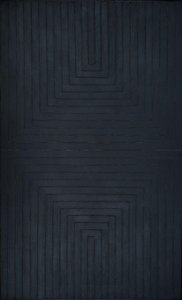
Frank Stella’s 1959 painting, *Die Fahne Hoch!*, isn't merely a composition of black lines on white canvas; it’s an arresting declaration of form and a subtle provocation. Emerging from the vibrant, emotionally charged world of Abstract Expressionism, Stella deliberately distanced himself from its subjective gestures, seeking instead to establish art as an object in itself – a flat surface with paint on it, as he famously stated. This painting embodies…

3
Gran Cairo (1962) (1889) -ja Frank Stella

Gran Cairo

1962 · Oil On Canvas · Whitney Múzeum, Új-York

In the vast landscape of twentieth-century abstraction, few works capture the hypnotic allure of pure form as effectively as Frank Stella’s Gran Cairo. Created in 1962, this masterpiece serves as a profound exploration of visual perception, where the boundaries between color and shape begin to dissolve into a mesmerizing dance. At first glance, the viewer is met with a striking interplay of concentric squares, each layer pulsating with a spectrum…

4
Basra Gate III (1889) -ja Frank Stella

Basra Gate III

Acrylic On Canvas · Museum Folkwang, Essen

To stand before Basra Gate III is to encounter a moment of pure, structured contemplation. This large-scale composition does not whisper; it declares with the confident precision of mathematical certainty. It presents itself as a magnificent semi-circular expanse, immediately drawing the eye into its vibrant, organized complexity. The dominant field of deep purple acts less as a background and more as a resonant void against which color can finally breathe…

5
Manteneia II – Magyar nyelvű címfordítás: Manteneia II (1889) -ja Frank Stella

Manteneia II – Magyar nyelvű címfordítás: Manteneia II

Akril festmény vászonon · Chrysler Museum of Art, Norfolk

Manteneia II – Egy Szellem Érzeke És Egy Új Észtétikai Megközelítés A művészi alkotás megismeréséhez és értékeléséhez fontos az anyag, a technikának és az időszaknak való odafigyelés. Frank Stella egy olyan új irányzatot épített fel az építő művészet világában, amely nagyban befolyásolta későbbi generációkat és melynek célja volt megváltoztatni a hagyományos művészi gondolkodást és kifejezést. Stella alkotása nem csak egy egyszerű képet mutat be; hanem egy komplex szellemi és érzésbeli…

6
Marrakech (1964) (1889) -ja Frank Stella

Marrakech

1964 · Painting

Marrakech is a painting by the American artist Frank Stella. Created in 1964, this work belongs to a specific body of work known as Stella’s Morocco series, which the artist produced between 1964 and 1965. The composition of this piece is informed by the geometric patterns found in Arabic tiles.

8
Darabjerd III (1967) (1889) -ja Frank Stella

Darabjerd III

1967

The Darabjerd III painting by Frank Stella is a seminal work in the realm of geometric abstraction. Created in 1967, this acrylic on canvas piece measures 305 x 458 cm and is housed at the National Portrait Gallery in the United States. As a prominent artist of his time, Frank Stella was known for pushing the boundaries of traditional art forms, and Darabjerd III is a testament to his innovative…

10
Harran II (1967) (1889) -ja Frank Stella

Harran II

1967 · Painting · Solomon R. Guggenheim Múzeum, New York

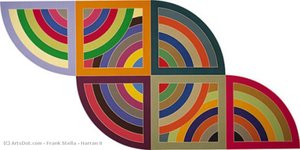
To stand before a work like Harran II is not merely to observe paint on canvas; it is to engage in an optical dialogue with the artist’s intellect. This piece, dating from 1967, captures a pivotal moment in modern art—a decisive pivot away from gestural excess toward rigorous, almost architectural clarity. Frank Stella, whose career was defined by his refusal to accept established boundaries, presents here a vision built entirely…

Frank Stella híres festményei, 11 és 42 között

Frank Stella híres festményei, korszakonként

Early Period

1962 – 1964 · 3 mű ebben a listában

A témák, amelyek Frank Stella figyelmét meghúzták

A négy leggyakorobban előforduló téma ebben az eredeti művekben, mindegyik a legkiválóbb példájával.

A műemlékek, amelyek Frank Stella eredeti műveit őrzik

A 8 olyan múzeum, amely a legtöbb ezen az oldalon szereplő festményet őrzi.

Múzeum Város Frank Stella művei Ebből a listából származó festmények
Whitney Múzeum, Új-YorkWhitney Múzeum Új-York 2 Die Fahne Hoch!, Gran Cairo
Museum Folkwang, EssenMuseum Folkwang Essen 1 Basra Gate III
Chrysler Museum of Art, NorfolkChrysler Museum of Art Norfolk 1 Manteneia II – Magyar nyelvű címfordítás: Manteneia II
National Gallery of Australia, CanberraNational Gallery of Australia Canberra 1 The Fountain
Solomon R. Guggenheim Múzeum, New YorkSolomon R. Guggenheim Múzeum New York 1 Harran II
Izraeli Múzeum, JeruzsálemIzraeli Múzeum Jeruzsálem 1 Damascus Gate
Minneapolis Institute of Art, MinneapolisMinneapolis Institute of Art Minneapolis 1 Tahkt-I-Sulayman Variation II
MoMA - Museum of Modern Art, New YorkMoMA - Museum of Modern Art New York 1 The Marriage of Reason and Squalor

Frank Stella évtizedekig: egy egyedi eredeti mű minden évtizedben

Művek évtizedenként

Váassz ki egy évtizedet, hogy megnézhesd az azt meghatározó eredetiműveket.

Frank Stella festményei: kérdések a galériának

Mi a leghíresebb műve Frank Stellanek?Fedje fel a választ

Hyena Stomp (1962). Ezt követi Die Fahne Hoch! (1959) és Gran Cairo (1962).

Milyen életkorában alkotta meg Frank Stella a(z) Hyena Stomp műszt?Fedje fel a választ

26 éves: Hyena Stomp 1962-ből származik, Frank Stella pedig 1936-ben született.

Melyik tíz festménye Frank Stella a leghíresebb?Fedje fel a választ

Hyena Stomp, Die Fahne Hoch!, Gran Cairo, Basra Gate III, Manteneia II – Magyar nyelvű címfordítás: Manteneia II, Marrakech, The Fountain, Darabjerd III, Coxuria from The Geldzahler Portfolio és Harran II. A fenti rangsor a művek évszamarát és a múzeumát jelzi.

Hány mű alkotása ismert Frank Stella nevében?Fedje fel a választ

Katalógusunkban 55 mű található Frank Stella alkotótól, 1958 és 2001 év közötti időszakból.

Hol tekinthetők meg a leghíresebb Frank Stella eredetijeit?Fedje fel a választ

Leginkább Whitney Múzeum (Új-York), Museum Folkwang (Essen) és Chrysler Museum of Art (Norfolk) található. A fenti múzeumi táblázatban mindegyik felsorolásra került.

Melyik időszakban alkotta Frank Stella a leghíresebb festményeit?Fedje fel a választ

1960s alatt: a jelen laphonon található 42 műből 17 készült ebben az időszakban, köztük Hyena Stomp.

Melyik híres Frank Stella festmény a legkorábbi, és melyik a legutóbb készült?Fedje fel a választ

Ezen az oldalon a leghitelesebb Them Apples (1958), a legutóbbi pedig Prinz Friedrich von Homburg, Ein Schauspiel, 3X (2001).

Milyen témakörket kedvelt Frank Stella?Fedje fel a választ

Geometric (5), Abstract (4) és Abstract art (4), a jelen oldalon található 42 műművészeti alkotás között.

Milyen anyagokkal festett leggyakrabban Frank Stella?Fedje fel a választ

Acrylic On Canvas, a jelen oldalon található 42 műből 4 darab esetén.

Mely művészeti irányba tartozik Frank Stella műve?Fedje fel a választ

Post-painterly abstraction, ezen az oldalon található eredetiek alapján.

Milyen Frank Stella eredeti műveket láthatok a Whitney Múzeum kiállításaiban?Fedje fel a választ

Die Fahne Hoch! és Gran Cairo: a Whitney Múzeum, Új-York 2 művet őrzi ezen az oldalon.

Frank Stella: a művész portréja

Frank Stella

Frank Stella, who passed away on May 4, 2024, at the age of 87, was a towering figure in American art, a relentless innovator whose career spanned seven decades and challenged conventional notions of painting, sculpture, and architectural design. Born in Malden, Massachusetts, in 1936 to first-generation Italian-American parents, Stella’s artistic journey began with an early exposure to the visual world through his mother's landscape paintings and a formative education at Phillips Academy Andover, where he encountered the rigorous color theories of Josef Albers and the expressive power of Hans Hofmann. These influences, coupled with studies in history at Princeton University and frequent trips to New York City galleries, laid the groundwork for a radical departure from the prevailing Abstract Expressionism of the time. Stella wasn’t interested in the emotional turmoil or subjective gesture that defined artists like Pollock and Kline; he sought something purer, more objective—a distillation of painting down to its most fundamental elements.

Rejecting Illusion: The Rise of Minimalism

Stella's emergence onto the art scene in the late 1950s was nothing short of revolutionary. He famously declared that “a painting should be a flat surface with paint on it—nothing more,” a statement that became a manifesto for the burgeoning Minimalist movement. This philosophy materialized most strikingly in his *Black Paintings* (1958-1960), a series of canvases defined by precisely spaced, symmetrical black stripes separated by bands of exposed canvas. Works like Die Fahne Hoch! (1959) – a title deliberately provocative, referencing the Nazi anthem – weren’t intended as expressions of political sentiment but rather as explorations of form and surface, challenging viewers to confront the painting as an object in itself. The deliberate coolness and rejection of emotional content were jarring at the time, signaling a decisive break from Abstract Expressionism's emphasis on subjective experience. He wasn’t aiming to depict something *about* the world; he was presenting the world—or rather, the painting—as it *is*. This focus on materiality and geometric precision extended into his shaped canvases of the 1960s, where Stella abandoned the traditional rectangular format in favor of complex polygons, often crafted from aluminum and copper paint. These weren’t merely paintings; they were sculptural objects that blurred the boundaries between two and three dimensions, further emphasizing the artwork's physical presence.

Expanding Boundaries: From Protractor Series to Maximalism

The 1970s saw Stella experimenting with new techniques and expanding his artistic vocabulary. The *Protractor Series* (1971) incorporated sweeping arcs and vibrant colors arranged within square borders, inspired by the circular cities he visited in the Middle East. Simultaneously, Stella explored printmaking extensively, mastering lithography, screenprinting, and etching to create abstract prints that mirrored the painting's geometric language. His engagement extended beyond visual art; he collaborated with Merce Cunningham on *Scramble* (1967), demonstrating his willingness to explore interdisciplinary connections. A retrospective at the Museum of Modern Art in 1970 solidified Stella’s position as a leading figure in contemporary art, marking a pivotal moment in his career. During this decade he began making series of increasingly elaborate relief constructions on canvas and aluminum, including *Polish Village* (1970–73) and *Exotic Bird Paintings* (1976–80). Departing from his hard-edged style, Stella embraced baroque patterns, fluorescent colors, gestural brushstrokes, and architectural elements. His *Moby Dick *series (1985–97) of 260 prints, sculptures, and reliefs considered the illustrative potential of abstraction.

A Legacy of Innovation

Stella's later work continued to push boundaries, reflecting a profound engagement with artistic tradition while maintaining his distinctive visual style. He received numerous accolades throughout his life, including the National Medal of Arts in 2009 and the Lifetime Achievement Award in Contemporary Sculpture from the International Sculpture Center in 2011. Frank Stella’s unwavering dedication to formal clarity and geometric precision cemented his place as one of the most important and influential artists of the 20th century, leaving behind a vast body of work that continues to inspire generations of creatives.