Frank Bowling portréja

A 8 legnevezesebb Frank Bowling festmény, egy galériaválaszték

Frissítve: november 2026 · rangsorolva népszerűségi pontszámunk alapján (minden mű keresései, látogatásai és megrendelései alapján) · 9 mű Frank Bowling alkotása a katalógusunkban

Röviden

Frank Bowling hagyatékából a leghíresebb alkotás Night Journey (1969). Röviddel ezután követik őket Who's Afraid of Barney Newman (1968) és Clem's No. I (1972). Katalógusunkban 9 mű található Frank Bowling alkotótól; a galéria megőrizte a világ által leginkább csodált 8 darabot, melyeket a dátummal, a múzeummal és a történetükkel együtt mutatunk be.

született: 1934, Bartica A legtöbb mű: Tate Modern

Frank Bowling legjobb 10 festménye: a galéria válogatása

1
Night Journey (1969) (1889) -ja Frank Bowling

Night Journey

1969

Night Journey belongs to Bowling’s Map series, a group of mostly abstract paintings composed of broad fields of color into which the artist placed the continents of Australia, South America, and Africa. Here, the barely discernible shapes of South America, in red at center left, and Africa, in blue and pink at center right, hover in a luminous but moody composition, which he created primarily by pouring various layers of…

8
Wintergreens (1986) (1889) -ja Frank Bowling

Wintergreens

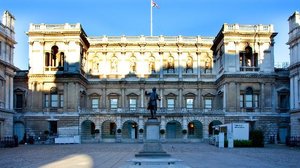
1986 · Royal Academy of Arts, London

One of the modern masterpieces in the RA Collection, Wintergreens was made in 1986, the year Frank Bowling moved to a studio with a view of the Thames in Limehouse, London. He’s referred to the city as “Turner’s town” and the scale of this painting has attracted comparisons with the ambitious landscapes of past artists such as Turner and Constable.The title refers to plants that keep their leaves throughout winter,…

A műemlékek, amelyek Frank Bowling eredeti műveit őrzik

A 3 olyan múzeum, amely a legtöbb ezen az oldalon szereplő festményet őrzi.

Múzeum Város Frank Bowling művei Ebből a listából származó festmények
Tate Modern, LondonTate Modern London 2 Who's Afraid of Barney Newman, Sacha Jason Guyana Dreams
Művészeti Múzeum, Boston, BostonMűvészeti Múzeum, Boston Boston 1 Suncrush
Royal Academy of Arts, LondonRoyal Academy of Arts London 1 Wintergreens

Frank Bowling évtizede folgtva: az eredeti művek, amelyek meghatározzák az egyes korzakot

Művek évtizedenként

Váassz ki egy évtizedet, hogy megnézhesd az azt meghatározó eredetiműveket.

Gyűjtői kérdések Frank Bowling festményeivel kapcsolatban

Melyik művel a(z) Frank Bowling a leghíresebb?Fedje fel a választ

Night Journey (1969). Ezt követi Who's Afraid of Barney Newman (1968) és Clem's No. I (1972).

Hány éves volt Frank Bowling, amikor a Night Journey készült?Fedje fel a választ

35 éves: Night Journey 1969-ből származik, Frank Bowling pedig 1934-ben született.

Hány festményet hagyott hátra Frank Bowling?Fedje fel a választ

Katalógusunkban 9 mű található Frank Bowling alkotótól, 1968 és 1989 év közötti időszakból.

Mely múzeumokban állnak Frank Bowling remekművei?Fedje fel a választ

Leginkább Tate Modern (London), Művészeti Múzeum, Boston (Boston) és Royal Academy of Arts (London) található. A fenti múzeumi táblázatban mindegyik felsorolásra került.

Mely években festette Frank Bowling leghíresebb műveit?Fedje fel a választ

1970s alatt: a jelen laphonon található 8 műből 3 készült ebben az időszakban, köztük Clem's No. I.

Mikszétek az első és az utolsó híres eredeti műve a(z) Frank Bowling alkotótól?Fedje fel a választ

Ezen az oldalon a leghitelesebb Who's Afraid of Barney Newman (1968), a legutóbbi pedig Sacha Jason Guyana Dreams (1989).

Mely Frank Bowling művei láthatóak a Tate Modern kiállتításán?Fedje fel a választ

Who's Afraid of Barney Newman és Sacha Jason Guyana Dreams: a Tate Modern, London 2 művet őrzi ezen az oldalon.

Frank Bowling: életmű és életút

The Architect of Abstraction: The Life and Legacy of Frank Bowling

In the vast, textured landscapes of contemporary abstraction, few names resonate with as much profound authority as Frank Bowling. Born in 1934 in the riverside town of Bartica, British Guiana, Bowling’s journey is one of remarkable movement—not just across continents, but through the very layers of paint and medium itself. His arrival in Britain as a young man marked the beginning of a career that would fundamentally reshape the trajectory of post-war British art. As a pioneer of color field painting and lyrical abstraction, Bowling did not merely paint surfaces; he constructed worlds that evoke the geological, the cartographic, and the deeply psychological.

Bowling’s formative years in the United Kingdom saw him immersed in the rigorous creative environments of the Regent Street Polytechnic and the Chelsea School of Art. By 1959, his talent earned him a prestigious scholarship to the Royal College of Art, placing him at the heart of a revolutionary generation. Alongside luminaries such as David Hockney and R.B. Kitaj, Bowling was part of a cohort that challenged the boundaries of British experimentalism. It was during this period that the echoes of American Abstract Expressionism—the monumental legacies of Mark Rothko and Barnative Newman—began to resonate within his work, inspiring a fascination with vast, immersive canvases that prioritize emotional resonance over representational clarity.

The Cartography of Color and Materiality

The mid-1960s heralded the emergence of Bowling’s most iconic contribution to the art world: the 'Map' series. These groundbreaking works eschewed traditional imagery in favor of a complex, fluid language of color and texture. In these paintings, the artist utilized the technique of pouring diluted paint onto canvas, allowing pigments to bleed, stain, and coalesce into shapes that suggest continents, oceans, and shifting borders. This approach transformed the canvas into a living topography, where the boundaries between land and sea, or self and other, become beautifully blurred.

What truly distinguishes Bowling’s technique is his daring exploration of materiality. He famously incorporated industrial substances such as asphalt and resin into his compositions, creating heavy, tactile surfaces that possess a physical weight and geological presence. This use of non-traditional media was more than a stylistic choice; it was a deliberate gesture against the polished aesthetic conventions of his era. Through these rugged textures, Bowling explored themes of globalization, cultural displacement, and the anxieties of a post-colonial world, making his work as much about political identity as it is about formal beauty.

A Modern Master on the Global Stage

The historical significance of Frank Bowling extends far beyond the aesthetic realm. As one of the most distinguished Black artists to emerge from the post-war British art school system, his success represents a pivotal moment in the diversification of the British canon. His career has been defined by a series of monumental achievements that have cemented his status as a modern master:

Today, Frank Bowling remains a singular figure whose work continues to breathe and evolve. Whether through the vibrant energy of pieces like 'Who’s Afraid of Barney Newman' or the atmospheric depth of 'Wintergreens', he invites the viewer into a space where color is not just seen, but felt. His legacy is etched into the very fabric of modern art—a testament to the power of abstraction to navigate the complexities of the human experience.