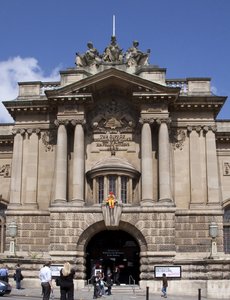
Florence Engelbach portréja

Florence Engelbach festményei: A 12 leghíresebb alkotás, egy galéria szemével

Frissítve: november 2026 · rangsorolva népszerűségi pontszámunk alapján (minden mű keresései, látogatásai és megrendelései alapján) · 12 mű Florence Engelbach alkotása a katalógusunkban

Röviden

A galéria szerint Florence Engelbach leghíresebb festménye a Roses and Peonies (1936), amelynek eredeti példája a Bristol Museum - Art Gallery múzeumában található, Bristol városában. Old Woman Knitting (1910) és Summer (1930) kiegészítik azt a triót, amelyet minden szem felismer. A katalógusunkban szereplő 12 művész Florence Engelbach alkotásából a galéria az alábbi 12 leghíresebbet mutatja be, amelyek mind egyedi originális művek, a készítés évszámával, a múzeum megnevezésével és a különlegességük leírásával.

1872 – 1951, Jerez de la Frontera A legtöbb mű: Laing Art Gallery

A galéria top 10 Florence Engelbach festménye

1
Roses and Peonies (1936) (1889) -ja Florence Engelbach

Roses and Peonies

1936 · Oil On Canvas · Bristol Museum - Art Gallery, Bristol

The composition centers on a dense arrangement of blossoms held within two distinct vessels. On the left, a blue vase provides a cool counterpoint to the warm tones of the flora, while a gold vessel on the right adds a sense of weight and luster to the scene. Pink roses dominate the arrangement, their petals layered to suggest volume and soft texture. Interspersed among the roses are white flowers, providing…

9
Gladioli (1933) (1889) -ja Florence Engelbach

Gladioli

1933 · Laing Art Gallery, Newcastle upon Tyne

The Florence Engelbach painting, Gladioli, is a stunning representation of flowers in a vase, showcasing the artist's skill in creating an eye-catching composition. The painting features a beautiful arrangement of flowers, including pink and red gladioli, which are prominently displayed in a vase. A cup placed next to the vase adds depth and interest to the scene, emphasizing the still life nature of the painting. Artistic Style and Technique The…

Florence Engelbach festményei, 11. helyezéstől 12. helyezésig

A témák, amelyek Florence Engelbach figyelmét meghúzták

A négy leggyakorobban előforduló téma ebben az eredeti művekben, mindegyik a legkiválóbb példájával.

A műemlékek, amelyek Florence Engelbach eredeti műveit őrzik

A 7 olyan múzeum, amely a legtöbb ezen az oldalon szereplő festményet őrzi.

Múzeum Város Florence Engelbach művei Ebből a listából származó festmények
Laing Art Gallery, Newcastle upon TyneLaing Art Gallery Newcastle upon Tyne 2 Old Woman Knitting, Gladioli
Bristol Museum - Art Gallery, BristolBristol Museum - Art Gallery Bristol 1 Roses and Peonies
New Walk Museum - Art Gallery, LeicesterNew Walk Museum - Art Gallery Leicester 1 Tulips and Irises
Walker Art Gallery, LiverpoolWalker Art Gallery Liverpool 1 Peonies
Grundy Art Gallery, BlackpoolGrundy Art Gallery Blackpool 1 White Roses in a Yellow Bowl
Wolverhampton Art Gallery, WolverhamptonWolverhampton Art Gallery Wolverhampton 1 Peonies
Pallant House Gallery, ChichesterPallant House Gallery Chichester 1 Crocus and Stocks

Florence Engelbach, az év meghatározó festményei

27 év Florence Engelbach művészetéből, 1910-től 1936-ig: a galéria év év után év követi őket, a legnevesültebb eredeti alkotásokon keresztül.

Művek évszáma szerint

Váasszon egy évet az eredetiek megtekintéséhez.

Florence Engelbach festményei: a galéria válaszai

Melyik Florence Engelbach festmény a leghíresebb?Fedje fel a választ

Roses and Peonies (1936), Bristol Museum - Art Gallery, Bristol. Ezután Old Woman Knitting (1910) és Summer (1930) következik.

Hány éves volt Florence Engelbach, amikor elkészítette a(t): Roses and Peonies?Fedje fel a választ

64 éves: Roses and Peonies 1936-ből származik, Florence Engelbach pedig 1872-ben született.

Melyek Florence Engelbach top 10 festménye?Fedje fel a választ

Roses and Peonies, Old Woman Knitting, Summer, Alpes Maritimes, Cyclamen, Tulips and Irises, Peonies, White Roses in a Yellow Bowl, Gladioli és A Lovely Morning, Le Touquet. A fenti rangsor a művek évszamarát és a múzeumát jelzi.

Hány műve született Florence Engelbach nevére?Fedje fel a választ

Katalógusunkban 12 mű található Florence Engelbach alkotótól, 1910 és 1936 év közötti időszakból.

Hol találhatóak Florence Engelbach leghíresebb eredeti művei?Fedje fel a választ

Leginkább Laing Art Gallery (Newcastle upon Tyne), Bristol Museum - Art Gallery (Bristol) és New Walk Museum - Art Gallery (Leicester) található. A fenti múzeumi táblázatban mindegyik felsorolásra került.

Mikor festette Florence Engelbach le leghíresebb műveit?Fedje fel a választ

1931 alatt: a jelen laphonon található 12 műből 3 készült ebben az időszakban, köztük Alpes Maritimes.

Melyek Florence Engelbach legkorábbi és legutóbbi híres művei?Fedje fel a választ

Ezen az oldalon a leghitelesebb Old Woman Knitting (1910), a legutóbbi pedig Roses and Peonies (1936).

Mely témakörökkel foglaltaszkodott a legtöbbször Florence Engelbach?Fedje fel a választ

Peonies (2) és Botanical art (2), a jelen oldalon található 12 műművészeti alkotás között.

Mely Florence Engelbach eredeti műveit őrzi a Laing Art Gallery?Fedje fel a választ

Old Woman Knitting és Gladioli: a Laing Art Gallery, Newcastle upon Tyne 2 művet őrzi ezen az oldalon.

Florence Engelbach: a művész

Florence Engelbach: A Bloomsbury Painter of Delicate Beauty

Florence Ada Engelbach née Neumegen (9 June 1872 – 27 February 1951) was a British painter renowned for her exquisite floral still lifes and portraits, particularly her masterful depictions of roses. Born in Jerez de la frontera, Spain, to English parents, Engelbach pursued artistic training initially in London at the Westminster School of Art and subsequently at Slade School of Art before immersing herself in Parisian ateliers – experiences that profoundly shaped her distinctive style. Her work reflects a meticulous observation of nature combined with an elegant sensitivity to form and color, establishing her as a significant figure within the Bloomsbury Group’s circle of artists and intellectuals.
  • Early Life & Education: Engelbach's formative years were spent in Spain amidst a family steeped in artistic tradition. Recognizing her talent early on, her parents encouraged her pursuit of formal art education, culminating in degrees from London’s prestigious institutions.
  • Parisian Influences: Engelbach’s relocation to Paris proved pivotal, exposing her to Impressionism and Post-Impressionist techniques championed by artists like Monet and Cézanne. These influences infused her canvases with luminous color palettes and loose brushstrokes—a stylistic hallmark of her oeuvre.
  • Notable Exhibitions & Recognition: Engelbach’s artistic endeavors garnered considerable acclaim during her lifetime. Her paintings were showcased at prominent galleries such as the Laing Art Gallery in Newcastle and the Paris Salon, securing her place among the leading artists of her era. Notably, she received a bronze medal at a Women's International Art Club exhibition in London.
  • Marriage & Family Life: Engelbach married C.F.R Engelbach in 1902, dedicating herself to raising a family while continuing to nurture her artistic passion. Despite prioritizing domestic responsibilities, she persevered in painting, demonstrating unwavering commitment to her craft.

Floral Mastery: The Art of Delicate Composition

Engelbach’s enduring legacy rests primarily on her captivating floral paintings—particularly her celebrated series of roses. These works exemplify her unparalleled ability to capture the ephemeral beauty of blossoms with breathtaking precision and emotional resonance. Employing meticulous observation and masterful brushwork, she achieved remarkable textural depth and luminous color harmonies that convey not merely visual representation but also a profound appreciation for the natural world. Her canvases are imbued with an understated elegance—a testament to her artistic vision.
  • Technique & Style: Engelbach favored a technique characterized by subtle gradations of tone and color, achieved through layering thin glazes over textured surfaces. This approach allowed her to convey the velvety sheen of petals and the delicate interplay of light and shadow—capturing the essence of floral form.
  • Iconic Works: Among Engelbach’s most celebrated paintings are “Gladioli” and “Crocus and Stocks,” which exemplify her masterful command of Impressionistic principles. These pieces demonstrate her ability to transform ordinary flowers into symbols of grace and beauty, resonating with viewers across generations.

Association with the Bloomsbury Group & Artistic Legacy

Engelbach’s artistic pursuits intersected seamlessly with intellectual discourse within the Bloomsbury Group—a collective of influential writers and artists who championed aesthetic experimentation and humanist ideals. Her membership in the Royal Institute of Oil Painters and the National Society of Painters, Sculptors and Gravers/ Printmakers solidified her position as a respected figure within British art circles.
  • Influence & Recognition: Engelbach’s work continues to inspire admiration for its understated beauty and technical virtuosity. Her paintings reside in prestigious collections such as the Tate Collection, ensuring that her artistic legacy endures—a testament to her enduring contribution to Impressionist painting.

A Memorial Exhibition & Lasting Remembrance

In 1951, a memorial exhibition honoring Engelbach’s life and accomplishments was held at the Leicester Galleries, commemorating her remarkable artistic achievements and celebrating her unwavering devotion to art. Her enduring influence on British painting—particularly her masterful depictions of roses—remains palpable today.