Röviden
Fairlie Harmar hagyatékából a leghíresebb alkotás After A Game Of Tennis (1923), amely a Birmingham városi Birmingham Museum and Art Gallery gyűjteményében található. Röviddel ezután követik őket St Giles, Oxford és The Bridge at Monxton (1916). Katalógusunkban 18 mű található Fairlie Harmar alkotótól; a galéria megőrizte a világ által leginkább csodált 18 darabot, melyeket a dátummal, a múzeummal és a történetükkel együtt mutatunk be.
Fairlie Harmar legjobb 10 festménye: a galéria válogatása
A Fairlie Harmar válogatás folytatódik: 11 – 18
A témák, amelyek Fairlie Harmar figyelmét meghúzták
A négy leggyakorobban előforduló téma ebben az eredeti művekben, mindegyik a legkiválóbb példájával.
British painting 2 alkotás
A műemlékek, amelyek Fairlie Harmar eredeti műveit őrzik
A 5 olyan múzeum, amely a legtöbb ezen az oldalon szereplő festményet őrzi.
| Múzeum | Város | Fairlie Harmar művei | Ebből a listából származó festmények |
|---|---|---|---|
| Wolverhampton | 2 | Ships on the Thames, Flowers | |
| Birmingham | 1 | After A Game Of Tennis | |
| Liverpool | 1 | The Bridge at Monxton | |
| Oxford | 1 | The Laurel Walk | |
| Darlington | 1 | Chibbet, Exmoor, Somerset |
Fairlie Harmar évtizede folgtva: az eredeti művek, amelyek meghatározzák az egyes korzakot
Művek évtizedenként
Váassz ki egy évtizedet, hogy megnézhesd az azt meghatározó eredetiműveket.
Gyűjtői kérdések Fairlie Harmar festményeivel kapcsolatban
Melyik művel a(z) Fairlie Harmar a leghíresebb?Fedje fel a választ
After A Game Of Tennis (1923), Birmingham Museum and Art Gallery, Birmingham. Ezután St Giles, Oxford és The Bridge at Monxton (1916) következik.
Hány éves volt Fairlie Harmar, amikor a After A Game Of Tennis készült?Fedje fel a választ
47 éves: After A Game Of Tennis 1923-ből származik, Fairlie Harmar pedig 1876-ben született.
Melyek a tíz leghíresebb Fairlie Harmar festmény?Fedje fel a választ
After A Game Of Tennis, St Giles, Oxford, The Bridge at Monxton, The Laurel Walk, Women's Royal Air Force Workers Drilling at Andover Aerodrome, Birthday Celebration, Garden Gate, L'Aveyron, Cheyne Walk Gardens és Sarson Farm, Early Spring. A fenti rangsor a művek évszamarát és a múzeumát jelzi.
Hány festményet hagyott hátra Fairlie Harmar?Fedje fel a választ
Katalógusunkban 18 mű található Fairlie Harmar alkotótól, 1912 és 1938 év közötti időszakból.
Mely múzeumokban állnak Fairlie Harmar remekművei?Fedje fel a választ
Leginkább Wolverhampton Art Gallery (Wolverhampton), Birmingham Museum and Art Gallery (Birmingham) és Walker Art Gallery (Liverpool) található. A fenti múzeumi táblázatban mindegyik felsorolásra került.
Mely években festette Fairlie Harmar leghíresebb műveit?Fedje fel a választ
1920s alatt: a jelen laphonon található 18 műből 4 készült ebben az időszakban, köztük After A Game Of Tennis.
Mikszétek az első és az utolsó híres eredeti műve a(z) Fairlie Harmar alkotótól?Fedje fel a választ
Ezen az oldalon a leghitelesebb The Laurel Walk (1912), a legutóbbi pedig Cheyne Walk Gardens (1938).
Mely Fairlie Harmar művei láthatóak a Wolverhampton Art Gallery kiállتításán?Fedje fel a választ
Ships on the Thames és Flowers: a Wolverhampton Art Gallery, Wolverhampton 2 művet őrzi ezen az oldalon.
Fairlie Harmar: életmű és életút
Fairlie Harmar (1876–1945): A Painter of Quiet Landscapes and Intimate Portraits
Fairlie Harmar (1876-1945) was an English painter who quietly established herself as a significant figure in early 20th-century British art. Born in Weymouth, Dorset, she pursued her artistic ambitions at the Slade School of Fine Art under the tutelage of Henry Tonks and Fred Brown—a formative experience that instilled in her a meticulous approach to observation and representation. Her oeuvre is characterized by evocative landscapes imbued with subtle tonal harmonies alongside delicately rendered portraits capturing fleeting moments of human emotion. Harmar’s work offers a poignant glimpse into the domestic life and artistic sensibilities of her era, reflecting both Impressionistic influences and a deep connection to the natural world.- Early Life & Education: Fairlie Harmar's formative years were spent in Weymouth, Dorset, where she absorbed the beauty of the coastal landscape—a visual element that would permeate much of her subsequent artistic output. Her studies at the Slade School of Fine Art provided her with invaluable technical skills and intellectual grounding, fostering a disciplined eye for detail and composition.
- Style & Technique: Harmar’s distinctive style leaned heavily towards Impressionism, prioritizing capturing atmospheric conditions and conveying subjective experience rather than striving for photographic accuracy. She skillfully employed muted palettes—often dominated by greens, blues, and browns—to evoke mood and atmosphere, layering brushstrokes to create textured surfaces that subtly shimmered with light.
- Notable Works: Among Harmar’s most celebrated paintings are “A la Chaumière” (1928), a luminous depiction of a Parisian apartment interior bathed in diffused sunlight, and “St Giles, Oxford” (1920), which captures the serene grandeur of Oxford University Chapel. These pieces exemplify her ability to distill complex emotions into simple visual forms—a hallmark of her artistic vision.
- Influences & Connections: Harmar’s artistic sensibilities were undoubtedly shaped by the broader intellectual currents of her time, including discussions surrounding Symbolism and Modernism. Her association with Ezra Pound and fellow artists fostered a stimulating environment for experimentation and critical engagement.
- Legacy & Recognition: Fairlie Harmar's contribution to British art history is recognized through inclusion in prominent collections such as the Ashmolean Museum and the Royal Collection, where her paintings continue to inspire admiration for their understated beauty and psychological depth. Her work stands as a testament to the power of quiet observation and skillful execution—qualities that resonate powerfully with viewers today.
Exploring Landscapes & Domestic Interiors
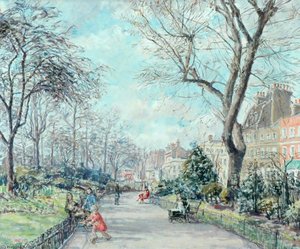
Harmar’s landscapes frequently depict tranquil scenes of Dorset countryside, capturing the subtle shifts in light and color throughout the seasons. She meticulously rendered details—such as foliage textures and reflections on water surfaces—to convey a profound sense of place. Simultaneously, her portraits delve into the inner lives of her subjects, portraying them with sensitivity and empathy. These intimate depictions reveal nuanced expressions of emotion and capture fleeting moments of human connection. Her ability to translate psychological states onto canvas solidified her reputation as one of Britain’s foremost portrait artists.- “Cheyne Walk Gardens” (1938): This Impressionistic landscape showcases Harmar's masterful use of color and brushwork, capturing the autumnal splendor of Cheyne Walk Gardens in Chelsea.