A Quiet Resonance of Faith and Observation
Dora Holzhandler (1928–2015) emerged from the vibrant artistic milieu of post-lar London, forging a distinctive path within the realm of naive painting—a style characterized by its simplicity, directness, and profound engagement with spiritual contemplation. Born in Paris to Jewish Polish parents, her early life instilled in her a deep appreciation for cultural heritage and familial bonds, shaping her artistic sensibilities before relocating to England at the age of six. Her formative years amidst London's Anglo-French Art Centre cemented her connection to European avant-garde movements, notably Marc Chagall and Henri Matisse, whose expressive use of color and symbolic imagery profoundly impacted her visual vocabulary.
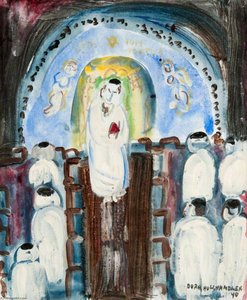
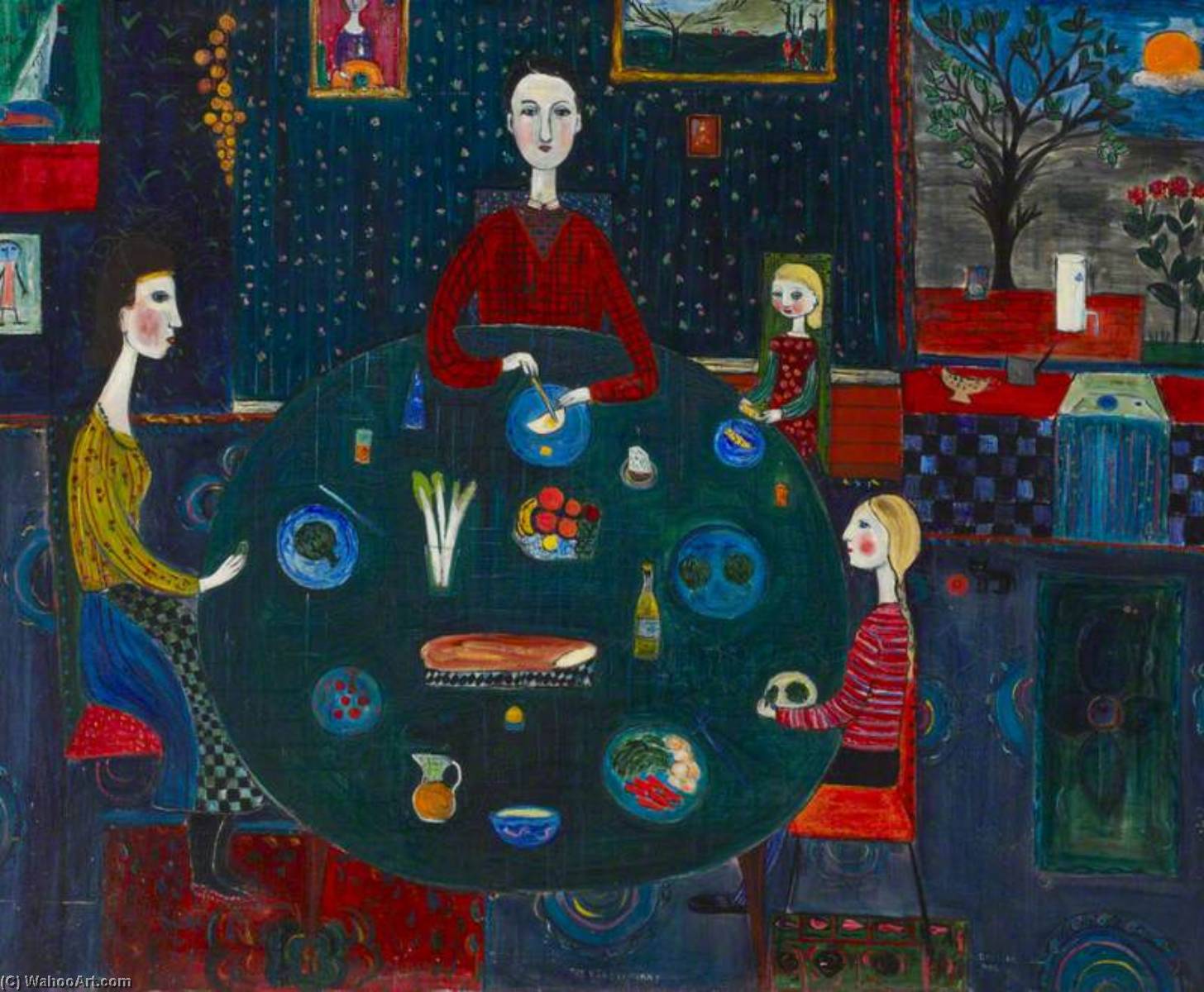
The essence of Holzhandler’s work lies in its ability to capture a mystical intimacy. As the art critic Sister Wendy Beckett once observed, she possessed a gift that made all things luminous, offering a precious light in a confused world. Her canvases often serve as windows into a meditative state, where the act of painting becomes a way to recreate a moment from decades past with absolute truth. Whether through her oils of lovers embracing in psychedelically patterned rooms or her darkly flourishing gouaches of icon-like mothers and children, there is an enchanting, childlike innocence of perception that masks a sophisticated emotional depth.
Symbolism and the Spiritual Tapestry
Holzhandler’s paintings are instantly recognizable by their meticulous attention to detail within a deliberately restrained aesthetic. Her artistic language was deeply informed by her personal spiritual journey, developing a dual belief in both the Jewish and Buddhist faiths. This intersection of traditions allowed her to weave a complex tapestry of repeated iconography and religious symbolism into her work. Her subjects—often figures engaged in everyday activities like sweeping a floor or eating bagels—are imbued with a sacred resonance that transcends the mundane.
The recurring motifs in her oeuvre reflect a profound engagement with:
- Jewish Tradition: Incorporating elements of her Polish-Jewish heritage, including scenes of religious life and cultural rituals.
- Buddhist Philosophy: Infusing her compositions with a sense of meditative stillness and the pursuit of inner peace.
- Universal Human Connection: Using simple, accessible forms to tell stories of domesticity, love, and the shared human experience.
Artistic Evolution and Legacy
Her artistic breakthrough arrived in 1947 when the renowned artist Victor Pasmore championed her work, initiating a collaborative relationship that propelled her into the spotlight of London’s burgeoning art scene. Following her debut exhibition at the Beaux Arts Gallery in 1954, she established a reputation as a gifted storyteller whose canvases whispered tales of human connection. Throughout her prolific career, she continued to refine her technique—primarily utilizing acrylic paint on canvas and luminous watercolours—embracing a method that prioritized clarity of vision and emotional impact over mere technical bravado.
Beyond the gallery walls, Holzhandler’s life was marked by meaningful connections; she famously befriended the violinist Nigel Kennedy, even painting his portrait. Today, her historical significance is cemented by the presence of her works in prestigious institutions such as the Museum of Modern Art in Glasgow and the Jewish Museum London. Her legacy remains that of an artist who could find the extraordinary within the ordinary, leaving behind a body of work that continues to offer a sanctuary of peace and spiritual beauty for all who behold it.