David Allan portréja

A 47 legnevesebbebb David Allan festmény, mindegyik egyedistens

Frissítve: november 2026 · rangsorolva népszerűségi pontszámunk alapján (minden mű keresései, látogatásai és megrendelései alapján) · 58 mű David Allan alkotása a katalógusunkban

Röviden

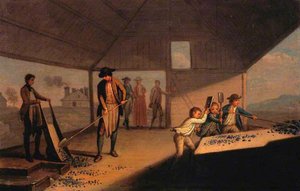
Óriásbányászat Leadhillsben – Azércsukott Ércek (1789) az a David Allan festmény, amely a legtöbb tekintetet felvonja; az eredeti mű a Scottish National Gallery gyűjteményében található, Edinburgh. Ezután a tekintet The Uncultivated Genius (1775) és Joseph Nolleken (1770) elemre irányul. A David Allan 58 műve közül a katalógusunkban megtalálható 47 legnépesebb alkotás, melyeket az év, a múzeum és az örökévalóságának okai kísérnek.

1744 – 1796, Alloa Neoclassicism A legtöbb mű: Scottish National Gallery

A galéria szemével: David Allan legjobb 10 festménye

1
Óriásbányászat Leadhillsben – Azércsukott Ércek (1789) (1889) -ja David Allan

Óriásbányászat Leadhillsben – Azércsukott Ércek

1789 · Olajfestmény vászonon · Scottish National Gallery, Edinburgh

David Allan és az Énki Ünnepélyes Székhelye – Egy Korabeli Társadalmi Könyörködés Megfestése A székhelyét Alloában, Skóziaban alapító David Allan egy igazán különleges művészi korszakra tekint vissza. Édesapja pozíciója révén először kapcsolatot épített ki az európai világgal, ami későbbi művészi látomásait is befolyásolta – ez mutatkozott meg elsősorban alkotásaiban. Az Allan család fiatal fia természetes érzéket és tehetséget tanúsított már gyermekkorában, mely végül egy nagy művészi karrierre johtzott. 1764-ben Róma…

2
The Uncultivated Genius (1775) (1889) -ja David Allan

The Uncultivated Genius

1775 · Oil On Canvas · Scottish National Gallery, Edinburgh

A man sits anchored in a chair, his body a quiet weight against the backdrop of a working studio. Behind him, a woman stands, her presence a vertical counterpoint to his seated form. They are bound by the shared gravity of the canvas. Both hands grip paintbrushes, poised at the edge of creation. The air in the room feels thick with the scent of linseed oil and the silent tension…

3
Joseph Nolleken (1770) (1889) -ja David Allan

Joseph Nolleken

1770 · Oil On Canvas · Yale Center for British Art, New Haven

There is a palpable sense of purpose in the way the subject interacts with the classical nude. This is a scene of connoisseurship, where the pursuit of ancient ideals meets the reality of 18th-century life. The painting avoids the frantic energy of the street, opting instead for the quietude of the study. Through the use of oil on canvas, the artist captures more than a likeness; he captures a temperament.…

4
Peasant woman of a town in the Kingdom of Naples (1770) (1889) -ja David Allan

Peasant woman of a town in the Kingdom of Naples

1770 · Watercolor · Scottish National Gallery of Modern Art, Edinburgh

In this delicate, full-length portrait sketch, David Allan presents "Peasant woman of a town in the Kingdom of Naples," created about 1770. The subject is positioned centrally against a plain, neutral background, which allows the viewer to focus entirely on her presence. She is captured in a frontal, standing pose, her figure anchored at the bottom by bare feet and at the top by a light head covering. This verticality…

5
James Colvin (1768) (1889) -ja David Allan

James Colvin

1768 · Oil On Canvas

This oil on canvas portrait, dating to 1768, depicts a young boy positioned centrally against a dark, indistinct background. The subject is shown from the upper body upwards, with his legs crossed at the bottom of the composition. He is dressed in formal attire consisting of a jacket, waistcoat, and breeches, all rendered in a muted beige or tan palette. Subtle variations in this color create texture and shading throughout…

7
Jean Duff (1746 1805), Lady Grant (1780) (1889) -ja David Allan

Jean Duff (1746 1805), Lady Grant

1780 · Oil On Canvas

A young woman sits in a quiet, heavy stillness. She leans her head against her hand, a gesture of soft contemplation that pulls the viewer into her private orbit. The light falls from above, catching the sheen of her silk dress and the delicate, translucent edges of her lace. Behind her, a muted red velvet drape provides a deep, steady weight to the composition. She is a figure of poise,…

8
Anne Forbes (1745–1834), Artist (1781) (1889) -ja David Allan

Anne Forbes (1745–1834), Artist

1781 · Oil On Canvas · Scottish National Portrait Gallery, Edinburgh

The subject sits within an oval frame, her presence filling the space with a quiet, direct intensity. She is a woman of the late eighteenth century, captured in oil on canvas. Her gaze meets the viewer, steady and unblinking, creating an immediate sense of intimacy. The lighting is soft, washing over the contours of her face and the delicate folds of her gown. It is a study of light and…

9
Sir John Halkett of Pitfirrane (1720–1793), 4th Baronet, Mary Hamilton, Lady Halkett and their Family (1781) (1889) -ja David Allan

Sir John Halkett of Pitfirrane (1720–1793), 4th Baronet, Mary Hamilton, Lady Halkett and their Family

1781 · Oil On Canvas · Scottish National Gallery, Edinburgh

The sun hangs low over a rolling Scottish landscape, casting a soft, diffused glow across a gathering of figures. At the heart of the scene, a great tree rises, its trunk anchoring a lively outdoor dance. Men, women, and children move in a rhythmic arrangement, their silhouettes breaking the greenery of the hills. In the distance, the pale geometry of a stately mansion rests against the horizon, a silent witness…

10
James Abercromby of Tullibody, Esq (1779) (1889) -ja David Allan

James Abercromby of Tullibody, Esq

1779 · Oil · University of Dundee, Dundee

In the delicate brushstrokes of David Allan’s 1779 masterpiece, James Abercromby of Tullibody, Esq, we find a profound connection between humanity, nature, and the quiet innocence of youth. This evocative portrait transcends a mere depiction of a subject; it serves as a window into the pastoral ideals of the late eighteenth century. The scene unfolds in a lush, verdant setting where the boundaries between the domestic and the wild seem…

David Allan híres festményei, 11 és 47 között

11The Children of David Allan (1790) (1889) -ja David AllanThe Children of David Allan1790 · Royal Scottish Academy of Art - Architecture 12John Francis, 7th Earl of Mar, and Family (1889) -ja David AllanJohn Francis, 7th Earl of Mar, and FamilyNational Trust For Scotland 13Faith (triptych, left wing) (1889) -ja David AllanFaith (triptych, left wing)Edinburgh City Chambers 14Lady Frances Erskine (1716–1776) (1764) (1889) -ja David AllanLady Frances Erskine (1716–1776)1764 15The Interior of the Foulis Academy of Fine Arts (1761) (1889) -ja David AllanThe Interior of the Foulis Academy of Fine Arts1761 16James Colvin (1768) (1889) -ja David AllanJames Colvin1768 · Scottish National Gallery 17Sir William Hamilton (1730–1803), and the First Lady Hamilton (1765–1815), in Their Apartment in Naples (1770) (1889) -ja David AllanSir William Hamilton (1730–1803), and the First Lady Hamilton (1765–1815), in Their Apartment in Naples1770 18The Continence of Scipio (1774) (1889) -ja David AllanThe Continence of Scipio1774 · Scottish National Gallery 19The Family of the Island of Procida with Vesuvius in the Background (1775) (1889) -ja David AllanThe Family of the Island of Procida with Vesuvius in the Background1775 · Clackmannanshire Council Museum And Heritage Service 20The Origin of Painting (The Maid of Corinth) (1775) (1889) -ja David AllanThe Origin of Painting (The Maid of Corinth)1775 · Scottish National Gallery 21The Vestals Attending the Sacred Fire (1772) (1889) -ja David AllanThe Vestals Attending the Sacred Fire1772 22James Tassie (1735–1799), Sculptor and Gem Engraver (1781) (1889) -ja David AllanJames Tassie (1735–1799), Sculptor and Gem Engraver1781 · Scottish National Portrait Gallery 23The Connoisseurs John Caw (d.1784), John Bonar (1747–1807) and James Bruce (1783) (1889) -ja David AllanThe Connoisseurs John Caw (d.1784), John Bonar (1747–1807) and James Bruce1783 · Scottish National Gallery 24Lead Processing at Leadhills Weighing the Lead Bars (1780) (1889) -ja David AllanLead Processing at Leadhills Weighing the Lead Bars1780 · Scottish National Gallery 25Francesco Ravai, Known as 'Baiocco' (1777) (1889) -ja David AllanFrancesco Ravai, Known as 'Baiocco'1777 26Mrs James Tassie, probably Ann Harker (1730–1790) (1779) (1889) -ja David AllanMrs James Tassie, probably Ann Harker (1730–1790)1779 · Scottish National Gallery 27Portrait of Two Boys (perhaps the two elder sons of John Francis Erskine, later 7th Earl of Mar) (1783) (1889) -ja David AllanPortrait of Two Boys (perhaps the two elder sons of John Francis Erskine, later 7th Earl of Mar)1783 · Clackmannanshire Council Museum And Heritage Service 28Niel Gow (1727–1807), Violinist and Composer, with his Brother Donald Gow (active c.1780), Cellist (1780) (1889) -ja David AllanNiel Gow (1727–1807), Violinist and Composer, with his Brother Donald Gow (active c.1780), Cellist1780 · Scottish National Portrait Gallery 29Charles Watson, Esq. (1740–1804), and His Wife, Lady Mary (d.1793), with Their Two Children, James (1781–1823) and Anne (1782–1800), in a Landscape (1782) (1889) -ja David AllanCharles Watson, Esq. (1740–1804), and His Wife, Lady Mary (d.1793), with Their Two Children, James (1781–1823) and Anne (1782–1800), in a Landscape1782 30Lead Processing at Leadhills Smelting the Ore (1789) (1889) -ja David AllanLead Processing at Leadhills Smelting the Ore1789 · Scottish National Gallery 31The Spreull Family (1793) (1889) -ja David AllanThe Spreull Family1793 32William Inglis (c.1712–1792), Surgeon and Captain of the Honourable Company of Edinburgh Golfers (1787) (1889) -ja David AllanWilliam Inglis (c.1712–1792), Surgeon and Captain of the Honourable Company of Edinburgh Golfers1787 · Scottish National Portrait Gallery 33Lead Processing at Leadhills Weighing the Lead Bars (1789) (1889) -ja David AllanLead Processing at Leadhills Weighing the Lead Bars1789 · Scottish National Gallery 34James Erskine, Lord Alva, and his Family (1780) (1889) -ja David AllanJames Erskine, Lord Alva, and his Family1780 · Scottish National Gallery 35Charity (triptych, right wing) (1889) -ja David AllanCharity (triptych, right wing) 36Lead Processing at Leadhills Washing the Ore (1789) (1889) -ja David AllanLead Processing at Leadhills Washing the Ore1789 · Scottish National Gallery 37David Allan (1744–1796), Művész (önképe) (1770) (1889) -ja David AllanDavid Allan (1744–1796), Művész (önképe)1770 · Royal Scottish Academy of Art - Architecture 38James Craig, Architect (1781) (1889) -ja David AllanJames Craig, Architect1781 · Scottish National Portrait Gallery 39The Forth at Alloa (1889) -ja David AllanThe Forth at Alloa 40The Forth at Alloa (1889) -ja David AllanThe Forth at AlloaNational Trust For Scotland 41Lady Charlotte Erskine (1889) -ja David AllanLady Charlotte Erskine 42Clackmann Pow and Hill with the River Forth Looking East (1889) -ja David AllanClackmann Pow and Hill with the River Forth Looking EastNational Trust For Scotland 43Mrs Scott, Mother of Sir Walter Scott (1889) -ja David AllanMrs Scott, Mother of Sir Walter Scott 44Thomas, Lord Erskine (d.1766) (1889) -ja David AllanThomas, Lord Erskine (d.1766)National Trust For Scotland 45Portrait of a Young Man in a Green Jacket (1889) -ja David AllanPortrait of a Young Man in a Green JacketThe National Trust For Scotland 46Hope (triptych, centre panel) (1889) -ja David AllanHope (triptych, centre panel)Edinburgh City Chambers 47Sir William Hamilton (1775) (1889) -ja David AllanSir William Hamilton1775 · National Portrait Gallery

A témák, amelyek David Allan figyelmét meghúzták

A négy leggyakorobban előforduló téma ebben az eredeti művekben, mindegyik a legkiválóbb példájával.

A műemlékek, amelyek David Allan eredeti műveit őrzik

A 8 olyan múzeum, amely a legtöbb ezen az oldalon szereplő festményet őrzi.

Múzeum Város David Allan művei Ebből a listából származó festmények
Scottish National Gallery, EdinburghScottish National Gallery Edinburgh 13 Óriásbányászat Leadhillsben – Azércsukott Ércek, The Uncultivated Genius, Sir John Halkett of Pitfirrane (1720–1793), 4th Baronet, Mary Hamilton, Lady Halkett and their Family
Scottish National Portrait Gallery, EdinburghScottish National Portrait Gallery Edinburgh 5 Anne Forbes (1745–1834), Artist, James Tassie (1735–1799), Sculptor and Gem Engraver, Niel Gow (1727–1807), Violinist and Composer, with his Brother Donald Gow (active c.1780), Cellist
National Trust For Scotland, AlloaNational Trust For Scotland Alloa 4 John Francis, 7th Earl of Mar, and Family, The Forth at Alloa, Clackmann Pow and Hill with the River Forth Looking East
Clackmannanshire Council Museum And Heritage Service, AlloaClackmannanshire Council Museum And Heritage Service Alloa 3 The Family of the Island of Procida with Vesuvius in the Background, The Family of the Island of Procida with Vesuvius in the Background, Portrait of Two Boys (perhaps the two elder sons of John Francis Erskine, later 7th Earl of Mar)
Royal Scottish Academy of Art - Architecture, EdinburghRoyal Scottish Academy of Art - Architecture Edinburgh 2 The Children of David Allan, David Allan (1744–1796), Művész (önképe)
Edinburgh City Chambers, EdinburghEdinburgh City Chambers Edinburgh 2 Faith (triptych, left wing), Hope (triptych, centre panel)
Yale Center for British Art, New HavenYale Center for British Art New Haven 1 Joseph Nolleken
Scottish National Gallery of Modern Art, EdinburghScottish National Gallery of Modern Art Edinburgh 1 Peasant woman of a town in the Kingdom of Naples

David Allan évtizedekig: egy egyedi eredeti mű minden évtizedben

Művek évtizedenként

Váassz ki egy évtizedet, hogy megnézhesd az azt meghatározó eredetiműveket.

David Allan festményei: kérdések a galériának

Mi a leghíresebb műve David Allannek?Fedje fel a választ

Óriásbányászat Leadhillsben – Azércsukott Ércek (1789), Scottish National Gallery, Edinburgh. Ezután The Uncultivated Genius (1775) és Joseph Nolleken (1770) következik.

Milyen életkorában alkotta meg David Allan a(z) Óriásbányászat Leadhillsben – Azércsukott Ércek műszt?Fedje fel a választ

45 éves: Óriásbányászat Leadhillsben – Azércsukott Ércek 1789-ből származik, David Allan pedig 1744-ben született.

Melyik tíz festménye David Allan a leghíresebb?Fedje fel a választ

Óriásbányászat Leadhillsben – Azércsukott Ércek, The Uncultivated Genius, Joseph Nolleken, Peasant woman of a town in the Kingdom of Naples, James Colvin, The Family of the Island of Procida with Vesuvius in the Background, Jean Duff (1746 1805), Lady Grant, Anne Forbes (1745–1834), Artist, Sir John Halkett of Pitfirrane (1720–1793), 4th Baronet, Mary Hamilton, Lady Halkett and their Family és James Abercromby of Tullibody, Esq. A fenti rangsor a művek évszamarát és a múzeumát jelzi.

Hány mű alkotása ismert David Allan nevében?Fedje fel a választ

Katalógusunkban 58 mű található David Allan alkotótól, 1761 és 1793 év közötti időszakból.

Hol tekinthetők meg a leghíresebb David Allan eredetijeit?Fedje fel a választ

Leginkább Scottish National Gallery (Edinburgh), Scottish National Portrait Gallery (Edinburgh) és National Trust For Scotland (Alloa) található. A fenti múzeumi táblázatban mindegyik felsorolásra került.

Melyik időszakban alkotta David Allan a leghíresebb festményeit?Fedje fel a választ

1780s alatt: a jelen laphonon található 47 műből 16 készült ebben az időszakban, köztük Óriásbányászat Leadhillsben – Azércsukott Ércek.

Melyik híres David Allan festmény a legkorábbi, és melyik a legutóbb készült?Fedje fel a választ

Ezen az oldalon a leghitelesebb The Interior of the Foulis Academy of Fine Arts (1761), a legutóbbi pedig The Spreull Family (1793).

Milyen témakörket kedvelt David Allan?Fedje fel a választ

18th century (9), Portrait (4) és Portraiture (4), a jelen oldalon található 47 műművészeti alkotás között.

Milyen anyagokkal festett leggyakrabban David Allan?Fedje fel a választ

Oil On Canvas, a jelen oldalon található 47 műből 12 darab esetén.

Mely művészeti irányba tartozik David Allan műve?Fedje fel a választ

Neoclassicism, ezen az oldalon található eredetiek alapján.

Milyen David Allan eredeti műveket láthatok a Scottish National Gallery kiállításaiban?Fedje fel a választ

Óriásbányászat Leadhillsben – Azércsukott Ércek, The Uncultivated Genius és Sir John Halkett of Pitfirrane (1720–1793), 4th Baronet, Mary Hamilton, Lady Halkett and their Family: a Scottish National Gallery, Edinburgh 13 művet őrzi ezen az oldalon.

David Allan: a művész portréja

A Scottish Voice in the Age of Enlightenment

David Allan, born in Alloa, Scotland, in 1744, emerged as a significant figure during a period of profound artistic and intellectual change. His father’s position as harbor master instilled an early connection to the world beyond Scotland's shores, hinting at influences that would later shape his artistic vision. Though details of his earliest training remain scarce, it is clear that a natural talent blossomed from youth, setting him on a path toward becoming one of Scotland’s most celebrated painters. This path led him, in 1764, to Rome – a pivotal journey for any aspiring artist of the time. For ten years, Allan immersed himself in the study of classical art and architecture, diligently copying masterpieces like the Borghese Gladiator, honing his skills in form and technique under the guidance of Gavin Hamilton. This Italian sojourn wasn’t merely about technical mastery; it was an immersion into a world of ideals that would subtly permeate his later work. The influence of Roman sculpture and painting is evident in his meticulous attention to detail and his embrace of classical composition, yet he never lost sight of his Scottish roots.

Blending Worlds: Neoclassicism with Scottish Life

Upon returning to Scotland around 1770, Allan established himself in Edinburgh, quickly becoming a leading artist within the city’s vibrant cultural scene. His style is remarkable for its unique synthesis of Neoclassical precision and Rococo elegance. While embracing the classical ideals of order, balance, and clarity – hallmarks of the Neoclassicism movement – he retained a decorative sensibility evident in his use of color and composition. This wasn't a rigid adherence to any single school but rather a thoughtful blending of influences. Allan excelled in both portraiture and genre painting, demonstrating a keen observational skill and an ability to capture the essence of his subjects. His portraits weren’t simply likenesses; they possessed psychological depth, revealing character and personality. He skillfully rendered the nuances of expression, capturing not just physical appearance but also inner emotions. However, it was perhaps in his genre scenes that Allan truly distinguished himself, offering intimate glimpses into 18th-century Scottish life – from bustling market days to quiet domestic moments. Works like “Lead Processing at Leadhills Washing the Ore” are not merely depictions of industry but insightful social commentaries rendered with remarkable realism and attention to detail. He also ventured into historical subjects, such as "Hope (triptych, centre panel)", showcasing his ambition and versatility while skillfully integrating classical influences with religious themes.

The ‘Scottish Hogarth’ and a Legacy Forged in Observation

Allan's dedication to depicting contemporary life earned him the moniker “the Scottish Hogarth,” a comparison that highlights his contributions to genre painting and social commentary through art. While not directly emulating Hogarth’s often satirical style, Allan shared a similar interest in portraying everyday scenes with honesty and insight. He possessed an exceptional ability to capture the nuances of human interaction and the textures of daily life, elevating seemingly ordinary subjects to artistic significance. His association with the Foulis Academy, a prominent center for artistic training in Edinburgh, further solidified his role in shaping Scottish art during this period. Allan wasn’t just creating paintings; he was contributing to the development of a distinct national artistic identity. He influenced subsequent generations of Scottish artists, encouraging them to look inward and find inspiration in their own culture and surroundings.

Notable Works and Artistic Techniques

Allan's oeuvre is diverse, reflecting his versatility as an artist. “The Family of Procida” exemplifies his mastery of composition and his ability to create a sense of harmony within a complex scene. “Hope (triptych, centre panel)” demonstrates his skill in historical painting and his understanding of classical iconography. His portraits, such as those of James Craig, Architect, are notable for their psychological depth and the subtle rendering of character. Allan’s illustrations for Allan Ramsay’s *The Gentle Shepherd* are particularly noteworthy, demonstrating a playful wit and an ability to capture the spirit of Scottish pastoral life. He was a master of both large-scale historical compositions and intimate domestic scenes, showcasing a remarkable range of skill and sensitivity. His use of light and shadow, his careful attention to detail, and his skillful rendering of textures all contribute to the enduring appeal of his work.

A Lasting Impression

David Allan's impact extends beyond his individual artworks. His illustrations for Allan Ramsay’s *The Gentle Shepherd* are particularly noteworthy, demonstrating a playful wit and an ability to capture the spirit of Scottish pastoral life. He was a master of both large-scale historical compositions and intimate domestic scenes, showcasing a remarkable range of skill and sensitivity. His death in 1796 marked the loss of a truly original voice in British art. Today, his paintings continue to be admired for their technical brilliance, insightful portrayals of Scottish society, and enduring artistic merit. Allan’s legacy lies not only in the beauty of his creations but also in his ability to bridge classical ideals with distinctly Scottish subject matter, leaving an indelible mark on the cultural landscape of his time and inspiring artists for generations to come. He remains a testament to the power of observation, the importance of artistic training, and the enduring appeal of capturing the human experience.