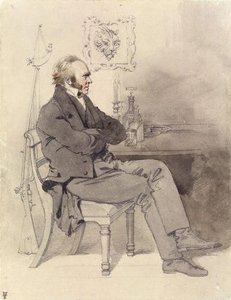
Daniel Maclise portréja

A 100 legnevezesebb Daniel Maclise festmény, egy galériaválaszték

Frissítve: november 2026 · rangsorolva népszerűségi pontszámunk alapján (minden mű keresései, látogatásai és megrendelései alapján) · 237 mű Daniel Maclise alkotása a katalógusunkban

Röviden

Daniel Maclise hagyatékából a leghíresebb alkotás Snap-Apple Night. Röviddel ezután követik őket And in the First Career they Ran és Henry Viii's First Interview With Anne Boleyn. Katalógusunkban 237 mű található Daniel Maclise alkotótól; a galéria megőrizte a világ által leginkább csodált 100 darabot, melyeket a dátummal, a múzeummal és a történetükkel együtt mutatunk be.

1806 – 1870, Cork Romanticism A legtöbb mű: National Gallery of Ireland

Daniel Maclise legjobb 10 festménye: a galéria válogatása

1
Snap-Apple Night (1889) -ja Daniel Maclise

Snap-Apple Night

Oil On Canvas

, also known as All-Hallow Eve, is an oil on canvas painting by the Irish artist Daniel Maclise. The work captures a specific moment of folk tradition, born from a Halloween party the artist attended in Blarney, Ireland, in October 1832. It remains a significant record of communal gathering and seasonal ritual.

2
And in the First Career they Ran (1889) -ja Daniel Maclise

And in the First Career they Ran

Oil On Canvas

The scene unfolds within the dramatic composition of And in the First Career they Ran, a work that carries the heavy weight of history through the hand of Daniel Maclise. This painting captures a moment of intense power and submission, frozen in a way that suggests a narrative long since passed. Maclise, an artist whose life spanned the transition of eras, brings a sense of gravity to this specific encounter…

3
Henry Viii's First Interview With Anne Boleyn (1889) -ja Daniel Maclise

Henry Viii's First Interview With Anne Boleyn

Oil

Henry Viii's First Interview With Anne Boleyn by Daniel Maclise captures a pivotal moment in English history. The scene portrays a formal meeting between King Henry VIII and Anne Boleyn within an opulent interior. This encounter, set in a royal court or palace chamber, marks a significant turning point in the Tudor era. Maclise focuses on the interaction between these two central figures, framing their meeting as a historical event…

5
A Scene from Gil Blas (1839) (1889) -ja Daniel Maclise

A Scene from Gil Blas

1839 · Oil · National Gallery of Ireland, Dublin

A Scene from Gil Blas is an oil on canvas executed by the Irish artist Daniel Maclise. Created in 1839, the work captures a specific moment of interaction among a group of figures dressed in period costume. The composition focuses on the social dynamics of the subjects within a structured interior setting.

6
D Maclise (1833) (1889) -ja Daniel Maclise

D Maclise

1833 · Watercolor · National Library of Wales, Aberystwyth

The artwork titled D Maclise is a portrait of a young man created by the artist Daniel Maclise. This specific piece dates to about 1833. The subject is depicted in a three-quarter length pose, seated and turned slightly toward the viewer. The sitter is a gentleman, presented with a sense of poise and calm.

7
A Scene from Gil Blas (1838) (1889) -ja Daniel Maclise

A Scene from Gil Blas

1838 · Oil · Royal Collection, London

A Scene from Gil Blas is an oil painting by Daniel Maclise, executed about 1838. The canvas captures a moment of social interaction within a rustic setting. Maclise, an Irish artist, brought a keen sense of narrative to this composition, focusing on the quiet tensions of a shared meal.

8
A Scene from Midas (1838) (1889) -ja Daniel Maclise

A Scene from Midas

1838 · Oil On Canvas · Royal Collection, London

A Scene from Midas is an oil painting by Daniel Maclise. The work dates to 1838. It captures a moment of dramatic tension through a collection of figures arranged within a detailed interior. The canvas holds a stillness that feels heavy, like the air before a storm breaks.

9
The Chivalric Vow of the Ladies and the Peacock (1835) (1889) -ja Daniel Maclise

The Chivalric Vow of the Ladies and the Peacock

1835 · Oil On Canvas · Government Art Collection, London

The Chivalric Vow of the Ladies and the Peacock is a historical narrative painting by Daniel Maclise. Created about 1835, the work is executed in a Romantic style. The composition depicts a scene of chivalry and ceremony, centering on a group of figures engaged in a formal ritual. Within the assembly, a knight in full plate armor is positioned near an altar or ceremonial object, surrounded by ladies wearing ornate,…

A Daniel Maclise válogatás folytatódik: 11 – 100

11The Spirit of Justice (1850) (1889) -ja Daniel MacliseThe Spirit of Justice1850 · Auckland Art Gallery Toi o Tāmaki 12Scottish Lovers (1863) (1889) -ja Daniel MacliseScottish Lovers1863 · Chazen Museum of Art 13The Ballad Seller (1858) (1889) -ja Daniel MacliseThe Ballad Seller1858 14The Sleeping Beauty (1889) -ja Daniel MacliseThe Sleeping Beauty 15A Scene from 'Undine' (1843) (1889) -ja Daniel MacliseA Scene from 'Undine'1843 · Royal Collection 16First Steps (1829) (1889) -ja Daniel MacliseFirst Steps1829 17The reign of King Richard the Third (1889) -ja Daniel MacliseThe reign of King Richard the Third 18John Baldwin Buckstone (1836) (1889) -ja Daniel MacliseJohn Baldwin Buckstone1836 · National Portrait Gallery 19Macready as Werner (1850) (1889) -ja Daniel MacliseMacready as Werner1850 20The Loving Cup (1859) (1889) -ja Daniel MacliseThe Loving Cup1859 21King Lear and Cordelia (1889) -ja Daniel MacliseKing Lear and Cordelia 22Portrait of Thomas Moore (1779-1852), Poet (1889) -ja Daniel MaclisePortrait of Thomas Moore (1779-1852), PoetNational Gallery of Ireland 23Portrait of Edmund Kean (1787-1833), Actor, as Hamlet (1889) -ja Daniel MaclisePortrait of Edmund Kean (1787-1833), Actor, as HamletNational Gallery of Ireland 24Studies after various hands (1889) -ja Daniel MacliseStudies after various hands 25Undine (1889) -ja Daniel MacliseUndine 26The Play Scene, Act Iii (1889) -ja Daniel MacliseThe Play Scene, Act Iii 27Edward Bulwer-Lytton , Author of 'Pelham' (1889) -ja Daniel MacliseEdward Bulwer-Lytton , Author of 'Pelham' 28The Hall Of Glennaquoich (1889) -ja Daniel MacliseThe Hall Of Glennaquoich 29George Cruikshank (1889) -ja Daniel MacliseGeorge Cruikshank 30Figures (1889) -ja Daniel MacliseFigures 31Drury Lane (1889) -ja Daniel MacliseDrury Lane 32Theodore Edward Hook (1889) -ja Daniel MacliseTheodore Edward Hook 33Mr. Apperley (1889) -ja Daniel MacliseMr. Apperley 34Devil's Glen, Wicklow (1889) -ja Daniel MacliseDevil's Glen, Wicklow 35The Rev. Francis Mahony (1889) -ja Daniel MacliseThe Rev. Francis Mahony 36Morte d'Arthur (1889) -ja Daniel MacliseMorte d'Arthur 37William Makepeace Thackeray (1889) -ja Daniel MacliseWilliam Makepeace Thackeray 38Constantine Henry Phipps, 1st Marquess of Normanby (1889) -ja Daniel MacliseConstantine Henry Phipps, 1st Marquess of Normanby 39Study for The Veiled Prophet of Khorassan 1 (1889) -ja Daniel MacliseStudy for The Veiled Prophet of Khorassan 1 40Donnybrook Fair; The Wonderful Tune (1889) -ja Daniel MacliseDonnybrook Fair; The Wonderful Tune 41Portrait of Thomas Carlyle, historian and philosopher (1889) -ja Daniel MaclisePortrait of Thomas Carlyle, historian and philosopher 42John Constable (1889) -ja Daniel MacliseJohn Constable 43Washington Irving (1889) -ja Daniel MacliseWashington Irving 44Self-portrait (1889) -ja Daniel MacliseSelf-portrait 45Portrait Of A Gentleman (1889) -ja Daniel MaclisePortrait Of A Gentleman 46Miners (1889) -ja Daniel MacliseMiners 47The Holy Well (1889) -ja Daniel MacliseThe Holy Well 48Sketch Of A Bearded Man In Profile In A Letter To David Roberts (1889) -ja Daniel MacliseSketch Of A Bearded Man In Profile In A Letter To David Roberts 49Sir Bedivere Sees An Arm Catching King Arthur's (1889) -ja Daniel MacliseSir Bedivere Sees An Arm Catching King Arthur's 50Preliminary drawing for the group caricature, 'The Fraserians' (1889) -ja Daniel MaclisePreliminary drawing for the group caricature, 'The Fraserians' 51Dionysius Lardner (1889) -ja Daniel MacliseDionysius Lardner 52Antiquaries (1889) -ja Daniel MacliseAntiquaries 53Crofton Croker (1889) -ja Daniel MacliseCrofton Croker 54Charles Molloy Westmacott (1889) -ja Daniel MacliseCharles Molloy Westmacott 55Battle Scene (1889) -ja Daniel MacliseBattle Scene 56Charles Dickens engraved by Emden (1889) -ja Daniel MacliseCharles Dickens engraved by Emden 57Sydney Smith (1889) -ja Daniel MacliseSydney Smith 58Woman writing (1889) -ja Daniel MacliseWoman writing 59James Henry Leigh Hunt (1889) -ja Daniel MacliseJames Henry Leigh Hunt 60George Robert Gleig (1889) -ja Daniel MacliseGeorge Robert Gleig 61Robert Macnish (1889) -ja Daniel MacliseRobert Macnish 62Donnybrook Fair (1889) -ja Daniel MacliseDonnybrook Fair 63Farm yard animals (1889) -ja Daniel MacliseFarm yard animals 64Michael Faraday (1889) -ja Daniel MacliseMichael Faraday 65Illustration for Dicken's 'Chimes' (1889) -ja Daniel MacliseIllustration for Dicken's 'Chimes' 66Drawing (1889) -ja Daniel MacliseDrawing 67Francis Egerton, 1st Earl of Ellesmere (1889) -ja Daniel MacliseFrancis Egerton, 1st Earl of Ellesmere 68Portrait of Samuel Taylor Coleridge, poet (1889) -ja Daniel MaclisePortrait of Samuel Taylor Coleridge, poet 69Coronation Of Harold Ii King Of The Anglo-saxons (1889) -ja Daniel MacliseCoronation Of Harold Ii King Of The Anglo-saxons 70Portrait of John Soane (1889) -ja Daniel MaclisePortrait of John Soane 71Mr. John Maguire (1889) -ja Daniel MacliseMr. John Maguire 72Benjamin Disraeli, Earl of Beaconsfield (1889) -ja Daniel MacliseBenjamin Disraeli, Earl of Beaconsfield 73Three men (1889) -ja Daniel MacliseThree men 74Jenny Lind (1889) -ja Daniel MacliseJenny Lind 75James Justinian Morier (1889) -ja Daniel MacliseJames Justinian Morier 76Cat and children (1889) -ja Daniel MacliseCat and children 77Miss jane porter (1889) -ja Daniel MacliseMiss jane porter 78William Cobbett (1889) -ja Daniel MacliseWilliam Cobbett 79On board the severn from Cork to Bristol (1889) -ja Daniel MacliseOn board the severn from Cork to Bristol 80Gravediggers (1889) -ja Daniel MacliseGravediggers 81Alaric attila watts (1889) -ja Daniel MacliseAlaric attila watts 82Donkey and castle (1889) -ja Daniel MacliseDonkey and castle 83Man and Pipes (1889) -ja Daniel MacliseMan and Pipes 84Henry Brougham, 1st Baron Brougham and Vaux 1 (1889) -ja Daniel MacliseHenry Brougham, 1st Baron Brougham and Vaux 1 85Tydus pooh pooh (1889) -ja Daniel MacliseTydus pooh pooh 86Artist sketching (1889) -ja Daniel MacliseArtist sketching 87John wilson (1889) -ja Daniel MacliseJohn wilson 88Edward George Earle Lytton Bulwer Lytton, 1st Baron Lytton 1 (1889) -ja Daniel MacliseEdward George Earle Lytton Bulwer Lytton, 1st Baron Lytton 1 89Earl of Munster (1889) -ja Daniel MacliseEarl of Munster 90Lady morgan (1889) -ja Daniel MacliseLady morgan 91Siamese Twins (1889) -ja Daniel MacliseSiamese Twins 92Portrait of Thomas Moore, poet (1889) -ja Daniel MaclisePortrait of Thomas Moore, poet 93Caroline, Lady Stirling-Maxwell (1889) -ja Daniel MacliseCaroline, Lady Stirling-Maxwell 94Caroline norton (1889) -ja Daniel MacliseCaroline norton 95Without saddle or bridle (1889) -ja Daniel MacliseWithout saddle or bridle 96Snapp Apple Night (1889) -ja Daniel MacliseSnapp Apple Night 97Sketch of two Men (1889) -ja Daniel MacliseSketch of two Men 98Portrait of David Wilkie (1889) -ja Daniel MaclisePortrait of David Wilkie 99William Jerdan (1889) -ja Daniel MacliseWilliam Jerdan 100William Dunlop (1889) -ja Daniel MacliseWilliam Dunlop

Daniel Maclise híres festményei, korszakonként

A témák, amelyek Daniel Maclise figyelmét meghúzták

A négy leggyakorobban előforduló téma ebben az eredeti művekben, mindegyik a legkiválóbb példájával.

A műemlékek, amelyek Daniel Maclise eredeti műveit őrzik

A 7 olyan múzeum, amely a legtöbb ezen az oldalon szereplő festményet őrzi.

Múzeum Város Daniel Maclise művei Ebből a listából származó festmények
National Gallery of Ireland, DublinNational Gallery of Ireland Dublin 7 A Scene from Gil Blas, Claude Lorrain Sketching, Portrait of Thomas Moore (1779-1852), Poet
Royal Collection, LondonRoyal Collection London 4 A Scene from Gil Blas, A Scene from Midas, A Scene from 'Undine'
National Portrait Gallery, LondonNational Portrait Gallery London 3 John Baldwin Buckstone
Auckland Art Gallery Toi o Tāmaki, AucklandAuckland Art Gallery Toi o Tāmaki Auckland 2 The Spirit of Justice
National Library of Wales, AberystwythNational Library of Wales Aberystwyth 1 D Maclise
Government Art Collection, LondonGovernment Art Collection London 1 The Chivalric Vow of the Ladies and the Peacock
Chazen Museum of Art, MadisonChazen Museum of Art Madison 1 Scottish Lovers

Daniel Maclise évtizede folgtva: az eredeti művek, amelyek meghatározzák az egyes korzakot

Művek évtizedenként

Váassz ki egy évtizedet, hogy megnézhesd az azt meghatározó eredetiműveket.

Gyűjtői kérdések Daniel Maclise festményeivel kapcsolatban

Melyik művel a(z) Daniel Maclise a leghíresebb?Fedje fel a választ

Snap-Apple Night. Ezt követi And in the First Career they Ran és Henry Viii's First Interview With Anne Boleyn.

Melyek a tíz leghíresebb Daniel Maclise festmény?Fedje fel a választ

Snap-Apple Night, And in the First Career they Ran, Henry Viii's First Interview With Anne Boleyn, Madeline after prayer, A Scene from Gil Blas, D Maclise, A Scene from Gil Blas, A Scene from Midas, The Chivalric Vow of the Ladies and the Peacock és Claude Lorrain Sketching. A fenti rangsor a művek évszamarát és a múzeumát jelzi.

Hány festményet hagyott hátra Daniel Maclise?Fedje fel a választ

Katalógusunkban 237 mű található Daniel Maclise alkotótól, 1829 és 1863 év közötti időszakból.

Mely múzeumokban állnak Daniel Maclise remekművei?Fedje fel a választ

Leginkább National Gallery of Ireland (Dublin), Royal Collection (London) és National Portrait Gallery (London) található. A fenti múzeumi táblázatban mindegyik felsorolásra került.

Mely években festette Daniel Maclise leghíresebb műveit?Fedje fel a választ

1830s alatt: a jelen laphonon található 100 műből 6 készült ebben az időszakban, köztük A Scene from Gil Blas.

Mikszétek az első és az utolsó híres eredeti műve a(z) Daniel Maclise alkotótól?Fedje fel a választ

Ezen az oldalon a leghitelesebb First Steps (1829), a legutóbbi pedig Scottish Lovers (1863).

Milyen témaköröket választott leggyakrabban Daniel Maclise?Fedje fel a választ

Men (21), Victorian era (13) és Woman (10), a jelen oldalon található 100 műművészeti alkotás között.

Melyik technikát alkalmazta leggyakrabban Daniel Maclise?Fedje fel a választ

Oil On Canvas, a jelen oldalon található 100 műből 7 darab esetén.

Mely művészeti irányba tartozik Daniel Maclise?Fedje fel a választ

Romanticism, ezen az oldalon található eredetiek alapján.

Mely Daniel Maclise művei láthatóak a National Gallery of Ireland kiállتításán?Fedje fel a választ

A Scene from Gil Blas, Claude Lorrain Sketching és Portrait of Thomas Moore (1779-1852), Poet: a National Gallery of Ireland, Dublin 4 művet őrzi ezen az oldalon.

Daniel Maclise: életmű és életút

Early Life and Artistic Beginnings

Daniel Maclise, a name synonymous with the grandeur of Victorian history painting, was born on January 25th, 1806, in Cork, Ireland – a city steeped in both artistic tradition and the burgeoning spirit of the Industrial Revolution. His father, Alexander McLish, was a tanner and shoemaker, providing a practical grounding for a young boy who instinctively sought to capture beauty and narrative through art. From an early age, Daniel displayed a remarkable talent for drawing, a gift nurtured by his mother, Rebecca McLeish, who recognized and encouraged his artistic inclinations. He began his formal training at the Cork School of Art, immersing himself in the study of anatomy, perspective, and classical techniques – foundational elements that would shape his later work. It was during this period that he honed his skills, developing a keen eye for detail and an appreciation for the dramatic potential within historical subjects. The seeds of his future success were sown in these formative years, laying the groundwork for a career that would ultimately command national attention.

London Calling: A Career Takes Shape

Driven by ambition and a desire to immerse himself fully in the vibrant art scene of London, Daniel Maclise embarked on a pivotal move in 1827, relocating to the bustling capital city. This decision marked the beginning of a new chapter in his artistic journey, one characterized by relentless dedication and a growing reputation for excellence. He enrolled at the Royal Academy Schools, where he excelled in life drawing and, crucially, history painting – a genre that would become the cornerstone of his career. It was here that he truly began to refine his technique, mastering the complex challenges of depicting historical events with both accuracy and dramatic flair. Notably, he adopted the surname "Maclise" at this time, streamlining his professional identity. Early successes included winning the Silver Medal for drawing from the antique in 1829 and later, the Schools’ Gold Medal for history painting in 1835 – accolades that signaled his rising prominence within the artistic community.

The Shadow of "Alfred Croquis"

Maclise's career took an unexpected turn when he began contributing illustrations to *Fraser’s Magazine* under the pseudonym “Alfred Croquis.” This clever disguise allowed him to explore a wider range of subjects and develop his distinctive style – particularly in capturing character portraits. These sketches, often depicting London’s social elite with remarkable wit and insight, quickly gained immense popularity, significantly boosting his reputation and establishing him as a master of portraying human personality. “Alfred Croquis” became a celebrated figure within the magazine's readership, showcasing Maclise’s ability to capture not just likeness but also mood and character – a skill that would later translate seamlessly into his grand historical paintings. This period demonstrated his versatility and solidified his position as a respected artist beyond the confines of the Royal Academy.

Monumental Achievements: Westminster’s Masterpieces

Maclise's most enduring legacy lies in his monumental murals adorning the walls of Westminster Palace – specifically, *The Meeting of Wellington and Blücher after the Battle of Waterloo* and *The Death of Nelson*. These colossal works, completed between 1848 and 1865, represent the pinnacle of his artistic ambition and technical skill. *The Death of Nelson*, in particular, is widely considered a masterpiece, a breathtaking depiction of heroism and sacrifice that continues to captivate viewers today. The sheer scale of these paintings demanded immense patience, meticulous planning, and an unwavering commitment to detail – qualities that Maclise possessed in abundance. His dedication, however, came at a significant cost to his health, ultimately contributing to his decline in later years. These murals stand as testaments to his artistic vision and enduring contribution to British art history.

A Legacy of Influence

Daniel Maclise’s influence extends far beyond the grand scale of his Westminster murals. His work profoundly shaped the direction of Victorian history painting, blending meticulous historical research with a strong sense of narrative drama and realistic characterization. He drew inspiration from both French Neoclassicism – particularly the works of David – and classical art traditions, incorporating elements of grandeur, idealism, and emotional intensity into his compositions. Furthermore, his illustrations for Charles Dickens’ Christmas books helped to popularize the author's stories and introduced a wider audience to the beauty of Victorian literature. Maclise’s legacy is one of artistic innovation, technical mastery, and a profound engagement with the historical and cultural currents of his time. He remains a significant figure in British art history, remembered not only for his magnificent murals but also for his contributions to illustration and his enduring influence on generations of artists.