Carl Blechen portréja

A 94 legnevesebbebb Carl Blechen festmény, mindegyik egyedistens

Frissítve: november 2026 · rangsorolva népszerűségi pontszámunk alapján (minden mű keresései, látogatásai és megrendelései alapján) · 97 mű Carl Blechen alkotása a katalógusunkban

Röviden

Sanssouci Palace (1830) az a Carl Blechen festmény, amely a legtöbb tekintetet felvonja; az eredeti mű a Nationalgalerie gyűjteményében található, Berlin. Ezután a tekintet The Interior of the Palm House on the Pfaueninsel Near Potsdam (1834) és Afternoon on Capri (1829) elemre irányul. A Carl Blechen 97 műve közül a katalógusunkban megtalálható 94 legnépesebb alkotás, melyeket az év, a múzeum és az örökévalóságának okai kísérnek.

1798 – 1840, Cottbus Romantic industrialization A legtöbb mű: Alte Nationalgalerie

A galéria szemével: Carl Blechen legjobb 10 festménye

1
Sanssouci Palace (1830) (1889) -ja Carl Blechen

Sanssouci Palace

1830 · Oil On Canvas · Nationalgalerie, Berlin

Subject Carl Blechen’s 1830 canvas invites the viewer into a dramatic yet serene tableau of Sanssouci Palace, its stately gardens framed by a storm‑laden sky that breathes both tension and awe. The central fountain glistens beneath swirling clouds, while a lone horse stands poised in the midst of the park, an emblem of grace amid turmoil. Figures—families, couples, solitary wanderers—are scattered across the scene, their silhouettes hinting at stories untold.…

2
The Interior of the Palm House on the Pfaueninsel Near Potsdam (1834) (1889) -ja Carl Blechen

The Interior of the Palm House on the Pfaueninsel Near Potsdam

1834 · Oil On Canvas · Art Institute of Chicago, Chicago

The work before us is titled The Interior of the Palm House on the Pfaueninsel Near Potsdam, a significant oil on canvas by the German artist Carl Blechen. Created in 1834, this painting captures a specific moment of architectural and botanical splendor within the Prussian royal grounds. It offers a view into a space where the structured lines of design meet the untamed growth of tropical flora.

3
Afternoon on Capri (1829) (1889) -ja Carl Blechen

Afternoon on Capri

1829 · Oil On Canvas

The oil painting depicts a coastal scene on the island of Capri, captured from an elevated perspective. In the upper right, massive cliffs of ochre and sienna rise toward the center-left, their jagged surfaces textured by light and shadow. These geological formations descend toward a calm, blue sea that occupies the middle ground. A solitary figure sits upon a rocky outcrop in the lower left, positioned against the scale of…

4
Napoleon on Horseback, Surrounded by Generals and Troops (1823) (1889) -ja Carl Blechen

Napoleon on Horseback, Surrounded by Generals and Troops

1823 · Watercolor

In Napoleon on Horseback, Surrounded by Generals and Troops, Carl Blechen organizes a scene of profound historical and heroic weight. The composition is centered upon a prominent figure on horseback, presumably Napoleon, who commands the viewer's immediate attention. This central figure is encircled by a dense gathering of military personnel and troops, creating a sense of crowded, purposeful movement. Whether the scene depicts a moment of intense military engagement or…

5
Tarantella (1830) (1889) -ja Carl Blechen

Tarantella

1830 · Oil On Canvas · Städel Múzeum, Frankfurt

In this 1830 oil on canvas, we find ourselves drawn into a lively scene of folk celebration. A group of people has gathered for a traditional dance, the Tarantella, set against a picturesque coastal landscape. The composition is built around a central dancing figure, whose movement acts as a focal point for the seated observers and the figures drifting in the background. There is a sense of rhythm here, captured…

6
Two monks in the park of Terni (1830) (1889) -ja Carl Blechen

Two monks in the park of Terni

1830 · Oil On Canvas · Alte Nationalgalerie, Berlin

The painting, titled Two monks in the park of Terni, was executed by the German artist Carl Blechen in 1830. It is also known by the alternative title Parthie aus dem Park des Grafen Graziani bei Terni. This work captures a quiet moment within the Park of Count Graziani, situated in the Nera river valley at Terni. The scene focuses on two monks engaged in conversation, positioned beneath a leafy…

7
Two Ladies in the Park (1830) (1889) -ja Carl Blechen

Two Ladies in the Park

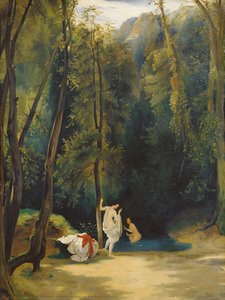
This romanticized landscape painting, dating from 1830, captures a tranquil scene of two women enjoying a moment of quiet companionship within an elegant park. The composition is carefully balanced, featuring the two figures positioned slightly off-center. They are framed by lush greenery on the right, while the left side of the work offers a receding view of trees and water. The women are dressed in soft white and cream garments,…

8
"Tarantella" Merry-society at Italian shore (1823) (1889) -ja Carl Blechen

"Tarantella" Merry-society at Italian shore

1823 · Oil

"Tarantella" Merry-society at Italian shore is an oil painting by the German artist Carl Blechen. Executed about 1823, the work captures a lively social gathering set against a coastal landscape. The scene focuses on human interaction within a picturesque environment, featuring figures engaged in various activities, including dance and seated observation.

10
Fishermen on Capri (1834) (1889) -ja Carl Blechen

Fishermen on Capri

1834 · Oil On Canvas · Alte Nationalgalerie, Berlin

In Fishermen on Capri, Carl Blechen captures a quiet moment on a pebbled shore. The scene is a serene and atmospheric coastal landscape set against the dramatic natural backdrop of the Italian coast. A woman in a flowing white dress sits upon the rocks, leaning toward a man kneeling before her. Nearby, a second man stands with his back to the viewer, his red cap a sharp point of color…

Carl Blechen híres festményei, 11 és 94 között

11Shepherd boy (1832) (1889) -ja Carl BlechenShepherd boy1832 12Forest path near Spandau (1835) (1889) -ja Carl BlechenForest path near Spandau1835 · Alte Nationalgalerie 13Weathered Tree Trunks in a Park (recto), c. 1834 (1834) (1889) -ja Carl BlechenWeathered Tree Trunks in a Park (recto), c. 18341834 · Albertina 14Stormy Weather over the Roman Campagna (1829) (1889) -ja Carl BlechenStormy Weather over the Roman Campagna1829 · Nationalgalerie 15Galgenberg (1833) (1889) -ja Carl BlechenGalgenberg1833 · Galerie Neue Meister 16Italian Monastery Building on the Water's Edge (1832) (1889) -ja Carl BlechenItalian Monastery Building on the Water's Edge1832 · Alte Nationalgalerie 17Memorial Column in the Forest (1837) (1889) -ja Carl BlechenMemorial Column in the Forest1837 · Alte Nationalgalerie 18Sleeping Faun in the Reeds (1827) (1889) -ja Carl BlechenSleeping Faun in the Reeds1827 · Alte Nationalgalerie 19Gothic Church Ruins (1826) (1889) -ja Carl BlechenGothic Church Ruins1826 · Staatliche Kunstsammlungen Dresden 20Rocky Landscape with Monk (1825) (1889) -ja Carl BlechenRocky Landscape with Monk1825 · Alte Nationalgalerie 21View of Rooftops and Gardens (1835) (1889) -ja Carl BlechenView of Rooftops and Gardens1835 · Nationalgalerie 22The Woods near Spandau (1834) (1889) -ja Carl BlechenThe Woods near Spandau1834 · Nationalgalerie 23Grotto in the Gulf of Naples (1829) (1889) -ja Carl BlechenGrotto in the Gulf of Naples1829 · Wallraf-Richartz Múzeum 24Woman Bathing in the Park of Terni (1829) (1889) -ja Carl BlechenWoman Bathing in the Park of Terni1829 · Städel Múzeum 25Italian Landscape (1829) (1889) -ja Carl BlechenItalian Landscape1829 · Alte Nationalgalerie 26Sleeping Faun (1820) (1889) -ja Carl BlechenSleeping Faun1820 27Romantic Painting with Ruins (1820) (1889) -ja Carl BlechenRomantic Painting with Ruins1820 · Westfälisches Landesmuseum 28Landscape with Hermit (1822) (1889) -ja Carl BlechenLandscape with Hermit1822 29Friedrich Wilhelm III's Palm Court (1832) (1889) -ja Carl BlechenFriedrich Wilhelm III's Palm Court1832 · Nationalgalerie 30In the Berliner Tiergarten / Forest Path with Water (1825) (1889) -ja Carl BlechenIn the Berliner Tiergarten / Forest Path with Water1825 31The Roman Forum (1829) (1889) -ja Carl BlechenThe Roman Forum1829 32Forest Gorge with Red Deer (1828) (1889) -ja Carl BlechenForest Gorge with Red Deer1828 · Niedersächsisches Landesmuseum 33View of Monte Castiglione in Capri (1829) (1889) -ja Carl BlechenView of Monte Castiglione in Capri1829 · Staatliche Kunsthalle Karlsruhe 34Young Oak Tree (1828) (1889) -ja Carl BlechenYoung Oak Tree1828 · Kanadai Nemzeti Galéria 35Fantasy Mountain Scene (1823) (1889) -ja Carl BlechenFantasy Mountain Scene1823 · Alte Nationalgalerie 36Ruins of Oybin Monastery (1823) (1889) -ja Carl BlechenRuins of Oybin Monastery1823 · Alte Nationalgalerie 37Track to Castle Gandolfo (1830) (1889) -ja Carl BlechenTrack to Castle Gandolfo1830 · Alte Nationalgalerie 38The Shattered Tower of Heidelberg Castle (1829) (1889) -ja Carl BlechenThe Shattered Tower of Heidelberg Castle1829 · Alte Nationalgalerie 39Trees at Sunrise in Autumn (1823) (1889) -ja Carl BlechenTrees at Sunrise in Autumn1823 · Alte Nationalgalerie 40Knight's castle at the fir pond (1823) (1889) -ja Carl BlechenKnight's castle at the fir pond1823 · Alte Nationalgalerie 41Campagna landscape (1830) (1889) -ja Carl BlechenCampagna landscape1830 · Berlinische Galerie 42Stormy sea with Lighthouse (1826) (1889) -ja Carl BlechenStormy sea with Lighthouse1826 · Hamburger Kunsthalle 43The Capuchin Convent at Amalfi (1829) (1889) -ja Carl BlechenThe Capuchin Convent at Amalfi1829 · National Gallery 44The Valley of Mills near Amalfi (1830) (1889) -ja Carl BlechenThe Valley of Mills near Amalfi1830 45boat at the coast (1823) (1889) -ja Carl Blechenboat at the coast1823 46Winterlandscape + wanderer (1823) (1889) -ja Carl BlechenWinterlandscape + wanderer1823 47landscape with figures (1823) (1889) -ja Carl Blechenlandscape with figures1823 48Winter- Landscape (1823) (1889) -ja Carl BlechenWinter- Landscape1823 49Mill Valley at Amalfi with Capuchin monk and farmer (1823) (1889) -ja Carl BlechenMill Valley at Amalfi with Capuchin monk and farmer1823 50Landscape with ruin, with motives of Webers "Freischütz" (1823) (1889) -ja Carl BlechenLandscape with ruin, with motives of Webers "Freischütz"1823 51Sleeping satyr in landscape (1823) (1889) -ja Carl BlechenSleeping satyr in landscape1823 52forest with pond + deers (1826) (1889) -ja Carl Blechenforest with pond + deers1826 53Gravestone (1823) (1889) -ja Carl BlechenGravestone1823 · Alte Nationalgalerie 54Mountain Gorge in Winter (1825) (1889) -ja Carl BlechenMountain Gorge in Winter1825 · Alte Nationalgalerie 55Mill in the valley near Amalfi (1829) (1889) -ja Carl BlechenMill in the valley near Amalfi1829 · Hamburger Kunsthalle 56Monastery of Saint Scholastica (1830) (1889) -ja Carl BlechenMonastery of Saint Scholastica1830 · Von der Heydt Museum 57Landscape (1823) (1889) -ja Carl BlechenLandscape1823 · Schloss Weimar 58Study for a Funerary Monument (1824) (1889) -ja Carl BlechenStudy for a Funerary Monument1824 · Nationalgalerie 59Gorge at Amalfi (1831) (1889) -ja Carl BlechenGorge at Amalfi1831 · Alte Nationalgalerie 60Forest Path in the Harz (1833) (1889) -ja Carl BlechenForest Path in the Harz1833 61Waterfalls near Tivoli (1832) (1889) -ja Carl BlechenWaterfalls near Tivoli1832 · Alte Nationalgalerie 62In the park of Villa Borghese (1837) (1889) -ja Carl BlechenIn the park of Villa Borghese1837 · Alte Nationalgalerie 63Schloss Sanssouci (1833) (1889) -ja Carl BlechenSchloss Sanssouci1833 · Alte Nationalgalerie 64Forest Landscape at Dawn (1835) (1889) -ja Carl BlechenForest Landscape at Dawn1835 · Bavári Állami Festırménygyűjtemények 65Spinning women in Cervara (1835) (1889) -ja Carl BlechenSpinning women in Cervara1835 · Alte Nationalgalerie 66Monk on Terrace (1835) (1889) -ja Carl BlechenMonk on Terrace1835 · Alte Nationalgalerie 67Mill in a valley (1833) (1889) -ja Carl BlechenMill in a valley1833 68Landscape in Winter at Moonlight (1836) (1889) -ja Carl BlechenLandscape in Winter at Moonlight1836 · Museum Behnhaus Drägerhaus 69In the Palm House in Potsdam (1832) (1889) -ja Carl BlechenIn the Palm House in Potsdam1832 · Hamburger Kunsthalle 70Girls on a Hill at the Beach (1840) (1889) -ja Carl BlechenGirls on a Hill at the Beach1840 71Fisherman (1839) (1889) -ja Carl BlechenFisherman1839 · Staatliche Kunsthalle Karlsruhe 72View of the Santa Scolastica Monastery near Subiaco (1832) (1889) -ja Carl BlechenView of the Santa Scolastica Monastery near Subiaco1832 · Staatliche Kunsthalle Karlsruhe 73In the Park at Terni (1889) -ja Carl BlechenIn the Park at TerniStaatsgalerie Stuttgart 74Alpesi átkelés téli hónapokban szerzettekkel (1833) (1889) -ja Carl BlechenAlpesi átkelés téli hónapokban szerzettekkel1833 · Staatliche Graphische Sammlung 75Bathers in Terni Park (1836) (1889) -ja Carl BlechenBathers in Terni Park1836 · Nationalgalerie 76Tivoli Gardens at the Villa d'Este (1831) (1889) -ja Carl BlechenTivoli Gardens at the Villa d'Este1831 · Nationalgalerie 77View of Assisi (1832) (1889) -ja Carl BlechenView of Assisi1832 · Neue Pinakothek 78Self-Portrait (1823) (1889) -ja Carl BlechenSelf-Portrait1823 · Nationalgalerie 79Scaffold in Storm (1833) (1889) -ja Carl BlechenScaffold in Storm1833 · Gemäldegalerie Alte Meister 80Forest landscape with flowing water and two hunters (1889) -ja Carl BlechenForest landscape with flowing water and two huntersKupferstichkabinett 81Hermit in a rocky landscape (1889) -ja Carl BlechenHermit in a rocky landscape 82The studio of the sculptor Rudolf Schadow (1889) -ja Carl BlechenThe studio of the sculptor Rudolf SchadowKunsthalle Bremen 83Resting Pilgrim in a Church's ruin (1889) -ja Carl BlechenResting Pilgrim in a Church's ruin 84Wooded landscape with castle (1889) -ja Carl BlechenWooded landscape with castle 85Tiberius rocks at Capri (1889) -ja Carl BlechenTiberius rocks at CapriNiedersächsisches Landesmuseum 86Rest in the Forest (1889) -ja Carl BlechenRest in the Forest 87Heidelberg Ruins (1889) -ja Carl BlechenHeidelberg RuinsKunsthalle Bremen 88The Waterfall (1889) -ja Carl BlechenThe WaterfallDetroit Institute of Arts 89Fishermen at the Gulf of Naples (1829) (1889) -ja Carl BlechenFishermen at the Gulf of Naples1829 · Nationalgalerie 90The Bay of Rapallo (1829) (1889) -ja Carl BlechenThe Bay of Rapallo1829 · Nationalgalerie 91Grotte im Park der Villa d’Este (1828) (1889) -ja Carl BlechenGrotte im Park der Villa d’Este1828 92Tower Ruins with Dragon (1827) (1889) -ja Carl BlechenTower Ruins with Dragon1827 · Alte Nationalgalerie 93Building the Devil's Bridge (1833) (1889) -ja Carl BlechenBuilding the Devil's Bridge1833 · Neue Pinakothek 94Rolling Mill (1834) (1889) -ja Carl BlechenRolling Mill1834 · Nationalgalerie

Carl Blechen híres festményei, korszakonként

A témák, amelyek Carl Blechen figyelmét meghúzták

A négy leggyakorobban előforduló téma ebben az eredeti művekben, mindegyik a legkiválóbb példájával.

A műemlékek, amelyek Carl Blechen eredeti műveit őrzik

A 8 olyan múzeum, amely a legtöbb ezen az oldalon szereplő festményet őrzi.

Múzeum Város Carl Blechen művei Ebből a listából származó festmények
Alte Nationalgalerie, BerlinAlte Nationalgalerie Berlin 24 Two monks in the park of Terni, Pifferaro and Girls in Rome, Fishermen on Capri
Nationalgalerie, BerlinNationalgalerie Berlin 12 Sanssouci Palace, Stormy Weather over the Roman Campagna, View of Rooftops and Gardens
Staatliche Kunsthalle Karlsruhe, KarlsruheStaatliche Kunsthalle Karlsruhe Karlsruhe 3 View of Monte Castiglione in Capri, Fisherman, View of the Santa Scolastica Monastery near Subiaco
Hamburger Kunsthalle, HamburgHamburger Kunsthalle Hamburg 3 Stormy sea with Lighthouse, Mill in the valley near Amalfi, In the Palm House in Potsdam
Städel Múzeum, FrankfurtStädel Múzeum Frankfurt 2 Tarantella, Woman Bathing in the Park of Terni
Bavári Állami Festırménygyűjtemények, MunchenBavári Állami Festırménygyűjtemények Munchen 2 Two Ladies in the Park, Forest Landscape at Dawn
Niedersächsisches Landesmuseum, HannoverNiedersächsisches Landesmuseum Hannover 2 Forest Gorge with Red Deer, Tiberius rocks at Capri
Neue Pinakothek, MunichNeue Pinakothek Munich 2 View of Assisi, Building the Devil's Bridge

Carl Blechen évtizedekig: egy egyedi eredeti mű minden évtizedben

Művek évtizedenként

Váassz ki egy évtizedet, hogy megnézhesd az azt meghatározó eredetiműveket.

Carl Blechen festményei: kérdések a galériának

Mi a leghíresebb műve Carl Blechennek?Fedje fel a választ

Sanssouci Palace (1830), Nationalgalerie, Berlin. Ezután The Interior of the Palm House on the Pfaueninsel Near Potsdam (1834) és Afternoon on Capri (1829) következik.

Milyen életkorában alkotta meg Carl Blechen a(z) Sanssouci Palace műszt?Fedje fel a választ

32 éves: Sanssouci Palace 1830-ből származik, Carl Blechen pedig 1798-ben született.

Melyik tíz festménye Carl Blechen a leghíresebb?Fedje fel a választ

Sanssouci Palace, The Interior of the Palm House on the Pfaueninsel Near Potsdam, Afternoon on Capri, Napoleon on Horseback, Surrounded by Generals and Troops, Tarantella, Two monks in the park of Terni, Two Ladies in the Park, "Tarantella" Merry-society at Italian shore, Pifferaro and Girls in Rome és Fishermen on Capri. A fenti rangsor a művek évszamarát és a múzeumát jelzi.

Hány mű alkotása ismert Carl Blechen nevében?Fedje fel a választ

Katalógusunkban 97 mű található Carl Blechen alkotótól, 1820 és 1840 év közötti időszakból.

Hol tekinthetők meg a leghíresebb Carl Blechen eredetijeit?Fedje fel a választ

Leginkább Alte Nationalgalerie (Berlin), Nationalgalerie (Berlin) és Staatliche Kunsthalle Karlsruhe (Karlsruhe) található. A fenti múzeumi táblázatban mindegyik felsorolásra került.

Melyik időszakban alkotta Carl Blechen a leghíresebb festményeit?Fedje fel a választ

1820s alatt: a jelen laphonon található 94 műből 43 készült ebben az időszakban, köztük Afternoon on Capri.

Melyik híres Carl Blechen festmény a legkorábbi, és melyik a legutóbb készült?Fedje fel a választ

Ezen az oldalon a leghitelesebb Sleeping Faun (1820), a legutóbbi pedig Girls on a Hill at the Beach (1840).

Milyen témakörket kedvelt Carl Blechen?Fedje fel a választ

Landscape (31), Sky (30) és Trees (26), a jelen oldalon található 94 műművészeti alkotás között.

Milyen anyagokkal festett leggyakrabban Carl Blechen?Fedje fel a választ

Oil On Canvas, a jelen oldalon található 94 műből 46 darab esetén.

Mely művészeti irányba tartozik Carl Blechen műve?Fedje fel a választ

Romantic industrialization és Romanticism, ezen az oldalon található eredetiek alapján.

Milyen Carl Blechen eredeti műveket láthatok a Alte Nationalgalerie kiállításaiban?Fedje fel a választ

Two monks in the park of Terni, Pifferaro and Girls in Rome és Fishermen on Capri: a Alte Nationalgalerie, Berlin 24 művet őrzi ezen az oldalon.

Carl Blechen: a művész portréja

Carl Blechen: A romantika úttörője, a változó táj festésze

Carl Eduard Ferdinand Blechen (Cottbus, 1798-Berlin, 1840) egyedülálló helyet foglal el a német tájképfestészet történetében. Élete művészi ragyogással és személyes viharokkal teli volt, kettősség, amely mélyen formálta megrázó és úttörő alkotásait. Kezdetben családi anyagi nehézségek miatt a banki pályát kellett volna választania, azonban belső művészi hajlamai végül győztek. 1822-ben kezdte tanulmányait a berlini Művészeti Akadémián, és ez az út vezetett oda, hogy ő legyen az egyik első festő, aki szembe nézte a korai iparosodás esztétikai kihívásait – és lehetőségeit. Blechen munkássága nem csupán a romantika szellemében született, hanem egy új látásmódot is képviselt, amely a természet szépségét ötvözte a modern kor felgyorsuló változásainak valóságával.

A berlini évek és az olasz utazás hatása

Blechen formáló éveit áthatotta az Európát átsuhintó romantikus ideálok légköre. Azonban, ellentétben sok kortársával, aki kizárólag az idealizált természet szépségére vagy a történelmi nagyságra koncentrált, Blechen tekintete egy változó világra irányult. A 1828-1829-es olaszországi utazása sorsfordító jelentőségűnek bizonyult. Az olasz vidéki táj fényében és hangulatában csiszolta festői képességeit, lenyűgöző érzékenységgel rögzítve múló pillanatokat és drámai hatásokat. Ezek a vázlatok nem csupán előkészítő tanulmányok voltak; vibráló energiával teltek, amely meghatározta későbbi stílusát. Nem egyszerűen egy technikailag képzett festőként tért vissza Berlinbe, hanem egy különleges vízióval rendelkező művésszé, aki a természet fenségét és a modernitás terjedését próbálta összeegyeztetni.

A romantika és a realizmus határán

Blechen alkotói munkásságát lenyűgöző feszültség jellemzi a romantikus érzékenység és egy újkori realizmus között. Nem kerüld el az éledő ipari táj ábrázolását, de nem ünnepelte kritikátlanul azt sem. A Bau der Teufelsbrücke (Az Ördög hídja építése) című műve, melyet 1830 és 1832 között festett, példázza ezt a megközelítést. A kép nem dicsőíti az mérnöki bravúrt; ehelyett egy nehéz munkáról szóló jelenetet mutat drámai háttérrel, utalva az emberi ambíciókra és a természeti rend zavarásának lehetőségére. Ez a hajlandóság szembenézni kora komplexitásaival különbözteti meg társaitól. Képfestészete nem csupán a látványt ragadta meg, hanem egy érzelmi reakciót is közvetített rá.

A táj és a lélek tükre

Tájképfestményei gyakran melankolikus hangulatúak, ami nemcsak a változó fizikai környezetet tükrözi, hanem belső küzdelmeit is. A Waldweg bei Spandau (Erdőút Spandauban) például magány és önvizsgálat érzetét idézi fel, miközben Blechen mesterségét bizonyítja a fény és árnyék terén. Sikeresen alkalmazta az atmoszféraperspektívát a mélység és a hangulat megteremtésére, bevonva a nézőt a jelenetbe és elmélkedésre ösztönözve. Im Berliner Tiergarten (A berlini állatkert) című korai műve példázza képességét az atmoszféra megragadására és a romantikus érzékenységgel átitatott mindennapi jelenetek ábrázolására.

Egy zseni tragédiája és öröksége

Blechen élete tragikusan rövid volt, mentális betegségben hunyt el. 1831-ben a berlini Akadémia tájképfestészet professzorává nevezték ki – ami növekvő hírnevét bizonyítja –, azonban egészségi állapota 1835 után gyorsan romlott. Kényszerült szabadságra menni, majd kórházba került, mégis alkotott a szenvedései közepette is, megrázó rajzokat készítve, amelyek bepillantást engednek nyugtalan belső világába. 1840-ben halt meg Berlinben, mindössze 41 évesen.

Bár pályafutása viszonylag rövid volt, Carl Blechen hatása a következő generációk művészeire vitathatatlan. Az ipari tájak úttörő ábrázolásával utat nyitott a későbbi realista és impresszionista festők számára, akik a modern élet változó arcát akarták megragadni. Bizonyította, hogy még a változás közepette is lehet szépséget – és jelentést – találni, egy olyan lecke, amely a mai napig inspirálja a művészeket. Művei erőteljes emlékeztetőként szolgálnak az emberiség, a természet és a fejlődés bonyolult kapcsolatáról.

  • Im Berliner Tiergarten (A berlini állatkert), 1825: Egy korai példa képességére, hogy megragadja az atmoszféra hatásait és a romantikus érzékenységgel átitatott mindennapi jeleneteket.
  • Waldweg bei Spandau (Erdőút Spandauban): Egy kísérteties tájkép, amely példázza a fény, árnyék és hangulat mesteri kezelését.
  • Bau der Teufelsbrücke (Az Ördög hídja építése), 1830–32: A korai iparosodás úttörő ábrázolása, amely bemutatja az emberi ambíciókat és annak hatását a természeti világra.

Blechen művei ma világszerte neves múzeumi gyűjteményekben találhatók, beleértve a németországi Kunsthalle Bielefeldet, a cambridge-i Fitzwilliam Múzeumot és a londoni National Galleryt. Ezek az intézmények megőrzik örökségét a jövő generációk számára, biztosítva, hogy innovatív látásmódja továbbra is inspiráljon és kihívást jelentsen a nézők számára.