Brook Andrew portréja

A 11 legnevezesebb Brook Andrew festmény, egy galériaválaszték

Frissítve: november 2026 · rangsorolva népszerűségi pontszámunk alapján (minden mű keresései, látogatásai és megrendelései alapján) · 11 mű Brook Andrew alkotása a katalógusunkban

Röviden

Brook Andrew hagyatékából a leghíresebb alkotás Hope, Hope and Peace Series (2005), amely a Emu Plains városi Penrith Regional Gallery - A Lewers-legacy otthona gyűjteményében található. Röviddel ezután követik őket Black & White SPECIAL CUT, Hope and Peace Series (2005) és Chandelier Friendly Fire, Hope and Peace Series (2005). Katalógusunkban 11 mű található Brook Andrew alkotótól; a galéria megőrizte a világ által leginkább csodált 11 darabot, melyeket a dátummal, a múzeummal és a történetükkel együtt mutatunk be.

született: 1970, Sydney Contemporary art A legtöbb mű: Penrith Regional Gallery - A Lewers-legacy otthona

Brook Andrew legjobb 10 festménye: a galéria válogatása

1
Hope, Hope and Peace Series (2005) (1889) -ja Brook Andrew

Hope, Hope and Peace Series

To stand before this piece from Brook Andrew’s Hope, Hope and Peace Series is to encounter not merely paint on canvas, but a vibrant conversation across cultures and epochs. The central motif—a striking red umbrella with its crisp white handle—immediately draws the eye, acting as an anchor point in a sea of color and scattered meaning. This object, so mundane in daily life, is elevated here into a potent symbol.…

2
Black & White SPECIAL CUT, Hope and Peace Series (2005) (1889) -ja Brook Andrew

Black & White SPECIAL CUT, Hope and Peace Series

To stand before Brook Andrew’s Black & White SPECIAL CUT, Hope and Peace Series is to encounter a visual conversation—a dialogue waged across the stark, compelling boundaries of color and pattern. This piece, executed in 2005, transcends mere decoration; it functions as a meditation on duality itself. The immediate impact is arresting: a vibrant interplay between deep blacks, crisp whites, and unexpected flashes of red, all structured within a grid-like…

3
Chandelier Friendly Fire, Hope and Peace Series (2005) (1889) -ja Brook Andrew

Chandelier Friendly Fire, Hope and Peace Series

Brook Andrew’s "Chandelier Friendly Fire, Hope and Peace Series" is not merely a collection of colors upon a canvas; it is a vibrant, arresting dialogue rendered in paint. From the moment one encounters its bold geometry—dominated by that striking red triangle accented with electric blue and sunny yellow—the viewer is drawn into a complex conversation about history, belonging, and enduring spirit. The piece pulses with an undeniable energy, characteristic of…

4
Against all odds, Hope and Peace Series (2005) (1889) -ja Brook Andrew

Against all odds, Hope and Peace Series

2005 · Digital Illustration · Penrith Regional Gallery - A Lewers-legacy otthona, Emu Plains

Brook Andrew’s “Against all odds, Hope and Peace Series” (2005) is not merely a graphic design; it's a visceral statement delivered through the deliberate chaos of digital media. This artwork, measuring 98 cm in size, immediately confronts the viewer with an overwhelming sense of unease – a carefully orchestrated disruption designed to provoke reflection on themes of surveillance, communication, and the potential for harm within imposed narratives. The piece’s impact…

5
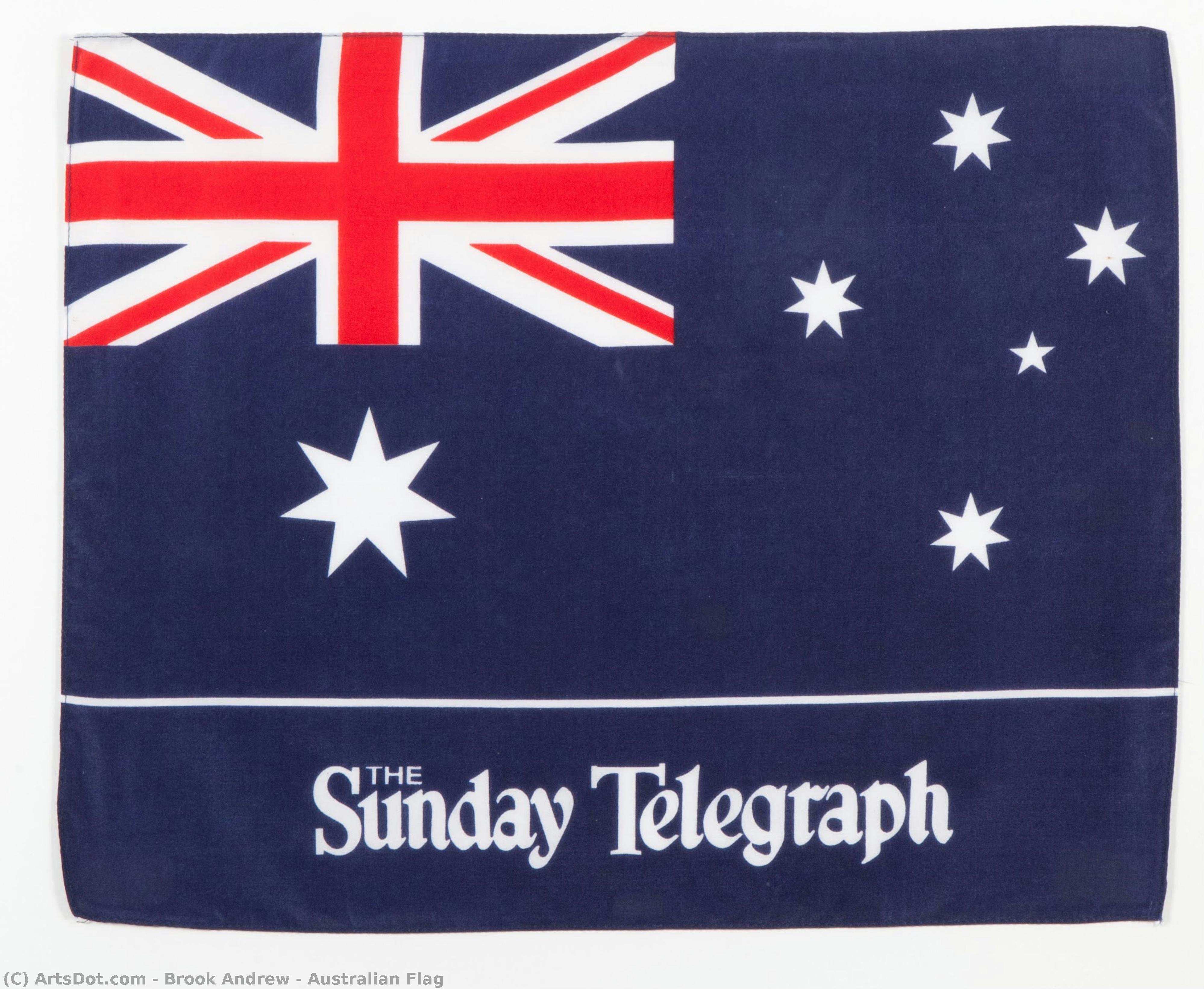
Australian Flag (2006) (1889) -ja Brook Andrew

Australian Flag

In the evocative work Australian Flag, the contemporary Wiradjuri artist Brook Andrew invites us into a profound meditation on national identity and the layered histories that define a continent. At first glance, the painting presents a familiar icon: the blue field of the Australian flag, punctuated by the Union Jack in the canton and the celestial brilliance of the Southern Cross. Yet, through Andrew’s masterful hand, this is not merely…

6
I split your gaze (1997) (1889) -ja Brook Andrew

I split your gaze

Brook Andrew is an Australian Wiradjuri artist, writer and curator who is driven by the collisions of intertwined narratives, often emerging from the mess of what he calls the “Colonial Wuba (hole)”. His interdisciplinary practice harnesses alternative narratives to explore the legacies of colonisation and modernism. His artworks, museum interventions and curatorial projects challenge the limitations imposed by power structures, historical amnesia, stereotyping and complicity to centre Indigenous perspectives. Apart…

7
Owl, Replicant Series (2006) (1889) -ja Brook Andrew

Owl, Replicant Series

Brook Andrew is an Australian Wiradjuri artist, writer and curator who is driven by the collisions of intertwined narratives, often emerging from the mess of what he calls the “Colonial Wuba (hole)”. His interdisciplinary practice harnesses alternative narratives to explore the legacies of colonisation and modernism. His artworks, museum interventions and curatorial projects challenge the limitations imposed by power structures, historical amnesia, stereotyping and complicity to centre Indigenous perspectives. Apart…

8
Peace, Hope and Peace Series (2005) (1889) -ja Brook Andrew

Peace, Hope and Peace Series

2005 · Digital Collage · Penrith Regional Gallery - A Lewers-legacy otthona, Emu Plains

Brook Andrew's “Peace, Hope and Peace Series” (2005) is not merely an advertisement; it’s a deliberately jarring interrogation of consumerism, identity, and the very notion of peace itself. This vibrant, chaotic collage, measuring 98 cm in size, immediately confronts the viewer with a dense network of geometric shapes, intersecting lines, and bold typography – all dominated by the prominent ‘Peace LIGHTS’ cigarette brand. Created through digital manipulation and layering, the…

10
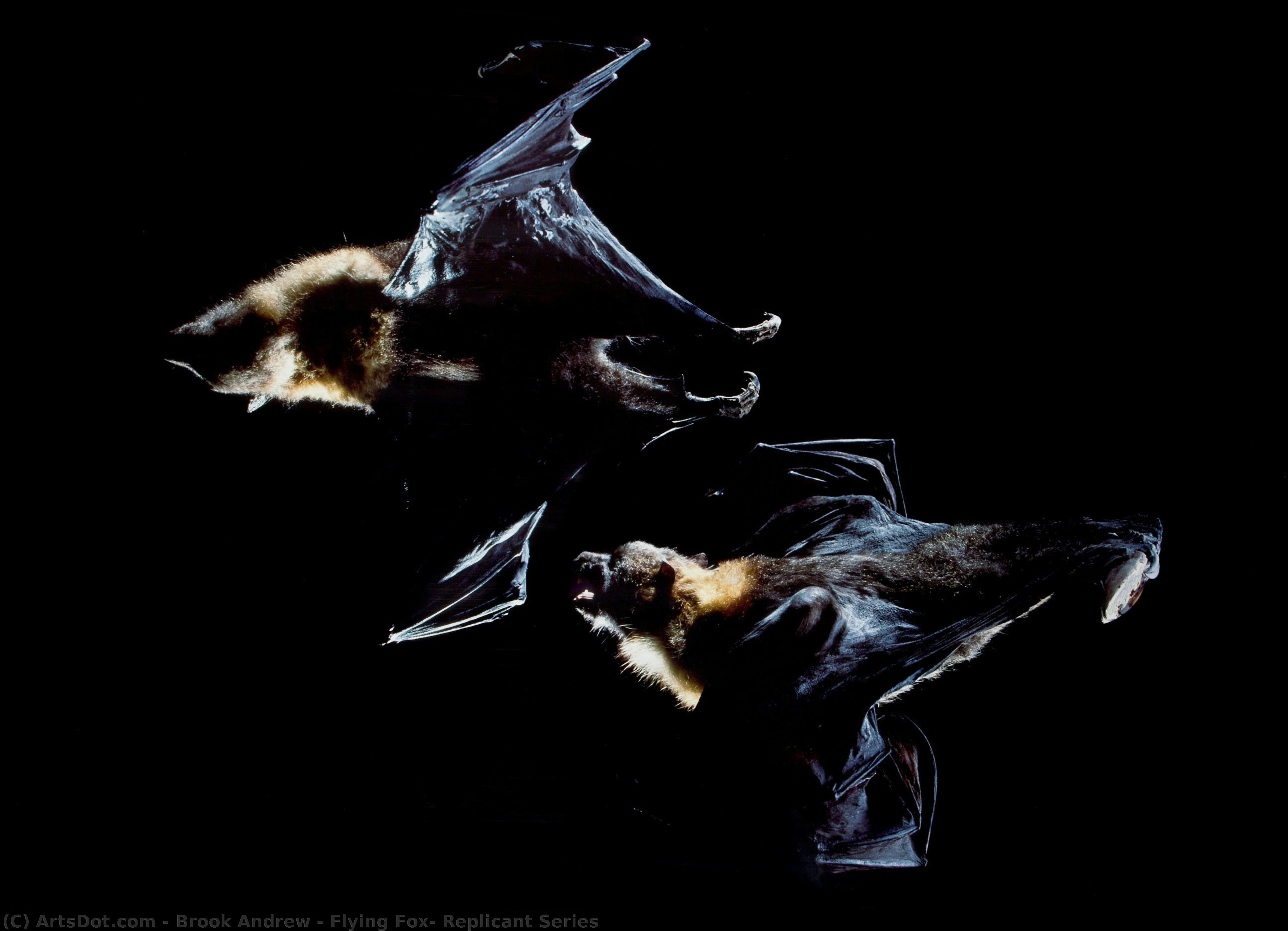
Flying Fox, Replicant Series (2006) (1889) -ja Brook Andrew

Flying Fox, Replicant Series

Brook Andrew is an Australian Wiradjuri artist, writer and curator who is driven by the collisions of intertwined narratives, often emerging from the mess of what he calls the “Colonial Wuba (hole)”. His interdisciplinary practice harnesses alternative narratives to explore the legacies of colonisation and modernism. His artworks, museum interventions and curatorial projects challenge the limitations imposed by power structures, historical amnesia, stereotyping and complicity to centre Indigenous perspectives. Apart…

A Brook Andrew válogatás folytatódik: 11 – 11

A műemlékek, amelyek Brook Andrew eredeti műveit őrzik

A 2 olyan múzeum, amely a legtöbb ezen az oldalon szereplő festményet őrzi.

Múzeum Város Brook Andrew művei Ebből a listából származó festmények
Penrith Regional Gallery - A Lewers-legacy otthona, Emu PlainsPenrith Regional Gallery - A Lewers-legacy otthona Emu Plains 10 Hope, Hope and Peace Series, Black & White SPECIAL CUT, Hope and Peace Series, Chandelier Friendly Fire, Hope and Peace Series
National Gallery of Victoria, MelbourneNational Gallery of Victoria Melbourne 1 Polemics

Brook Andrew év évtizedéja: az egyes éveket meghatározó eredeti művek

Alig egy évtized alatt, 1997 és 2006 között, a világ minden dátumozott Brook Andrew eredetije ebben a válogatásban: íme, év évre.

Művek évszáma szerint

Váasszon egy évet az eredetiek megtekintéséhez.

Gyűjtői kérdések Brook Andrew festményeivel kapcsolatban

Melyik művel a(z) Brook Andrew a leghíresebb?Fedje fel a választ

Hope, Hope and Peace Series (2005), Penrith Regional Gallery - A Lewers-legacy otthona, Emu Plains. Ezután Black & White SPECIAL CUT, Hope and Peace Series (2005) és Chandelier Friendly Fire, Hope and Peace Series (2005) következik.

Hány éves volt Brook Andrew, amikor a Hope, Hope and Peace Series készült?Fedje fel a választ

35 éves: Hope, Hope and Peace Series 2005-ből származik, Brook Andrew pedig 1970-ben született.

Melyek a tíz leghíresebb Brook Andrew festmény?Fedje fel a választ

Hope, Hope and Peace Series, Black & White SPECIAL CUT, Hope and Peace Series, Chandelier Friendly Fire, Hope and Peace Series, Against all odds, Hope and Peace Series, Australian Flag, I split your gaze, Owl, Replicant Series, Peace, Hope and Peace Series, Polemics és Flying Fox, Replicant Series. A fenti rangsor a művek évszamarát és a múzeumát jelzi.

Hány festményet hagyott hátra Brook Andrew?Fedje fel a választ

Katalógusunkban 11 mű található Brook Andrew alkotótól, 1997 és 2006 év közötti időszakból.

Mely múzeumokban állnak Brook Andrew remekművei?Fedje fel a választ

Leginkább Penrith Regional Gallery - A Lewers-legacy otthona (Emu Plains) és National Gallery of Victoria (Melbourne) található. A fenti múzeumi táblázatban mindegyik felsorolásra került.

Mely években festette Brook Andrew leghíresebb műveit?Fedje fel a választ

2005 alatt: a jelen laphonon található 11 műből 5 készült ebben az időszakban, köztük Hope, Hope and Peace Series.

Mikszétek az első és az utolsó híres eredeti műve a(z) Brook Andrew alkotótól?Fedje fel a választ

Ezen az oldalon a leghitelesebb I split your gaze (1997), a legutóbbi pedig Australian Flag (2006).

Melyik technikát alkalmazta leggyakrabban Brook Andrew?Fedje fel a választ

Painting, a jelen oldalon található 11 műből 4 darab esetén.

Mely művészeti irányba tartozik Brook Andrew?Fedje fel a választ

Contemporary art, ezen az oldalon található eredetiek alapján.

Mely Brook Andrew művei láthatóak a Penrith Regional Gallery - A Lewers-legacy otthona kiállتításán?Fedje fel a választ

Hope, Hope and Peace Series, Black & White SPECIAL CUT, Hope and Peace Series és Chandelier Friendly Fire, Hope and Peace Series: a Penrith Regional Gallery - A Lewers-legacy otthona, Emu Plains 10 művet őrzi ezen az oldalon.

Brook Andrew: életmű és életút

The Architect of Memory: The Art of Brook Andrew

Born in the vibrant landscape of Sydney, Australia, in 1970, Brook Andrew has emerged as a profound and commanding presence in the global contemporary art scene. His work does not merely exist within a gallery space; it interrogates the very foundations of how we perceive history, identity, and the enduring legacies of colonialism. As an artist who masterfully navigates the intersection of Western historical narratives and Indigenous perspectives, Andrew creates a dialogue that is as much about reclaiming lost voices as it is about challenging the established canon. His artistic journey, which gained significant international momentum following his emergence in 1996, is defined by a relentless pursuit of truth through the deconstruction of visual archives.

The foundations of Andrew’s practice were laid during his formative academic years at the University of Western Sydney and the University of Denmark, later continuing his rigorous intellectual development at the University of Melbourne. These periods of study provided him with more than just technical proficiency; they instilled a conceptual depth that allows him to treat art as a site of archaeological inquiry. His ability to sift through the debris of history was further bolstered by prestigious recognitions, such as the Smithsonian Artist Research Fellowship in 2017. This opportunity allowed him to delve into vast archival resources, providing the raw material for his explorations into how much of our "official" history is constructed, and how much has been intentionally erased.

A Symphony of Mediums and Immersive Narratives

What distinguishes Brook Andrew from many of his contemporaries is his refusal to be tethered to a single medium. His practice is a fluid, interdisciplinary tapestry where video projection, sculptural forms, photography, and large-scale installations coalesce into singular, immersive environments. To walk through an Andrew installation is to enter a living archive. He utilizes the physical presence of sculpture to ground his work, while the ephemeral nature of video and light allows him to haunt the viewer with spectral histories. This multifaceted approach ensures that his art is not a passive object of observation but an active, sensory experience that demands critical reflection.

In works such as ‘Chandelier Friendly Fire’ from his evocative ‘Hope & Peace’ series, one can witness the breathtaking tension he creates between beauty and brutality. By utilizing objects that carry cultural weight—ranging from colonial artifacts to contemporary pop culture symbols—he forces a confrontation between the viewer and the complexities of social justice. His technique involves a sophisticated layering of textures and media, creating a sense of depth that mirrors the layered, often contradictory, nature of historical memory itself.

Legacy and the Reimagining of Identity

The historical significance of Brook Andrew lies in his ability to transform the gallery into a space of reclamation. His work serves as a vital bridge, connecting the traumatic legacies of the past with the urgent social justice movements of the present. By centering Indigenous perspectives within the framework of contemporary art, he disrupts the monolithic Western gaze and invites a more pluralistic understanding of Australian and global identity.

Throughout his career, Andrew has achieved remarkable milestones that cement his status as a pivotal figure in modern art, including:

  • Global Recognition: His influential presence in major international exhibitions, such as the Biennale of Sydney, where his work challenges established cultural hierarchies.
  • Archival Interrogation: The successful use of institutional archives to expose the biases inherent in colonial documentation.
  • Interdisciplinary Innovation: The seamless integration of diverse media to create immersive, multi-sensory historical critiques.

Ultimately, Brook Andrew’s art is a testament to the power of visual storytelling to reshape our understanding of the world. He remains a vital, living force in the art community, continuing to push the boundaries of how we confront, remember, and ultimately reimagine the narratives that define us.