Andrew Rewald: Bridging Culinary Roots and Artistic Exploration
Andrew Rewald’s artistic practice stands apart as a remarkable convergence of seemingly disparate passions – food anthropology and culinary arts – resulting in artworks that wrestle with profound questions concerning migration, identity, and ethical responsibility. Born in Murgon, Australia, in 1969, Rewald's early upbringing nurtured within him an unwavering appreciation for cultural traditions surrounding sustenance and ritualistic practices; this formative experience would indelibly shape his artistic vision.
Formal Education: Rewald embarked on his academic journey with a Bachelor of Fine Arts degree from Queensland College of Art (QCA) in 2006, followed by a Master of Fine Arts qualification from QCA in 2011. These scholarly pursuits honed his technical prowess and furnished him with a critical lens for dissecting artistic concepts—a skillset that would prove invaluable throughout his subsequent career.
Culinary Background: Prior to dedicating himself entirely to visual artmaking, Rewald cultivated considerable expertise as a chef, gaining firsthand insight into the sensory dimensions inherent in food preparation and presentation. This practical grounding profoundly informs his conceptual approach, anchoring it firmly within tangible realities and enriching his understanding of human experience.
Rewald’s artistic output predominantly manifests as performance art pieces designed to provoke contemplation regarding “duty of care.” He doesn't merely depict subjects; rather, he actively solicits viewers’ engagement with ethical dilemmas surrounding cultural exchange and the preservation of traditions—a deliberate tactic that underscores his commitment to fostering dialogue and challenging conventional perspectives. Recurring motifs within his oeuvre incorporate food as a symbolic element – extending far beyond mere nourishment – representing memory, heritage, and social connection—concepts central to his anthropological investigations.
Notable Exhibitions and Recognition: Rewald’s artistic reputation has steadily ascended since graduation, culminating in appearances at internationally acclaimed venues such as Biennale Sydney (2016) and Zk/u Berlin (2018). These exhibitions serve as testament to the breadth of his influence within contemporary art discourse, demonstrating a willingness to confront uncomfortable truths about globalization and prompting reflection on the role of artists—and indeed all individuals—in fostering ethical engagement with cultural differences. His presentations are characterized by meticulous attention to detail—both visual and conceptual—reflecting a deep conviction that artistic expression should serve as a conduit for intellectual inquiry.
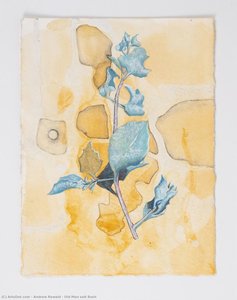
Influences and Artistic Style: Rewald’s stylistic choices reveal a deliberate restraint – a careful consideration of materiality and form prioritizing conceptual depth over ostentation. Cézanne exerts a significant influence on his work, particularly in Rewald's exploration of spatial relationships and the depiction of natural forms; this stylistic decision embodies his belief that artistic expression should illuminate complex ideas rather than merely captivating the eye. He strives to create artworks that resonate with intellectual curiosity and provoke thoughtful consideration among audiences.
Historical Significance: Andrew Rewald’s contribution to contemporary art is marked by a pioneering spirit—a willingness to blend disciplines and challenge established conventions. By uniting food anthropology with performance art, he pushes boundaries within the field, prompting viewers to confront uncomfortable realities about cultural interaction and fostering empathy across societal divides. His unwavering dedication to ethical engagement ensures that his artistic legacy will continue to inspire discussions surrounding art’s role in shaping our collective consciousness—a testament to his enduring impact on the artistic landscape.