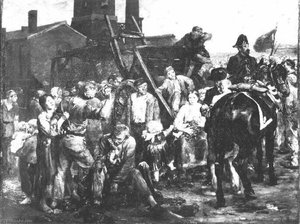
Alfred Roll portréja

A 49 legnevezesebb Alfred Roll festmény, egy galériaválaszték

Frissítve: november 2026 · rangsorolva népszerűségi pontszámunk alapján (minden mű keresései, látogatásai és megrendelései alapján) · 50 mű Alfred Roll alkotása a katalógusunkban

Röviden

Alfred Roll hagyatékából a leghíresebb alkotás Portrait de Mme Roll. Röviddel ezután követik őket Retour du bal és The feast of Silenus (1871). Katalógusunkban 50 mű található Alfred Roll alkotótól; a galéria megőrizte a világ által leginkább csodált 49 darabot, melyeket a dátummal, a múzeummal és a történetükkel együtt mutatunk be.

1845 – 1919, Párizs A legtöbb mű: Petit Palais

Alfred Roll legjobb 10 festménye: a galéria válogatása

1
Portrait de Mme Roll (1889) -ja Alfred Roll

Portrait de Mme Roll

Oil On Canvas

The portrait depicts a woman, identified as Madame Roll, positioned in a vertical orientation. She is situated slightly off-center within a domestic interior, appearing to stand near a window. The figure is rendered with a muted color palette, primarily composed of blacks, grays, and browns. Subtle ochre and muted red tones appear in the highlights and the background. Her attire is formal, and her expression remains serene with a slight…

2
Retour du bal (1889) -ja Alfred Roll

Retour du bal

Oil On Canvas · Musée d'Arts de Nantes, Nantes

The air in the room feels heavy with the scent of perfume and the soft rustle of silk as two women move through an opulent interior. We watch them from behind, catching only the graceful curve of their backs and the sweeping lines of their attire. They are poised, perhaps caught in a moment of transition between the excitement of a social gathering and the quietude of their private quarters.…

3
The feast of Silenus (1871) (1889) -ja Alfred Roll

The feast of Silenus

1871 · Oil On Canvas · Ghent Művészeti Múzeum (MSK), Ghent

The feast of Silenus emerges from the brush of Alfred Philippe Roll, a painter whose life spanned the transformative decades of the late nineteenth century. Born in the former 8th arrondissement of Paris, France, in 1845, Roll carries the weight of a changing era within his lineage. He remains a figure of the French tradition, having departed this world in 1919. This specific work, The feast of Silenus, captures a…

4
Marianne Orfrey, Green Crier (1880) (1889) -ja Alfred Roll

Marianne Orfrey, Green Crier

1880 · Oil On Canvas · Musée des Beaux-Arts de Pau, Pau

In this 1880 oil on canvas, we find ourselves standing at eye-level with a solitary woman, a street vendor whose presence commands a quiet, stoic dignity. She is positioned slightly off-center, a choice that lends a sense of naturalism to the vertical composition. There is a certain weight to her figure, anchored by the heavy folds of her skirt and the rounded, organic form of the basket she carries. The…

5
July 14, 1880, Inauguration of the Monument to the République (1882) (1889) -ja Alfred Roll

July 14, 1880, Inauguration of the Monument to the République

1882 · Oil · Petit Palais, Paris

The canvas depicts a dense, wide-angle view of a Parisian square during a large-scale public celebration. In the center of the composition, a monument rises toward a sky filled with fluttering flags. The scene is populated by a vast, diverse crowd of figures that extend from the immediate foreground into the distance. These people are rendered with varied postures, some standing in groups and others moving through the space. The…

6
Henri Rochefort (Victor-Henri, marquis de Rochefort-Luçay, 1831-1913), journalist, politician and writer (1879) (1889) -ja Alfred Roll

Henri Rochefort (Victor-Henri, marquis de Rochefort-Luçay, 1831-1913), journalist, politician and writer

1879 · Oil On Canvas · Carnavalet Museum, Paris

The portrait emerges from a period of transition in French art, moving away from the rigid constraints of academic tradition toward a more grounded, empathetic realism. The visible layering of paint suggests a preoccupation with the authentic human form rather than an idealized version of it. There is a palpable sense of the man's internal life, a quiet intensity that lingers in the way the light interacts with his features.…

7
Woman and bull (1885) (1889) -ja Alfred Roll

Woman and bull

1885 · Oil · Nemzeti Szépművészeti Múzeum, Buenos Aires

The air feels heavy and still within this shadowed woodland, where the light filters through a dense canopy in soft, dappled patches. A nude woman rests in an intimate, quiet moment, her pale skin glowing against the deep, earthy tones of the surrounding meadow. Beside her, the muscular form of a bull emerges from the darkness, its presence a powerful counterpoint to her vulnerability. There is a profound sense of…

8
Alsatian and Lorrainer (1891) (1889) -ja Alfred Roll

Alsatian and Lorrainer

1891 · Oil · Museum of the French Revolution, Vizille

In the work Alsatian and Lorrainer by Alfred Philippe Roll, the composition is structured as a tight, intimate close-up of two female figures. The primary subject is positioned in the foreground, presented in a sharp profile facing toward the left side of the frame. Behind her, a second woman is partially visible, also oriented toward the left. This overlapping arrangement creates a sense of depth within the narrow field of…

9
Portrait of Thaulow and His Wife (1890) (1889) -ja Alfred Roll

Portrait of Thaulow and His Wife

1890 · Oil On Canvas · Petit Palais, Paris

In this intimate oil on canvas, Alfred Philippe Roll presents Portrait of Thaulow and His Wife. Painted about 1890, the work captures a quiet moment between a man and a woman. The subjects are likely the artist's acquaintances, Thaulow and his wife, rendered with a sense of naturalism that suggests a close proximity to the figures. There is a palpable sense of companionship in the way they are positioned together.

10
Portrait of Jane Hading (1890) (1889) -ja Alfred Roll

Portrait of Jane Hading

1890 · Oil On Canvas · Petit Palais, Paris

The portrait presents a woman seated centrally within a luxurious interior. She is positioned in a vertical orientation, wearing a sleeveless black gown that features shimmering, light-colored patterns suggestive of sequins or embroidery. A large, dark, textured element, resembling a fur mantle or heavy drapery, surrounds the upper portion of her chair. Her skin is rendered with smooth, luminous textures, and her reddish-brown hair is styled softly around her face.…

A Alfred Roll válogatás folytatódik: 11 – 49

11André Manaut (1890) (1889) -ja Alfred RollAndré Manaut1890 · Municipal museum (Saverne) 12Au trot (1888) (1889) -ja Alfred RollAu trot1888 · Municipal museum (Saverne) 13Adolphe Alphand (1888) (1889) -ja Alfred RollAdolphe Alphand1888 · Petit Palais 14Centenary of the Estates General at the Neptune Basin (May 3, 1889) (1889) (1889) -ja Alfred RollCentenary of the Estates General at the Neptune Basin (May 3, 1889)1889 15Exodus (1893) (1889) -ja Alfred RollExodus1893 · Petit Palais 16Louise Cattel, wet nurse (1894) (1889) -ja Alfred RollLouise Cattel, wet nurse1894 · Palais des Beaux-Arts de Lille 17Alexandre Dumas fils (1895) (1889) -ja Alfred RollAlexandre Dumas fils1895 · Musée des Beaux-Arts 18Roll Painting (1900) (1889) -ja Alfred RollRoll Painting1900 · Petit Palais 19Portrait de Mme Henriette Roll (1900) (1889) -ja Alfred RollPortrait de Mme Henriette Roll1900 · Municipal museum (Saverne) 20Nu couché (1900) (1889) -ja Alfred RollNu couché1900 · Musée d'Art Moderne et Contemporain de Strasbourg 21In Summer, Woman with Dog (1909) (1889) -ja Alfred RollIn Summer, Woman with Dog1909 · Petit Palais 22Sketch for the Petit Palais, south gallery: Apotheosis (central ceiling) (1909) (1889) -ja Alfred RollSketch for the Petit Palais, south gallery: Apotheosis (central ceiling)1909 · Petit Palais 23Sketch for the Petit Palais, south gallery: Poetry - Drama (1910) (1889) -ja Alfred RollSketch for the Petit Palais, south gallery: Poetry - Drama1910 · Petit Palais 24Sketch for the Petit Palais, south gallery: Fantastic Music (1911) (1889) -ja Alfred RollSketch for the Petit Palais, south gallery: Fantastic Music1911 · Petit Palais 25Sketch for the South Gallery of the Petit Palais: Apotheosis (central ceiling) (1913) (1889) -ja Alfred RollSketch for the South Gallery of the Petit Palais: Apotheosis (central ceiling)1913 · Petit Palais 26The Big Bed (1912) (1889) -ja Alfred RollThe Big Bed1912 · Municipal museum (Saverne) 27Bourgeoisie (1913) (1889) -ja Alfred RollBourgeoisie1913 · Municipal museum (Saverne) 28Portrait of Miss Amélie Diéterle, in 1913. Title : In June, Amélie Diéterle. (1913) (1889) -ja Alfred RollPortrait of Miss Amélie Diéterle, in 1913. Title : In June, Amélie Diéterle.1913 · Petit Palais 29The Tea Cup (1918) (1889) -ja Alfred RollThe Tea Cup1918 · Municipal museum (Saverne) 30CHEMIN SOUS BOIS (1889) -ja Alfred RollCHEMIN SOUS BOIS 31July 14, 1880, Inauguration of the Monument to the Republic (1881) (1889) -ja Alfred RollJuly 14, 1880, Inauguration of the Monument to the Republic1881 · Petit Palais 32Esquisse pour La fête nationale du 14 juillet 1880 (1881) (1889) -ja Alfred RollEsquisse pour La fête nationale du 14 juillet 18801881 · Municipal museum (Saverne) 33Sketch for the Hôtel de Ville de Paris: Art, Movement, Work, Lights (1897) (1889) -ja Alfred RollSketch for the Hôtel de Ville de Paris: Art, Movement, Work, Lights1897 · Petit Palais 34The Vigil under the Arc de Triomphe (1903) (1889) -ja Alfred RollThe Vigil under the Arc de Triomphe1903 · Musée Victor Hugo 35The Wave (1911) (1889) -ja Alfred RollThe Wave1911 · Petit Palais 36Sketch for the Petit Palais, south gallery: Fantastic Music (1911) (1889) -ja Alfred RollSketch for the Petit Palais, south gallery: Fantastic Music1911 · Petit Palais 37Peder Severin Kröyer (1851-1909) (1889) -ja Alfred RollPeder Severin Kröyer (1851-1909)Nationalmuseum 38Petite République (1907) (1889) -ja Alfred RollPetite République1907 · Municipal museum (Saverne) 39La grève de mineurs (1889) -ja Alfred RollLa grève de mineurs 40Portrait de Léon Bourgeois (1889) -ja Alfred RollPortrait de Léon Bourgeois 41PORTRAIT DE JEUNE FILLE (1889) -ja Alfred RollPORTRAIT DE JEUNE FILLE 42Portrait de jeune femme (1889) -ja Alfred RollPortrait de jeune femme 43L'Exécution d'un trompette sous la Commune (1889) -ja Alfred RollL'Exécution d'un trompette sous la CommuneCarnavalet Museum 44Les baigneuses Panneau décoratif (Ancien titre) (1889) -ja Alfred RollLes baigneuses Panneau décoratif (Ancien titre) 45Bathers (1889) -ja Alfred RollBathersMusée des Beaux-Arts de Dijon 46Chevaux à l'écurie (1889) -ja Alfred RollChevaux à l'écurie 47Manda Lamétrie, fermière (1887) (1889) -ja Alfred RollManda Lamétrie, fermière1887 · Musée d'Orsay 48The Young Republic (1908) (1889) -ja Alfred RollThe Young Republic1908 · Musée d'Orsay 49The Striker's Wife (1889) -ja Alfred RollThe Striker's WifeMusee Baron Martin

Alfred Roll híres festményei, korszakonként

A témák, amelyek Alfred Roll figyelmét meghúzták

A négy leggyakorobban előforduló téma ebben az eredeti művekben, mindegyik a legkiválóbb példájával.

A műemlékek, amelyek Alfred Roll eredeti műveit őrzik

A 8 olyan múzeum, amely a legtöbb ezen az oldalon szereplő festményet őrzi.

Múzeum Város Alfred Roll művei Ebből a listából származó festmények
Petit Palais, ParisPetit Palais Paris 16 July 14, 1880, Inauguration of the Monument to the République, Portrait of Thaulow and His Wife, Portrait of Jane Hading
Municipal museum (Saverne), SaverneMunicipal museum (Saverne) Saverne 8 André Manaut, Au trot, Portrait de Mme Henriette Roll
Carnavalet Museum, ParisCarnavalet Museum Paris 2 Henri Rochefort (Victor-Henri, marquis de Rochefort-Luçay, 1831-1913), journalist, politician and writer, L'Exécution d'un trompette sous la Commune
Musée d'Orsay, PárizsMusée d'Orsay Párizs 2 Manda Lamétrie, fermière, The Young Republic
Musée d'Arts de Nantes, NantesMusée d'Arts de Nantes Nantes 1 Retour du bal
Ghent Művészeti Múzeum (MSK), GhentGhent Művészeti Múzeum (MSK) Ghent 1 The feast of Silenus
Musée des Beaux-Arts de Pau, PauMusée des Beaux-Arts de Pau Pau 1 Marianne Orfrey, Green Crier
Nemzeti Szépművészeti Múzeum, Buenos AiresNemzeti Szépművészeti Múzeum Buenos Aires 1 Woman and bull

Alfred Roll évtizede folgtva: az eredeti művek, amelyek meghatározzák az egyes korzakot

Művek évtizedenként

Váassz ki egy évtizedet, hogy megnézhesd az azt meghatározó eredetiműveket.

Gyűjtői kérdések Alfred Roll festményeivel kapcsolatban

Melyik művel a(z) Alfred Roll a leghíresebb?Fedje fel a választ

Portrait de Mme Roll. Ezt követi Retour du bal és The feast of Silenus (1871).

Melyek a tíz leghíresebb Alfred Roll festmény?Fedje fel a választ

Portrait de Mme Roll, Retour du bal, The feast of Silenus, Marianne Orfrey, Green Crier, July 14, 1880, Inauguration of the Monument to the République, Henri Rochefort (Victor-Henri, marquis de Rochefort-Luçay, 1831-1913), journalist, politician and writer, Woman and bull, Alsatian and Lorrainer, Portrait of Thaulow and His Wife és Portrait of Jane Hading. A fenti rangsor a művek évszamarát és a múzeumát jelzi.

Hány festményet hagyott hátra Alfred Roll?Fedje fel a választ

Katalógusunkban 50 mű található Alfred Roll alkotótól, 1871 és 1918 év közötti időszakból.

Mely múzeumokban állnak Alfred Roll remekművei?Fedje fel a választ

Leginkább Petit Palais (Paris), Municipal museum (Saverne) (Saverne) és Carnavalet Museum (Paris) található. A fenti múzeumi táblázatban mindegyik felsorolásra került.

Mely években festette Alfred Roll leghíresebb műveit?Fedje fel a választ

1880s alatt: a jelen laphonon található 49 műből 9 készült ebben az időszakban, köztük Marianne Orfrey, Green Crier.

Mikszétek az első és az utolsó híres eredeti műve a(z) Alfred Roll alkotótól?Fedje fel a választ

Ezen az oldalon a leghitelesebb The feast of Silenus (1871), a legutóbbi pedig The Tea Cup (1918).

Milyen témaköröket választott leggyakrabban Alfred Roll?Fedje fel a választ

Woman (19), Man (8) és Skin tones (5), a jelen oldalon található 49 műművészeti alkotás között.

Melyik technikát alkalmazta leggyakrabban Alfred Roll?Fedje fel a választ

Oil On Canvas, a jelen oldalon található 49 műből 17 darab esetén.

Mely Alfred Roll művei láthatóak a Petit Palais kiállتításán?Fedje fel a választ

July 14, 1880, Inauguration of the Monument to the République, Portrait of Thaulow and His Wife és Portrait of Jane Hading: a Petit Palais, Paris 16 művet őrzi ezen az oldalon.

Alfred Roll: életmű és életút

A Harmadik Köztársaság lelke: Alfred Philippe Roll művészi útja

A 19. század végi Franciaország vibráló és változékony tájában kevés olyan művész képeste megörökíteni egy változó nemzet pulzusát olyan megható módon, mint Alfred Philippe Roll. 1846-ban született Párizsban, Roll a rangos École des Beaux-Arts falai között debütált, ahol olyan mesterek szigorú akadémikus hagyományai formálták, mint Jean-Léon Gérôme, Léon Bonnat és Charles-François Daubigny. Korai éveket romantikus érzékenység jellemezte, egy olyan stilisztikai időszakot, amelyben vászlei a korszakra jellemző nagylegűséggel és idillikus bájjal lélegtek. Ezen kialakulási szakaszban műve gyakran visszhangozta a bolognai hagyomány lenyűgöző érzelmi intenzitását és Gustave Courbet feltiremlő realizmusát, finom feszültséget teremtve a klasszikus szépség és a nyers megfigyelés között.

Roll pályafutásának irányát a történelem viharos szélmozgásai irrevocabilisan megváltoztatták. A fegyveres konfliktus, a fegyveres milícia tiszten szolgálva tapasztalt Franciaországi–porosz háború, mély emberi ellenállásról és társadalmi megpróbáltatásokról szóló megértéssel töltötte meg nézőpontját. Ez a konfliktus időszak egy próbátűzként működött, finomítva tekintetét a tiszta romantikától egy földibb, empatikus realizmus felé. 1875-ös remekműve, az A tolucska árvíz, emlékműként áll ezen átmenetnek; az ideiglenes szenvedés és az élet törékenységének megörökítésével egy természeti katasztrófa során, túlmutatott a puszta dekoráción, és kapcsolódott a francia nép kollektív pszechéjéhez. Ez a mű, amely ma a Musée Malrauxban található, jelezte meg, hogy egy olyan művész érkezését, aki képes a mély vizuális törtésteremtésre.

A romantikától a realizmus nyersességé

Ahogy a évtizedek haladtak, Roll ecsetvonala elszakadt a romantizált éltől, helyette a naturalista mozgalom durvaságát és igazságát fogadta el. A nép művészévé vált, figyelmét a Harmadik Köztársaság társadalmi-politikai dinamikájára összpontosítva. Ez az evolúció nem csupán stilisztikai változás volt, hanem mélyen ideológiai is. Törekedett az autentikus emberi tapasztalatok dokumentálására, különösen a munkásosztály küzdelmeit és győzelmeit. Átütőző alkotása, a Bányászsztrájk (1880), a legjelentősebb eredményei közé tartozik, amely a francia művészeti világ felső rangsorába catapultálta őt. Ebben a műben nem csupán a munkahelyi torzsángot ábrázolta;人性化 (emberiétté) tette a küzdelmet, olyan méltóságot îmelt a alakokba, amely a galériafalakon túlra is visszhangozott.

A társadalmi realizmus iránti elkötelezettség segítette Roll-t, hogy rendkívüli ügyességgel navigáljon korabeli komplexitásai között. Repertoárja a következőket objektiválta:

  • Városi tájképek: Párizsi élet apró részletei és a város változó arcának pontos ábrázolása.
  • Intim portrék: A polgári és a munkásosztályi identitások árnyalatait tükröző tanulmányok.
  • Társadalmi narratívák: Nagyítottságú kompozíciók, amelyek a kortárs politikai és társadalmi kérdéseket érintették meg.

Képesége a tudományos precizitás ötvözésére, amelyet akadémikus mentoroktól tanult, egy progresszív, szinte dokumentarista szemléletmódjal a témavallumok iránt, elengedhetetlen hanggá tette őt a francia művészetben. Nem csupán az élet megfigyelője volt, hanem annak legégetőbb átalakulásainak krónikása.

Örökség és történelmi jelentőség

Alfred Philippe Roll hagyatékát az alkotói szerepe határozza meg, mint híd az akadémikus hagyomány régi világai és a társadalmi elkötelezettség új világa között. A Société Nationale des Beaux-Arts współalapítójaként döntő szerepet játszott a francia művészet intézményi hátterének átformálásában, véve a helyet, ahol a különböző stílusok egymás mellett létezhetnek. Műve vitalis történelmi forrásként őriz meg a lényeget egy olyan Franciaországról, amely a romantika visszhangjai és az iparosodás, valamint a társadalmi reformok rideg valóságai között fogott össze.

A fény, a textúra és a kompozíció mesteri uralmával Roll biztosította, hogy a mindennapi élet küzdelmei és szépsége megmaradjon az örökkévalóságban. Legyen szó a Champagne régió lenyűgöző tájairól vagy egy sztrájk sötét tónusairól, művészete folyamatosan meghívja a nézőket egy mély pármódos dialogusba a múlttal. Jelentős alaknak számít mindenki számára, aki meg akarja érteni a 19. századi Franciaország szívverését – egy olyan művésztől, aki nemcsak úgy nézett a világra, mint amilyen az látszott, hanem úgy, ahogyan azt érezni lehetett.