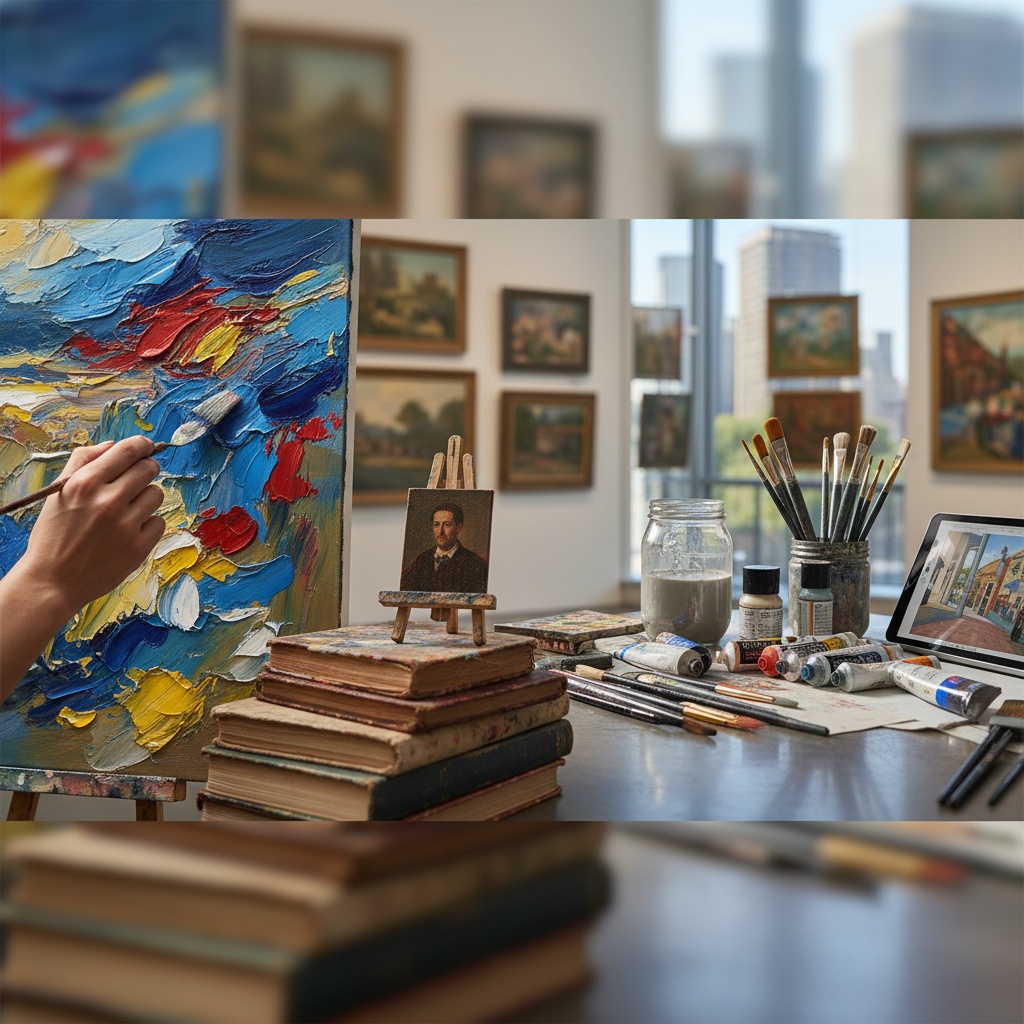
The Genesis of Acrylic: A Historical Overview
Abstract expressionism in the United States emerged as a distinct art movement in the aftermath of World War II and gained mainstream acceptance in the 1950s, a shift from the American social realism of the 1930s influenced by the Great Depression an...
Though seemingly ubiquitous today, acrylic painting is a relatively recent arrival on the artistic landscape, its origins rooted not in centuries-old tradition but in the pragmatic demands of industrial innovation. The story begins in the 1930s with German chemists exploring new polymer emulsions – substances designed for durability and adhesion. These early formulations weren’t intended for canvas; rather, they were geared towards industrial coatings and protective finishes. It wasn't until the post-war era that artists began to recognize the potential of this versatile medium. Leonard Bocour and Sam Golden are pivotal figures in this narrative, commercializing the first acrylic paints in 1947 under the name “Magna.” This initial offering provided a water-based alternative to oils, promising faster drying times and easier cleanup – advantages that quickly resonated with a generation eager for new modes of expression. However, it was the subsequent refinements by companies like Permanent Pigment Company in 1955 that truly unlocked acrylic’s potential, creating formulations specifically tailored to the needs of fine artists. This marked not merely an addition to the painter's palette but a fundamental shift in how art could be conceived and executed.
Understanding Acrylic’s Unique Properties & Composition
In polymer chemistry, emulsion polymerization is a type of radical polymerization that usually starts with an emulsion incorporating water, monomers, and surfactants. The most common type of emulsion polymerization is an oil-in-water emulsion, in whi...
The allure of acrylic lies in its remarkable adaptability, stemming from its unique chemical composition. At its core, acrylic paint consists of pigment particles suspended within an acrylic polymer emulsion – a water-based binder that imparts flexibility and adhesion. Unlike oil paints which rely on slow oxidation for drying, acrylics harden through evaporation of the water component, resulting in significantly faster drying times. This characteristic presents both opportunities and challenges; artists can build up layers rapidly, but must also contend with the paint’s tendency to dry quickly on brushes and palettes. The versatility extends beyond drying time. Acrylics can be diluted with water to achieve watercolor-like washes or used directly from the tube for thick impasto textures reminiscent of oil painting. This malleability is further enhanced by a wide range of additives – gels, retarders, flow improvers – allowing artists to fine-tune viscosity, transparency, and surface sheen. The composition also contributes to its durability; once dry, acrylic forms a resilient, water-resistant film that resists cracking and yellowing, ensuring the longevity of the artwork.
Mastering Essential Acrylic Painting Techniques
Acrylic painting techniques are different styles of manipulating and working with polymer-based acrylic paints. Acrylics differ from oil paints in that they have shorter drying times (as little as 10 minutes) and are soluble in water. Since acrylic ...
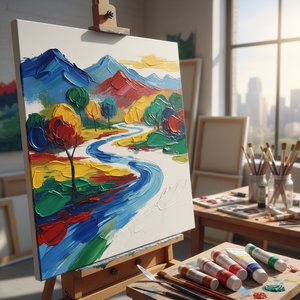
The spectrum of techniques available to the acrylic painter is vast, mirroring the medium’s inherent flexibility. Layering, perhaps the most fundamental approach, involves building up successive coats of paint, allowing each layer to dry before applying the next – a process facilitated by its rapid drying time. This technique lends itself beautifully to creating depth and complexity, particularly in representational work. Conversely, glazing employs thin, transparent washes of color over dried layers, imbuing the artwork with luminosity and subtle tonal variations. For those seeking tactile expression, impasto utilizes thick applications of paint, often applied with palette knives or stiff brushes, to create textured surfaces that capture light and shadow. Other techniques include dry brushing – a method for achieving scratchy, atmospheric effects – and pouring, which involves manipulating the flow of liquid acrylics to generate abstract patterns. Blending, while challenging due to the quick drying time, can be achieved with retarders or by working quickly on a wet surface. Ultimately, the choice of technique depends on the artist’s vision and desired aesthetic effect.
Acrylic in the Modern Era: Key Artists and Movements
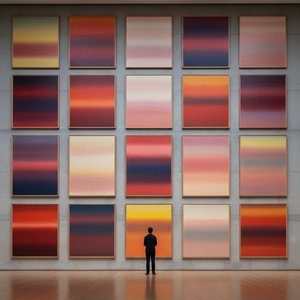
 Abstract Painting 780-1
Explore Gerhard Richter’s ‘Abstract Painting 780-1,’ a vibrant 1992 masterpiece! Dynamic color & impasto technique create an energetic abstract experience. A statement piece for art lovers.
The rise of acrylic painting coincided with the emergence of Abstract Expressionism in the post-World War II United States, and it quickly became a favored medium for artists seeking new forms of visual language. Figures like Jackson Pollock, while primarily known for his drip paintings using oil paints, experimented extensively with acrylics as he sought greater control over viscosity and flow. However, it was artists such as Helen Frankenthaler who truly embraced the potential of acrylic, pioneering techniques like the “soak-stain” method – pouring diluted paint onto unprimed canvas to create luminous, ethereal compositions. Gerhard Richter stands out as a contemporary master, utilizing acrylics with remarkable versatility in both abstract and photorealistic works. His Abstract Painting series, for example, showcases the dynamic interplay of color and impasto technique, creating energetic and visually arresting experiences. Andy Warhol also adopted acrylics for his iconic pop art prints, appreciating its vibrant colors and suitability for mass production techniques. These artists demonstrate that acrylic is not merely a substitute for traditional media but a powerful tool capable of expressing a wide range of artistic visions.
Materials & Mediums: Expanding Your Acrylic Palette
Beyond the basic paints themselves, a diverse array of materials and mediums can significantly expand an artist’s creative possibilities. Gel mediums, available in various viscosities, add texture and body to acrylic paint, allowing for sculptural effects or impasto techniques. Matte and gloss mediums alter the surface sheen, providing options ranging from a velvety finish to a high-gloss luster. Retarders slow down drying time, enabling smoother blending and wet-into-wet techniques. Flow improvers reduce surface tension, enhancing paint flow and adhesion, particularly useful for detailed work or airbrushing. The choice of substrate is also crucial; while canvas remains a popular option, acrylics adhere readily to paper, wood, metal, and even fabric. Furthermore, the integration of mixed media – incorporating collage elements, pastels, inks, or other materials – can add depth and complexity to an artwork. Experimentation with these various components allows artists to tailor their palette and achieve unique visual effects.
Preserving Your Work: Varnishing, Storage & Long-Term Care
Once completed, protecting your acrylic painting is paramount to ensuring its longevity. Varnishing provides a protective layer against dust, UV damage, and abrasion, while also enhancing the colors and unifying the surface sheen. Acrylic varnishes are available in gloss, satin, and matte finishes, allowing artists to customize the final appearance of their work. Proper storage is equally important; paintings should be stored in a cool, dry environment away from direct sunlight and extreme temperatures. Avoid stacking canvases directly on top of each other, as this can cause damage to the paint surface. For long-term care, regular cleaning with a soft, damp cloth can remove dust and debris. While acrylics are inherently durable, taking these preventative measures will ensure that your artwork remains vibrant and intact for generations to come. At OriginalUniqueArt.com, we offer museum-quality reproductions and expert advice on preserving the beauty of art – from selecting archival materials to ensuring proper framing and display.