High Renaissance · 1518
Jacob's Dream (Raffaello Sanzio, 1518)
Raffaello Sanzio (1483–1520) megalkotta: Jacob's Dream. 1518-ből származik. A High Renaissance irányzathoz tartozik. Fresco anyagból készült.
- 1518
- Fresco

 Kézzel festett olajfestmény
 Küldés
 Megosztás
 Információs lap


 Letöltés
 Hasonló darabok
 Diavetítés
 Kérdések és válaszok

 Statisztika
Jacob's Dream röviden
- Cím
- Jacob's Dream
- Művész
- Raffaello Sanzio (1483–1520)
- A művész születési helye
- Urbino, Olaszország
- Dátum
- 1518
- Műszaki adatok
- Fresco
- Mozgalom
- High Renaissance
- Időszak
- Renaissance
- Téma
- biblical narrative, dream imagery, religious symbolism, angel ascension, italian renaissance, jacob's vision
Mit ábrázol a Jacob's Dream?
A Vision of Divine Ascent: The Celestial Majesty of Raphael’s Jacob’s Dream
In the heart of the High Renaissance, amidst the intellectual fervor of Rome, Raphael Sanzio captured a moment of profound spiritual transcendence in his 1518 masterpiece, Jacob’s Dream. Originally conceived for the prestigious Loggia of the Palazzo Nuovo under the patronage of Pope Leo X, this fresco is far more than a mere biblical illustration; it is a breathtaking window into the divine. The scene breathes with the life of Genesis, depicting the patriarch Jacob as he rests upon a stone altar, caught in the liminal space between sleep and revelation. As he lies in contemplative repose, his eyes are drawn upward to witness a celestial procession: angels ascending and descending a heavenly ladder, bridging the gap between the earthly realm and the infinite heavens.
Raphael’s technical mastery is on full display through his sophisticated use of sfumato and linear perspective, techniques that lend the composition an almost palpable atmospheric depth. By subtly blurring edges and layering pigments with remarkable luminosity, he creates an illusionistic space that pulls the viewer into the dreamscape. The movement within the painting is masterfully orchestrated; the dynamic upward trajectory of the angels creates a sense of rhythmic energy, while the presence of birds circling above Jacob’s head serves as a poignant metaphor for divine messengers. Every brushstroke contributes to a sense of weightlessness and grace, making the ethereal quality of the dream feel strikingly real.
Symbolism and the Humanist Spirit
Beyond its visual splendor, Jacob’s Dream is a profound meditation on the human condition and our yearning for spiritual enlightenment. The stone altar upon which Jacob rests serves as a symbol of humility and groundedness, representing the physical world from which all spiritual aspiration begins. The ascending angels embody the movement of grace—the soul's upward climb toward God. This interplay between the heavy, terrestrial elements and the light, celestial figures reflects the core tenets of Renaissance humanism: the belief that through intellect, faith, and beauty, humanity can reach toward the divine. For the discerning collector or interior designer, this piece offers a sophisticated narrative of hope, aspiration, and the eternal search for meaning.
The emotional impact of the work lies in its ability to evoke both awe and tranquility. There is a quietude in Jacob’s slumber that invites introspection, yet the vibrant colors and intricate details of the heavenly figures stir the imagination. It is an artwork that commands presence in any space, offering a focal point of intellectual depth and aesthetic elegance. Whether viewed as a historical relic of the papal court or as a timeless symbol of spiritual journeying, Raphael’s vision remains an enduring testament to the power of art to capture the intangible essence of the soul.
Jacob's Dream nagy felbontású képei

Felfüggesztett szerzői jogok: a művész 1520-ben halt meg.
Egyéb méretek, kivágások és idézetforrás →Raffaello Sanzio, Jacob's Dream (1518). Felfüggeszthető jogforrás
Jacob's Dream kapcsán felmerülő kérdések megválaszolva
Mikor készült a "Jacob's Dream"?
A "Jacob's Dream" 1518-ban készült. Ez az időpont meghatározó jelentőséggel bír Raffaello Sanzio pályájában és az adott korszak kontextusában is.
Milyen technikával készült a „Jacob's Dream”, Raffaello Sanzio alkotása?
A „Jacob's Dream”, Raffaello Sanzio alkotása technikája Fresco. A reprodukciók célja ezen technika megjelenítésének hiteles återadása.
Milyen témák jelennek meg a(z) „Jacob's Dream”, Raffaello Sanzio alkotása alkotásban?
A „Jacob's Dream”, Raffaello Sanzio alkotása alkotás témái közé tartozik a biblical narrative, dream imagery, religious symbolism, angel ascension, italian renaissance, jacob's vision, classical composition. Ezek együtt foglalják össze a mű tárgyát.
A „Jacob's Dream”, Raffaello Sanzio alkotása jogtalanul védett (public domain)?
A „Jacob's Dream”, Raffaello Sanzio alkotása szerzői jogi státusza: a mű közösségi tulajdon – a szerzői jog lejártt. Ez határozza meg, hogy a kép másolatai szabadon készíthetők-e.
Mely művészhez köthető a "Jacob's Dream"?
A „Jacob's Dream” műtémét Raffaello Sanzio alkotójának tulajdonítják.
Milyen stílusba tartozik a "Jacob's Dream"?
A „Jacob's Dream”, Raffaello Sanzio alkotása művészeti irányata a High Renaissance. Ez a klasszifikáció a művet a kapcsolódó alkotók és alkotások közé sorolja.
Hová sorolható a Raffaello Sanzio pályájának mely szakaszába a "Jacob's Dream"?
Raffaello Sanzio pályaművében a „Jacob's Dream” a Mature Period korszakba tartozik. Ez az időszak segít összehasonlíthatóvá tenni a művet a művész többi alkotásával.
Hány éves volt Raffaello Sanzio, amikor megalkotta a "Jacob's Dream" című alkotást?
Raffaello Sanzio 35 éves volt, amikor 1518 évben megalkotta a "Jacob's Dream" alkotást. A korúsítás az alkotó születési évéből, 1483 fel основании került kiszámítva.
Mi magyarázza a „Jacob's Dream”, Raffaello Sanzio alkotása szerzői jogi helyzetét?
Raffaello Sanzio alkotása, a "Jacob's Dream", közösségi tulajdon – a szerzői jog lejártt státuszban van. A szerzői jogi védelem a művész halálától számítod, Raffaello Sanzio pedig 1520 évben hunyt meg.
A művészről: Raffaello Sanzio

1483–1520, Olaszország
Raffaello Sanzio
A Reneszánsz Fénye: Raffaello Sanzio élete és művészete Raffaello Sanzio da Urbino, a világ Raffaelloként ismerte, a reneszánsz egyik legkiemelkedőbb alakja volt. 1483-ban született Urbino falai között, egy kis, de intellektuálisan pezsgő itáliai városállamban. Korai éveit olyan légkörben töltötte, amely a művészi képességeket és a humanista tudást egyaránt értékelte. Apja, Giovanni Santi nem csupán Federico da Montefeltro herceg festője volt – hanem mélyen elmerült a reneszánsz gondolkodásának áramlataiban, költő, aki megörökítette a herceg életét és aktívan keresett innovatív művészeti ötleteket Itália szerte.
Raffaello Sanzio részletesen Raffaello Sanzio legkiemelkedőbb művei
Raffaello Sanzio további művei
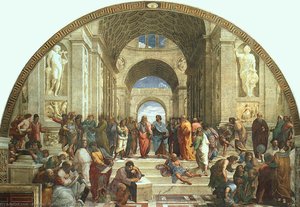 Az Athénai Iskola1511
 A Szisztine Madonna1513
 Raphael1520
 Észüremedett menyasszonyok összeolvasztása1504
Esszék a Jacob's Dream körül
 Masterpieces of Perfection: The Top 25 Greatest Artworks by RaphaelImmerse yourself in the grace of the High Renaissance. Explore 25 iconic masterpieces by Raphael, from divine Madonnas to legendary frescoe…
 High Renaissance vs. Mannerism: Harmony and the Shift to TensionMaster the shift from Renaissance harmony to Mannerist tension with our expert art analysis. Discover the evolution of Italian masterpieces…
 25 Masterpieces by Duccio di Buoninsegna: The Dawn of Sienese ArtJourney through the divine beauty of Duccio di Buoninsegna’s greatest works. From the Sienese School to Byzantine elegance, explore 25 time…