Art Nouveau
(86) (Alphonse Mucha)
Alphonse Mucha (1860–1939) megalkotta: (86). A Art Nouveau irányzathoz tartozik. Acrylic On Canvas anyagból készült.
- Acrylic On Canvas

 Megtekintés

 Kézzel festett olajfestmény
 Küldés
 Megosztás
 Információs lap


 Letöltés
 Hasonló darabok
 X-ray felvétel
 Diavetítés
 Kérdések és válaszok

 Statisztika
(86) röviden
- Cím
- (86)
- Művész
- Alphonse Mucha (1860–1939)
- A művész születési helye
- Ivančice, Csehország
- Műszaki adatok
- Acrylic On Canvas
- Mozgalom
- Art Nouveau
- Időszak
- 19th Century
Mit ábrázol a (86)?
Alphonse Mucha’s “86”: A Symphony of Art Nouveau
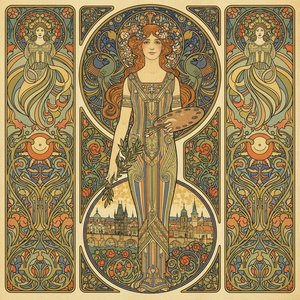
“86,” a captivating painting by Alphonse Maria Mucha, presents a scene brimming with feminine grace and vibrant energy – a quintessential embodiment of the artist's signature Art Nouveau style. This work, likely created around the early 20th century when Mucha was at the height of his fame, immediately draws the eye with its bold color palette: a luminous yellow background punctuated by striking red accents that lend an almost theatrical intensity to the composition. The painting depicts a group of women, their figures rendered in flowing robes and adorned with elaborate floral headdresses – a recurring motif in Mucha’s oeuvre – suggesting a scene of leisure, perhaps a gathering of friends or a salon setting. Scattered throughout are several chairs, strategically placed to guide the viewer's eye and contribute to the overall sense of movement and dynamism.
The Masterstroke of Art Nouveau
Alphonse Mucha’s artistic legacy rests firmly within the framework of Art Nouveau, a style that rejected academic traditions in favor of organic forms, flowing lines, and an emphasis on beauty. Influenced by artists like Pierre-Auguste Renoir and Gustave Moreau, Mucha developed his own distinctive approach – one characterized by idealized female figures, intricate floral designs, and a deliberate sense of movement. “86” exemplifies these qualities perfectly. Note the sinuous curves of the women’s garments, mirroring the natural world; the delicate rendering of the flowers in their hair, each petal meticulously crafted with an almost obsessive attention to detail; and the overall feeling that the scene is perpetually caught in a graceful, flowing moment. Mucha's work was not merely decorative; it aimed to evoke a sense of wonder and enchantment, transporting the viewer to a realm of beauty and serenity.
Symbolism and Narrative
While the precise narrative of “86” remains somewhat open to interpretation, several symbolic elements contribute to its rich visual language. The abundance of women suggests themes of community, friendship, and perhaps even fertility – common motifs within Art Nouveau. The bird, subtly integrated into the composition, could represent freedom, joy, or a connection to nature. Mucha frequently employed such subtle symbols to add layers of meaning to his work, inviting viewers to engage in a deeper contemplation of its subject matter. The painting’s overall atmosphere is one of lively celebration and feminine power, reflecting Mucha's fascination with portraying idealized female beauty.
Hand-Painted Reproduction: Bringing Mucha to Life
OriginalUniqueArt offers a meticulously hand-painted reproduction of “86,” capturing the essence of Mucha’s original masterpiece. Each reproduction is created by skilled artisans, employing traditional oil painting techniques to faithfully recreate the vibrant colors and intricate details of the artwork. The result is a stunning piece of art that will enhance any interior space while celebrating the enduring legacy of Alphonse Mucha. Available in various sizes, this reproduction provides an accessible way to own a significant work of Art Nouveau history. Order yours today and experience the magic of Mucha’s vision firsthand.
(86) nagy felbontású képei
Felfüggesztett szerzői jogok: a művész 1939-ben halt meg.
Alphonse Mucha, (86). Felfüggeszthető jogforrás
(86) kapcsán felmerülő kérdések megválaszolva
Milyen technikával készült a „(86)”, Alphonse Mucha alkotása?
Alphonse Mucha a Acrylic On Canvas technikát alkalmazta a "(86)" alkotáshoz. A technika határozza meg az eredeti mű anyagösszetételt.
A „(86)”, Alphonse Mucha alkotása jogtalanul védett (public domain)?
A „(86)”, Alphonse Mucha alkotása szerzői jogi státusza: a mű közösségi tulajdon – a szerzői jog lejártt. Ez határozza meg, hogy a kép másolatai szabadon készíthetők-e.
Ki készítette a(t): "(86)"?
A „(86)” műtémét Alphonse Mucha alkotójának tulajdonítják.
Milyen stílusba tartozik a "(86)"?
A "(86)" a Art Nouveau egyik alkotása. A művészeti irány meghatározza azt a művészeti hagyományt, amelybe a mű beágyazódik.
A Alphonse Mucha alkotása, a "(86)", a jogi szabadhasználatban (public domain) áll-e, és miért?
A „(86)”, Alphonse Mucha alkotása közösségi tulajdon – a szerzői jog lejártt állapotban van. A szerzői jogi védelem időtartama a művész halálától számítódik, amely 1939 évben történt.
A művészről: Alphonse Mucha

1860–1939, Csehország
Alphonse Mucha
Early Life and Artistic Beginnings Alphonse Maria Mucha, a name synonymous with the opulent beauty of Art Nouveau, was born on July 15, 1860, in the small Moravian town of Ivanačice. His early life, steeped in the traditions of his Czech homeland, laid the foundation for an artistic vision that would soon captivate Europe. From a young age, Alphonse displayed a remarkable talent for drawing – a gift nurtured by his family’s modest circumstances and a supportive local merchant who provided him with paper, a luxury at the time. This nascent skill blossomed into a passionate pursuit, leading him to study at the Academy of Fine Arts in Prague, though he quickly grew disillusioned with the academy's rigid adherence to classical conventions.
Alphonse Mucha részletesen Alphonse Mucha legkiemelkedőbb művei
Alphonse Mucha további művei
 The Moon
 Nude
 The Apotheosis of the Slavs1926
 Stained-Glass Window in St. Vitus Cathedral
Esszék a (86) körül
 Alphonse Mucha: A Comprehensive Exploration of Art Nouveau's Master of Decorative SymbolismExplore the life & art of Alphonse Mucha, master of Art Nouveau! Discover his iconic posters, stunning illustrations, and the monumental Sl…
 Renoir Mesterek: A 25 Leglenyűgözőbb Kép a Francia Impresszionizmus Gyöngyszemeiből | OriginalUniqueArtFedezze fel Pierre-Auguste Renoir 25 legszebb művét! Ismerje meg az impresszionizmus gyöngyszemeit, a színek és fény játékát. Vásároljon ex…
 Feathered Masterpieces: The Enchanting World of Impressionist Bird ArtDiscover the ethereal beauty of Impressionist bird art. Explore how masters like Monet and Renoir captured light and motion through feather…