Wang Yuanqi portréja

A 22 legnevezesebb Wang Yuanqi festmény, egy galériaválaszték

Frissítve: október 2026 · rangsorolva népszerűségi pontszámunk alapján (minden mű keresései, látogatásai és megrendelései alapján) · 22 mű Wang Yuanqi alkotása a katalógusunkban

Röviden

Wang Yuanqi hagyatékából a leghíresebb alkotás Landscape for Zhanting (1710). Röviddel ezután követik őket Wangchuan Villa (1711) és Landscape (1678). Katalógusunkban 22 mű található Wang Yuanqi alkotótól; a galéria megőrizte a világ által leginkább csodált 22 darabot, melyeket a dátummal, a múzeummal és a történetükkel együtt mutatunk be.

1642 – 1715, Taicang A legtöbb mű: Metropolitan Művészeti Múzeum

Wang Yuanqi legjobb 10 festménye: a galéria válogatása

1
Landscape for Zhanting (1710) (1889) -ja Wang Yuanqi

Landscape for Zhanting

1710 · Ink

In Landscape for Zhanting, the artist Wang Yuanqi presents a vast mountain range that stretches across the entire width of the silk. Snow-capped peaks rise against the sky, their white summits catching the light amidst the rugged terrain. These mountains form a heavy, continuous boundary that defines the horizon. The scale of the landscape creates a sense of immense depth, pulling the eye through layers of stone and mist.
2
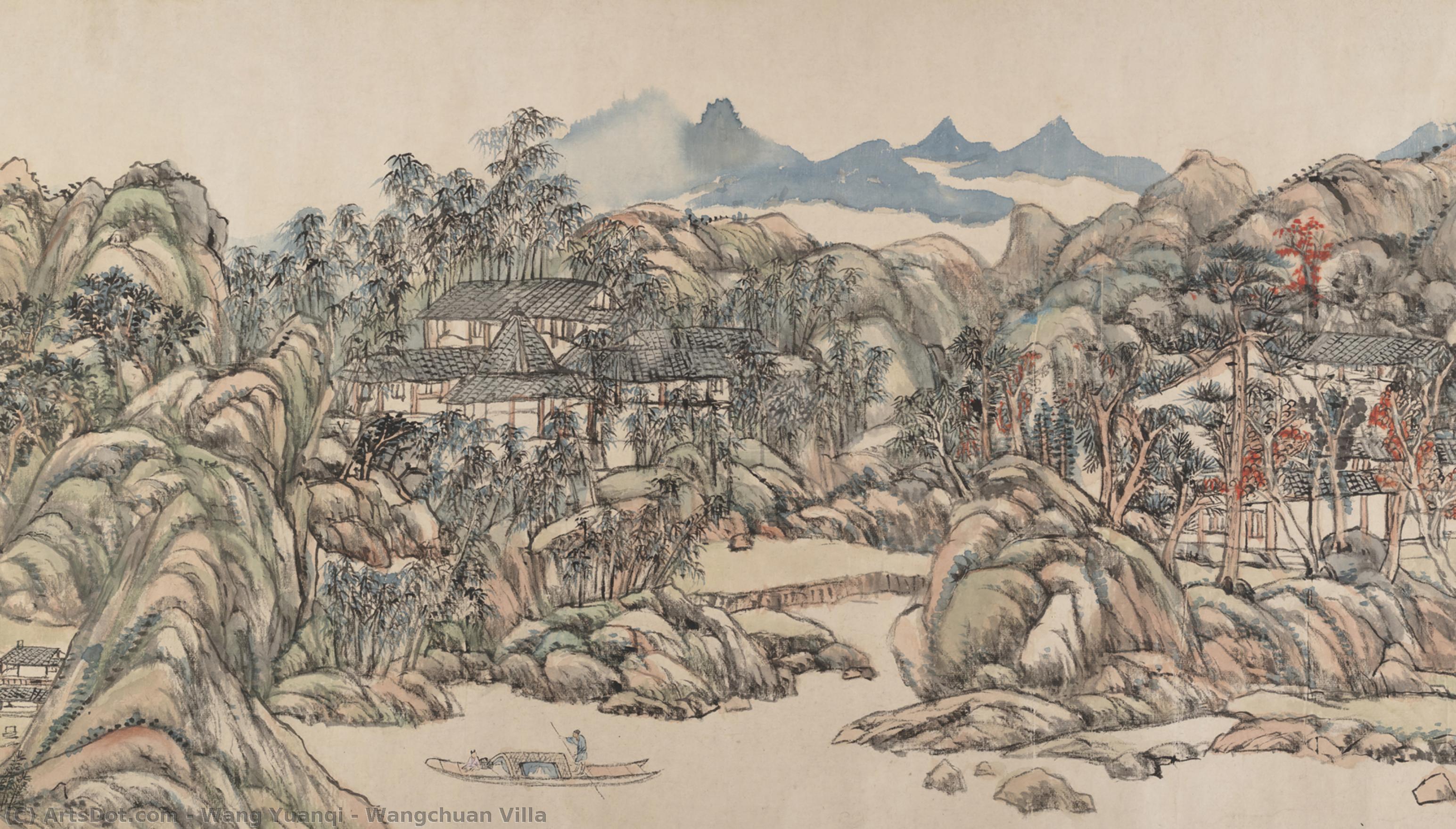
Wangchuan Villa (1711) (1889) -ja Wang Yuanqi

Wangchuan Villa

1711 · Ink On Paper · Metropolitan Művészeti Múzeum, New York

The handscroll titled Wangchuan Villa emerges from the brush of Wang Yuanqi, a painter who shaped the landscape traditions of the Qing Dynasty. Born in 1642 in Taicang, Jiangsu province, China, Wang Yuanqi carries the weight of a profound artistic lineage. He moves through the world of ink and color as a leading figure of the Orthodox School. His hand brings life to this specific vision of a mountain community,…

A Wang Yuanqi válogatás folytatódik: 11 – 22

A témák, amelyek Wang Yuanqi figyelmét meghúzták

A négy leggyakorobban előforduló téma ebben az eredeti művekben, mindegyik a legkiválóbb példájával.

A műemlékek, amelyek Wang Yuanqi eredeti műveit őrzik

A 8 olyan múzeum, amely a legtöbb ezen az oldalon szereplő festményet őrzi.

Múzeum Város Wang Yuanqi művei Ebből a listából származó festmények
Metropolitan Művészeti Múzeum, New YorkMetropolitan Művészeti Múzeum New York 7 Wangchuan Villa, 清 王原祁 倣吳鎮山水圖 軸 Landscape after Wu Zhen, Landscape for Zhanting
Art Institute of Chicago, ChicagoArt Institute of Chicago Chicago 3 Landscape, Mountainous Landscape after Wang Meng, Landscape after Huang Gongwang
Cleveland Museum of Art, ClevelandCleveland Museum of Art Cleveland 2 Landscape after Ni Zan, Green Peaks under Clear Sky: After Huang Gongwang
Yale University Art Gallery, New HavenYale University Art Gallery New Haven 2 Landscape in the Style of Huang Gongwang, Landscape
Walters Art Museum, BaltimoreWalters Art Museum Baltimore 1 Free Spirits Among Streams and Mountains
Detroit Institute of Arts, DetroitDetroit Institute of Arts Detroit 1 Mountain and River Landscape
Csísa Palota Múzeum, PekingCsísa Palota Múzeum Peking 1 Wang Yuanqi's Thatched Cottage Ten Records
National Gallery of Victoria, MelbourneNational Gallery of Victoria Melbourne 1 The Fuchun Mountians

Wang Yuanqi évtizede folgtva: az eredeti művek, amelyek meghatározzák az egyes korzakot

Művek évtizedenként

Váassz ki egy évtizedet, hogy megnézhesd az azt meghatározó eredetiműveket.

Gyűjtői kérdések Wang Yuanqi festményeivel kapcsolatban

Melyik művel a(z) Wang Yuanqi a leghíresebb?Fedje fel a választ

Landscape for Zhanting (1710). Ezt követi Wangchuan Villa (1711) és Landscape (1678).

Hány éves volt Wang Yuanqi, amikor a Landscape for Zhanting készült?Fedje fel a választ

68 éves: Landscape for Zhanting 1710-ből származik, Wang Yuanqi pedig 1642-ben született.

Melyek a tíz leghíresebb Wang Yuanqi festmény?Fedje fel a választ

Landscape for Zhanting, Wangchuan Villa, Landscape, Mountainous Landscape after Wang Meng, Free Spirits Among Streams and Mountains, 清 王原祁 倣吳鎮山水圖 軸 Landscape after Wu Zhen, Landscape for Zhanting, Landscape after Ni Zan, Green Peaks under Clear Sky: After Huang Gongwang és Landscape after Huang Gongwang. A fenti rangsor a művek évszamarát és a múzeumát jelzi.

Hány festményet hagyott hátra Wang Yuanqi?Fedje fel a választ

Katalógusunkban 22 mű található Wang Yuanqi alkotótól, 1678 és 1712 év közötti időszakból.

Mely múzeumokban állnak Wang Yuanqi remekművei?Fedje fel a választ

Leginkább Metropolitan Művészeti Múzeum (New York), Art Institute of Chicago (Chicago) és Cleveland Museum of Art (Cleveland) található. A fenti múzeumi táblázatban mindegyik felsorolásra került.

Mely években festette Wang Yuanqi leghíresebb műveit?Fedje fel a választ

1700s alatt: a jelen laphonon található 22 műből 5 készült ebben az időszakban, köztük Landscape after Ni Zan.

Mikszétek az első és az utolsó híres eredeti műve a(z) Wang Yuanqi alkotótól?Fedje fel a választ

Ezen az oldalon a leghitelesebb Landscape (1678), a legutóbbi pedig Landscape in the Style of Huang Gongwang (1712).

Milyen témaköröket választott leggyakrabban Wang Yuanqi?Fedje fel a választ

Mountains (3), Trees (2) és People (2), a jelen oldalon található 22 műművészeti alkotás között.

Mely Wang Yuanqi művei láthatóak a Metropolitan Művészeti Múzeum kiállتításán?Fedje fel a választ

Wangchuan Villa, 清 王原祁 倣吳鎮山水圖 軸 Landscape after Wu Zhen és Landscape for Zhanting: a Metropolitan Művészeti Múzeum, New York 7 művet őrzi ezen az oldalon.

Wang Yuanqi: életmű és életút

Wang Yuanqi: A Master of Qing Dynasty Landscape

Early Life and Education

  • Wang Yuanqi (王原祁) was born in 1642 in Taicang, Jiangsu province, China.
  • He came from a family with a strong artistic tradition; his grandfather, Wang Shimin, was a renowned painter of the early Qing dynasty.
  • Yuanqi received rigorous training in painting from his grandfather, laying the foundation for his future artistic endeavors.
  • His style name was 'Mao-ching' and his sobriquet was 'Lu-t’ai'.

Career as a Court Official

  • Wang Yuanqi rose to prominence as a court official during the Qing dynasty, beginning shortly after its establishment in 1644.
  • He served with distinction and was eventually appointed curator of the imperial collection under the Kangxi Emperor.
  • This position granted him access to a vast array of artworks, further enriching his artistic knowledge and influencing his style.
  • He remained a court official throughout his long career, balancing administrative duties with his passion for painting until his death in 1715 at age 73.

Artistic Style and Influences

  • Wang Yuanqi is considered one of the “Six Masters of the early Qing period,” also known as the ‘Four Wangs, a Wu and a Yun’.
  • He was a leading figure in the 'Orthodox School' (正统派) of Chinese landscape painting.
  • His landscapes drew inspiration from Yuan dynasty artists who moved away from the highly realistic depictions favored during the Northern Song period.
  • A key influence on his work was Huang Gongwang, particularly in the use of dry brush strokes, ink washes, and a sophisticated approach to color.
  • He skillfully integrated color patterns into his compositions, complementing abstract designs with rhythmic color flows.

Major Works and Achievements

  • Notable works include Landscape in the Style of Huang Gongwang (1711), currently held in Singapore’s Asian Civilisations Museum.
  • His rendition of Wang Wei's eighth-century hand scroll, The Wang River Villa, is housed in the Metropolitan Museum of Art, New York City.
  • Other significant paintings include “The Fuchun Mountains”, “Landscape for Zhanting” and numerous landscapes after the Four Great Yuan Masters.
  • He excelled at recreating the styles of earlier masters while imbuing his works with a unique personal touch.

Historical Significance

  • Wang Yuanqi played a crucial role in shaping the development of Chinese landscape painting during the Qing dynasty.
  • His adherence to and refinement of the Orthodox School established a standard for generations of artists.
  • He helped preserve and promote traditional artistic values while also demonstrating innovative techniques in composition and color usage.
  • His work continues to be celebrated for its technical mastery, aesthetic beauty, and historical importance within the context of Chinese art history.