Red Grooms portréja

A 40 legnevesebbebb Red Grooms festmény, mindegyik egyedistens

Frissítve: október 2026 · rangsorolva népszerűségi pontszámunk alapján (minden mű keresései, látogatásai és megrendelései alapján) · 41 mű Red Grooms alkotása a katalógusunkban

Röviden

Self-portrait with extra large paper hat (1955) az a Red Grooms festmény, amely a legtöbb tekintetet felvonja. Ezután a tekintet Derain and Poiret (1998) és (Constantine) Guys (1972) elemre irányul. A Red Grooms 41 műve közül a katalógusunkban megtalálható 40 legnépesebb alkotás, melyeket az év, a múzeum és az örökévalóságának okai kísérnek.

született: 1937, Nashville Pop art A legtöbb mű: Metropolitan Művészeti Múzeum

A galéria szemével: Red Grooms legjobb 10 festménye

2
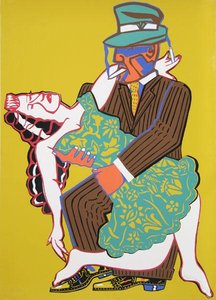
Derain and Poiret (1998) (1889) -ja Red Grooms

Derain and Poiret

1998 · Oil On Canvas · Metropolitan Művészeti Múzeum, New York

The work known as Derain and Poiret emerges from the creative mind of Red Grooms, an artist whose origins trace back to Nashville, Tennessee, in 1937. In this piece, the artist captures a specific moment of visual inquiry, bringing together names and ideas through a unique lens. The piece dates to 1998, a time when the artist's hand was already deeply engaged with the textures of modern existence.

Red Grooms híres festményei, 11 és 40 között

A témák, amelyek Red Grooms figyelmét meghúzták

A négy leggyakorobban előforduló téma ebben az eredeti művekben, mindegyik a legkiválóbb példájával.

A műemlékek, amelyek Red Grooms eredeti műveit őrzik

A múzeum, amely ezen az oldalon szereplő festmények többségét őrzi.

Múzeum Város Red Grooms művei Ebből a listából származó festmények
Metropolitan Művészeti Múzeum, New YorkMetropolitan Művészeti Múzeum New York 1 Derain and Poiret

Red Grooms évtizedekig: egy egyedi eredeti mű minden évtizedben

Művek évtizedenként

Váassz ki egy évtizedet, hogy megnézhesd az azt meghatározó eredetiműveket.

Red Grooms festményei: kérdések a galériának

Mi a leghíresebb műve Red Groomsnek?Fedje fel a választ

Self-portrait with extra large paper hat (1955). Ezt követi Derain and Poiret (1998) és (Constantine) Guys (1972).

Milyen életkorában alkotta meg Red Grooms a(z) Self-portrait with extra large paper hat műszt?Fedje fel a választ

18 éves: Self-portrait with extra large paper hat 1955-ből származik, Red Grooms pedig 1937-ben született.

Melyik tíz festménye Red Grooms a leghíresebb?Fedje fel a választ

Self-portrait with extra large paper hat, Derain and Poiret, (Constantine) Guys, Blewy, Baudelaire, Degas, Wounded Bird, Goal Posts, Charlie Chaplin és Lumberjack. A fenti rangsor a művek évszamarát és a múzeumát jelzi.

Hány mű alkotása ismert Red Grooms nevében?Fedje fel a választ

Katalógusunkban 41 mű található Red Grooms alkotótól, 1955 és 2017 év közötti időszakból.

Hol tekinthetők meg a leghíresebb Red Grooms eredetijeit?Fedje fel a választ

Leginkább Metropolitan Művészeti Múzeum (New York) található. A fenti múzeumi táblázatban mindegyik felsorolásra került.

Melyik időszakban alkotta Red Grooms a leghíresebb festményeit?Fedje fel a választ

1980s alatt: a jelen laphonon található 40 műből 9 készült ebben az időszakban, köztük Goal Posts.

Melyik híres Red Grooms festmény a legkorábbi, és melyik a legutóbb készült?Fedje fel a választ

Ezen az oldalon a leghitelesebb Self-portrait with extra large paper hat (1955), a legutóbbi pedig The Strand (2017).

Mely művészeti irányba tartozik Red Grooms műve?Fedje fel a választ

Pop art, ezen az oldalon található eredetiek alapján.

Red Grooms: a művész portréja

A Life Painted in Motion: The World of Red Grooms

Red Grooms, a name synonymous with exuberant energy and satirical observation, was born Charles Rogers Grooms in Nashville, Tennessee, on June 7, 1937. His life’s work has been a relentless exploration of the vibrant, often chaotic beauty of modern urban existence, translated into a uniquely personal visual language characterized by bold colors, dynamic compositions, and an irrepressible spirit of playfulness. From his early days absorbing the sights and sounds of mid-century America to his groundbreaking ‘sculpto-pictoramas,’ Grooms’ art consistently challenges conventional notions of representation and invites viewers to actively engage with the world around them. His nickname, “Red,” earned during his time as a dishwasher in Provincetown while studying with Hans Hofmann, perfectly encapsulates his artistic temperament – a vibrant hue that would forever define his palette and his approach to life and art. A subtle influence from his father’s profession as a coppersmith is evident in Grooms' later inclination towards assemblage and construction, fostering an appreciation for the tactile qualities of materials and the art of building form from disparate parts.

From Happenings to ‘Sculpto-Pictoramas’: Forging a New Artistic Path

Grooms’ artistic journey was anything but conventional. Initially studying at the Art Institute of Chicago and Peabody College, he quickly gravitated towards the burgeoning avant-garde scene in New York City, immersing himself in the experimental atmosphere of the New School for Social Research and the Hans Hofmann School. This period was defined by collaboration and innovation – a deliberate rejection of traditional artistic boundaries. He became deeply involved with “happenings,” those ephemeral performance events that blurred the lines between art and life, working alongside influential figures like Allan Kaprow, Claes Oldenburg, and Jim Dine. These experiences were formative, instilling in him a desire to create immersive artworks that actively engaged the viewer – pieces designed not just to be seen, but to be experienced. This impulse led him to co-found City Gallery in New York, providing a vital platform for emerging artists pushing the boundaries of artistic expression and fostering a community dedicated to experimentation. Early films like “Shoot the Moon” and “The Big Sneeze” further demonstrated his willingness to experiment with diverse media and challenge established artistic norms. However, it was the development of his signature ‘sculpto-pictoramas’ that truly cemented his reputation as a visionary artist. These large-scale, walk-through installations – such as *City of Chicago* (1967) and *Ruckus Manhattan* (1975) – were not merely representations of urban environments; they were vibrant, chaotic recreations teeming with life and brimming with satirical detail.

Influences and Artistic Kinships

While firmly rooted in the Pop Art movement of his time, Grooms’ artistic lineage extends far beyond Warhol and Lichtenstein. He openly acknowledges a debt to earlier masters of social satire – artists like William Hogarth and Honoré Daumier, whose works offered biting critiques of their respective societies through visual storytelling. He also admired Marcel Duchamp's willingness to challenge the very definition of art, embracing an openness that resonated with Grooms’ own experimental spirit. His work shares a comic sensibility with Bob and Ray, reflecting a shared ability to find humor in the mundane absurdities of everyday life. However, Grooms wasn’t simply mimicking these influences; he was synthesizing them into something entirely new – a distinctly American form of Pop Art that celebrated (and often gently mocked) the energy and contradictions of modern urban existence. He frequently incorporates stylistic nods to other artists as both homage and critique, demonstrating a deep understanding of art history and a playful disregard for artistic dogma. The influence of Peter Schjeldahl, who compared Grooms to Duchamp due to their open and accessible approach, highlights this willingness to engage with the broader context of art and its relationship to society.

A Legacy of Immersive Storytelling

Red Grooms’ impact on contemporary art is profound. He pioneered site-specific sculpture and installation art, creating immersive experiences that invited viewers to step inside his vibrant worlds. His work challenged the traditional passive role of the art spectator, fostering a sense of participation and encouraging audiences to actively engage with the artwork. Beyond the ‘sculpto-pictoramas,’ Grooms continued to explore diverse artistic avenues – from films and paintings to assemblages and carousel designs, such as the *Tennessee Fox Trot Carousel* commissioned for downtown Nashville in 1998. This commission exemplifies his ability to bring art into public spaces, making it accessible and engaging for a wider audience. His satirical commentary on consumerism, urban life, and societal conventions remains remarkably relevant today, offering a timeless reflection of the human condition. Red Grooms continues to live and work in New York City, constantly evolving his artistic practice and inspiring new generations of artists with his boundless creativity and unwavering commitment to pushing boundaries. He is a testament to the power of art to both reflect and shape our understanding of the world around us.