

1


Frissítve: november 2026 · rangsorolva népszerűségi pontszámunk alapján (minden mű keresései, látogatásai és megrendelései alapján) · 10 mű Philips Augustijn Immenraet alkotása a katalógusunkban
Röviden
Wooded Landscape (1650) az a Philips Augustijn Immenraet festmény, amely a legtöbb tekintetet felvonja; az eredeti mű a Dulwich Picture Gallery gyűjteményében található, London. Ezután a tekintet Landscape with Herders and Ruins (II) (1650) és The Repudiation of Hagar (1659) elemre irányul. A Philips Augustijn Immenraet 10 műve közül a katalógusunkban megtalálható 10 legnépesebb alkotás, melyeket az év, a múzeum és az örökévalóságának okai kísérnek.


The Repudiation of Hagar is a religious art painting by the Flemish artist Philips Augustijn Immenraet. Created before 1659, this work belongs to the tradition of Flemish culture. The composition focuses on a biblical narrative set within a landscape of monumental classical ruins. Large, crumbling Corinthian columns and broken stone fragments occupy the right side of the frame, while a large tree with twisting branches stands to the left. The…


A 4 olyan múzeum, amely a legtöbb ezen az oldalon szereplő festményet őrzi.
| Múzeum | Város | Philips Augustijn Immenraet művei | Ebből a listából származó festmények |
|---|---|---|---|
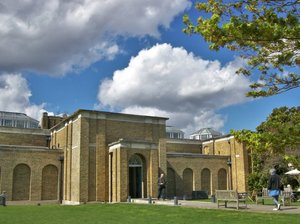 Dulwich Picture Gallery |
London | 1 | Wooded Landscape |
 Kunsthistorisches Museum |
Bécs | 1 | The Repudiation of Hagar |
 Musée Sainte-Croix |
Poitiers | 1 | Landscape |
 Nationalmuseum |
Stockholm | 1 | Landscape with High Trees near a Ravine |
Váassz ki egy évtizedet, hogy megnézhesd az azt meghatározó eredetiműveket.
Wooded Landscape (1650), Dulwich Picture Gallery, London. Ezután Landscape with Herders and Ruins (II) (1650) és The Repudiation of Hagar (1659) következik.
23 éves: Wooded Landscape 1650-ből származik, Philips Augustijn Immenraet pedig 1627-ben született.
Wooded Landscape, Landscape with Herders and Ruins (II), The Repudiation of Hagar, A wooded landscape with a herder by a stream, Cartouche with floral decoration and two parrots around a landscape, Landscape with Herders and Ruins, Landscape with figures, Landscape, Landscape with a company on a bridge crossing a water fall, 1678 és Landscape with High Trees near a Ravine. A fenti rangsor a művek évszamarát és a múzeumát jelzi.
Katalógusunkban 10 mű található Philips Augustijn Immenraet alkotótól, 1650 és 1678 év közötti időszakból.
Leginkább Dulwich Picture Gallery (London), Kunsthistorisches Museum (Bécs) és Musée Sainte-Croix (Poitiers) található. A fenti múzeumi táblázatban mindegyik felsorolásra került.
1650s alatt: a jelen laphonon található 10 műből 6 készült ebben az időszakban, köztük Wooded Landscape.
Ezen az oldalon a leghitelesebb Wooded Landscape (1650), a legutóbbi pedig Landscape with a company on a bridge crossing a water fall, 1678 (1678).
In the vibrant heart of the seventeenth-century Flemish Baroque, a period defined by dramatic movement and rich textures, Philips Augustijn Immenraet emerged as a painter of singular vision. Born in Antwerp in 1627 to a German immigrant piano builder, Immenraet was destined for a life steeped in the artistic traditions of his homeland. While many of his contemporaries remained tethered to the heavy, receding planes of traditional landscape composition, Immenlaret sought a different path—one marked by an infusion of light and a burgeoning sense of atmospheric depth. His early training under the landscape specialist Lucas van Uden provided him with a robust foundation in the Flemish style, yet his spirit was far too restless to be confined by established boundaries.
The trajectory of Immenraet’s career suggests a profound engagement with the wider European art scene. It is widely believed that during his formative years, he traveled through Italy, perhaps residing there between 1645 and 1655. This sojourn likely acted as a transformative catalyst, introducing him to the Italianate style characterized by sun-drenched vistas and classical clarity. Upon his return to Antwerp, he did not merely replicate what he had seen; instead, he synthesized these Mediterranean influences with the lush, wooded traditions of the North. His work began to exhibit a remarkable brightness, breaking away from the darker, more somber palettes of his predecessors and hinting at a pre-Romantic sensibility that would not fully bloom in art for decades to come.
One of the most fascinating aspects of Immenraet’s professional life was his mastery of the collaborative spirit, a hallmark of the Antwerp Guild of Saint Luke. In an era where large-scale commissions often required specialized talents, Immenraet frequently acted as the architect of the landscape, providing the sweeping vistas and atmospheric settings that served as the stage for other artists' brilliance. He would meticulously paint the terrain, while specialists were brought in to breathe life into the staffage—the small, vital figures that populate his worlds.
His compositions often featured a delicate interplay of elements:
Immenraet’s contribution to the Flemish Baroque extends beyond mere technical skill; he was a bridge between eras. By introducing a new luminosity and moving away from the rigid, oblique recession of planes, he helped pave the way for a more naturalistic and emotionally resonant approach to landscape painting. His work shares a stylistic kinship with the Sonian Forest Painters and masters like Cornelis Huysmans, yet his unique ability to capture light gives his oeuvre a distinct, almost ethereal quality.
Though he passed away in Antwerp in 1679, leaving behind a legacy of breathtaking vistas and innovative techniques, his influence endured through his pupils, including his son Andries Immenraet. Today, the works of Philips Augustijn Immenraet stand as a testament to a period of profound transition, where the structured grandeur of the Baroque began to yield to the soft, emotive light of a new, approaching era in European art.