Paul Gauguin portréja

A 100 legnevezesebb Paul Gauguin festmény, egy galériaválaszték

Frissítve: november 2026 · rangsorolva népszerűségi pontszámunk alapján (minden mű keresései, látogatásai és megrendelései alapján) · 928 mű Paul Gauguin alkotása a katalógusunkban

Röviden

Paul Gauguin hagyatékából a leghíresebb alkotás Honnan jövünk? Mik vagyunk? Hová megyünk? (1897), amely a Boston városi Művészeti Múzeum, Boston gyűjteményében található. Röviddel ezután követik őket Sárga Krisztus (1889) és Manao Tupapau (a halottak figyelő szelleme néven is ismert) (1892). Katalógusunkban 928 mű található Paul Gauguin alkotótól; a galéria megőrizte a világ által leginkább csodált 100 darabot, melyeket a dátummal, a múzeummal és a történetükkel együtt mutatunk be.

1848 – 1903, Párizs Posztimpressionizmus A legtöbb mű: Metropolitan Művészeti Múzeum

Paul Gauguin legjobb 10 festménye: a galéria válogatása

1
Honnan jövünk? Mik vagyunk? Hová megyünk? (1897) (1889) -ja Paul Gauguin

Honnan jövünk? Mik vagyunk? Hová megyünk?

1897 · Olajfestmény vászonon · Művészeti Múzeum, Boston, Boston

Paul Gauguin monumentális festménye, melynek eredeti címe “D’où venons nous ? Que sommes-nous ? Où allons-nous?”, nem csupán egy vizuális alkotás; ez a modern művészet egyik legmélyebb filozófiai kérdéseinek lenyűgöző ábrázolása. Tahiti szigetén született, és Gauguin élete végéig meghatározóvá vált, miközben az emberiség lételapjának alapvető dilemmáit feszegette. A művészt a hagyományos életpályától eltérően egy váratlan gyerekkor formálta: apja újságíró volt, anyai ágon pedig perui arisztokrata származású családhoz tartozott – nagymamája,…

2
Sárga Krisztus (1889) (1889) -ja Paul Gauguin

Sárga Krisztus

1889 · Olajfestmény vászonon · Buffalo AKG Art Museum, Buffalo

Ezt a műsort 1889-ben festette Paul Gauguin, Bretaigne, Pont-Aven városában töltött meghatározó idején, és a keresztezés rendkívül szokatlan értelmezését mutatja be. Távol állva a hagyományos vallási ikonográfiától, ez a alkotás a spirituális kérdőjelezés és az érzelmi távolságtartás erőteljes kinyilatkoztatása, amely jelentős szakadékot jelentett a posztimpressionista festészet történetében.

3
Manao Tupapau (a halottak figyelő szelleme néven is ismert) (1892) (1889) -ja Paul Gauguin

Manao Tupapau (a halottak figyelő szelleme néven is ismert)

1892 · Olajfestmény vászonon · Buffalo AKG Art Museum, Buffalo

Paul Gauguin’s Manao Tupapau, more commonly known as Spirit of the Dead Watching, is not merely a painting; it's an immersion into a world where the veil between life and death feels remarkably thin. Completed in 1892 during his transformative sojourn to Tahiti, this oil on burlap canvas pulsates with a potent blend of Polynesian mythology, Symbolist introspection, and Gauguin’s signature synthetist style. The painting immediately commands attention – not…

4
Tahiti nők a strandon, 1891 (1889) -ja Paul Gauguin

Tahiti nők a strandon, 1891

Olajfestmény vászonon · Grand Palais, Párizs

Egy ablak az elveszett paradicsomba: Gauguin „Tahiti nők a strandon, 1891” című művének vizsgálata Eugène Henri Paul Gauguin 1891-ben festett „Tahiti nők a strandon” című alkotása túlmutat a puszta ábrázoláson; a vadonjáró szépség és a spirituális szabadság iránti mély vágyat foglal meg – egy olyan érzést, amely mélyen gyökerezik Gauguin saját művészeti utakon. Ez a lenyűgöző vászon két tahiti nőt ábrázolja, akik Bora Boran partjain ülik, átáztatva a délutáni nap…

5
Látomás a lelkásodásról (Jákob harca az angyallal) (1888) (1889) -ja Paul Gauguin

Látomás a lelkásodásról (Jákob harca az angyallal)

1888 · Olajfestmény vászonon · Scottish National Gallery, Edinburgh

Paul Gauguin „Látomás a lelkásodásról” (amely más néven „Jákob harca az angyallal” is ismert), amelyet 1888-ban fest, nem csupán egy bibliai ábrázolás; a hit, a látomás és az emberi létezés mélyreható feltárása. Ez a vibráló vászon, amely jelenleg az Art Gallery of Ontario collectionében található, azonnal magára vonja a tekintetet merész színehasználatával és a hagyományos akadémikus festészetről való eltérésével. Gauguin, az európai konvencióktól menekülni vágyó, nyugtalan lélek, már korábban is…

6
Ia Orana Maria (úgy is ismert, mint Üdvözlendő Mária) (1891) (1889) -ja Paul Gauguin

Ia Orana Maria (úgy is ismert, mint Üdvözlendő Mária)

1891 · Olajfestmény vászonon · Metropolitan Művészeti Múzeum, New York

Tahiti álmodozása: Gauguin „Ia Orana Maria” című művének értelmezése Paul Gauguin 1891-es mesterműve, az „Ia Orana Maria” (Üdvöz Hungria/Üdvözlélek Mária) több, mint egy egyszerű festmény; ez egy vizuális költemény, amely a művész őszinte létezésre vágyó lelke és a polinéziai kultúra iránti mély elmélyülése során született. Ez a alkotás foglalja össze Gauguin radikális szakítását az európai művészeti konvencióktól, valamint szellemi keresését, amely a nyugati hagyományok keretein túl próbálta megörökíteni a spirituális…

7
Izzánlsz? (1892) (1889) -ja Paul Gauguin

Izzánlsz?

1892 · Olajfestmény vászonon · Pushkin állami művészeti múzeum, Moszkva

In this oil painting from 1892, two women are positioned in a close embrace within an indoor setting. One figure lies atop the other, their bodies overlapping to form the central focus of the work. The woman on top wears a lei around her neck, a detail that introduces a specific botanical element to the human subjects. To the left, a chair is visible near the edge of the frame,…

8
Két tahiti nő mangóvirágokkal (1889) -ja Paul Gauguin

Két tahiti nő mangóvirágokkal

Olajfestmény vászonon · Metropolitan Művészeti Múzeum, New York

A festmény, amely más néven "Két tahiti nő mangóvirágokkal" néven is ismert, két egymás mellett álló nőt ábrázol fák árnyékában. A bal oldalon lévő asszony a másik nő csípőjét öleli, ezzel mély bizalmat és szoros közelséget sugallva a két alak között. Mindkét alak ékszert visel, és láthatóan a közös pillanatok örömét élvezi. A jelenetben egy tál is feltűnik, amely valószínűleg gyümölcsöket vagy más tárgyakat tartalmaz. A mű egy vibráló színpalettával…

9
Két nő a vízparton (1891) (1889) -ja Paul Gauguin

Két nő a vízparton

1891 · Olajfestmény vászonon · Musée d'Orsay, Párizs

Az 1891-ben megalkotott, lenyűgöző alkotás a nézőt a Tahiti partjaira repíti, betekintést nyújtva Paul Gauguin polinéziai életmód utáni kutatásaiba, valamint a hagyományos nyugati művészet iránti radikális eltérésébe. Ez a festmény nem csupán két nő ábrázolása, hanem egy erőteljes megállapítás a színről, a formáról és az érzelmi kifejezésről – amely a posztimpresszionizmus egyik alapköve.

10
A Szemtimosság (vagy a Tavaszi Ébredés) (1891) (1889) -ja Paul Gauguin

A Szemtimosság (vagy a Tavaszi Ébredés)

1891 · Akril festmény vászonon · Chrysler Museum of Art, Norfolk

A Keleti Szellem Ébredése: Gauguin "A Szűretés" Mesterpéce Paul Gauguin világtörténeti alkotása, "A Szűretés" (eredeti neve "The Loss of Virginity", vagy "Az Erdélyi Szép Nő"), 1891-ben született Párizsban, és egyedülállóan ötvözi a post-impressionista, szimbolista és syntetista irányzatokat. Ez a festmény nem csupán egy tájképi jelenet, hanem egy mélyen személyes és filozofikus megnyilatkozás, mely Gauguin utolsó, legjelentősebb alkotása előtt néhány hónappal készült. A kép egy szingli női alakot ábrázol, aki egy…

A Paul Gauguin válogatás folytatódik: 11 – 100

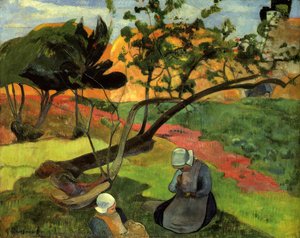
11Mahina no atua (Nap Isten) (1889) -ja Paul GauguinMahina no atua (Nap Isten)Art Institute of Chicago 12nafeaffaa ipolpo (1889) -ja Paul Gauguinnafeaffaa ipolpoKunstmuseum Basel 13Honnan jövünk? Kik vagyunk? Hová megyünk? (Where Do We come from. What Are We. where Are We Going) (1889) -ja Paul GauguinHonnan jövünk? Kik vagyunk? Hová megyünk? (Where Do We come from. What Are We. where Are We Going) 14A látomás a lelkészségi beszéd után (Jákobnak az angyallal való birkózása néven is ismert) (1888) (1889) -ja Paul GauguinA látomás a lelkészségi beszéd után (Jákobnak az angyallal való birkózása néven is ismert)1888 15A zöld Krisztus (1889) (1889) -ja Paul GauguinA zöld Krisztus1889 · Belgiai Képzőművészeti Múzeumok 16Tahítói Szegényység részlete (1898) (1889) -ja Paul GauguinTahítói Szegényység részlete1898 · Tate Gallery 17Little Girls (Landscape with Two Breton Girls) (1889) (1889) -ja Paul GauguinLittle Girls (Landscape with Two Breton Girls)1889 · Musée d'Orsay 18Claude Antoine Favre arcképe (1877) (1889) -ja Paul GauguinClaude Antoine Favre arcképe1877 19Tahiti nő és két gyermek (1901) (1889) -ja Paul GauguinTahiti nő és két gyermek1901 · Art Institute of Chicago 20Fürdő táhitii asszonyok (1891) (1889) -ja Paul GauguinFürdő táhitii asszonyok1891 · Metropolitan Művészeti Múzeum 21Éjszakai kávézó Arles-ban (Madame Ginoux) (1888) (1889) -ja Paul GauguinÉjszakai kávézó Arles-ban (Madame Ginoux)1888 · Pushkin állami művészeti múzeum 22Hová járunk? Ki vagyunk? Mi vagyunk? (Hol származunk? Mi vagyunk? Hova tartunk?) (1889) -ja Paul GauguinHová járunk? Ki vagyunk? Mi vagyunk? (Hol származunk? Mi vagyunk? Hova tartunk?) 23Farm in Brittany (1894) (1889) -ja Paul GauguinFarm in Brittany1894 · Metropolitan Művészeti Múzeum 24Landscape with black pigs and a crouching Tahitian (1891) (1889) -ja Paul GauguinLandscape with black pigs and a crouching Tahitian1891 25Offerings of Gratitude (Maruru) (1889) -ja Paul GauguinOfferings of Gratitude (Maruru) 26A fehér ló (1898) (1889) -ja Paul GauguinA fehér ló1898 · Musée d'Orsay 27Parau api (also known as What News) (1892) (1889) -ja Paul GauguinParau api (also known as What News)1892 · Staatliche Kunstsammlungen 28Breton Fishermen (1889) -ja Paul GauguinBreton Fishermen 29Ta Matete (also known as The Market) (1892) (1889) -ja Paul GauguinTa Matete (also known as The Market)1892 30Manao tupapau (The Spirit of the Dead Keep Watch) (1889) -ja Paul GauguinManao tupapau (The Spirit of the Dead Keep Watch) 31Házi macska és kutya három állata (1888) (1889) -ja Paul GauguinHázi macska és kutya három állata1888 · MoMA - Museum of Modern Art 32Teuraheimata a Potoru (1891) (1889) -ja Paul GauguinTeuraheimata a Potoru1891 33Bonjour Monsieur Gauguin (1889) (1889) -ja Paul GauguinBonjour Monsieur Gauguin1889 · Hammer Museum 34I rara te oviri (also known as Beneath the Pandanus Tree) (1891) (1889) -ja Paul GauguinI rara te oviri (also known as Beneath the Pandanus Tree)1891 · Dallas Museum of Art 35Breton Girl Spinning (1889) (1889) -ja Paul GauguinBreton Girl Spinning1889 · Van Gogh Múzeum 36D'où venons nous Que sommes-nous Où allons-nous (Where Do We come from. What Are We. where Are We Going) (1889) -ja Paul GauguinD'où venons nous Que sommes-nous Où allons-nous (Where Do We come from. What Are We. where Are We Going) 37Paru Paru (1892) (1889) -ja Paul GauguinParu Paru1892 · Yale University Art Gallery 38Still Life with Chinese Peonies and Mandolin (1885) (1889) -ja Paul GauguinStill Life with Chinese Peonies and Mandolin1885 · Musée d'Orsay 39Faa Iheihe (1898) (1889) -ja Paul GauguinFaa Iheihe1898 · National Gallery 40I Raro Te Oviri (Under the Pandanus) (1891) (1889) -ja Paul GauguinI Raro Te Oviri (Under the Pandanus)1891 · Minneapolis Institute of Art 41Women at the Riverside (1892) (1889) -ja Paul GauguinWomen at the Riverside1892 42Két tahiti nő (1899) (1889) -ja Paul GauguinKét tahiti nő1899 · Metropolitan Művészeti Múzeum 43Road in Tahiti (1891) (1889) -ja Paul GauguinRoad in Tahiti1891 · Toledo Művészeti Múzeum 44The Universe Is Created (1893) (1889) -ja Paul GauguinThe Universe Is Created1893 45Spirit of the dead watching, Alb (1892) (1889) -ja Paul GauguinSpirit of the dead watching, Alb1892 46The fisherwomen of Tahiti (1891) (1889) -ja Paul GauguinThe fisherwomen of Tahiti1891 · Alte Nationalgalerie 47Life and Death (1889) (1889) -ja Paul GauguinLife and Death1889 · Mohamed Mahmoud Khalil Museum 48Gauguin at His Easel (1885) (1889) -ja Paul GauguinGauguin at His Easel1885 49Barbarian Tales (1892) (1889) -ja Paul GauguinBarbarian Tales1892 · Tel Aviv Művészeti Múzeum 50Escape (1902) (1889) -ja Paul GauguinEscape1902 · National Gallery Prague 51And the Gold of Their Bodies (Et l'or de leures corps) (1889) -ja Paul GauguinAnd the Gold of Their Bodies (Et l'or de leures corps) 52The Offering (1902) (1889) -ja Paul GauguinThe Offering1902 · Foundation E.G. Bührle Collection 53Tahitian girl (1898) (1889) -ja Paul GauguinTahitian girl1898 · National Museum of Serbia 54Karikatura, Önarckép (1889) (1889) -ja Paul GauguinKarikatura, Önarckép1889 · National Gallery of Art 55A Tahitian Woman with a Flower in Her Hair (1889) -ja Paul GauguinA Tahitian Woman with a Flower in Her HairMetropolitan Művészeti Múzeum 56Black pigs (1891) (1889) -ja Paul GauguinBlack pigs1891 57The Bathers (1897) (1889) -ja Paul GauguinThe Bathers1897 58Two Nudes on a Tahitian Beach (1892) (1889) -ja Paul GauguinTwo Nudes on a Tahitian Beach1892 · Honolulu Museum of Art 59Paradise Lost (?) (1890) (1889) -ja Paul GauguinParadise Lost (?)1890 · Yale University Art Gallery 60Forest Edge (1885) (1889) -ja Paul GauguinForest Edge1885 61Little Cat (1888) (1889) -ja Paul GauguinLittle Cat1888 62Torso of a Woman (1895) (1889) -ja Paul GauguinTorso of a Woman1895 · Nasher Sculpture Center 63A Canoe (Tahitian Family), (1896) (1889) -ja Paul GauguinA Canoe (Tahitian Family),1896 64Martinique Landscape (also known as Comings and Goings) (1887) (1889) -ja Paul GauguinMartinique Landscape (also known as Comings and Goings)1887 · Thyssen-Bornemisza Múzeum 65Beszélgetés (1885) (1889) -ja Paul GauguinBeszélgetés1885 66Breton Girls by the sea (1889) (1889) -ja Paul GauguinBreton Girls by the sea1889 · Nemzetközi Nyugati Művészeti Múzeum 67Still Life (1899) (1889) -ja Paul GauguinStill Life1899 · Izraeli Múzeum 68Boquet of Peonies on a Musical Score (1889) -ja Paul GauguinBoquet of Peonies on a Musical Score 69Huts under the Trees (also known as Martinican Scene with Mango Tree) (1887) (1889) -ja Paul GauguinHuts under the Trees (also known as Martinican Scene with Mango Tree)1887 70Rue Jouvenet, Rouen (1884) (1889) -ja Paul GauguinRue Jouvenet, Rouen1884 · Thyssen-Bornemisza Múzeum 71Brittany landscape with women carrying sack (1889) (1889) -ja Paul GauguinBrittany landscape with women carrying sack1889 72Te tiare farani (úgy is ismert, mint Virágcs束) (1893) (1889) -ja Paul GauguinTe tiare farani (úgy is ismert, mint Virágcs束)1893 · Pushkin állami művészeti múzeum 73Fire Dance (1891) (1889) -ja Paul GauguinFire Dance1891 · Izraeli Múzeum 74Portrait of Suzanne Bambridge (1891) (1889) -ja Paul GauguinPortrait of Suzanne Bambridge1891 · Belgiai Képzőművészeti Múzeumok 75Landscape with Dog (1903) (1889) -ja Paul GauguinLandscape with Dog1903 · Izraeli Múzeum 76Aline Gauguin and one of her brothers (1883) (1889) -ja Paul GauguinAline Gauguin and one of her brothers1883 77Brittföldi Farm (1894) (1889) -ja Paul GauguinBrittföldi Farm1894 78Head of a Tahitian Woman (1982) (1889) -ja Paul GauguinHead of a Tahitian Woman1982 79Pond with Ducks (also known as Girl Amusing Herself) (1881) (1889) -ja Paul GauguinPond with Ducks (also known as Girl Amusing Herself)1881 80Motherhood (Women on the Shore) (1889) -ja Paul GauguinMotherhood (Women on the Shore) 81Tahitian Scene (1892) (1889) -ja Paul GauguinTahitian Scene1892 82Flower Piece (1896) (1889) -ja Paul GauguinFlower Piece1896 · National Gallery 83Grape Harvest in Arles (also known as Human Misery) (1888) (1889) -ja Paul GauguinGrape Harvest in Arles (also known as Human Misery)1888 · Ordrupgaard 84Rocks on the breton coast (1888) (1889) -ja Paul GauguinRocks on the breton coast1888 85Portrait of Aline Gauguin (1890) (1889) -ja Paul GauguinPortrait of Aline Gauguin1890 · Staatsgalerie Stuttgart 86The little valley (1891) (1889) -ja Paul GauguinThe little valley1891 · Beyeler Foundation 87Csendstillé mit teával és gyümölccsel (1896) (1889) -ja Paul GauguinCsendstillé mit teával és gyümölccsel1896 · Metropolitan Művészeti Múzeum 88Kontes Barbares (1902) (1889) -ja Paul GauguinKontes Barbares1902 · Museum Folkwang 89Day of the Gods (1894) (1889) -ja Paul GauguinDay of the Gods1894 90Rocks of Tahiti (1892) (1889) -ja Paul GauguinRocks of Tahiti1892 · New Orleans Museum of Art 91Barbarous Tales (1889) -ja Paul GauguinBarbarous Tales 92Normandiai táj: Bocsat egy tavon (1884) (1889) -ja Paul GauguinNormandiai táj: Bocsat egy tavon1884 93Faaturuma (also known as Melancholy) (1891) (1889) -ja Paul GauguinFaaturuma (also known as Melancholy)1891 · Nelson-Atkins Múzeum 94Portrait of Mette Gauguin (1877) (1889) -ja Paul GauguinPortrait of Mette Gauguin1877 · Courtauld Gallery 95Tahitian women under the palms (1892) (1889) -ja Paul GauguinTahitian women under the palms1892 96Daisies and Peonies in a Blue Vase (1876) (1889) -ja Paul GauguinDaisies and Peonies in a Blue Vase1876 97Nő portréja Cézanne stillelővel (1890) (1889) -ja Paul GauguinNő portréja Cézanne stillelővel1890 · Art Institute of Chicago 98Women at the River (Auti Te Pape) (1889) -ja Paul GauguinWomen at the River (Auti Te Pape) 99Young Woman Lying in the Grass (1884) (1889) -ja Paul GauguinYoung Woman Lying in the Grass1884 100Self-Portrait (1891) (1889) -ja Paul GauguinSelf-Portrait1891

Paul Gauguin híres festményei, korszakonként

A témák, amelyek Paul Gauguin figyelmét meghúzták

A négy leggyakorobban előforduló téma ebben az eredeti művekben, mindegyik a legkiválóbb példájával.

A műemlékek, amelyek Paul Gauguin eredeti műveit őrzik

A 8 olyan múzeum, amely a legtöbb ezen az oldalon szereplő festményet őrzi.

Múzeum Város Paul Gauguin művei Ebből a listából származó festmények
Metropolitan Művészeti Múzeum, New YorkMetropolitan Művészeti Múzeum New York 12 Ia Orana Maria (úgy is ismert, mint Üdvözlendő Mária), Két tahiti nő mangóvirágokkal, Fürdő táhitii asszonyok
Musée d'Orsay, PárizsMusée d'Orsay Párizs 28 Két nő a vízparton, Little Girls (Landscape with Two Breton Girls), A fehér ló
Pushkin állami művészeti múzeum, MoszkvaPushkin állami művészeti múzeum Moszkva 18 Izzánlsz?, Éjszakai kávézó Arles-ban (Madame Ginoux), Te tiare farani (úgy is ismert, mint Virágcs束)
Art Institute of Chicago, ChicagoArt Institute of Chicago Chicago 11 Mahina no atua (Nap Isten), Tahiti nő és két gyermek, Nő portréja Cézanne stillelővel
Izraeli Múzeum, JeruzsálemIzraeli Múzeum Jeruzsálem 5 Still Life, Fire Dance, Landscape with Dog
Thyssen-Bornemisza Múzeum, MadridThyssen-Bornemisza Múzeum Madrid 10 Martinique Landscape (also known as Comings and Goings), Rue Jouvenet, Rouen
National Gallery, LondonNational Gallery London 4 Faa Iheihe, Flower Piece
Belgiai Képzőművészeti Múzeumok, BrüsszelBelgiai Képzőművészeti Múzeumok Brüsszel 3 A zöld Krisztus, Portrait of Suzanne Bambridge

Paul Gauguin évtizede folgtva: az eredeti művek, amelyek meghatározzák az egyes korzakot

Művek évtizedenként

Váassz ki egy évtizedet, hogy megnézhesd az azt meghatározó eredetiműveket.

Gyűjtői kérdések Paul Gauguin festményeivel kapcsolatban

Melyik művel a(z) Paul Gauguin a leghíresebb?Fedje fel a választ

Honnan jövünk? Mik vagyunk? Hová megyünk? (1897), Művészeti Múzeum, Boston, Boston. Ezután Sárga Krisztus (1889) és Manao Tupapau (a halottak figyelő szelleme néven is ismert) (1892) következik.

Hány éves volt Paul Gauguin, amikor a Honnan jövünk? Mik vagyunk? Hová megyünk? készült?Fedje fel a választ

49 éves: Honnan jövünk? Mik vagyunk? Hová megyünk? 1897-ből származik, Paul Gauguin pedig 1848-ben született.

Melyek a tíz leghíresebb Paul Gauguin festmény?Fedje fel a választ

Honnan jövünk? Mik vagyunk? Hová megyünk?, Sárga Krisztus, Manao Tupapau (a halottak figyelő szelleme néven is ismert), Tahiti nők a strandon, 1891, Látomás a lelkásodásról (Jákob harca az angyallal), Ia Orana Maria (úgy is ismert, mint Üdvözlendő Mária), Izzánlsz?, Két tahiti nő mangóvirágokkal, Két nő a vízparton és A Szemtimosság (vagy a Tavaszi Ébredés). A fenti rangsor a művek évszamarát és a múzeumát jelzi.

Hány festményet hagyott hátra Paul Gauguin?Fedje fel a választ

Katalógusunkban 928 mű található Paul Gauguin alkotótól, 1876 és 1903 év közötti időszakból.

Mely múzeumokban állnak Paul Gauguin remekművei?Fedje fel a választ

Leginkább Metropolitan Művészeti Múzeum (New York), Musée d'Orsay (Párizs) és Pushkin állami művészeti múzeum (Moszkva) található. A fenti múzeumi táblázatban mindegyik felsorolásra került.

Mely években festette Paul Gauguin leghíresebb műveit?Fedje fel a választ

1890s alatt: a jelen laphonon található 100 műből 48 készült ebben az időszakban, köztük Honnan jövünk? Mik vagyunk? Hová megyünk?.

Mikszétek az első és az utolsó híres eredeti műve a(z) Paul Gauguin alkotótól?Fedje fel a választ

Ezen az oldalon a leghitelesebb Daisies and Peonies in a Blue Vase (1876), a legutóbbi pedig Landscape with Dog (1903).

Milyen témaköröket választott leggyakrabban Paul Gauguin?Fedje fel a választ

Szimbolizmus (15), Landscape (10) és Tahiti (9), a jelen oldalon található 100 műművészeti alkotás között.

Melyik technikát alkalmazta leggyakrabban Paul Gauguin?Fedje fel a választ

Oil On Canvas, a jelen oldalon található 100 műből 39 darab esetén.

Mely művészeti irányba tartozik Paul Gauguin?Fedje fel a választ

Posztimpressionizmus, ezen az oldalon található eredetiek alapján.

Mely Paul Gauguin művei láthatóak a Metropolitan Művészeti Múzeum kiállتításán?Fedje fel a választ

Ia Orana Maria (úgy is ismert, mint Üdvözlendő Mária), Két tahiti nő mangóvirágokkal és Fürdő táhitii asszonyok: a Metropolitan Művészeti Múzeum, New York 7 művet őrzi ezen az oldalon.

Paul Gauguin: életmű és életút

Early Life and Family Background

Born in Paris in 1848, Eugène Henri Paul Gauguin entered a world of shifting social and political currents. His early years were defined by a sudden departure from the French capital; in 1850, his family relocated to Lima, Peru. This move was driven by his mother’s connections, as she was descended from the Peruvian aristocracy. Such a lineage provided a sense of privilege during his formative years, though the stability of this existence was often precarious.

The boy spent his childhood in Peru until the age of six, a period that left an indelible mark on his memory. He retained vivid recollections of the intense colors and sounds of his South American upbringing, impressions that would persist long after he returned to France. These early experiences in a landscape so distinct from Europe provided a sensory foundation that would later inform his search for authenticity.

Before finding his footing in the art world, Gauguin’s life took a more rugged, maritime turn. He spent six years working as a merchant marine, navigating the seas and experiencing the vastness of the world firsthand. This period of seafaring, characterized by physical labor and global travel, preceded his eventual return to France. He was a man shaped by movement, caught between the structured life of a Parisian professional and the primal, unscripted realities of the distant coasts he encountered.

A Career in Finance and Art

Before the world recognized his brushwork, Gauguin navigated the structured, predictable environment of the Parisian financial sector. He spent his early adulthood working as a stockbroker's clerk, a role that demanded a focus quite removed from the expressive freedom he would later seek. During these years, painting remained a private pursuit, a quiet passion nurtured in the spare moments between the demands of his professional life. It was a period of dual existence, where the meticulous calculations of the market coexisted with a growing, secret devotion to the canvas.

His talent eventually demanded a public presence. Between 1879 and 1886, he was accepted into the Paris Salon, appearing in the prestigious exhibition annually. This period marked his gradual transition from a man of business to a recognized figure within the Parisian art scene. However, the stability of his financial life was not to last. The economic upheaval of the 1882 financial crisis significantly impacted his career in brokerage, creating a fracture in his conventional path. This instability ultimately forced a decisive choice, pushing him to abandon the security of finance to embrace his calling as a professional painter.

Artistic Development in Brittany and Martinique

The years between 1886 and 1891 were marked by a restless search for a visual language that could transcend mere observation. During his time in Brittany, Gauguin began to move away from the immediate concerns of the Impressionists. While he had been influenced by the works of Camille Pissarro and Paul Cézanne, he found himself increasingly drawn toward the more structured and symbolic approaches of the Synthetists and Symbolist groups. This period was less about capturing light and more about distilling the essence of a subject through simplified forms and bold outlines.

In 1887, a shift in scenery brought him to Panama and Martinique alongside Charles Laval. This excursion into the tropics provided a different kind of stimulus, introducing him to the allure of non-European climates and cultures. These travels helped foster an idealized vision of tropical life, a theme that would later define much of his output. He was no longer content with the fleeting effects of nature; he sought a deeper, more spiritual connection to his subjects, often blending the physical landscape with a sense of internal meaning.

The Journey to Tahiti and the South Seas

By 1891, the search for a new and original subject matter led Gauguin to the shores of Papeete, Tahiti. He arrived with a feverish expectancy, seeking to locate or perhaps to imagine the indigenous culture he believed was being eroded by Western presence. The reality of the French colony was not entirely what he had envisioned, yet the landscape provided the raw material for a profound shift in his creative focus. He sought to move beyond the familiar, looking for a way to capture the spiritual essence of the islands through a lens that was both observational and deeply personal.

His connection to the South Pacific deepened significantly during his residence in Tahiti between 1895 and 1901. This period was marked by an attempt to find a sense of liberation through the depiction of Polynesian life, customs, and landscapes. He moved away from the constraints of European society, attempting to find a more authentic way of existence through his subjects. His later years took him further into the archipelago, eventually leading him to settle on Hiva Oa in the Marquesas Islands, where he remained until his death.

Technique and Distinctive Artistic Style

Gauguin’s departure from the Impressionist tradition was marked by a deliberate rejection of naturalism. Rather than attempting to capture the fleeting effects of light on a surface, he sought to translate subjective experience into a visual language. This approach, known as Synthetism, relied on the use of flattened perspectives and bold, rhythmic lines to convey meaning. His compositions often bypassed the complexities of three-dimensional space, opting instead for a simplified, decorative clarity that prioritized emotional resonance over objective accuracy.

His palette was defined by an experimental use of color that frequently defied the constraints of reality. He utilized saturated hues to express spiritual or psychological states, a technique that drew heavily from the influence of Japanese aesthetics and the symbolic imagery of medieval art. This stylistic shift moved his work away from the observational habits of his contemporaries and toward a more primal, symbolic form of expression. Beyond the canvas, he was an influential practitioner of wood engraving and woodcuts, applying his interest in strong outlines and simplified forms to the medium of printmaking.

Notable Masterpieces and Iconic Works

Gauguin’s most profound explorations occurred during his time in the South Pacific, where he sought to capture the spiritual essence of Polynesian life. His work from this period often moved beyond mere depiction, favoring a symbolic language that addressed the human condition. In 1892, he painted Vairumati, a piece that exemplifies his ability to weave human figures into a larger, rhythmic landscape. This work, along with many others from his Tahitian years, helped define his reputation as an artist deeply preoccupied with the intersection of the physical and the divine.

One of his most significant compositions, Where Do we Come From? What Are We? Where Are We Going?, was created between 1897 and 1898. This large-scale work reflects his increasing preoccupation with existential questions and his disillusionment with Western civilization. It remains a central piece of his output, illustrating the heavy, atmospheric tension he often sought to convey through flattened perspectives and non-naturalistic color. Similarly, The Loss of Virginity, also known as The Awakening of Spring, invites viewers into a liminal space where the boundaries between the human soul and the natural world appear to dissolve.

Legacy and Influence on Modern Art

As a leading figure of 19th-century Post-Impressionism, Gauguin altered the trajectory of Western painting by moving away from the mere observation of light. His radical experimentation with color provided a direct foundation for the developments of 20th-century modern art. By prioritizing the expression of internal meaning over the accurate depiction of the external world, he helped shift the focus of the French avant-garde toward a more subjective, symbolic language. This departure from naturalism allowed for a new way of seeing that favored emotion over optical precision.

His aesthetic choices also paved the way for Primitivism and a renewed interest in the pastoral. By seeking out what he perceived as more authentic, non-Western modes of existence, he challenged the perceived sterility of European civilization. This pursuit of a primal essence through flattened forms and bold outlines offered a template for subsequent movements to explore the spiritual and the subconscious. His influence reached through the decades, shaping the visual vocabulary of many artists who sought to break free from academic constraints.

Where to See His Works Today

To encounter the physical reality of his vision, one must travel to several major cultural centers where his canvases remain held in permanent collections. In Paris, the Musée d'Orsay preserves a significant portion of his output, offering a glimpse into the evolution of his color and form. The city also houses works within the Centre Pompidou, ensuring his presence in the French capital remains felt.

His reach extends far beyond Europe, finding a home in the vast collections of the United States. The Metropolitan Museum of Art in New York holds several of his paintings, including works from his time in Tahiti. In Chicago, the Art Institute of Chicago maintains his paintings, providing a space to observe his departure from traditional naturalism. These institutions allow for a direct confrontation with the textures and pigments he used to express his subjective experiences.

The breadth of his influence is further evidenced by his presence in Eastern Europe. The Pushkin State Museum in Moscow contains his works, placing his aesthetic within a global context. Collectors and historians can find his traces in various other repositories, including the Ny Carlsberg Glyptotek in Copenhagen and the Museum of Fine Arts in Boston. These locations preserve the specific, often non-naturalistic palettes that defined his later years.