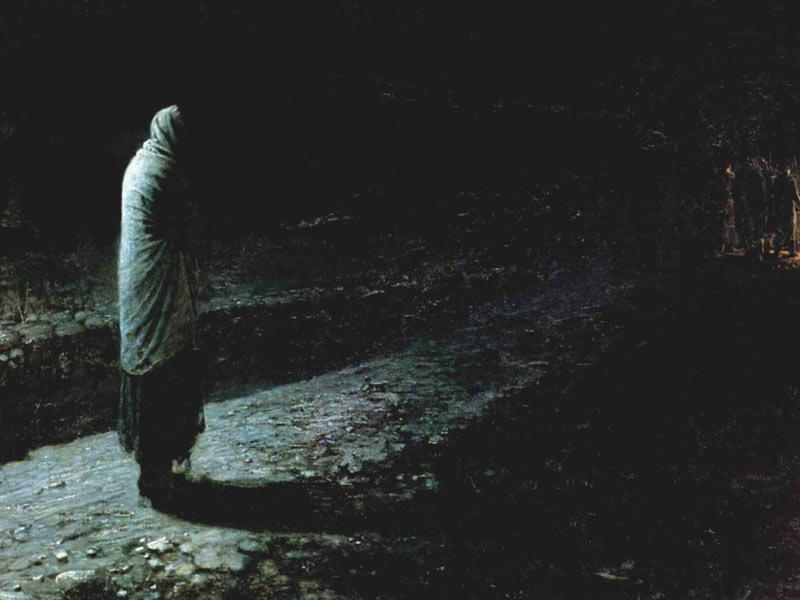
Ge, Mykola portréja

A 95 legnevezesebb Ge, Mykola festmény, egy galériaválaszték

Frissítve: október 2026 · rangsorolva népszerűségi pontszámunk alapján (minden mű keresései, látogatásai és megrendelései alapján) · 95 mű Ge, Mykola alkotása a katalógusunkban

Röviden

Ge, Mykola hagyatékából a leghíresebb alkotás Peter the Great Interrogating the Tsarevich Alexei Petrovich at Peterhof (1871), amely a Moszkva városi Tretyakov-galéria gyűjteményében található. Röviddel ezután követik őket Christ and his disciples entered the Garden of Gethsemane (1888) és Harbingers of the Resurrection (1867). Katalógusunkban 95 mű található Ge, Mykola alkotótól; a galéria megőrizte a világ által leginkább csodált 95 darabot, melyeket a dátummal, a múzeummal és a történetükkel együtt mutatunk be.

1831 – 1894, Voronyezs Realism A legtöbb mű: Tretyakov-galéria

Ge, Mykola legjobb 10 festménye: a galéria válogatása

1
Peter the Great Interrogating the Tsarevich Alexei Petrovich at Peterhof (1871) (1889) -ja Ge, Mykola

Peter the Great Interrogating the Tsarevich Alexei Petrovich at Peterhof

1871 · Oil On Canvas · Tretyakov-galéria, Moszkva

The oil painting depicts a somber historical scene set within the interior of the Monplaisir Palace in Peterhof. The composition centers on two figures positioned on opposite sides of a large, ornate table. On the right, Peter I is seated in an upholstered chair trimmed with red velvet, leaning slightly forward with an authoritative gaze. On the left, Tsarevich Alexei Petrovich stands upright with a bowed head and a dejected…

2
Christ and his disciples entered the Garden of Gethsemane (1888) (1889) -ja Ge, Mykola

Christ and his disciples entered the Garden of Gethsemane

1888 · Oil On Canvas

Nikolai Ge’s Christ and his disciples entered the Garden of Gethsemane, painted about 1888, captures a pivotal moment from the New Testament. The religious subject matter focuses on the group of figures gathered in the garden. Christ stands prominently with outstretched arms, a gesture suggesting sacrifice and the acceptance of fate. Around him, the disciples are clustered in a solemn assembly. Their somber expressions convey a sense of anxiety and…

3
Harbingers of the Resurrection (1867) (1889) -ja Ge, Mykola

Harbingers of the Resurrection

1867 · Oil

In the painting Harbingers of the Resurrection, created by Nikolai Ge about 1867, the central figure is Jesus Christ. He is positioned in the middle of the composition, flanked by two men. These two figures on either side of Christ appear to be angels or messengers. Each of these men holds a staff, an object that may symbolize their functions as protectors or guides. The presence of these figures establishes…

4
Portrait of Nikolai Nekrasov (1872) (1889) -ja Ge, Mykola

Portrait of Nikolai Nekrasov

1872 · Oil On Canvas · Hermitaeus-múzeum, Szentpétervár

An elderly man sits within the heavy embrace of a patterned armchair. The fabric of his suit carries a palpable weight, rendered in deep blacks and muted earth tones that seem to absorb the surrounding light. His face, pale against the dark void of the background, holds a quiet melancholy. Light falls sharply across his forehead and eyes, catching the texture of skin and the silvered strands of facial hair.…

5
Leila and Khaji-Abrek (1852) (1889) -ja Ge, Mykola

Leila and Khaji-Abrek

1852 · Oil

In the painting Leila and Khaji-Abrek by Nikolai Ge, two figures occupy the central space of the composition. Created about 1852, the work depicts a woman and a man in a specific physical arrangement. The woman is positioned kneeling on the ground, facing the man. He is situated before her, appearing as a soldier or a leader in stature and presence. Both individuals are dressed in traditional clothing that covers…

6
Bridge in Viko (1858) (1889) -ja Ge, Mykola

Bridge in Viko

1858 · Oil On Paper

We are looking at Bridge in Viko, a work from 1858 by the Russian artist Nikolai Ge. This piece belongs to the Realism movement, a period where the focus shifted toward a more direct and unadorned representation of the world. It is a quiet study of landscape and structure, captured during a formative time in the artist's career.

7
Returning from the burial of Christ (1859) (1889) -ja Ge, Mykola

Returning from the burial of Christ

1859 · Oil

In this quiet composition titled Returning from the burial of Christ, we encounter a profound moment of transition. The work is attributed to the Russian artist Nikolai Ge and dates to 1859. It captures a solemn procession of figures moving through a natural landscape, their presence marked by the heavy folds of their long robes. There is a stillness here that invites a closer look at the gravity of the…

8
Portrait of Leo Tolstoy (1884) (1889) -ja Ge, Mykola

Portrait of Leo Tolstoy

1884 · Oil On Canvas · Tretyakov-galéria, Moszkva

In the quiet, amber-hued atmosphere of a Moscow study, time seems to suspend itself within Nikolai Ge’s 1884 masterpiece, Portrait of Leo Tolstoy. This is not merely a depiction of a man at work; it is an intimate window into the very soul of Russian literature. The painting captures the legendary author seated at his desk, enveloped by the weight of his own profound thoughts. As he leans over his…

9
Portrait of Alexander Herzen (1867) (1889) -ja Ge, Mykola

Portrait of Alexander Herzen

1867 · Oil On Canvas · Hermitaeus-múzeum, Szentpétervár

This oil painting is a somber and intense psychological portrait of an older man, presented as an oval-shaped bust-length figure. Set against a dark, indistinct background, the subject is illuminated by directional lighting coming from the upper left, which casts one side of his face and much of his clothing into deep shadow. This technique creates a sense of depth and three-dimensionality through dramatic chiaroscuro. The color palette is dominated…

10
Catherine II at the Coffin of Empress Elizabeth (1709) (1889) -ja Ge, Mykola

Catherine II at the Coffin of Empress Elizabeth

1709 · Oil

In Catherine II at the Coffin of Empress Elizabeth, Nikolai Ge constructs a grand hall where history feels heavy and crowded. The composition is a dense gathering of figures, a chaotic assembly of dignitaries and attendants that fills the space with ceremonial weight. Amidst this throng, the eye is drawn to Catherine II, positioned slightly off-center. She exists within a shallow perspective that pushes the solemnity of the court toward…

A Ge, Mykola válogatás folytatódik: 11 – 95

11Achilles and the body of Patroclus (1889) -ja Ge, MykolaAchilles and the body of PatroclusNational Art Museum of The Republic of Belarus 12Mary, sister of Lazarus, Greets Jesus (1863) (1889) -ja Ge, MykolaMary, sister of Lazarus, Greets Jesus1863 13Portrait of Russian baritone opera singer Gennady Kondratiev (1863) (1889) -ja Ge, MykolaPortrait of Russian baritone opera singer Gennady Kondratiev1863 14Portrait of V.N.Rostovtseva (1861) (1889) -ja Ge, MykolaPortrait of V.N.Rostovtseva1861 15Portrait of Joseph Daumang (1868) (1889) -ja Ge, MykolaPortrait of Joseph Daumang1868 16Portrait of Princess Olga Volkonskaya (nee Kleinmichel) (1882) (1889) -ja Ge, MykolaPortrait of Princess Olga Volkonskaya (nee Kleinmichel)1882 · Hermitaeus-múzeum 17Conscience, Judas (1891) (1889) -ja Ge, MykolaConscience, Judas1891 18Portrait of P.A. Kostichev (1892) (1889) -ja Ge, MykolaPortrait of P.A. Kostichev1892 19Portrait of Yelena Likhachova (1892) (1889) -ja Ge, MykolaPortrait of Yelena Likhachova1892 20Portrait of Yekaterina Ge, the Artist's Daughter-in-Law (1880) (1889) -ja Ge, MykolaPortrait of Yekaterina Ge, the Artist's Daughter-in-Law1880 · Hermitaeus-múzeum 21Crucifixion (1889) -ja Ge, MykolaCrucifixion 22Portrait of Evdokiya Nikolaevna Kostycheva (1845) (1889) -ja Ge, MykolaPortrait of Evdokiya Nikolaevna Kostycheva1845 23Portrait of Yakov Merkulov (1855) (1889) -ja Ge, MykolaPortrait of Yakov Merkulov1855 24Portrait of Nikolay O.Ge, Artist's Father (1854) (1889) -ja Ge, MykolaPortrait of Nikolay O.Ge, Artist's Father1854 25Frascati Clouds (1859) (1889) -ja Ge, MykolaFrascati Clouds1859 26The view from Santo Terenzo at Lerici by night (1862) (1889) -ja Ge, MykolaThe view from Santo Terenzo at Lerici by night1862 27Portrait of Piotr Zabela (1856) (1889) -ja Ge, MykolaPortrait of Piotr Zabela1856 28Bay in Livorno. sunset (1862) (1889) -ja Ge, MykolaBay in Livorno. sunset1862 29Death of Imelda Lambertatstsi (1860) (1889) -ja Ge, MykolaDeath of Imelda Lambertatstsi1860 30Death of Virginia, Study (1857) (1889) -ja Ge, MykolaDeath of Virginia, Study1857 31Witch of Endor (1857) (1889) -ja Ge, MykolaWitch of Endor1857 32The destruction of the Temple in Jerusalem (1859) (1889) -ja Ge, MykolaThe destruction of the Temple in Jerusalem1859 33love of Vestal (1857) (1889) -ja Ge, Mykolalove of Vestal1857 34Portrait of the Artist's Wife Anna Ge (1858) (1889) -ja Ge, MykolaPortrait of the Artist's Wife Anna Ge1858 · Kiev Nemzeti Képtár 35Portrait of Shestova with daughter (1859) (1889) -ja Ge, MykolaPortrait of Shestova with daughter1859 36Death of Virginia, Study (1857) (1889) -ja Ge, MykolaDeath of Virginia, Study1857 37Vineyard at Vico (1858) (1889) -ja Ge, MykolaVineyard at Vico1858 38Death of Virginia, Study (1857) (1889) -ja Ge, MykolaDeath of Virginia, Study1857 39Livorno. Road to the Sea at Antiniano near Livorno (1862) (1889) -ja Ge, MykolaLivorno. Road to the Sea at Antiniano near Livorno1862 40Sorrento (1869) (1889) -ja Ge, MykolaSorrento1869 41Oaks in the mountains of Carrara (1868) (1889) -ja Ge, MykolaOaks in the mountains of Carrara1868 42Marble Saw in Carrara (1868) (1889) -ja Ge, MykolaMarble Saw in Carrara1868 43Loading marble (1868) (1889) -ja Ge, MykolaLoading marble1868 44Portrait of the Author Alexander Herzen (1867) (1889) -ja Ge, MykolaPortrait of the Author Alexander Herzen1867 45The Transportation of Marble at Carrara (1868) (1889) -ja Ge, MykolaThe Transportation of Marble at Carrara1868 46Christ in front of Annas (1868) (1889) -ja Ge, MykolaChrist in front of Annas1868 47Portrait of an Unknown Woman in a blue blouse (1868) (1889) -ja Ge, MykolaPortrait of an Unknown Woman in a blue blouse1868 48Christ in the synagogue (1868) (1889) -ja Ge, MykolaChrist in the synagogue1868 49Portrait of A.N.Pypin (1871) (1889) -ja Ge, MykolaPortrait of A.N.Pypin1871 50Florence. The Cascina Park (1868) (1889) -ja Ge, MykolaFlorence. The Cascina Park1868 51Portrait of the Poet Nikolay Nekrasov (1872) (1889) -ja Ge, MykolaPortrait of the Poet Nikolay Nekrasov1872 52Tsar Boris and the Queen Martha (1874) (1889) -ja Ge, MykolaTsar Boris and the Queen Martha1874 53Portrait of Alexei Antipowitsch Potechin (1876) (1889) -ja Ge, MykolaPortrait of Alexei Antipowitsch Potechin1876 54Portrait of Anna Olsufyeva (1881) (1889) -ja Ge, MykolaPortrait of Anna Olsufyeva1881 55An Old Peasant (1880) (1889) -ja Ge, MykolaAn Old Peasant1880 56Portrait of Adam Olsufyev (1881) (1889) -ja Ge, MykolaPortrait of Adam Olsufyev1881 57On the Mount of Olives (1880) (1889) -ja Ge, MykolaOn the Mount of Olives1880 58Portrait of Natalia Petrunkevich (1892) (1889) -ja Ge, MykolaPortrait of Natalia Petrunkevich1892 59Self-Portrait (1892) (1889) -ja Ge, MykolaSelf-Portrait1892 · Kiev Nemzeti Képtár 60Sophia Tolstaya (1886) (1889) -ja Ge, MykolaSophia Tolstaya1886 61Portrait of Maria Gabayeva (1886) (1889) -ja Ge, MykolaPortrait of Maria Gabayeva1886 62Portrait of Tatyana Tolstaya, Leo Tolstoy's Daughter (1887) (1889) -ja Ge, MykolaPortrait of Tatyana Tolstaya, Leo Tolstoy's Daughter1887 63Portrait of Nikolay Ge, the Artist's Grandson (1889) (1889) -ja Ge, MykolaPortrait of Nikolay Ge, the Artist's Grandson1889 64Old Park (1893) (1889) -ja Ge, MykolaOld Park1893 65Crusifixion (1889) -ja Ge, MykolaCrusifixion 66Mother at the funeral of her child (1889) -ja Ge, MykolaMother at the funeral of her child 67Portrait of Barbara Kochubey (1889) -ja Ge, MykolaPortrait of Barbara Kochubey 68Portrait of Olga Kostycheva (1889) -ja Ge, MykolaPortrait of Olga Kostycheva 69Return of Tobias (1889) -ja Ge, MykolaReturn of Tobias 70Carrara (1889) -ja Ge, MykolaCarrara 71Judah (1889) -ja Ge, MykolaJudah 72The Temptation of Christ (1889) -ja Ge, MykolaThe Temptation of Christ 73Pushkin in the village Mihaylovskoye (1889) -ja Ge, MykolaPushkin in the village Mihaylovskoye 74Ruslan and Lyudmila (1889) -ja Ge, MykolaRuslan and Lyudmila 75The road into the forest (1889) -ja Ge, MykolaThe road into the forest 76Bay in Livorno (1889) -ja Ge, MykolaBay in Livorno 77Boys at the beach. Study (1889) -ja Ge, MykolaBoys at the beach. Study 78Bay. Vyko (1889) -ja Ge, MykolaBay. Vyko 79Portrait of Historian M.Kostomarov (1889) -ja Ge, MykolaPortrait of Historian M.Kostomarov 80Gorge in the mountains of Carrara (1889) -ja Ge, MykolaGorge in the mountains of Carrara 81Portrait of M.P.Svet (1889) -ja Ge, MykolaPortrait of M.P.Svet 82Portrait of the Author Mikhail Saltykov-Shchedrin (1889) -ja Ge, MykolaPortrait of the Author Mikhail Saltykov-Shchedrin 83Christ Head (1889) -ja Ge, MykolaChrist HeadKiev Nemzeti Képtár 84Portrait of the Ukrainian boy (1889) -ja Ge, MykolaPortrait of the Ukrainian boy 85The head of John the Apostle (1889) -ja Ge, MykolaThe head of John the Apostle 86Katerina Ivanovna Zabello (1889) -ja Ge, MykolaKaterina Ivanovna Zabello 87Portrait of Maria Tolstaya, Leo Tolstoy's Daughter (1889) -ja Ge, MykolaPortrait of Maria Tolstaya, Leo Tolstoy's Daughter 88Portrait of M.V. Alekhin (1889) -ja Ge, MykolaPortrait of M.V. Alekhin 89Christand Robber (1889) -ja Ge, MykolaChristand Robber 90Peter I interrogates Tsarevich Alexei (1889) -ja Ge, MykolaPeter I interrogates Tsarevich Alexei 91The Judgment of King Solomon (1889) -ja Ge, MykolaThe Judgment of King Solomon 92Last Supper (1863) (1889) -ja Ge, MykolaLast Supper1863 · Orosz Állami Múzeum 93What is Truth. Christ and Pilate (1890) (1889) -ja Ge, MykolaWhat is Truth. Christ and Pilate1890 · Tretyakov-galéria 94Golgotha (1893) (1889) -ja Ge, MykolaGolgotha1893 · Tretyakov-galéria 95The Judgment of the Sanhedrin (1892) (1889) -ja Ge, MykolaThe Judgment of the Sanhedrin1892 · Tretyakov-galéria

Ge, Mykola híres festményei, korszakonként

A témák, amelyek Ge, Mykola figyelmét meghúzták

A négy leggyakorobban előforduló téma ebben az eredeti művekben, mindegyik a legkiválóbb példájával.

A műemlékek, amelyek Ge, Mykola eredeti műveit őrzik

A 5 olyan múzeum, amely a legtöbb ezen az oldalon szereplő festményet őrzi.

Múzeum Város Ge, Mykola művei Ebből a listából származó festmények
Tretyakov-galéria, MoszkvaTretyakov-galéria Moszkva 5 Peter the Great Interrogating the Tsarevich Alexei Petrovich at Peterhof, Portrait of Leo Tolstoy, What is Truth. Christ and Pilate
Hermitaeus-múzeum, SzentpétervárHermitaeus-múzeum Szentpétervár 4 Portrait of Nikolai Nekrasov, Portrait of Alexander Herzen, Portrait of Princess Olga Volkonskaya (nee Kleinmichel)
Kiev Nemzeti Képtár, KyivKiev Nemzeti Képtár Kyiv 3 Portrait of the Artist's Wife Anna Ge, Self-Portrait, Christ Head
National Art Museum of The Republic of Belarus, MinskNational Art Museum of The Republic of Belarus Minsk 1 Achilles and the body of Patroclus
Orosz Állami Múzeum, SzentpétervárOrosz Állami Múzeum Szentpétervár 1 Last Supper

Ge, Mykola évtizede folgtva: az eredeti művek, amelyek meghatározzák az egyes korzakot

Művek évtizedenként

Váassz ki egy évtizedet, hogy megnézhesd az azt meghatározó eredetiműveket.

Gyűjtői kérdések Ge, Mykola festményeivel kapcsolatban

Melyik művel a(z) Ge, Mykola a leghíresebb?Fedje fel a választ

Peter the Great Interrogating the Tsarevich Alexei Petrovich at Peterhof (1871), Tretyakov-galéria, Moszkva. Ezután Christ and his disciples entered the Garden of Gethsemane (1888) és Harbingers of the Resurrection (1867) következik.

Hány éves volt Ge, Mykola, amikor a Peter the Great Interrogating the Tsarevich Alexei Petrovich at Peterhof készült?Fedje fel a választ

40 éves: Peter the Great Interrogating the Tsarevich Alexei Petrovich at Peterhof 1871-ből származik, Ge, Mykola pedig 1831-ben született.

Melyek a tíz leghíresebb Ge, Mykola festmény?Fedje fel a választ

Peter the Great Interrogating the Tsarevich Alexei Petrovich at Peterhof, Christ and his disciples entered the Garden of Gethsemane, Harbingers of the Resurrection, Portrait of Nikolai Nekrasov, Leila and Khaji-Abrek, Bridge in Viko, Returning from the burial of Christ, Portrait of Leo Tolstoy, Portrait of Alexander Herzen és Catherine II at the Coffin of Empress Elizabeth. A fenti rangsor a művek évszamarát és a múzeumát jelzi.

Hány festményet hagyott hátra Ge, Mykola?Fedje fel a választ

Katalógusunkban 95 mű található Ge, Mykola alkotótól, 1845 és 1893 év közötti időszakból.

Mely múzeumokban állnak Ge, Mykola remekművei?Fedje fel a választ

Leginkább Tretyakov-galéria (Moszkva), Hermitaeus-múzeum (Szentpétervár) és Kiev Nemzeti Képtár (Kyiv) található. A fenti múzeumi táblázatban mindegyik felsorolásra került.

Mely években festette Ge, Mykola leghíresebb műveit?Fedje fel a választ

1860s alatt: a jelen laphonon található 95 műből 21 készült ebben az időszakban, köztük Harbingers of the Resurrection.

Mikszétek az első és az utolsó híres eredeti műve a(z) Ge, Mykola alkotótól?Fedje fel a választ

Ezen az oldalon a leghitelesebb Portrait of Evdokiya Nikolaevna Kostycheva (1845), a legutóbbi pedig Old Park (1893).

Milyen témaköröket választott leggyakrabban Ge, Mykola?Fedje fel a választ

Portraits (25), Men (18) és Women (11), a jelen oldalon található 95 műművészeti alkotás között.

Melyik technikát alkalmazta leggyakrabban Ge, Mykola?Fedje fel a választ

Oil On Canvas, a jelen oldalon található 95 műből 7 darab esetén.

Mely művészeti irányba tartozik Ge, Mykola?Fedje fel a választ

Realism, ezen az oldalon található eredetiek alapján.

Mely Ge, Mykola művei láthatóak a Tretyakov-galéria kiállتításán?Fedje fel a választ

Peter the Great Interrogating the Tsarevich Alexei Petrovich at Peterhof, Portrait of Leo Tolstoy és What is Truth. Christ and Pilate: a Tretyakov-galéria, Moszkva 5 művet őrzi ezen az oldalon.

Ge, Mykola: életmű és életút

Nikolai Ge: A Life Dedicated to Art and Philosophy

Nikolai Nikolaevich Ge (1831-1894) nem csupán egy festő volt, hanem a 19. század egyik legérdekesebb és legellentéletesebb alakja – egy olyan művész, aki a hagyományos akadémiai stílusok határait feszegették, miközben mélyen belemerült a vallásos és filozófiai kérdésekbe. Születése Voronyezsben, Franciaországból származó nemesi családban, majd Kievbe költözésével kezdődött egy olyan élet, amely tele volt tudományos törekvésekkel, művészi szenvedéllyel és a társadalmi elvárásokkal szembeni merész kísérletezéssel. Kezdetben a fizika és matematika felé vett fintulatos irányt a Kievi és Szentpétervári Egyetemeken, de 1850-ben, egy meglepetésként, a Szentpétervári ललित művészi akadémiára jelentkezett, ami végül meghatározta nemcsak saját sorsát, hanem a rusztikus művészet fejlődését is.

Early Training and Influences

Az akadémiai évek során Ge tanulmányozta Pyotr Basin mester festő munkáit, és 1857-ben nyert aranyérmet "A Witch of Endor Invoking the Spirit of the Prophet Samuel" című alkotásával. A korai évei során a Karl Bryullov hatása volt erősen jelen, egy vezető rusztikus akadémiai festő. Az európai ösztöndíjak lehetővé tették számára, hogy Németországban, Svádban és Franciaországban utasszon, bővítve ezzel művészi horizontját. A római tartózkodása során Alexander Andreyevich Ivanov találkozott vele, akinek munkája nagy hatást gyakorolt Ge jövőbeli stílusára és témaválasztására is. Az akadémiai tanulmányok alatt Ge elsajátította a klasszikus technikákat, miközben egyre mélyebbre merített a filozófiai kérdésekbe, amelyek később munkásságának meghatározó elemeivé váltak.

Pioneering Use of Photography and Controversial Works

1861-ben Ge festette meg "The Last Supper" című alkotását, ami egy merész kísérlet volt a művészet és a modern technológia találkozása. A képen Aleksandr Ivanovich Herzen fotóját használta fel Krisztus modelljeként, ami nagy vitákat váltott ki a művészeti világban. Az alkotás realisztikus megközelítése és a fotó használata a materializmus és a nihilizmus vádjával nézett szembe. Ez volt az első példa arra, hogy a fényképet bevonják a finom művészetbe. A viták ellenére Ge sikeresen került a Szentpétervári ललित művészi akadémia professzora 1863-ban. Az alkotásokon túl Ge portrékat is festett, például Alexander Herzen és később Leo Tolstoy.

Historical Paintings and Tolstoy's Influence

Ge történelmi témákon maradt fenn, ahol jelentős sikereit értelmezte "Peter the Great Interrogates Tsarevich Alexei at Peterhof" (1871) című alkotásával. A művész barát lett Leo Tolstoyjal, és a filozófus ideológiájának hatását érezte munkásságában. Az 1880-as években vallási témákra tért vissza, de alkotásai gyakran vitattak, mert nem tükrözték hagyományos bibliai narratívákat, hanem Ernest Renan gondolatát. "Quid Est Veritas? Christ and Pilate" (1890) című műve cenzúrázott lett. Ge elkötelezettsége a művészet hozzáférhetőségének volt, ami lehetővé tette számára, hogy portrékat festjen mindenki számára, aki fizethette.

Legacy and Rediscovery

Ge munkásságának nagy része elveszett, és csak 1974-ben kerültek elő rajzai svájci használatban lévő üzletekben. A művek nagy részét Beatrice de Vattville, egy svájci benefactress adta át, aki halála után elvesztek. A Tretyakov Gallery vásárolta fel a műveket 2011-ben, és visszahozta őket Oroszországba. Ge munkássága ma már újraértékelésre került, és a fotózás innovatív használata, a mély filozófiai témák feltárása és az emberiesség realista ábrázolása továbbra is vonzza a közönséget.