Röviden
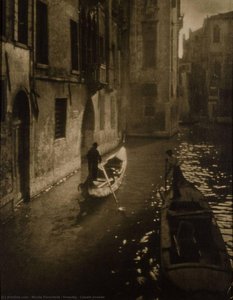
Nicola Perscheid hagyatékából a leghíresebb alkotás Venedig - Canale Grande (1929). Röviddel ezután követik őket The Reaper (1901) és Heimwärts (1901). Katalógusunkban 5 mű található Nicola Perscheid alkotótól; a galéria megőrizte a világ által leginkább csodált 5 darabot, melyeket a dátummal, a múzeummal és a történetükkel együtt mutatunk be.
Nicola Perscheid legjobb 10 festménye: a galéria válogatása
The Reaper
Nicola Perscheid's "The Reaper," painted in 1901, isn’t merely a depiction of rural labor; it’s a profound meditation on time, mortality, and the enduring connection between humanity and the land. This evocative monochrome image, now housed within the State Art Collections of Dresden, immediately draws the viewer into a world steeped in quiet intensity – a world where the rhythmic cycle of harvest is inextricably linked to the inevitable passage…
Heimwärts
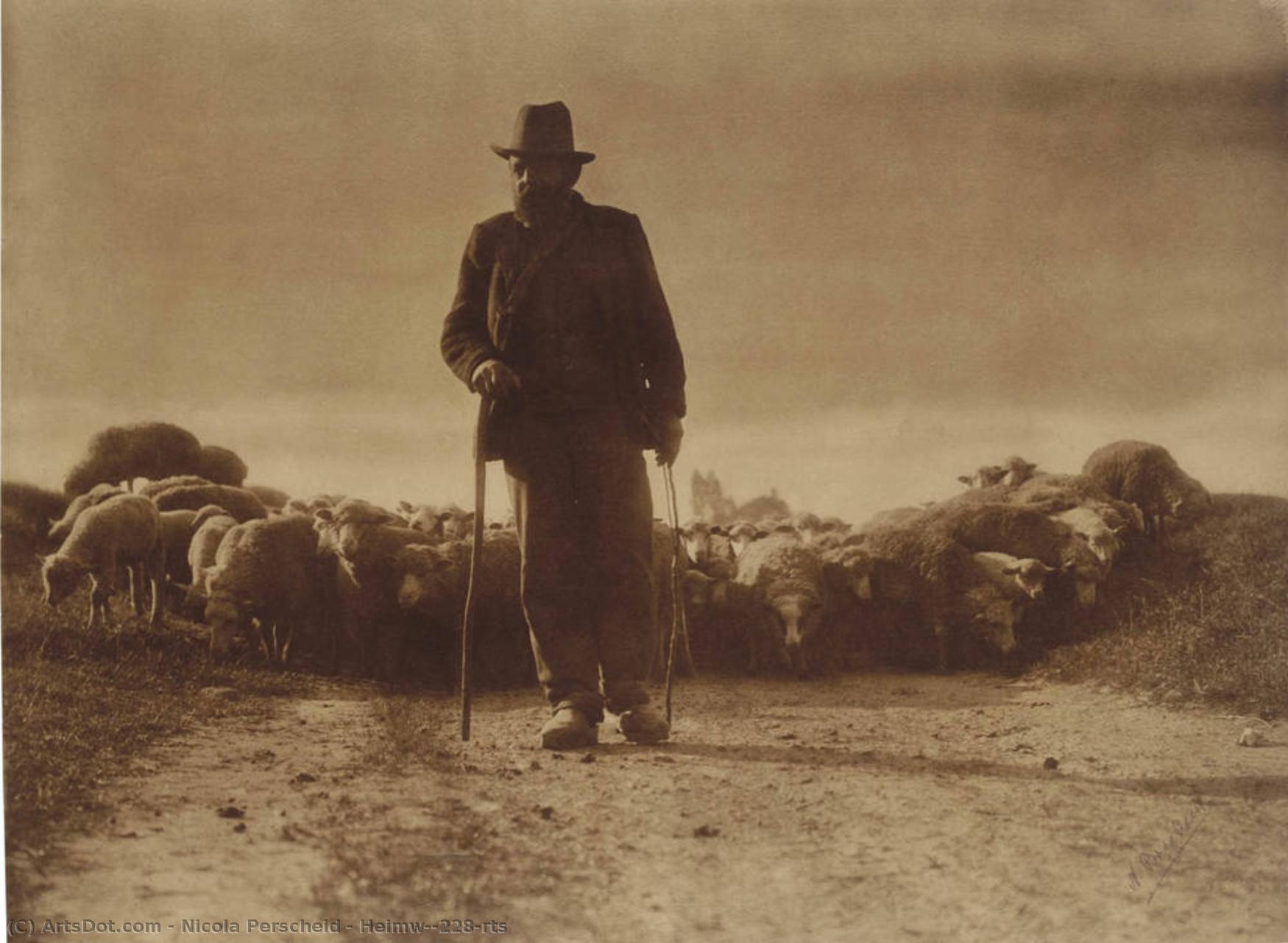
The photograph Heimwärts was captured by Nicola Perscheid in 1901. It presents a quiet study of rural life, focusing on the rhythmic movement of a shepherd and his flock. The scene is frozen in a sepia-toned stillness, a moment caught in the soft light of an overcast day.
Arnold Schönberg
The opening of Nicola Perscheid’s studio at Bellevuestraße 6a, right near the Choralion hall (Bellevuestraße 4) where the world premiere of Pierrot lunaire, op. 21 took place in October 1912, was a major event in the press: “A magnificent space in colossal dimensions! No skylight! Smooth, green walls […] On the opposite wall facing the courtyard is an enormous window slanted inwards almost as wide as the wall, of the…
A témák, amelyek Nicola Perscheid figyelmét meghúzták
A négy leggyakorobban előforduló téma ebben az eredeti művekben, mindegyik a legkiválóbb példájával.
Landscape 2 alkotás
A műemlékek, amelyek Nicola Perscheid eredeti műveit őrzik
A 2 olyan múzeum, amely a legtöbb ezen az oldalon szereplő festményet őrzi.
| Múzeum | Város | Nicola Perscheid művei | Ebből a listából származó festmények |
|---|---|---|---|
| Drezda | 2 | The Reaper, Heimwärts | |
| Bécs | 1 | Arnold Schönberg |
Nicola Perscheid évtizede folgtva: az eredeti művek, amelyek meghatározzák az egyes korzakot
Művek évtizedenként
Váassz ki egy évtizedet, hogy megnézhesd az azt meghatározó eredetiműveket.
The Reaper
Nicola Perscheid's "The Reaper," painted in 1901, isn’t merely a depiction of rural labor; it’s a profound meditation on time, mortality, and the enduring connection between humanity and the land. This evocative monochrome image, now housed within the State Art Collections of Dresden, immediately draws the viewer into a world steeped in quiet intensity – a world where the rhythmic cycle of harvest is inextricably linked to the inevitable passage…
Arnold Schönberg
The opening of Nicola Perscheid’s studio at Bellevuestraße 6a, right near the Choralion hall (Bellevuestraße 4) where the world premiere of Pierrot lunaire, op. 21 took place in October 1912, was a major event in the press: “A magnificent space in colossal dimensions! No skylight! Smooth, green walls […] On the opposite wall facing the courtyard is an enormous window slanted inwards almost as wide as the wall, of the…
Gyűjtői kérdések Nicola Perscheid festményeivel kapcsolatban
Melyik művel a(z) Nicola Perscheid a leghíresebb?Fedje fel a választ
Venedig - Canale Grande (1929). Ezt követi The Reaper (1901) és Heimwärts (1901).
Hány éves volt Nicola Perscheid, amikor a Venedig - Canale Grande készült?Fedje fel a választ
65 éves: Venedig - Canale Grande 1929-ből származik, Nicola Perscheid pedig 1864-ben született.
Hány festményet hagyott hátra Nicola Perscheid?Fedje fel a választ
Katalógusunkban 5 mű található Nicola Perscheid alkotótól, 1901 és 1929 év közötti időszakból.
Mely múzeumokban állnak Nicola Perscheid remekművei?Fedje fel a választ
Leginkább Staatliche Kunstsammlungen Dresden (Drezda) és Arnold Schönberg Center (Bécs) található. A fenti múzeumi táblázatban mindegyik felsorolásra került.
Mely években festette Nicola Perscheid leghíresebb műveit?Fedje fel a választ
1900s alatt: a jelen laphonon található 5 műből 2 készült ebben az időszakban, köztük The Reaper.
Mikszétek az első és az utolsó híres eredeti műve a(z) Nicola Perscheid alkotótól?Fedje fel a választ
Ezen az oldalon a leghitelesebb The Reaper (1901), a legutóbbi pedig Venedig - Canale Grande (1929).
Mely Nicola Perscheid művei láthatóak a Staatliche Kunstsammlungen Dresden kiállتításán?Fedje fel a választ
The Reaper és Heimwärts: a Staatliche Kunstsammlungen Dresden, Drezda 2 művet őrzi ezen az oldalon.
Nicola Perscheid: életmű és életút
Nicola Perscheid: Pioneer of Artistic Portraiture and the Soft Focus Lens
Nicola Perscheid (3 December 1864 – 12 May 1930) stands as a singular figure in early 20th-century German photography, celebrated primarily for his masterful artistic portraits imbued with an ethereal quality achieved through innovative techniques. Born in Moselweiß near Koblenz, he embarked on a lifelong pursuit of visual storytelling, honing his craft across Europe – Saarbrücken, Trier, Colmar, Nice, Vienna and Budapest – demonstrating remarkable adaptability and dedication to his profession. His formative years instilled within him a deep appreciation for observation and meticulous detail, qualities that would subsequently define his artistic vision.- Early Life & Training: Perscheid’s formal education focused on classical studies, providing him with a foundational understanding of aesthetics and composition. However, it was his apprenticeship as a photographer under Wilhelm Schüle in Koblenz that truly ignited his passion for the medium and established him upon a path toward artistic expression.
- The Perscheid Lens: A Breakthrough in Portrait Photography: Perhaps Perscheid’s most enduring legacy rests on his invention of the “Perscheid lens,” a revolutionary soft focus apparatus specifically designed for large format portraiture. This ingenious device prioritized capturing subtle nuances of emotion and expression, rejecting the harsh realities of conventional photographic processes. It allowed photographers to achieve an unprecedented level of artistic control over image texture and tonal range.
Artistic Vision & Portrait Style
Perscheid’s approach to portraiture transcended mere documentation; he sought to convey the inner life of his subjects, prioritizing mood and atmosphere alongside precise likeness. Influenced by Impressionism and Symbolism – movements that championed subjective experience and evocative imagery – Perscheid skillfully employed lighting techniques and compositional choices to heighten emotional impact. His portraits are characterized by a contemplative stillness, reflecting a profound understanding of human psychology and an unwavering commitment to artistic integrity. He meticulously crafted images that captured not just appearance but also spirit.- Notable Works: Among his impressive oeuvre are captivating pieces such as ‘Dame Mit Japanischem Schirm’ (1925), where he expertly utilized platinum printing to produce a stunning black and white portrait brimming with texture and an otherworldly luminescence. Similarly, his depiction of Arnold Schönberg showcases the artist's ability to convey complex emotions through carefully considered framing and tonal gradation.
- Technique & Aesthetic Considerations: Perscheid’s dedication to artistic excellence extended beyond lens innovation; he embraced meticulous printing processes—particularly platinum printing—to maximize image depth and luminosity. This technique allowed him to achieve a remarkable level of tonal subtlety, mirroring the artist's desire to capture the essence of his subjects with profound sensitivity.