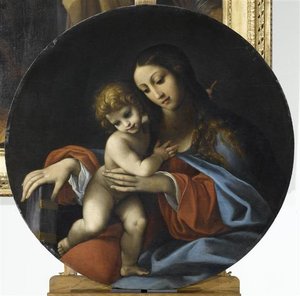
Ludovico Carracci portréja

A 64 legnevesebbebb Ludovico Carracci festmény, mindegyik egyedistens

Frissítve: október 2026 · rangsorolva népszerűségi pontszámunk alapján (minden mű keresései, látogatásai és megrendelései alapján) · 67 mű Ludovico Carracci alkotása a katalógusunkban

Röviden

The Dream of Saint Catherine of Alexandria (1593) az a Ludovico Carracci festmény, amely a legtöbb tekintetet felvonja; az eredeti mű a National Gallery of Art gyűjteményében található, Washington. Ezután a tekintet Madonna and Child with Saints (1607) és The Lamentation (1582) elemre irányul. A Ludovico Carracci 67 műve közül a katalógusunkban megtalálható 64 legnépesebb alkotás, melyeket az év, a múzeum és az örökévalóságának okai kísérnek.

1555 – 1619, Bologna Baroque A legtöbb mű: Bavári Állami Festırménygyűjtemények

A galéria szemével: Ludovico Carracci legjobb 10 festménye

1
The Dream of Saint Catherine of Alexandria (1593) szerzője Ludovico Carracci

The Dream of Saint Catherine of Alexandria

1593 · Oil On Canvas · National Gallery of Art, Washington

To gaze upon this depiction of The Dream of Saint Catherine of Alexandria is to step directly into the heart of Baroque devotion. It is an artwork that does not merely hang on a wall; it envelops the viewer in a palpable atmosphere of sacred serenity and profound familial love. The composition immediately draws the eye into a pyramidal embrace, centering the Virgin Mary with the infant Jesus at its…

2
Madonna and Child with Saints (1607) szerzője Ludovico Carracci

Madonna and Child with Saints

1607 · Oil On Copper · Metropolitan Művészeti Múzeum, New York

To gaze upon this depiction of the Madonna and Child with Saints is to step directly into the heart of Bologna's artistic fervor during the early seventeenth century. Ludovico Carracci, a master whose hand guided art through a period of profound transition, has gifted us a scene that is both deeply devotional and exquisitely sophisticated. The composition immediately draws the eye into a moment suspended between earthly celebration and heavenly…

3
The Lamentation (1582) szerzője Ludovico Carracci

The Lamentation

1582 · Oil On Canvas · Metropolitan Művészeti Múzeum, New York

To stand before The Lamentation by Ludovico Carracci is to be enveloped in an atmosphere so thick with palpable sorrow that it feels almost breathable. This is not the polished, idealized grief often depicted in later art; rather, it is a raw, visceral outpouring of human emotion captured at its most agonizing peak. The scene presents a profound tableau of loss, centering on figures whose poses and expressions reject classical…

4
The Dream of Saint Catherine of Alexandria (detail) (1593) szerzője Ludovico Carracci

The Dream of Saint Catherine of Alexandria (detail)

1593 · Oil On Canvas · National Gallery of Art, Washington

To gaze upon this detail from Ludovico Carracci’s The Dream of Saint Catherine of Alexandria is to step directly into the heart of the Bolognese Baroque—a moment where profound spirituality met breathtaking artistic realism. The scene unfolds with an almost palpable sense of devotion, capturing a sacred narrative rich with human emotion and divine mystery. At its core, we find Mary cradling the infant Jesus, their forms rendered with a…

5
An Angel Frees the Souls of Purgatory (1610) szerzője Ludovico Carracci

An Angel Frees the Souls of Purgatory

1610 · Oil · Vatikáni Képtár, Vatikánváros

Completed in 1610, this work reflects the religious fervor of the Counter-Reformation. As the Catholic Church sought to reaffirm its doctrines against Protestant critiques, artists in Bologna moved away from the artificiality of Mannerism toward a more visceral, emotive naturalism. This piece likely originated as a sketch for an altarpiece within the Carracci workshop. It captures a pivotal theological moment: the transition of souls from the state of purification to…

6
The Trinity with the Dead Christ (1590) szerzője Ludovico Carracci

The Trinity with the Dead Christ

1590 · Oil On Canvas · Vatikáni Képtár, Vatikánváros

In this work from around 1590, we find ourselves witnessing a heavy, quiet moment of transition. The composition is built upon a pyramidal structure, drawing the eye upward toward the limp, lifeless body of Christ. He rests upon a draped cloth, marked by the imprint of Veronica, a detail that anchors the scene in a tradition of compassion. There is a palpable sense of weight here, as the physical reality…

7
The Transfiguration (1590) szerzője Ludovico Carracci

The Transfiguration

1590 · Oil On Canvas · Scottish National Gallery, Edinburgh

The air seems to thicken with a sudden, celestial weight as Jesus Christ stands at the center of this unfolding miracle. He is not a distant figure of stone, but a presence felt in the very movement of his outstretched arms. Light does not merely strike his form; it seems to emanate from within him, carving his silhouette against a world caught in a moment of profound spiritual upheaval. Around…

8
Saint Francis of Assisi in the Portiuncula (1601) szerzője Ludovico Carracci

Saint Francis of Assisi in the Portiuncula

1601 · Oil · Museo del Prado, Madrid

The air in the Portiuncula feels heavy, thick with the scent of damp earth and the weight of a profound, sudden silence. Below, in the dimness of the earthly realm, Saint Francis of Assisi kneels. He is a figure of deep humility, his body pressed toward the ground in a gesture of total surrender. His arms cross over his chest, a physical manifestation of a soul caught in a moment…

9
The Vision of Saint Francis (1602) szerzője Ludovico Carracci

The Vision of Saint Francis

1602 · Oil On Canvas · Art Institute of Chicago, Chicago

The canvas splits into two distinct realms, divided by a diagonal surge of clouds. On the lower left, Saint Francis kneels in the heavy shadows of the earthly plane, his form solid and grounded. Above him, the darkness of the night is pierced by a sudden, divine light. The Virgin Mary and the infant Christ emerge from this celestial glow, surrounded by the soft, rounded shapes of cherubs. A moon…

10
The Agony in the Garden (1590) szerzője Ludovico Carracci

The Agony in the Garden

1590 · Oil On Canvas · Museo del Prado, Madrid

The Agony in the Garden emerges from the shadows of history as a profound oil on canvas by Ludovico Carracci. This specific work, known in collections as Prado P00074, captures a moment of intense spiritual weight. The paint clings to the fabric, holding the tension of a scene that feels as though it is unfolding right before our eyes. It is a work that breathes with the heavy atmosphere of…

Ludovico Carracci híres festményei, 11 és 64 között

11The Vision of St Jerome (1594) szerzője Ludovico CarracciThe Vision of St Jerome1594 · Statens Museum for Kunst 12Bacchus and Ariadne (1591) szerzője Ludovico CarracciBacchus and Ariadne1591 13Portrait of a Widow (1585) szerzője Ludovico CarracciPortrait of a Widow1585 · Dayton Art Institute 14St Sebastian (1590) szerzője Ludovico CarracciSt Sebastian1590 · Fitzwilliam Museum 15Portrait of a Young Man (1583) szerzője Ludovico CarracciPortrait of a Young Man1583 · Capitoline-múzeumok 16Saint Francis in Meditation (1580) szerzője Ludovico CarracciSaint Francis in Meditation1580 · Dulwich Picture Gallery 17Sacrifice of Isaac (1586) szerzője Ludovico CarracciSacrifice of Isaac1586 18Holy Family (1600) szerzője Ludovico CarracciHoly Family1600 · Slovak National Gallery 19Annunciation (1603) szerzője Ludovico CarracciAnnunciation1603 · Musei di Strada Nuova 20Allegory of Providence (1604) szerzője Ludovico CarracciAllegory of Providence1604 · Capitoline-múzeumok 21Singing angels (1605) szerzője Ludovico CarracciSinging angels1605 · Museo Cerralbo 22Hercules and the Hydra (1594) szerzője Ludovico CarracciHercules and the Hydra1594 23The Adoration of the Shepherds (1613) szerzője Ludovico CarracciThe Adoration of the Shepherds1613 24Three angels visiting Abraham (1610) szerzője Ludovico CarracciThree angels visiting Abraham1610 · Pinacoteca Nazionale di Bologna 25The Stories of Jason (detail) (1584) szerzője Ludovico CarracciThe Stories of Jason (detail)1584 · Palazzo Fava 26The Virgin Appearing to St Hyacinth (1594) szerzője Ludovico CarracciThe Virgin Appearing to St Hyacinth1594 · Louvre Múzeum 27Ludovico ) (1555) szerzője Ludovico CarracciLudovico )1555 28Male Nude (Hercules ?) (1588) szerzője Ludovico CarracciMale Nude (Hercules ?)1588 · Kunstpalast 29The Agony in the Garden (1590) szerzője Ludovico CarracciThe Agony in the Garden1590 · National Gallery 30The Marriage of the Virgin (1590) szerzője Ludovico CarracciThe Marriage of the Virgin1590 · National Gallery 31Portrait of Carlo Alberto Rati Opizzoni in Armour (1597) szerzője Ludovico CarracciPortrait of Carlo Alberto Rati Opizzoni in Armour1597 32Christ in the Wilderness, Served by Angels (1608) szerzője Ludovico CarracciChrist in the Wilderness, Served by Angels1608 · Gemäldegalerie 33The Martyrdom of St Margaret (1616) szerzője Ludovico CarracciThe Martyrdom of St Margaret1616 34Susannah and the Elders (1616) szerzője Ludovico CarracciSusannah and the Elders1616 35Annunciation (1616) szerzője Ludovico CarracciAnnunciation1616 · Kunstpalast 36The Denial of Saint Peter (1616) szerzője Ludovico CarracciThe Denial of Saint Peter1616 · Metropolitan Művészeti Múzeum 37Bargellini Madonna (1588) szerzője Ludovico CarracciBargellini Madonna1588 · Pinacoteca Nazionale 38Saint Francis szerzője Ludovico CarracciSaint FrancisBavári Állami Festırménygyűjtemények 39Presentation in the Temple (1605) szerzője Ludovico CarracciPresentation in the Temple1605 · Thyssen-Bornemisza Múzeum 40Preaching of John the Baptist szerzője Ludovico CarracciPreaching of John the BaptistBavári Állami Festırménygyűjtemények 41Portrait of a Young Man szerzője Ludovico CarracciPortrait of a Young ManBavári Állami Festırménygyűjtemények 42Saint Francis Seraphic szerzője Ludovico CarracciSaint Francis SeraphicBavári Állami Festırménygyűjtemények 43Entombment of Christ szerzője Ludovico CarracciEntombment of ChristBavári Állami Festırménygyűjtemények 44The Agony in the Garden of Gethsemane szerzője Ludovico CarracciThe Agony in the Garden of Gethsemane 45St. John the Baptist at the Fontain szerzője Ludovico CarracciSt. John the Baptist at the FontainMusée Fesch 46Saint Mary Magdalene szerzője Ludovico CarracciSaint Mary MagdaleneNemzeti Szépművészeti Múzeum 47Le martyre de saint Pierre et saint Paul szerzője Ludovico CarracciLe martyre de saint Pierre et saint Paul 48LE BAPTEME DE JESUS szerzője Ludovico CarracciLE BAPTEME DE JESUSLyon Museuma a Gy Fine Arts 49The Baptism of Christ szerzője Ludovico CarracciThe Baptism of ChristBavári Állami Festırménygyűjtemények 50Christ Served by Angels in the Wilderness (1608) szerzője Ludovico CarracciChrist Served by Angels in the Wilderness1608 · Berlin Állami Múzeumai 51The Vision of Saint Francis of Assisi, Ludovico Carracci, 1583 - 1585 (1585) szerzője Ludovico CarracciThe Vision of Saint Francis of Assisi, Ludovico Carracci, 1583 - 15851585 52Aranyozott Madonna trónon a gyermekkel, Szt. János, angyal Miklós, Szt. Ferenc, Szt. Lucia, Szt. József (1616) szerzője Ludovico CarracciAranyozott Madonna trónon a gyermekkel, Szt. János, angyal Miklós, Szt. Ferenc, Szt. Lucia, Szt. József1616 · Royal Łazienki Museum 53L'apparition de la Vierge et de l'enfant Jésus à saint Hyacinthe szerzője Ludovico CarracciL'apparition de la Vierge et de l'enfant Jésus à saint HyacintheLouvre Múzeum 54Antonio Landscape with Bathers szerzője Ludovico CarracciAntonio Landscape with Bathers 55The Vision of Saint Francis szerzője Ludovico CarracciThe Vision of Saint Francis 56L'Adoration des bergers La Nativité de Jésus Christ szerzője Ludovico CarracciL'Adoration des bergers La Nativité de Jésus Christ 57The Marriage of the Virgin szerzője Ludovico CarracciThe Marriage of the Virgin 58The Assumption of the Virgin szerzője Ludovico CarracciThe Assumption of the Virgin 59Orlando Delivering Olympia from the Sea Monster szerzője Ludovico CarracciOrlando Delivering Olympia from the Sea MonsterNational Trust 60La Vierge à l'enfant szerzője Ludovico CarracciLa Vierge à l'enfantLouvre Múzeum 61St. Sebastian Thrown into the Cloaca Maxima (1612) szerzője Ludovico CarracciSt. Sebastian Thrown into the Cloaca Maxima1612 · J. Paul Getty Múzeum 62Chess players (1590) szerzője Ludovico CarracciChess players1590 · Gemäldegalerie 63The Funeral of the Virgin Mary (1605) szerzője Ludovico CarracciThe Funeral of the Virgin Mary1605 · Galleria Nazionale 64La Flagellation szerzője Ludovico CarracciLa FlagellationMusée de la Chartreuse de Douai

Ludovico Carracci híres festményei, korszakonként

A témák, amelyek Ludovico Carracci figyelmét meghúzták

A négy leggyakorobban előforduló téma ebben az eredeti művekben, mindegyik a legkiválóbb példájával.

A műemlékek, amelyek Ludovico Carracci eredeti műveit őrzik

A 8 olyan múzeum, amely a legtöbb ezen az oldalon szereplő festményet őrzi.

Múzeumok Város Ludovico Carracci művei Ebből a listából származó festmények
Bavári Állami Festırménygyűjtemények, MunchenBavári Állami Festırménygyűjtemények Munchen 6 Saint Francis, Preaching of John the Baptist, Portrait of a Young Man
Metropolitan Művészeti Múzeum, New YorkMetropolitan Művészeti Múzeum New York 3 Madonna and Child with Saints, The Lamentation, The Denial of Saint Peter
Louvre Múzeum, PárizsLouvre Múzeum Párizs 3 The Virgin Appearing to St Hyacinth, L'apparition de la Vierge et de l'enfant Jésus à saint Hyacinthe, La Vierge à l'enfant
National Gallery of Art, WashingtonNational Gallery of Art Washington 2 The Dream of Saint Catherine of Alexandria, The Dream of Saint Catherine of Alexandria (detail)
Vatikáni Képtár, VatikánvárosVatikáni Képtár Vatikánváros 2 An Angel Frees the Souls of Purgatory, The Trinity with the Dead Christ
Museo del Prado, MadridMuseo del Prado Madrid 2 Saint Francis of Assisi in the Portiuncula, The Agony in the Garden
Capitoline-múzeumok, RómaCapitoline-múzeumok Róma 2 Portrait of a Young Man, Allegory of Providence
Kunstpalast, DüsseldorfKunstpalast Düsseldorf 2 Male Nude (Hercules ?), Annunciation

Ludovico Carracci évtizedekig: egy egyedi eredeti mű minden évtizedben

Művek évtizedenként

Váassz ki egy évtizedet, hogy megnézhesd az azt meghatározó eredetiműveket.

Ludovico Carracci festményei: kérdések a galériának

Mi a leghíresebb műve Ludovico Carraccinek?Fedje fel a választ

The Dream of Saint Catherine of Alexandria (1593), National Gallery of Art, Washington. Ezután Madonna and Child with Saints (1607) és The Lamentation (1582) következik.

Milyen életkorában alkotta meg Ludovico Carracci a(z) The Dream of Saint Catherine of Alexandria műszt?Fedje fel a választ

38 éves: The Dream of Saint Catherine of Alexandria 1593-ből származik, Ludovico Carracci pedig 1555-ben született.

Melyik tíz festménye Ludovico Carracci a leghíresebb?Fedje fel a választ

The Dream of Saint Catherine of Alexandria, Madonna and Child with Saints, The Lamentation, The Dream of Saint Catherine of Alexandria (detail), An Angel Frees the Souls of Purgatory, The Trinity with the Dead Christ, The Transfiguration, Saint Francis of Assisi in the Portiuncula, The Vision of Saint Francis és The Agony in the Garden. A fenti rangsor a művek évszamarát és a múzeumát jelzi.

Hány mű alkotása ismert Ludovico Carracci nevében?Fedje fel a választ

Katalógusunkban 67 mű található Ludovico Carracci alkotótól, 1580 és 1616 év közötti időszakból.

Hol tekinthetők meg a leghíresebb Ludovico Carracci eredetijeit?Fedje fel a választ

Leginkább Bavári Állami Festırménygyűjtemények (Munchen), Metropolitan Művészeti Múzeum (New York) és Louvre Múzeum (Párizs) található. A fenti múzeumi táblázatban mindegyik felsorolásra került.

Melyik időszakban alkotta Ludovico Carracci a leghíresebb festményeit?Fedje fel a választ

1590s alatt: a jelen laphonon található 64 műből 14 készült ebben az időszakban, köztük The Dream of Saint Catherine of Alexandria.

Melyik híres Ludovico Carracci festmény a legkorábbi, és melyik a legutóbb készült?Fedje fel a választ

Ezen az oldalon a leghitelesebb Saint Francis in Meditation (1580), a legutóbbi pedig The Martyrdom of St Margaret (1616).

Milyen témakörket kedvelt Ludovico Carracci?Fedje fel a választ

Man (11), Angels (8) és Virgin mary (6), a jelen oldalon található 64 műművészeti alkotás között.

Milyen anyagokkal festett leggyakrabban Ludovico Carracci?Fedje fel a választ

Oil On Canvas, a jelen oldalon található 64 műből 21 darab esetén.

Mely művészeti irányba tartozik Ludovico Carracci műve?Fedje fel a választ

Baroque, ezen az oldalon található eredetiek alapján.

Milyen Ludovico Carracci eredeti műveket láthatok a Bavári Állami Festırménygyűjtemények kiállításaiban?Fedje fel a választ

Saint Francis, Preaching of John the Baptist és Portrait of a Young Man: a Bavári Állami Festırménygyűjtemények, Munchen 6 művet őrzi ezen az oldalon.

Ludovico Carracci: a művész portréja

A bolognai barokk építésze

Bologna vibráló, intellektuális szívében – egy olyan városban, ahol a reneszánsz hagyomány találkozott egy új korszak fejlődő szellemiségével – Ludovico Carracci európai művészetének átalakító erejévé vált. 1555-ben született, és élete elválaszthatatlanul kapcsolódott a bolognai iskola alapköveihez. A nemes Carracci család tagjaként, kuzinjai, Annibale és Agostino mellett, Ludovico nem csupán részt vett egy művészeti mozgalomban; ő segítette megalkotni az átmenetet a manierizmus stilisztikus, gyakran mesterséges eleganciájából a barokk mély, érzelmes naturalizmusába. Korai éveket édesapja, Prospero Carracci műhelye formált, amely kísérleti tűztérként és a disegno – az alakok és az anatómia aprólékos megfigyelésének szentélyeként szolgált, amely később örökségének egyik jellegzetessé válik.

Míg kuzinjai gyakran Róma ragyogó udvarai között keresték hírnevüket, Ludovico szülővárosában, Bolognában maradt mélyen gyökerezve. Ez a hűséges kötődés lehetővé tette számára, hogy egy egyedi művészeti mencsávot ápoljon, alapítva egy olyan akadémiát, amely fényként szolgált a következő generáció mesterei számára, köztük Guido Reni és Domenichino számára is. Művészete a történelmi hatások mesteri szintézise; Raffaello isteni kegyelméből, Correggio lágy fényességéből és Tizian gazdag kolorizmusából merített erőforrást, ám ezeket a klasszikus elemeket új, drámai vitalitással töltötte meg. Elvetve a késő manierista festők, például Parmigianino, nyúlt és gyakran feszült pózait, Ludovico egy őszintébb, érzelmesebb valóságot fogadott el, bátor mozdulatokat és vibráló, atmoszférás fényt használva, hogy megrendítse nézői lelkét.

Fény, árnyék és spirituális intenzitás

Ludovico Carracci igazi zsenialitása abban rejlik, hogy képes volt a chiaroscuro – a fény és az árnyék drámai játékának – manipulálására, amely eszközzé vált a spirituális kontempláció számára. Vászonai ritkán pusztán bibliai események ábrázolásai; inkább magával ragadó élmények, amelyek célja a vallásos lelkesedés kiváltása. Olyan művekben, mint az Egy angyal felszabadítja a purgatórium lelkjeit, megfigyelhető, hogy a fény használata nem csupán megvilágítja a jelenetet, hanem aktívan részt vesz a narratívában, kiemelve a alakokat a sötétségből, hogy hangsúlyozza a isteni irgalom és kegyelem pillanatait. Ez a technika, amely Caravaggio felkelő naturalizmusát idézi, lehetővé tette számára, hogy még a legszentebb témákat is érezhető, emberi érzelmekkel árasztja be.

Mesteressége számos médiumban megmutatkozott, a freskók monumentális nagyságától a metszetek és grafikák finom precizitásáig. Legyen szó a Tárnoktemplomi bemutatás békés szentségéről vagy a Férfi akt (Herkulesz?) izmos, hősies feszültségéről, művészetén áramlik az érzelmi mélység állandó szövetszűré. Vallásos festményei, mint a Bargellini Madonna, képesek összetett szent- és angyalcsoportokat harmonikus, mégis dinamikus kompozíciókba rendezni, ahol a körmétek minden fodrászá és a fejek minden megbillantása egy nagyobb, égi mozgás érzetét járatja.

Tartós örökség az olasz kanonban

Ludovico Carracci történelmi jelentőségét nem lehet alulbecsülni. Ő volt a kulcsfontosságú alak, aki segített új életre kelteni az olasz művészetet abban az időszakban, amikor fennállt a stagnálás veszélye saját formális hagyományai súlya alatt. Stílusát, amely az érzelmi igazságra és a naturalisztikus megfigyelésre helyezte a hangsúlyt, oly olyan irányba mozdította el, amely alapvető tervként szolgált a barokk korszak legünnepeltebb eredményeihez. Hatása Bolognából sugárzott ki, meghatározva Európa jelentős részének esztétikai nyelvét, és alapot teremtve a 17. századot uraló klasszikus naturalizmusnak.

Művész életére és munkásságára visszatekintve egy olyan alkotót látunk, aki sikeresen áthidalta két világ közötti szakadékot: a reneszánsz strukturált tökéletességét és a barokk drámai, teátrális energiáját. Képes volt egyesíteni a disegno intellektuális szigorát a colore mély érzékelésével és érzelmi rezonanciájával, ami biztosítja helyét korának egyik legkiemelkedőbb festőjeként. Művészetének iránti elkötelezettségével és a spirituális erő iránti hitével Ludováció Carracci megkérülhetetlen nyomot hagyott a nyugati festészet történetében, emlékeztetve minket arra, hogy az igazi szépség a technikai mesterség és az emberi szív találkozási pontján rejlik.