Leonora Carrington portréja

A 25 legnevezesebb Leonora Carrington festmény, egy galériaválaszték

Frissítve: november 2026 · rangsorolva népszerűségi pontszámunk alapján (minden mű keresései, látogatásai és megrendelései alapján) · 25 mű Leonora Carrington alkotása a katalógusunkban

Röviden

Leonora Carrington hagyatékából a leghíresebb alkotás Costume design for the play Penelope Fantastic Figure with Leaves (1959). Röviddel ezután követik őket Do You Know My Aunt Eliza? (1941) és Self Portrait (1937). Katalógusunkban 25 mű található Leonora Carrington alkotótól; a galéria megőrizte a világ által leginkább csodált 25 darabot, melyeket a dátummal, a múzeummal és a történetükkel együtt mutatunk be.

1917 – 2011, Clayton-le-Woods Surrealism A legtöbb mű: Tate Britain

Leonora Carrington legjobb 10 festménye: a galéria válogatása

2
Do You Know My Aunt Eliza? (1941) (1889) -ja Leonora Carrington

Do You Know My Aunt Eliza?

1941 · Graphite · Tate Britain, London

This arresting monochromatic pencil drawing plunges the viewer into a moment of profound, almost visceral drama. The composition itself is a study in vertical tension, pulling the eye upward through an unfolding narrative of struggle. At its heart lies a dynamic confrontation: on one side, a spectral, skeletal presence—perhaps representing mortality or primal fear—lunges forward with palpable aggression. Counterbalancing this force is a more recognizably human figure, whose bearing suggests…

A Leonora Carrington válogatás folytatódik: 11 – 25

A témák, amelyek Leonora Carrington figyelmét meghúzták

A négy leggyakorobban előforduló téma ebben az eredeti művekben, mindegyik a legkiválóbb példájával.

A műemlékek, amelyek Leonora Carrington eredeti műveit őrzik

A 4 olyan múzeum, amely a legtöbb ezen az oldalon szereplő festményet őrzi.

Múzeum Város Leonora Carrington művei Ebből a listából származó festmények
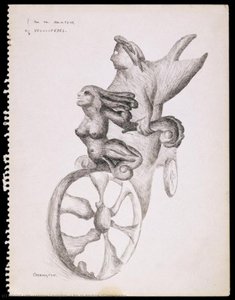
Tate Britain, LondonTate Britain London 2 Do You Know My Aunt Eliza?, I Am an Amateur of Velocipedes
Izraeli Múzeum, JeruzsálemIzraeli Múzeum Jeruzsálem 2 Assurbanipal Abluting Harpies, Ayusco 2 am
Museum of Latin American Art, Long BeachMuseum of Latin American Art Long Beach 1 Title translation: Baño de pájaros
Metropolitan Művészeti Múzeum, New YorkMetropolitan Művészeti Múzeum New York 1 Costume design for the play ¦Penelope¦: Fantastic Figure with Leaves

Leonora Carrington évtizede folgtva: az eredeti művek, amelyek meghatározzák az egyes korzakot

Művek évtizedenként

Váassz ki egy évtizedet, hogy megnézhesd az azt meghatározó eredetiműveket.

Gyűjtői kérdések Leonora Carrington festményeivel kapcsolatban

Melyik művel a(z) Leonora Carrington a leghíresebb?Fedje fel a választ

Costume design for the play Penelope Fantastic Figure with Leaves (1959). Ezt követi Do You Know My Aunt Eliza? (1941) és Self Portrait (1937).

Hány éves volt Leonora Carrington, amikor a Costume design for the play Penelope Fantastic Figure with Leaves készült?Fedje fel a választ

42 éves: Costume design for the play Penelope Fantastic Figure with Leaves 1959-ből származik, Leonora Carrington pedig 1917-ben született.

Melyek a tíz leghíresebb Leonora Carrington festmény?Fedje fel a választ

Costume design for the play Penelope Fantastic Figure with Leaves, Do You Know My Aunt Eliza?, Self Portrait, Bird Superior, Portrait of Max Ernst, The Old Maids, The Good King Elk Horn, The Giantess, The Necromancer, Step-Sister's Hen és Assurbanipal Abluting Harpies. A fenti rangsor a művek évszamarát és a múzeumát jelzi.

Hány festményet hagyott hátra Leonora Carrington?Fedje fel a választ

Katalógusunkban 25 mű található Leonora Carrington alkotótól, 1937 és 1987 év közötti időszakból.

Mely múzeumokban állnak Leonora Carrington remekművei?Fedje fel a választ

Leginkább Tate Britain (London), Izraeli Múzeum (Jeruzsálem) és Museum of Latin American Art (Long Beach) található. A fenti múzeumi táblázatban mindegyik felsorolásra került.

Mely években festette Leonora Carrington leghíresebb műveit?Fedje fel a választ

1950s alatt: a jelen laphonon található 25 műből 7 készült ebben az időszakban, köztük Costume design for the play Penelope Fantastic Figure with Leaves.

Mikszétek az első és az utolsó híres eredeti műve a(z) Leonora Carrington alkotótól?Fedje fel a választ

Ezen az oldalon a leghitelesebb Self Portrait (1937), a legutóbbi pedig Ayusco 2 am (1987).

Milyen témaköröket választott leggyakrabban Leonora Carrington?Fedje fel a választ

Mythology (2), Fantasy (2) és Dreamscape (2), a jelen oldalon található 25 műművészeti alkotás között.

Mely művészeti irányba tartozik Leonora Carrington?Fedje fel a választ

Surrealism, ezen az oldalon található eredetiek alapján.

Mely Leonora Carrington művei láthatóak a Tate Britain kiállتításán?Fedje fel a választ

Do You Know My Aunt Eliza? és I Am an Amateur of Velocipedes: a Tate Britain, London 2 művet őrzi ezen az oldalon.

Leonora Carrington: életmű és életút

A Realm Beyond the Veil: The Life and Art of Leonora Carrington

Born Mary Leonora Carrington in 1917 amidst the verdant landscapes of Clayton Woods, Lancashire, England, the artist who would become a pivotal figure in Surrealism was, from her earliest years, an individual set apart. Her upbringing within a wealthy textile manufacturing family provided material comfort but little solace for a spirit that chafed against societal expectations and yearned for realms beyond the tangible. Expulsions from two schools – including New Hall School in Chelmsford – signaled a rebellious streak, a refusal to be molded by conventional norms. This early defiance ultimately led her to Florence, Italy, where she briefly attended Mrs. Penrose's Academy of Art, yet it was an encounter at age ten with Surrealist art in a Paris gallery that truly ignited the flame within her imagination. The seed was planted; a lifelong fascination with the subconscious, mythology, and the power of dreams had begun to blossom. Though met with familial resistance, Carrington’s mother provided crucial encouragement, recognizing and nurturing her daughter's artistic inclinations.

Forging a Surrealist Identity: From London to Mexico

Carrington’s formal art education continued in London at the Chelsea School of Art (1935) followed by studies at the Ozenfant Academy, where she honed her technical skills. However, it was her fateful meeting with Max Ernst in 1937 that irrevocably altered the course of her artistic journey. Their passionate and intellectually stimulating relationship led them to Saint Martin d'Ardèche, France, a period of intense collaboration and experimentation. It was during this time that Carrington began to develop her distinctive style, exemplified by works like The Inn of the Dawn Horse (c. 1939). This self-portrait is not merely a depiction of physical likeness but a symbolic exploration of identity, blending human and animal forms within a dreamlike setting—a hallmark of her emerging aesthetic. The outbreak of World War II shattered this idyllic existence. Ernst’s departure for America and Carrington's subsequent mental breakdown in Spain plunged her into a period of profound suffering and institutionalization. From the depths of this experience emerged Down Below (1944), a semi-autobiographical novel that stands as a powerful testament to the horrors of psychosis and the failings of psychiatric treatment, solidifying her place within Surrealist literature. A pivotal move followed: in the 1940s, Carrington sought refuge and reinvention in Mexico City, where she would reside for the remainder of her life.

Myth, Magic, and Feminine Power: The Core of Her Vision

Leonora Carrington’s art is a captivating tapestry woven with threads of mythology, folklore, alchemy, Kabbalah, and deeply personal symbolism. Animals—often possessing human-like qualities or existing as hybrid creatures—feature prominently in her paintings, serving not merely as subjects but as representations of psychological states, archetypal figures, and the untamed forces of nature. While she resisted explicit categorization as a “feminist artist,” Carrington’s work consistently challenges traditional gender roles and explores female agency within fantastical narratives. Her dreamlike landscapes are populated by enigmatic figures and strange creatures, evoking an atmosphere of mystery and inviting viewers to delve into the depths of their own subconscious. Her unique style is characterized by meticulous detail combined with imaginative subject matter, vibrant colors, and intricate patterns that create visually arresting compositions. Arca de Noé (1967), a vibrant depiction of Noah’s Ark teeming with fantastical creatures, exemplifies her exploration of creation and renewal. The Return of Boadicea (1969) showcases her celestial imagery and mythical storytelling. Even haunting works like Do You Know My Aunt Eliza? (c. 1947), a pencil drawing exploring mortality, are imbued with a unique blend of vulnerability and strength.

A Lasting Legacy: Beyond Surrealism

In Mexico City, Carrington found not only artistic freedom but also intellectual kinship. Her close friendship and collaborative spirit with fellow Surrealist Remedios Varo fostered an exchange of ideas centered on alchemy, Mayan mysticism, and esoteric knowledge. She continued to paint prolifically throughout her life, creating a vast body of work that delved into themes of transformation, the subconscious, and the enduring power of myth. Beyond her artistic pursuits, Carrington was actively involved in social justice movements, becoming a founding member of the women’s liberation movement in Mexico during the 1970s. Her commitment to challenging societal norms extended beyond her art, reflecting a deep-seated belief in equality and empowerment. Leonora Carrington passed away in 2011, leaving behind a legacy that continues to inspire artists and audiences worldwide. She is now rightfully recognized as one of the most important Surrealist artists of the 20th century—a visionary whose work transcends categorization, inviting us to explore the hidden realms within ourselves and the world around us. Her paintings, novels, and unwavering spirit remain a testament to the power of imagination, rebellion, and the enduring search for meaning beyond the veil of reality.