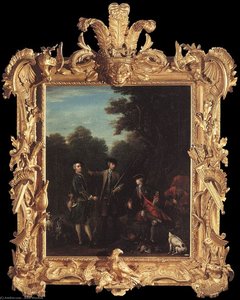
John Wootton portréja

John Wootton festményei: A 91 leghíresebb alkotás, egy galéria szemével

Frissítve: október 2026 · rangsorolva népszerűségi pontszámunk alapján (minden mű keresései, látogatásai és megrendelései alapján) · 91 mű John Wootton alkotása a katalógusunkban

Röviden

A galéria szerint John Wootton leghíresebb festménye a The Death of the Hare (1735), amelynek eredeti példája a Yale Center for British Art múzeumában található, New Haven városában. Portrait of a Man on Horseback (1720) és The Meet of a Hunt with Henry II Hoare (1705 - 1785) (1729) kiegészítik azt a triót, amelyet minden szem felismer. A katalógusunkban szereplő 91 művész John Wootton alkotásából a galéria az alábbi 91 leghíresebbet mutatja be, amelyek mind egyedi originális művek, a készítés évszámával, a múzeum megnevezésével és a különlegességük leírásával.

1682 – 1764, Snitterfield Baroque A legtöbb mű: Yale Center for British Art

A galéria top 10 John Wootton festménye

1
The Death of the Hare (1735) (1889) -ja John Wootton

The Death of the Hare

1735 · Oil On Canvas · Yale Center for British Art, New Haven

In this oil on canvas, we find ourselves in the quiet, heavy atmosphere of a post-hunt landscape. The scene is set during the soft, diffused light of late afternoon, where the sky holds pale blues and warm, creamy hues of a setting sun. Large, dark trees frame the composition on either side, creating a natural vignette that draws the eye inward toward the central drama. There is a profound sense…

2
Portrait of a Man on Horseback (1720) (1889) -ja John Wootton

Portrait of a Man on Horseback

1720 · Oil On Canvas · Yale Center for British Art, New Haven

In "Portrait of a Man on Horseback" by John Wootton, a gentleman sits mounted upon a dark bay horse. The composition is vertical and centered, fixing the viewer’s gaze directly upon the rider. He is dressed in regal riding attire, his presence defined by a coat of saturated red. This bold color cuts through the muted, earthy tones of the background. The subject meets the eye-level perspective of the observer,…

3
The Meet of a Hunt with Henry II Hoare (1705 - 1785) (1729) (1889) -ja John Wootton

The Meet of a Hunt with Henry II Hoare (1705 - 1785)

1729 · Oil On Canvas

The composition centers on a group of horsemen and hounds assembled in a wide, rolling landscape. On the left, a tall stone obelisk rises vertically, providing a fixed point against the horizontal expanse of the countryside. The scene depicts a specific social gathering, identified by inscriptions as involving Henry Hoare and Benjamin Hoare. Henry Hoare is mounted on a horse, wearing a grey coat, while a groom leads a second…

4
The Hampton Court Chestnut Arabian (1726) (1889) -ja John Wootton

The Hampton Court Chestnut Arabian

1726 · Oil On Canvas · Royal Collection, London

The air feels heavy with the quiet dignity of the 18th century as a chestnut Arabian horse commands the center of the scene. Its sleek, muscular form catches the light from the upper left, casting soft shadows that define every curve of its powerful body. This is a portrait of poise and breeding. To the left, a man in classical attire holds the reins with a steady hand, his presence…

5
The Duke of Hamilton's Grey Racehorse, 'Victorious,' at Newmarket (1725) (1889) -ja John Wootton

The Duke of Hamilton's Grey Racehorse, 'Victorious,' at Newmarket

1725 · Oil On Canvas · Yale Center for British Art, New Haven

We are looking at The Duke of Hamilton's Grey Racehorse, 'Victorious,' at Newmarket, a significant work by the English painter John Wootton. Created about 1725, this oil painting captures a grey racehorse positioned within a vast, open landscape. The subject is presented with a sense of quiet dignity, set against an expansive backdrop that emphasizes the scale of the environment.

6
Lamprey at Newmarket, with a Group of Figures Including Sir William Morgan and Girolamo Bardoletti (1723) (1889) -ja John Wootton

Lamprey at Newmarket, with a Group of Figures Including Sir William Morgan and Girolamo Bardoletti

1723 · Oil · Yale Center for British Art, New Haven

In this oil painting from about 1723, the viewer enters a moment of high social ritual. Lamprey at Newmarket, with a Group of Figures Including Sir William Morgan and Girolamo Bardoletti presents a formal presentation of a grey horse to a gathering of gentlemen. The scene unfolds in an outdoor setting, where the quiet tension of the assembly meets the presence of the animal. The artist, John Wootton, captures a…

7
Two Stallions Fighting (1734) (1889) -ja John Wootton

Two Stallions Fighting

1734 · Oil

A white stallion and a black stallion collide in a moment of intense physical struggle. The composition relies on a sharp diagonal tension, driving the eye from the bright, muscular form of the white horse on the left toward the deep, dark tones of its opponent on the right. Arched necks and outstretched limbs create a sense of chaotic movement, framed by the intervention of handlers and the sharp line…

8
The Shooting Party: Frederick, Prince of Wales with John Spencer and Charles Douglas, 3rd Duke of Queensberry (1740) (1889) -ja John Wootton

The Shooting Party: Frederick, Prince of Wales with John Spencer and Charles Douglas, 3rd Duke of Queensberry

1740 · Oil On Canvas · Royal Collection, London

The Shooting Party: Frederick, Prince of Wales with John Spencer and Charles Douglas, 3rd Duke of Queensberry is an oil on canvas executed by the English painter John Wootton. Dated 1740, the work belongs to the genre of Georgian Sporting Art. It captures a specific moment of aristocratic leisure, centering on a group of prominent figures engaged in a hunting scene.

9
The Death of the Stag (1737) (1889) -ja John Wootton

The Death of the Stag

1737 · Oil On Canvas · Royal Collection, London

The scene unfolds across a wide, panoramic landscape under a vast sky of blue and white. In the foreground, the immediate focus is a fallen stag, its body positioned amidst a group of hunting dogs that scatter around the carcass. Some of these animals actively engage with the animal, their forms creating a sense of movement against the earth. Beyond this central action, the midground contains a group of hunters,…

10
The Return from the Chase (1737) (1889) -ja John Wootton

The Return from the Chase

1737 · Oil On Canvas · Royal Collection, London

An expansive 18th-century landscape captures a group of aristocratic figures and their horses returning from a hunt. The composition utilizes a wide format to emphasize the scale of the estate, leading the eye from a detailed foreground of riders and attendants toward a distant, imposing stone manor situated on a slight rise. To the right, a dense cluster of mature trees provides verticality, framing the scene and adding depth to…

John Wootton festményei, 11. helyezéstől 91. helyezésig

11The Siege of Tournay (1742) (1889) -ja John WoottonThe Siege of Tournay1742 · Royal Collection 12William Augustus, Duke of Cumberland (1721-65) at the Battle of Dettingen (1744) (1889) -ja John WoottonWilliam Augustus, Duke of Cumberland (1721-65) at the Battle of Dettingen1744 · Royal Collection 13Frederick, Prince of Wales (1707-1751) in the Hunting Field (1734) (1889) -ja John WoottonFrederick, Prince of Wales (1707-1751) in the Hunting Field1734 · Royal Collection 14A Fox Hunt (1735) (1889) -ja John WoottonA Fox Hunt1735 · Yale Center for British Art 15Lord Portmore Watching Racehorses at Exercise on Newmarket Heath (1735) (1889) -ja John WoottonLord Portmore Watching Racehorses at Exercise on Newmarket Heath1735 · Yale Center for British Art 16William Augustus, Duke of Cumberland (1721-1765) (1745) (1889) -ja John WoottonWilliam Augustus, Duke of Cumberland (1721-1765)1745 · Royal Collection 17Haycart Passing a Ruined Abbey (1745) (1889) -ja John WoottonHaycart Passing a Ruined Abbey1745 · Yale Center for British Art 18Preparing for the Hunt (1745) (1889) -ja John WoottonPreparing for the Hunt1745 · Yale Center for British Art 19Rievaulx Abbey (1745) (1889) -ja John WoottonRievaulx Abbey1745 · Yale Center for British Art 20Classical Landscape: Morning (1740) (1889) -ja John WoottonClassical Landscape: Morning1740 · Yale Center for British Art 21Classical Landscape (1725) (1889) -ja John WoottonClassical Landscape1725 · Yale Center for British Art 22The Battle of Blenheim, 13 August (1704) (1889) -ja John WoottonThe Battle of Blenheim, 13 August (1704) 23Horse Race at Newmarket (1889) -ja John WoottonHorse Race at NewmarketPetworth House 24Battle Scene on Bridge (1706) (1889) -ja John WoottonBattle Scene on Bridge1706 · Antony House 25George I at Newmarket, 4 or 5 October, 1717 (1717) (1889) -ja John WoottonGeorge I at Newmarket, 4 or 5 October, 17171717 · Yale Center for British Art 26A rutlandi herceg (1715) (1889) -ja John WoottonA rutlandi herceg1715 · Yale Center for British Art 27Sketch for ‘A prospect of Dover Castle’, Warmer Castle (1727) (1889) -ja John WoottonSketch for ‘A prospect of Dover Castle’, Warmer Castle1727 28Park Place, Henley (1742) (1889) -ja John WoottonPark Place, Henley1742 · Royal Collection 29A Distant View of Henley-on-Thames (1742) (1889) -ja John WoottonA Distant View of Henley-on-Thames1742 · Royal Collection 30The Siege of Lille (1742) (1889) -ja John WoottonThe Siege of Lille1742 · Royal Collection 31A Grey Spotted Hound (1738) (1889) -ja John WoottonA Grey Spotted Hound1738 · Yale Center for British Art 32Two of the Duchess of Marlborough's Dogs (1736) (1889) -ja John WoottonTwo of the Duchess of Marlborough's Dogs1736 33Classical Landscape (1754) (1889) -ja John WoottonClassical Landscape1754 · Yale Center for British Art 34Classical Landscape with Figures and Animals: Sunset (1754) (1889) -ja John WoottonClassical Landscape with Figures and Animals: Sunset1754 · Yale Center for British Art 35Releasing the Hound (1745) (1889) -ja John WoottonReleasing the Hound1745 · Yale Center for British Art 36Racing Scene at Newmarket (1750) (1889) -ja John WoottonRacing Scene at Newmarket1750 · Minneapolis Institute of Art 37The Shooting Party (1740) (1889) -ja John WoottonThe Shooting Party1740 · Royal Collection 38Hounds and a Magpie (1740) (1889) -ja John WoottonHounds and a Magpie1740 · Hermitaeus-múzeum 39Classical Landscape (1889) -ja John WoottonClassical LandscapeSzépművészeti Múzeum 40Classical Landscape: Evening (1740) (1889) -ja John WoottonClassical Landscape: Evening1740 · Yale Center for British Art 41A Dark Bay Stallion, Possibly the Byerley Turk (1889) -ja John WoottonA Dark Bay Stallion, Possibly the Byerley Turk 42Bowater Vernon (1683–1735), with Hanbury Hall and Its Formal Garden (1889) -ja John WoottonBowater Vernon (1683–1735), with Hanbury Hall and Its Formal GardenHanbury Hall 43The Beauchamp-Proctor Family and Friends at Langley Park, Norfolk (1889) -ja John WoottonThe Beauchamp-Proctor Family and Friends at Langley Park, Norfolk 44The Bloody-Shouldered Arabian (1889) -ja John WoottonThe Bloody-Shouldered Arabian 45Viscount Weymouth's Hunt The Hon. John Spencer beside a Hunter held by a Young Boy (1889) -ja John WoottonViscount Weymouth's Hunt The Hon. John Spencer beside a Hunter held by a Young Boy 46Landscape with Angelica and Medoro (1889) -ja John WoottonLandscape with Angelica and Medoro 47The Duke of Rutland (1889) -ja John WoottonThe Duke of Rutland 48Classical Landscape with a Grecian Temple (1889) -ja John WoottonClassical Landscape with a Grecian Temple 49Before the hunt (1889) -ja John WoottonBefore the hunt 50Classical Landscape with Gypsies (1748) (1889) -ja John WoottonClassical Landscape with Gypsies1748 · Metropolitan Művészeti Múzeum 51Portrait of Coplestone Warre Bampfylde (1720-96) in front of Hestercombe House with his huntsman c.1740 (1889) -ja John WoottonPortrait of Coplestone Warre Bampfylde (1720-96) in front of Hestercombe House with his huntsman c.1740Hestercombe House - Gardens 52Rome from the Aventine Hill (1889) -ja John WoottonRome from the Aventine HillBirmingham Museum and Art Gallery 53Classical landscape (1889) -ja John WoottonClassical landscapeFitzwilliam Museum 54Stag hunt (1889) -ja John WoottonStag hunt 55Horses Exercising on Newmarket Heath (1889) -ja John WoottonHorses Exercising on Newmarket Heath 56'Lamprey' (A Racehorse) (1889) -ja John Wootton'Lamprey' (A Racehorse) 57A Race on the Round Course at Newmarket (1889) -ja John WoottonA Race on the Round Course at NewmarketFitzwilliam Museum 58Life-Size Horse with Huntsman Blowing a Horn (1889) -ja John WoottonLife-Size Horse with Huntsman Blowing a Horn 59Landscape with Cattle (1889) -ja John WoottonLandscape with Cattle 60Lady Mary Churchill at the Death of the Hare (1889) -ja John WoottonLady Mary Churchill at the Death of the Hare 61A View of Cassiobury Park (1889) -ja John WoottonA View of Cassiobury Park 62Coastal Scene with Shipping at Dawn (1889) -ja John WoottonCoastal Scene with Shipping at DawnHartwell House 63Muff, a Black and White Dog (1889) -ja John WoottonMuff, a Black and White Dog 64A Turkey in a Landscape (1889) -ja John WoottonA Turkey in a Landscape 65Drovers at a Harbour (1889) -ja John WoottonDrovers at a Harbour 66A Stag Hunt in Full Cry (1889) -ja John WoottonA Stag Hunt in Full CryWimpole Hall 67George II (1683–1760), on Horseback (1889) -ja John WoottonGeorge II (1683–1760), on HorsebackBlickling Hall 68View of the Severn Valley with Haymaking and Figures (1889) -ja John WoottonView of the Severn Valley with Haymaking and Figures 69Landscape of a River Valley at Sunset (1889) -ja John WoottonLandscape of a River Valley at SunsetHartwell House 70Landscape with Fishermen (1889) -ja John WoottonLandscape with Fishermen 71A Stag Hunt at Chirk (1889) -ja John WoottonA Stag Hunt at Chirk 72A Grey Horse and Jockey in Red Colours, before a Stable (1889) -ja John WoottonA Grey Horse and Jockey in Red Colours, before a StableClandon Park 73Lionel Sackville, 1st Duke of Dorset, Lord Warden of the Cinque Ports, Returning in Procession to Dover Castle (1889) -ja John WoottonLionel Sackville, 1st Duke of Dorset, Lord Warden of the Cinque Ports, Returning in Procession to Dover CastleKnole House 74Italianate landscape (1889) -ja John WoottonItalianate landscape 75Equestrian Portrait of Sir Richard Hoare II (1709–1754), as Lord Mayor of London, at Temple Bar (1889) -ja John WoottonEquestrian Portrait of Sir Richard Hoare II (1709–1754), as Lord Mayor of London, at Temple Bar 76William tregonwell frampton (1889) -ja John WoottonWilliam tregonwell frampton 77Wooded Landscape and Coastal Town (1889) -ja John WoottonWooded Landscape and Coastal Town 78A Bay Racehorse and Attendants (1889) -ja John WoottonA Bay Racehorse and Attendants 79Sir Robert Walpole, 1st Earl of Orford, as a Ranger of Richmond Park (1889) -ja John WoottonSir Robert Walpole, 1st Earl of Orford, as a Ranger of Richmond Park 80George II at the Battle of Dettingen, with the Duke of Cumberland and Robert, 4th Earl of Holderness, 27 June (1743) (1889) -ja John WoottonGeorge II at the Battle of Dettingen, with the Duke of Cumberland and Robert, 4th Earl of Holderness, 27 June (1743) 81Henry Hoare II (1705–1785), on Horseback (1889) -ja John WoottonHenry Hoare II (1705–1785), on Horseback 82George Henry Lee, 3rd Earl of Litchfield, and his Uncle the Hon. Robert Lee, Subsequently 4th Earl of Litchfield, Shooting in 'True Blue' Frock Coats (1889) -ja John WoottonGeorge Henry Lee, 3rd Earl of Litchfield, and his Uncle the Hon. Robert Lee, Subsequently 4th Earl of Litchfield, Shooting in 'True Blue' Frock Coats 83A Classical Landscape with Animals (1889) -ja John WoottonA Classical Landscape with AnimalsUpton House 84Dancing Dogs 'Lusette', 'Madore', 'Rosette' and 'Moucheby' (1889) -ja John WoottonDancing Dogs 'Lusette', 'Madore', 'Rosette' and 'Moucheby'Wallington Hall 85Viscount Weymouth's Hunt A Groom holding a Saddled Grey Hunter with Hounds and Terriers (1889) -ja John WoottonViscount Weymouth's Hunt A Groom holding a Saddled Grey Hunter with Hounds and Terriers 86Viscount Weymouth's Hunt Two Hunt Servants on Hunters beside a Cottage (1889) -ja John WoottonViscount Weymouth's Hunt Two Hunt Servants on Hunters beside a Cottage 87Gilbert Coventry (c.1688–1719), 4th Earl of Coventry, with Two Huntsmen in a Landscape (1889) -ja John WoottonGilbert Coventry (c.1688–1719), 4th Earl of Coventry, with Two Huntsmen in a LandscapeAntony House 88A favorite poodle and monkey belonging to thomas osborn (1889) -ja John WoottonA favorite poodle and monkey belonging to thomas osborn 89Viscount Weymouth's Hunt Mr Jackson, the Hon. Henry Villiers and the Hon. Thomas Villiers, with Hunters and Hounds (1889) -ja John WoottonViscount Weymouth's Hunt Mr Jackson, the Hon. Henry Villiers and the Hon. Thomas Villiers, with Hunters and Hounds 90Viscount Weymouth's Hunt Thomas, 2nd Viscount Weymouth, with a Black Page and other Huntsmen at the Kill (1889) -ja John WoottonViscount Weymouth's Hunt Thomas, 2nd Viscount Weymouth, with a Black Page and other Huntsmen at the Kill 91A View of Henley-on-Thames (1742) (1889) -ja John WoottonA View of Henley-on-Thames1742 · Royal Collection

A témák, amelyek John Wootton figyelmét meghúzták

A négy leggyakorobban előforduló téma ebben az eredeti művekben, mindegyik a legkiválóbb példájával.

A műemlékek, amelyek John Wootton eredeti műveit őrzik

A 8 olyan múzeum, amely a legtöbb ezen az oldalon szereplő festményet őrzi.

Múzeum Város John Wootton művei Ebből a listából származó festmények
Yale Center for British Art, New HavenYale Center for British Art New Haven 18 The Death of the Hare, Portrait of a Man on Horseback, The Duke of Hamilton's Grey Racehorse, 'Victorious,' at Newmarket
Royal Collection, LondonRoyal Collection London 13 The Hampton Court Chestnut Arabian, The Shooting Party: Frederick, Prince of Wales with John Spencer and Charles Douglas, 3rd Duke of Queensberry, The Death of the Stag
Antony HouseAntony House 2 Battle Scene on Bridge, Gilbert Coventry (c.1688–1719), 4th Earl of Coventry, with Two Huntsmen in a Landscape
Fitzwilliam MuseumFitzwilliam Museum 2 Classical landscape, A Race on the Round Course at Newmarket
Hartwell House, AylesburyHartwell House Aylesbury 2 Coastal Scene with Shipping at Dawn, Landscape of a River Valley at Sunset
Petworth House, PetworthPetworth House Petworth 1 Horse Race at Newmarket
Minneapolis Institute of Art, MinneapolisMinneapolis Institute of Art Minneapolis 1 Racing Scene at Newmarket
Hermitaeus-múzeum, SzentpétervárHermitaeus-múzeum Szentpétervár 1 Hounds and a Magpie

John Wootton, egy aláírott festmény évtizedenként

Művek évtizedenként

Váassz ki egy évtizedet, hogy megnézhesd az azt meghatározó eredetiműveket.

John Wootton festményei: a galéria válaszai

Melyik John Wootton festmény a leghíresebb?Fedje fel a választ

The Death of the Hare (1735), Yale Center for British Art, New Haven. Ezután Portrait of a Man on Horseback (1720) és The Meet of a Hunt with Henry II Hoare (1705 - 1785) (1729) következik.

Hány éves volt John Wootton, amikor elkészítette a(t): The Death of the Hare?Fedje fel a választ

53 éves: The Death of the Hare 1735-ből származik, John Wootton pedig 1682-ben született.

Melyek John Wootton top 10 festménye?Fedje fel a választ

The Death of the Hare, Portrait of a Man on Horseback, The Meet of a Hunt with Henry II Hoare (1705 - 1785), The Hampton Court Chestnut Arabian, The Duke of Hamilton's Grey Racehorse, 'Victorious,' at Newmarket, Lamprey at Newmarket, with a Group of Figures Including Sir William Morgan and Girolamo Bardoletti, Two Stallions Fighting, The Shooting Party: Frederick, Prince of Wales with John Spencer and Charles Douglas, 3rd Duke of Queensberry, The Death of the Stag és The Return from the Chase. A fenti rangsor a művek évszamarát és a múzeumát jelzi.

Hány műve született John Wootton nevére?Fedje fel a választ

Katalógusunkban 91 mű található John Wootton alkotótól, 1706 és 1754 év közötti időszakból.

Hol találhatóak John Wootton leghíresebb eredeti művei?Fedje fel a választ

Leginkább Yale Center for British Art (New Haven), Royal Collection (London) és Antony House található. A fenti múzeumi táblázatban mindegyik felsorolásra került.

Mikor festette John Wootton le leghíresebb műveit?Fedje fel a választ

1740s alatt: a jelen laphonon található 91 műből 17 készült ebben az időszakban, köztük The Shooting Party: Frederick, Prince of Wales with John Spencer and Charles Douglas, 3rd Duke of Queensberry.

Melyek John Wootton legkorábbi és legutóbbi híres művei?Fedje fel a választ

Ezen az oldalon a leghitelesebb Battle Scene on Bridge (1706), a legutóbbi pedig Classical Landscape (1754).

Mely témakörökkel foglaltaszkodott a legtöbbször John Wootton?Fedje fel a választ

Landscape (30), Sky (14) és Hunting (13), a jelen oldalon található 91 műművészeti alkotás között.

Melyik technikával foglalt leginkább John Wootton?Fedje fel a választ

Oil On Canvas, a jelen oldalon található 91 műből 23 darab esetén.

Mely művészeti irányhoz tartozik John Wootton?Fedje fel a választ

Baroque, ezen az oldalon található eredetiek alapján.

Mely John Wootton eredeti műveit őrzi a Yale Center for British Art?Fedje fel a választ

The Death of the Hare, Portrait of a Man on Horseback és The Duke of Hamilton's Grey Racehorse, 'Victorious,' at Newmarket: a Yale Center for British Art, New Haven 18 művet őrzi ezen az oldalon.

John Wootton: a művész

A Pioneer of Sporting Art: The Life and Legacy of John Wootton

John Wootton, born around 1686 in the quaint Warwickshire village of Snitterfield, near Stratford-upon-Avon, emerged as a pivotal figure in the development of British sporting art. While precise details of his early life remain somewhat elusive, it is believed he entered the service of the esteemed Beaufort family at a young age, an experience that likely fostered his deep connection to equestrian pursuits and the aristocratic world surrounding them. His artistic journey began with formal training under Jan Wyck during the 1690s, where he honed fundamental skills in draftsmanship and painting techniques – a foundation upon which he would build a remarkably successful career. Even in these early years, Wootton demonstrated an innate talent for capturing the essence of horses, as evidenced by his earliest known work, “Bonny Black” (1711), a piece that foreshadowed his future mastery of equine portraiture.

Establishing a Reputation and Artistic Innovation

By 1706, Wootton had firmly established himself in London, quickly gaining recognition for his depictions of horses, particularly those gracing the renowned racing scene at Newmarket. He wasn’t merely documenting these animals; he was capturing their spirit, their power, and their individual character with an unprecedented level of detail and sensitivity. This specialization brought him into close contact with Britain's elite – a patronage that included figures like George II and Frederick, Prince of Wales. Wootton actively engaged with the artistic community, subscribing to the first English Academy of Painting and Drawing in 1711 and later serving as a steward of the Virtuosi Club of St Luke’s by 1717, demonstrating his commitment to fostering artistic discourse and collaboration. However, Wootton's contribution extended beyond simply painting horses. He was a key figure in introducing what became known as the “ideal landscape” to British art – a style heavily influenced by artists like Gaspard Dughet (also known as Gaspar van Wittel). By incorporating classical elements into his landscapes, he offered a refreshing alternative to the prevailing Dutch and Flemish styles, laying the groundwork for future generations of British landscape painters, including Thomas Gainsborough.

Mastering the Canvas: Style and Major Works

Wootton’s artistic style is characterized by meticulous detail, a realistic rendering of animals, and a harmonious blend of figure and landscape painting. He possessed an exceptional ability to observe and then idealize, creating works that were both aesthetically pleasing and reflective of the sporting culture of his time. His equine portraits are arguably his most celebrated achievement – paintings like “The Bloody-Shouldered Arabian” showcase not only technical skill but also a deep understanding of anatomy and character. Beyond individual horse portraits, Wootton excelled at depicting lively hunting scenes and equestrian activities, often incorporating "conversation pieces" that featured riders, hounds, and picturesque settings. These works weren’t simply records of events; they were carefully constructed narratives that captured the social dynamics and leisurely pursuits of the British aristocracy. His landscapes, while sometimes overshadowed by his animal paintings, demonstrate a refined understanding of perspective, composition, and atmospheric effects, further solidifying his position as a versatile and innovative artist. Works like “Viscount Weymouth’s Hunt” exemplify this skill, portraying aristocratic leisure with classic style and rich detail.

Influences and Artistic Legacy

Wootton's artistic development was profoundly shaped by the influence of Jan Wyck and Gaspard Dughet – masters who championed a naturalistic approach to painting and instilled in Wootton a dedication to capturing the subtleties of light and color. He absorbed lessons from these artists, integrating their techniques into his own distinctive style. Furthermore, Wootton’s engagement with the Virtuosi Club fostered intellectual exchange and encouraged him to explore new artistic horizons. His embrace of the ideal landscape movement signaled a decisive break from traditional conventions, establishing sporting art as a legitimate genre and inspiring subsequent generations of painters. He bridged the gap between earlier traditions and the emerging styles that would define 18th-century British art.

A Lasting Influence and Historical Significance

While later artists such as George Stubbs – whose anatomical precision surpassed Wootton's – gained greater prominence in the field of animal painting due to advancements in scientific observation, John Wootton’s pioneering role remains undeniable. He established sporting art as a legitimate genre, paving the way for subsequent artists to explore this subject matter with increasing sophistication. His introduction of the ideal landscape style had a lasting impact on British painting, influencing generations and contributing to the development of a distinctly British aesthetic sensibility. He stands as a testament to the power of observation, innovation, and the enduring appeal of capturing the beauty and dynamism of both the natural world and the aristocratic pursuits that defined his era. Today, Wootton’s works are held in prestigious collections worldwide – including the Tate Gallery (London), the Virginia Museum of Fine Arts (Richmond), and the Yale Center for British Art – ensuring his legacy continues to be appreciated by art enthusiasts.