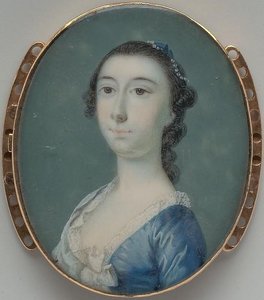
Jeremiah Theus portréja

Jeremiah Theus festményei: A 28 leghíresebb alkotás, egy galéria szemével

Frissítve: november 2026 · rangsorolva népszerűségi pontszámunk alapján (minden mű keresései, látogatásai és megrendelései alapján) · 29 mű Jeremiah Theus alkotása a katalógusunkban

Röviden

A galéria szerint Jeremiah Theus leghíresebb festménye a Captain William Richardson (1743-1786) (1757), amelynek eredeti példája a Yale University Art Gallery múzeumában található, New Haven városában. William Wragg (1750) és Portrait of Amarinthia Elliott (1748) kiegészítik azt a triót, amelyet minden szem felismer. A katalógusunkban szereplő 29 művész Jeremiah Theus alkotásából a galéria az alábbi 28 leghíresebbet mutatja be, amelyek mind egyedi originális művek, a készítés évszámával, a múzeum megnevezésével és a különlegességük leírásával.

1716 – 1774, Chur Rococo A legtöbb mű: Metropolitan Művészeti Múzeum

A galéria top 10 Jeremiah Theus festménye

1
Captain William Richardson (1743-1786) (1757) (1889) -ja Jeremiah Theus

Captain William Richardson (1743-1786)

1757 · Oil On Canvas · Yale University Art Gallery, New Haven

A formal 18th-century portrait of a young man, presented within an oval vignette against a dark, monochromatic background. Captain William Richardson is depicted from the waist up, positioned at a slight angle while looking toward the viewer. The composition relies on a restrained color palette, dominated by the creamy white of his waistcoat and jacket, which contrasts sharply against a deep blue trim. This trim features intricate silver or gold…

2
William Wragg (1750) (1889) -ja Jeremiah Theus

William Wragg

1750 · Watercolor · Detroit Institute of Arts, Detroit

In this intimate portrait of William Wragg, the sitter meets our gaze from a time long passed. Painted around 1750, the work captures a man of status through a refined, oval-shaped bust-length composition. He sits slightly off-center, his body turned toward the right while his eyes remain fixed forward, creating a sense of quiet presence. The subject wears a cool lavender-grey frock coat that contrasts against the warm, shimmering gold…

3
Portrait of Amarinthia Elliott (1748) (1889) -ja Jeremiah Theus

Portrait of Amarinthia Elliott

1748 · Painting · Detroit Institute of Arts, Detroit

Portrait of Amarinthia Elliott, painted by Jeremiah Theus in 1748, captures a young woman in a formal, medium close-up composition. The subject is positioned slightly off-center, holding a small sprig of blue flowers against a muted, atmospheric background. This work originates from the mid-18th century, a period when Theus was establishing his presence within the colonial social hierarchy.

4
Mrs. Thomas Lynch (Elizabeh Allston Lynch) (1755) (1889) -ja Jeremiah Theus

Mrs. Thomas Lynch (Elizabeh Allston Lynch)

1755 · Oil On Canvas

In this oil on canvas portrait, we encounter Mrs. Thomas Lynch (Elizabeth Allston Lynch), a figure captured by the Swiss-American painter Jeremiah Theus. Created in 1755, the work offers a direct look at a woman of the colonial era. Theus, who established himself in Charleston, South Carolina, brought a refined sensibility to his depictions of the local elite. This specific piece reflects the quiet dignity of his portraiture from that…

5
Mrs. Peter Manigault (1757) (1889) -ja Jeremiah Theus

Mrs. Peter Manigault

1757 · Oil On Canvas

In this 1757 portrait, we encounter Elizabeth Wragg Manigault, a woman whose presence defines the social hierarchy of colonial South Carolina. She is captured in a full-length vertical composition, her figure positioned with a poised, slight offset that suggests both grace and a quiet, commanding authority. The light, descending from the upper left, catches the luminous sheen of her white and silver satin gown, creating a play of light and…

6
Portrait of John Faucheraud Grimké (1762) (1889) -ja Jeremiah Theus

Portrait of John Faucheraud Grimké

The mid-18th century in Charleston was a time of burgeoning commercial and social complexity. Theus arrived in the colony from Switzerland, contributing to a growing artistic community that sought to mirror European sophistication. His work provides a visual record of the individuals who shaped the social fabric of South Carolina. This portrait remains a specific window into the life of a man who navigated the legal and political intricacies of…

7
Portrait of Mrs. John Champneys (Anne Livingston, born 1746) (1763) (1889) -ja Jeremiah Theus

Portrait of Mrs. John Champneys (Anne Livingston, born 1746)

1763 · Oil On Canvas · Museum of Fine Arts, Houston, Houston

In this 1763 oil portrait, we encounter Mrs. John Champneys, known to history as Anne Livingston, captured in a moment of quiet contemplation. She is presented in a three-quarter view, her form emerging from a deep, atmospheric brown background that lends a sense of weight and presence to her figure. The lighting, descending softly from the upper left, traces the contours of her face and neck, creating a gentle play…

8
Mrs. Lionel Chalmers (Martha Logan) (1756) (1889) -ja Jeremiah Theus

Mrs. Lionel Chalmers (Martha Logan)

1756 · Oil On Canvas · Művészeti Múzeum, Boston, Boston

Jeremiah Theus presents Mrs. Lionel Chalmers (Martha Logan) within a formal oval composition. The arrangement focuses on the subject's head and upper torso, utilizing a straight-on, medium close-up perspective to establish a sense of intimacy. The single female figure is captured with a calm, dignified expression, projecting an air of poise and social standing. This portrait, executed about 1756, centers the viewer's attention on the sitter's steady gaze and composed…

9
Dr. Lionel Chalmers (1756) (1889) -ja Jeremiah Theus

Dr. Lionel Chalmers

1756 · Oil On Canvas · Művészeti Múzeum, Boston, Boston

The gaze of Dr. Lionel Chalmers meets the viewer from across the centuries, preserved within this 1756 oil portrait. Jeremiah Theus, a Swiss-born American painter, captures the man in a moment of quiet, professional dignity. The subject sits with a composed presence, his features rendered with a clarity that suggests a life of intellect and social standing. Every line of his expression seems to hold a silent story of the…

10
Mrs. Samuel Carne (1740-1805) (1765) (1889) -ja Jeremiah Theus

Mrs. Samuel Carne (1740-1805)

1765 · Oil On Canvas · New York Historical Society, New York

The sitter gazes out from an oval frame, her presence steady and quiet against a dark, muted background. She is a woman of the mid-eighteenth century, captured in a moment of formal repose. Her attire speaks of a specific social standing, defined by the delicate translucency of a lace collar that rests against her neck. A dark choker encircles her throat, drawing the eye upward toward the soft features of…

Jeremiah Theus festményei, 11. helyezéstől 28. helyezésig

A témák, amelyek Jeremiah Theus figyelmét meghúzták

A négy leggyakorobban előforduló téma ebben az eredeti művekben, mindegyik a legkiválóbb példájával.

A műemlékek, amelyek Jeremiah Theus eredeti műveit őrzik

A 8 olyan múzeum, amely a legtöbb ezen az oldalon szereplő festményet őrzi.

Múzeum Város Jeremiah Theus művei Ebből a listából származó festmények
Metropolitan Művészeti Múzeum, New YorkMetropolitan Művészeti Múzeum New York 4 Mrs. Jacob Motte (Rebecca Brewton), Mrs. John Dart, Gabriel Manigault
National Gallery of Art, WashingtonNational Gallery of Art Washington 3 James Cuthbert (?), Mr. Motte, Mrs. Cuthbert
Gibbes Museum of Art, CharlestonGibbes Museum of Art Charleston 3 Benjamin Smith, Ezredes Barnabé Elliott Jr., Mrs. Barnard Elliott, Jr. (Mary Elizabeth Bellinger Elliott)
Detroit Institute of Arts, DetroitDetroit Institute of Arts Detroit 2 William Wragg, Portrait of Amarinthia Elliott
Művészeti Múzeum, Boston, BostonMűvészeti Múzeum, Boston Boston 2 Mrs. Lionel Chalmers (Martha Logan), Dr. Lionel Chalmers
New York Historical Society, New YorkNew York Historical Society New York 2 Mrs. Samuel Carne (1740-1805), Samuel Carne, MD (1725-1780)
Yale University Art Gallery, New HavenYale University Art Gallery New Haven 1 Captain William Richardson (1743-1786)
John és Mable Ringling Művészeti Múzeum, SarasotaJohn és Mable Ringling Művészeti Múzeum Sarasota 1 Portrait of John Faucheraud Grimké

Jeremiah Theus, egy aláírott festmény évtizedenként

Művek évtizedenként

Váassz ki egy évtizedet, hogy megnézhesd az azt meghatározó eredetiműveket.

Jeremiah Theus festményei: a galéria válaszai

Melyik Jeremiah Theus festmény a leghíresebb?Fedje fel a választ

Captain William Richardson (1743-1786) (1757), Yale University Art Gallery, New Haven. Ezután William Wragg (1750) és Portrait of Amarinthia Elliott (1748) következik.

Hány éves volt Jeremiah Theus, amikor elkészítette a(t): Captain William Richardson (1743-1786)?Fedje fel a választ

41 éves: Captain William Richardson (1743-1786) 1757-ből származik, Jeremiah Theus pedig 1716-ben született.

Melyek Jeremiah Theus top 10 festménye?Fedje fel a választ

Captain William Richardson (1743-1786), William Wragg, Portrait of Amarinthia Elliott, Mrs. Thomas Lynch (Elizabeh Allston Lynch), Mrs. Peter Manigault, Portrait of John Faucheraud Grimké, Portrait of Mrs. John Champneys (Anne Livingston, born 1746), Mrs. Lionel Chalmers (Martha Logan), Dr. Lionel Chalmers és Mrs. Samuel Carne (1740-1805). A fenti rangsor a művek évszamarát és a múzeumát jelzi.

Hány műve született Jeremiah Theus nevére?Fedje fel a választ

Katalógusunkban 29 mű található Jeremiah Theus alkotótól, 1748 és 1772 év közötti időszakból.

Hol találhatóak Jeremiah Theus leghíresebb eredeti művei?Fedje fel a választ

Leginkább Metropolitan Művészeti Múzeum (New York), National Gallery of Art (Washington) és Gibbes Museum of Art (Charleston) található. A fenti múzeumi táblázatban mindegyik felsorolásra került.

Mikor festette Jeremiah Theus le leghíresebb műveit?Fedje fel a választ

1760s alatt: a jelen laphonon található 28 műből 13 készült ebben az időszakban, köztük Portrait of John Faucheraud Grimké.

Melyek Jeremiah Theus legkorábbi és legutóbbi híres művei?Fedje fel a választ

Ezen az oldalon a leghitelesebb Portrait of Amarinthia Elliott (1748), a legutóbbi pedig Mrs. John Dart (1772).

Mely témakörökkel foglaltaszkodott a legtöbbször Jeremiah Theus?Fedje fel a választ

Woman (8), Man (7) és 18th century (4), a jelen oldalon található 28 műművészeti alkotás között.

Melyik technikával foglalt leginkább Jeremiah Theus?Fedje fel a választ

Oil On Canvas, a jelen oldalon található 28 műből 16 darab esetén.

Mely művészeti irányhoz tartozik Jeremiah Theus?Fedje fel a választ

Rococo, ezen az oldalon található eredetiek alapján.

Mely Jeremiah Theus eredeti műveit őrzi a Metropolitan Művészeti Múzeum?Fedje fel a választ

Mrs. Jacob Motte (Rebecca Brewton), Mrs. John Dart és Gabriel Manigault: a Metropolitan Művészeti Múzeum, New York 4 művet őrzi ezen az oldalon.

Jeremiah Theus: a művész

Jeremiah Theus: A Charleston Pioneer

Jeremiah Theus (1716 – May 17, 1774) stands as a singular figure in the artistic landscape of colonial South Carolina—a Swiss-born painter who established himself as Charleston’s dominant portraitist during his lifetime. His legacy extends far beyond mere aesthetic achievement; he embodies the spirit of innovation and adaptation that characterized early American art, skillfully blending European Rococo traditions with the burgeoning sensibilities of the New World. ### Early Life and Artistic Training Born in Chur, Graubünden, Switzerland, Jeremiah Theüs was the eldest child of Simeon Walser Theüs and Anna Maria Müller. Details regarding his formal artistic training remain elusive—likely reflecting the limitations imposed by educational opportunities during that era—however, it’s plausible he honed his skills in Basel before immigrating to Charleston in 1735 alongside his family. This migration was driven by religious fervor; Simeon Theüs received a substantial land grant from the General Assembly of Carolina, fostering an environment conducive to European Protestant settlement. He established a foothold on Edisto Island, cultivating a prosperous rice plantation and becoming one of Charleston’s wealthiest citizens. ### Establishing His Studio and Artistic Practice in Charleston By 1740, Theus had firmly rooted himself in Charleston's vibrant cultural milieu. Recognizing the dearth of accomplished portraitists within the city, he boldly declared his intention to offer his services—a proclamation appearing prominently in *The South Carolina Gazette*. This entrepreneurial spirit wasn’t merely driven by economic necessity; it stemmed from a genuine desire to engage with and elevate Charleston society through visual representation. He quickly gained renown for his meticulous attention to detail and his ability to capture the essence of his subjects, establishing a studio at the northeast corner of Broad Street and Meeting Streets—a location that would become synonymous with artistic excellence. ### Style and Technique: Adapting European Influences Theus’s artistic style is characterized by understated elegance and a masterful command of technique. Like many artists of his time, he drew inspiration from mezzotint prints produced in England—particularly those depicting aristocratic figures—demonstrating an awareness of broader artistic currents circulating across the Atlantic. His portraits eschewed ostentation, favoring compositions that prioritized clarity and balance. He meticulously rendered fabrics, jewelry, and hairstyles, reflecting the prevailing fashions of London society. Notably, he frequently employed poses borrowed from English mezzotints, mirroring stylistic conventions prevalent in Europe. Theus’s penchant for capturing subtle nuances—the delicate folds of a gown, the glint of candlelight on polished surfaces—underscores his dedication to realism while simultaneously honoring artistic tradition. ### Notable Commissions and Artistic Achievements Throughout his career, Theus undertook numerous commissions, cementing his reputation as Charleston's premier portraitist. Among his most significant projects was the decoration of St. Michael’s Episcopal Church steeple in 1756—a task for which he received a considerable sum from the church commissioners. He also contributed substantially to the fundraising efforts for a new edifice, securing a pew within the cathedral. His artistic prowess extended beyond ecclesiastical patronage; he painted the weather vane for Charleston and produced striking depictions of prominent citizens—including Colonel Barnard Elliott Jr., whose portrait remains among his most celebrated works. The Elliott family commissioned him to portray their likenesses in exquisite detail, reflecting the social prestige associated with Charleston’s elite. Furthermore, Theus collaborated with Henry Benbridge, establishing a competitive artistic rivalry that propelled both artists to prominence within the city. His enduring legacy resides not only in the beauty of his paintings but also in his role as a catalyst for artistic innovation and cultural exchange—a testament to his unwavering commitment to excellence and his profound understanding of the transformative power of art. ### Legacy and Historical Significance Jeremiah Theus died peacefully in Charleston in 1774, leaving behind a prolific oeuvre that continues to captivate scholars and collectors alike. His will revealed considerable wealth—including substantial cash holdings and expansive land estates—reflecting the success of his artistic enterprise and securing a comfortable future for his family. Subsequent research has illuminated the breadth of Theus’s influence on Charleston society, demonstrating his role as a patron of the arts and a champion of Enlightenment ideals. His portraits serve as invaluable documents of colonial life—capturing not only physical likenesses but also social status, familial bonds, and cultural aspirations. Today, Theus's paintings reside in museums across North America and Europe—a testament to their enduring artistic merit and their significance within the broader history of American art.