Jacopo Bellini portréja

A 60 legnevesebbebb Jacopo Bellini festmény, mindegyik egyedistens

Frissítve: október 2026 · rangsorolva népszerűségi pontszámunk alapján (minden mű keresései, látogatásai és megrendelései alapján) · 62 mű Jacopo Bellini alkotása a katalógusunkban

Röviden

The Aposle Peter (1430) az a Jacopo Bellini festmény, amely a legtöbb tekintetet felvonja; az eredeti mű a Berlin Állami Múzeumai gyűjteményében található, Berlin. Ezután a tekintet Madonna and Child (1450) és Saint Anthony Abbot and Saint Bernardino of Siena (1459) elemre irányul. A Jacopo Bellini 62 műve közül a katalógusunkban megtalálható 60 legnépesebb alkotás, melyeket az év, a múzeum és az örökévalóságának okai kísérnek.

1400 – 1470, Velence Korai reneszánsz A legtöbb mű: Louvre Múzeum

A galéria szemével: Jacopo Bellini legjobb 10 festménye

1
The Aposle Peter (1430) (1889) -ja Jacopo Bellini

The Aposle Peter

1430 · Berlin Állami Múzeumai, Berlin

To stand before Jacopo Bellini's depiction of The Apostle Peter is to encounter not merely a portrait, but a profound moment suspended in the amber glow of the early Renaissance. This oil on wood painting, dating from 1430, immediately draws the viewer into its narrative depth. Bellini masterfully captures the gravitas and intellectual weight associated with the figure of Peter. The composition itself is a lesson in visual storytelling; every…

2
Madonna and Child (1450) (1889) -ja Jacopo Bellini

Madonna and Child

1450 · Acrylic On Canvas · Metropolitan Művészeti Múzeum, New York

The year is roughly 1450, and within the bustling heart of Venice, a young artist named Jacopo Bellini was quietly revolutionizing the very fabric of painting. His “Madonna and Child,” now residing in the Uffizi Gallery, isn't merely a depiction of the Virgin Mary cradling her infant son; it’s a window into the burgeoning Renaissance spirit, a testament to Bellini’s innovative approach to perspective, color, and emotional resonance. This work…

3
Saint Anthony Abbot and Saint Bernardino of Siena (1459) (1889) -ja Jacopo Bellini

Saint Anthony Abbot and Saint Bernardino of Siena

1459 · Oil On Canvas · National Gallery of Art, Washington

Jacopo Bellini's “Saint Anthony Abbot and Saint Bernardino of Siena,” painted in 1459, isn’t merely a depiction of two revered saints; it’s a profound meditation on faith, the natural world, and the burgeoning spirit of Renaissance Venice. This oil-on-poplar panel, now housed within the National Gallery of Art in Washington D.C., offers a rare glimpse into a pivotal moment in Venetian art – a transition from the rigid formality of…

4
St John the Evangelist (1430) (1889) -ja Jacopo Bellini

St John the Evangelist

1430 · Oil On Panel · Berlin Állami Múzeumai, Berlin

To stand before this depiction of Saint John the Evangelist is to step into a hushed moment of profound intellectual reckoning. The air seems thick with the scent of aged vellum and deep thought. This painting captures not merely a portrait, but an entire state of being—the quiet intensity of divine revelation meeting human contemplation. The figure dominates the vertical space, his posture one of serene yet palpable engagement with…

5
Epigrafi e Statue (1450) (1889) -ja Jacopo Bellini

Epigrafi e Statue

1450 · Charcoal · Louvre Múzeum, Párizs

To gaze upon this preparatory drawing by Jacopo Bellini is to step directly into the vibrant, intellectual crucible of the early Italian Renaissance. It is not merely an image; it is a blueprint of genius—a tangible record of an artist wrestling with the monumental weight and exquisite potential of classical antiquity. Rendered in the delicate interplay of charcoal and ink upon aged paper, the composition presents three distinct sculptural visions:…

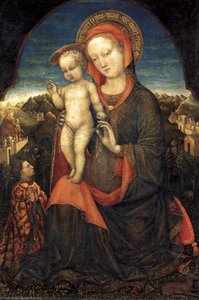
6
Saint Peter (1432) (1889) -ja Jacopo Bellini

Saint Peter

1432 · Tempera On Panel · Gemäldegalerie, Berlin

A vertical, arched composition defines this Renaissance-era religious panel, presenting a standing figure of Saint Peter with a formal, iconographic presence. The subject is an elderly man, characterized by a balding head and a full, greyish-white beard, his gaze directed slightly upward and toward the viewer's left. He is draped in voluminous, layered robes: a red undergarment visible at the base, a heavy golden-yellow mantle across the torso, and a…

7
Annunciation (1444) (1889) -ja Jacopo Bellini

Annunciation

1444 · Tempera On Panel

The scene unfolds within a highly ornate polyptych, a structure defined by two main arched panels separated by a central gilded pillar. On the left, the Archangel Gabriel kneels in profile, his presence marked by an intricately patterned gold brocade robe accented with blue. His large, feathered wings frame a moment of profound stillness. Opposite him, the Virgin Mary kneels before a decorated prie-dieu, her posture one of quiet devotion.…

8
St. Jerome with St. Francis and St. Anthony Abbot (1450) (1889) -ja Jacopo Bellini

St. Jerome with St. Francis and St. Anthony Abbot

1450 · Tempera On Panel · Frances Lehman Loeb Art Center

This Renaissance triptych, dated to 1450, presents three holy figures arranged within a gilded Gothic architectural frame. The composition follows a symmetrical structure, featuring a larger central panel flanked by two narrower side panels. In the center, St. Jerome is depicted wearing a crimson robe, holding a book and a small model of a church. To the left, St. Francis is shown in a muted grey habit, and to the…

9
Saint Bernardino of Siena (1450) (1889) -ja Jacopo Bellini

Saint Bernardino of Siena

1450 · Tempera On Panel

A solemn portrait of Saint Bernardino of Siena emerges from a dark, patterned background, rendered with the precision of the Early Renaissance. The composition focuses on a three-quarter view of the elderly saint, whose weathered skin and deep-set eyes suggest a life of intense spiritual rigor. Soft, directional light from the upper left carves out the bony structure of his face, casting gentle shadows into the folds of his monastic…

10
Madonna and Child (1440) (1889) -ja Jacopo Bellini

Madonna and Child

1440 · Tempera On Panel · Accademia Carrara, Bergamo

The painting titled Madonna and Child is a work by the Venetian artist Jacopo Bellini. Born in Venice, Italy, Bellini helped shape the visual language of the Renaissance through a precise, observational hand. This specific panel captures a quiet, sacred moment between mother and son.

Jacopo Bellini híres festményei, 11 és 60 között

11Adoration of the Magi (1460) (1889) -ja Jacopo BelliniAdoration of the Magi1460 · Pinacoteca Nazionale 12Virgin and Child (1465) (1889) -ja Jacopo BelliniVirgin and Child1465 13Mourning over Christ (1470) (1889) -ja Jacopo BelliniMourning over Christ1470 · Gemäldegalerie 14Profile Portrait of a Boy (1470) (1889) -ja Jacopo BelliniProfile Portrait of a Boy1470 · National Gallery of Art 15Születés (1440) (1889) -ja Jacopo BelliniSzületés1440 · Louvre Múzeum 16Dormition of the Virgin (1450) (1889) -ja Jacopo BelliniDormition of the Virgin1450 · Louvre Múzeum 17Presentation of the Virgin at the Temple (1889) -ja Jacopo BelliniPresentation of the Virgin at the TempleLouvre Múzeum 18St. John the Baptist Preaching (1889) -ja Jacopo BelliniSt. John the Baptist PreachingLouvre Múzeum 19Flagellation (1450) (1889) -ja Jacopo BelliniFlagellation1450 · Louvre Múzeum 20Johannes der Evangelist, Der Apostel Petrus (1430) (1889) -ja Jacopo BelliniJohannes der Evangelist, Der Apostel Petrus1430 21Der heilige Hieronymus (1430) (1889) -ja Jacopo BelliniDer heilige Hieronymus1430 · Gemäldegalerie 22madonna and child, uffizi (1450) (1889) -ja Jacopo Bellinimadonna and child, uffizi1450 23Annunciation (1444) (1889) -ja Jacopo BelliniAnnunciation1444 · Sant'Alessandro 24Lamentation (from the sketchook, folios 57b-58a) (1440) (1889) -ja Jacopo BelliniLamentation (from the sketchook, folios 57b-58a)1440 · Louvre Múzeum 25Madonna and Child (1450) (1889) -ja Jacopo BelliniMadonna and Child1450 · Pinacoteca di Brera 26Saint Anthony Abbot and Saint Bernardino of Siena (1459) (1889) -ja Jacopo BelliniSaint Anthony Abbot and Saint Bernardino of Siena1459 · National Gallery of Art 27Madonna with Child (1465) (1889) -ja Jacopo BelliniMadonna with Child1465 · Los Angeles County Museum of Art 28Triptych of the Virgin (1464) (1889) -ja Jacopo BelliniTriptych of the Virgin1464 · Gallerie dell'Accademia di Venezia 29Saint Anthony Abbot and Saint Bernardino da Siena (1460) (1889) -ja Jacopo BelliniSaint Anthony Abbot and Saint Bernardino da Siena1460 30Album del Louvre, epigrafi és monete (1450) (1889) -ja Jacopo BelliniAlbum del Louvre, epigrafi és monete1450 · Louvre Múzeum 31Le triomphe de Bacchus (1889) -ja Jacopo BelliniLe triomphe de BacchusLouvre Múzeum 32Madonna and Child Adored by Lionello d'Este (1450) (1889) -ja Jacopo BelliniMadonna and Child Adored by Lionello d'Este1450 · Louvre Múzeum 33Ross and rider (1889) -ja Jacopo BelliniRoss and rider 34Sieben Heilige (1889) -ja Jacopo BelliniSieben Heilige 35Profile of a man (1889) -ja Jacopo BelliniProfile of a man 36Crucifix (1889) -ja Jacopo BelliniCrucifix 37Madonna mit dem Kind (1889) -ja Jacopo BelliniMadonna mit dem KindBonnefanten Museum 38Christus in der Vorhölle (1889) -ja Jacopo BelliniChristus in der Vorhölle 39Heiliger Hieronymus in der Wüste (1889) -ja Jacopo BelliniHeiliger Hieronymus in der Wüste 40The Three Dead and Three Loud (1889) -ja Jacopo BelliniThe Three Dead and Three Loud 41The scourging at the torchlight (1889) -ja Jacopo BelliniThe scourging at the torchlight 42Christ in the grave (1889) -ja Jacopo BelliniChrist in the grave 43The Twelve Apostles in a Barrel Vaulted Passage (1440) (1889) -ja Jacopo BelliniThe Twelve Apostles in a Barrel Vaulted Passage1440 · British Museum 44Sketch of young deer (1889) -ja Jacopo BelliniSketch of young deer 45Sketch of deer doe (1889) -ja Jacopo BelliniSketch of deer doe 46Tomb of a prince (1889) -ja Jacopo BelliniTomb of a prince 47View of a fortification of Jerusalem (1889) -ja Jacopo BelliniView of a fortification of Jerusalem 48Christ's Descent into Limbo (1889) -ja Jacopo BelliniChrist's Descent into Limbo 49saint anthony abbot and saint bernardino of sie(1 (1889) -ja Jacopo Bellinisaint anthony abbot and saint bernardino of sie(1 50The Crucifixion (1889) -ja Jacopo BelliniThe CrucifixionMuseo Correr 51Sketch of figures and scenes from the antique age (1889) -ja Jacopo BelliniSketch of figures and scenes from the antique age 52Virgin with Child (1889) -ja Jacopo BelliniVirgin with ChildGallerie dell'Accademia di Venezia 53St Michael Defeating Satan (1889) -ja Jacopo BelliniSt Michael Defeating SatanBritish Museum 54Madonna and Child (1450) (1889) -ja Jacopo BelliniMadonna and Child1450 · Galleria degli Uffizi 55Madonna Tadini (1450) (1889) -ja Jacopo BelliniMadonna Tadini1450 56Triptych of St Lawrence (1464) (1889) -ja Jacopo BelliniTriptych of St Lawrence1464 · Gallerie dell'Accademia di Venezia 57Triptych of St Sebastian (1464) (1889) -ja Jacopo BelliniTriptych of St Sebastian1464 · Gallerie dell'Accademia di Venezia 58Triptych of the Nativity (1464) (1889) -ja Jacopo BelliniTriptych of the Nativity1464 · Gallerie dell'Accademia di Venezia 59Madonna and Child (1420) (1889) -ja Jacopo BelliniMadonna and Child1420 · Castelvecchio Museum 60Saint Jerome in the Desert (1460) (1889) -ja Jacopo BelliniSaint Jerome in the Desert1460 · Castelvecchio Museum

Jacopo Bellini híres festményei, korszakonként

A témák, amelyek Jacopo Bellini figyelmét meghúzták

A négy leggyakorobban előforduló téma ebben az eredeti művekben, mindegyik a legkiválóbb példájával.

A műemlékek, amelyek Jacopo Bellini eredeti műveit őrzik

A 8 olyan múzeum, amely a legtöbb ezen az oldalon szereplő festményet őrzi.

Múzeum Város Jacopo Bellini művei Ebből a listából származó festmények
Louvre Múzeum, PárizsLouvre Múzeum Párizs 10 Epigrafi e Statue, Születés, Dormition of the Virgin
Gallerie dell'Accademia di Venezia, VelenceGallerie dell'Accademia di Venezia Velence 5 Triptych of the Virgin, Virgin with Child, Triptych of St Lawrence
National Gallery of Art, WashingtonNational Gallery of Art Washington 3 Saint Anthony Abbot and Saint Bernardino of Siena, Profile Portrait of a Boy, Saint Anthony Abbot and Saint Bernardino of Siena
Gemäldegalerie, BerlinGemäldegalerie Berlin 3 Saint Peter, Mourning over Christ, Der heilige Hieronymus
Berlin Állami Múzeumai, BerlinBerlin Állami Múzeumai Berlin 2 The Aposle Peter, St John the Evangelist
British Museum, LondonBritish Museum London 2 The Twelve Apostles in a Barrel Vaulted Passage, St Michael Defeating Satan
Castelvecchio Museum, VeronaCastelvecchio Museum Verona 2 Madonna and Child, Saint Jerome in the Desert
Metropolitan Művészeti Múzeum, New YorkMetropolitan Művészeti Múzeum New York 1 Madonna and Child

Jacopo Bellini évtizedekig: egy egyedi eredeti mű minden évtizedben

Művek évtizedenként

Váassz ki egy évtizedet, hogy megnézhesd az azt meghatározó eredetiműveket.

Jacopo Bellini festményei: kérdések a galériának

Mi a leghíresebb műve Jacopo Bellininek?Fedje fel a választ

The Aposle Peter (1430), Berlin Állami Múzeumai, Berlin. Ezután Madonna and Child (1450) és Saint Anthony Abbot and Saint Bernardino of Siena (1459) következik.

Milyen életkorában alkotta meg Jacopo Bellini a(z) The Aposle Peter műszt?Fedje fel a választ

30 éves: The Aposle Peter 1430-ből származik, Jacopo Bellini pedig 1400-ben született.

Melyik tíz festménye Jacopo Bellini a leghíresebb?Fedje fel a választ

The Aposle Peter, Madonna and Child, Saint Anthony Abbot and Saint Bernardino of Siena, St John the Evangelist, Epigrafi e Statue, Saint Peter, Annunciation, St. Jerome with St. Francis and St. Anthony Abbot, Saint Bernardino of Siena és Madonna and Child. A fenti rangsor a művek évszamarát és a múzeumát jelzi.

Hány mű alkotása ismert Jacopo Bellini nevében?Fedje fel a választ

Katalógusunkban 62 mű található Jacopo Bellini alkotótól, 1420 és 1470 év közötti időszakból.

Hol tekinthetők meg a leghíresebb Jacopo Bellini eredetijeit?Fedje fel a választ

Leginkább Louvre Múzeum (Párizs), Gallerie dell'Accademia di Venezia (Velence) és National Gallery of Art (Washington) található. A fenti múzeumi táblázatban mindegyik felsorolásra került.

Melyik időszakban alkotta Jacopo Bellini a leghíresebb festményeit?Fedje fel a választ

1450s alatt: a jelen laphonon található 60 műből 14 készült ebben az időszakban, köztük Madonna and Child.

Melyik híres Jacopo Bellini festmény a legkorábbi, és melyik a legutóbb készült?Fedje fel a választ

Ezen az oldalon a leghitelesebb Madonna and Child (1420), a legutóbbi pedig Mourning over Christ (1470).

Milyen témakörket kedvelt Jacopo Bellini?Fedje fel a választ

Renaissance (9), Virgin mary (8) és Child (7), a jelen oldalon található 60 műművészeti alkotás között.

Milyen anyagokkal festett leggyakrabban Jacopo Bellini?Fedje fel a választ

Tempera On Panel, a jelen oldalon található 60 műből 10 darab esetén.

Mely művészeti irányba tartozik Jacopo Bellini műve?Fedje fel a választ

Korai reneszánsz, ezen az oldalon található eredetiek alapján.

Milyen Jacopo Bellini eredeti műveket láthatok a Louvre Múzeum kiállításaiban?Fedje fel a választ

Epigrafi e Statue, Születés és Dormition of the Virgin: a Louvre Múzeum, Párizs 10 művet őrzi ezen az oldalon.

Jacopo Bellini: a művész portréja

A velencei reneszánsz perspektíva úttörője

Jacopo Bellini alapvető alakként áll a Velencében és Észak-Itáliában virágzó, fejlődő reneszánsz festészeti stílus közéáll. Sokkal több volt, mint egy egyszerű festő; korácsa egyik alapozó innovátora volt, aki a természet aprólékos megfigyelésével és a lineáris perspektíva mesteri alkalmazásával formálta át az esztétikai érzékeket – egy olyan technika, amely korábban nagyrészt hiányzott a velencei művészetből. Bár Bellini eredeti vászonmalai közül ma már nagyon kevés maradt fenn, hogy teljes pompájukban megtekintsük, mély öröksége elsősorban különleges rajztárcáiban él tovább – például azokban, amelyeket a British Museum és a Louvre őriz. Ezek a rajzok mély vonzalmat tárnak fel a tájkép látmányok és a bonyolult építészeti tervezetek iránt, felbecsülhetetlen betekintést nyúzva egy olyan művészeti folyamatba, amely előrejelzte a következő évszázadok stilisztikai forradalmait.

Jacopo 1396 körül született Velencében, formálódó évei a késő gótikus korszak gazdag, dekoratív hagyományai között teltek. Korai képzése arra utal, hogy a híres Gentile da Fabriano tanítványa volt – egy olyan művész, akinek műhelye a kor egyik legambiciózusabb és leg díszesebb freskóit hozta létre. Ez a tekintélyes kapcsolat kétségtelenül lifelong értékelést suttogott Bellini fülébe az aprólékos részletek, a színharmónia és a dekoratív összetettség iránt. Fiatal korában, 1411 és 1412 között Folignóban volt aktív, ahol a Palazzo Trinci monumentális freskóián dolgozott, éppen azok mellett a mesterek mellett, akik maguk meghatározták az nemzetközi gótikus stílust.

Utazás a Reneszánsz szívében

Egy jelentős fordulópont akkor érkezett, amikor Bellini körülbelül 1423 körül Firenzébe utazott. Ez az út az alkotási kísérletezés intenzív időszakának epicentrumába sodorta őt, olyan fényemberek mellett, mint Brunelleschi, Donatello és Masaccio. Firenzében találkozott a fejlődő lineáris perspektíva tudományával, egy olyan felfedezéssel, amely alapjaiban változtatta meg a térhez és a mélységhez való viszonyát. A velencei gyökereinek lírai, dekoratív eleganciáját ötvözve a firenzei innovátorok szerkezeti szigorával és térbeli tisztaságával, Bellini egy egyedülálló vizuális nyelvet kezdett kovácsolni. Ez az összethesis lehetővé tette számára, hogy túllépjen a középkor sík, szimbolikus síkjain, és egy magával ragadóbb, ablakszerű ábrázolást nyújtson a világról.

Karrierje fejlődésével Bellini központi alakká vált egy olyan családi dinasztia megalapításában, amely generációkon át uralta a velencei művészetet. Hatása nem csupán személyes volt, hanem pedagógiai is, hiszen innovációit fiáinak, Gentilenek és Giovanninak adta tovább. Általa a fény, a táj és a perspektíva kísérletezésének magjai virágoztak ki a Bellini névvel egyesüldő magasreneszánsz pompázatban. Művészete hidat képezett a múlt díszes hagyományai és a jövő humanisztikus realizmusai között, megkölthetetlenné téve őt az olasz művészet fejlődésének egyik legfontosabb láncszemévé.

Örökség és történelmi jelentőség

Jacopo Bellini történelmi jelentősége a változás katalizátorként töltött szerepében rejlik. Bár alkotásainak jelentős része az ecet és toll intim mediumában maradt meg, ezek a vázlatok olyan tervként szolgálnak, mint a velencei reneszánsz alaprajzai. Képes volt komplex, több rétegből álló tájképeket és matematikai pontossággal összehangolt építészeti alkotásokat elképzelni, ami beenétéként szolgált az utódainak, hogy felfedezzék a velencei laguna atmoszférikus szépségét. Bellini tanulmányozása olyan pillanat tanúja, amikor a művész szeme valóban megtanulta uralni a mélység illúzióját, örökre megváltoztatva az emberiség azon felfogását, ahogyan a festett világot látja.