Honoré Daumier portréja

A 100 legnevezesebb Honoré Daumier festmény, egy galériaválaszték

Frissítve: november 2026 · rangsorolva népszerűségi pontszámunk alapján (minden mű keresései, látogatásai és megrendelései alapján) · 355 mű Honoré Daumier alkotása a katalógusunkban

Röviden

Honoré Daumier hagyatékából a leghíresebb alkotás Nous voulons Barabbas (Ecce Homo) (1852), amely a Essen városi Museum Folkwang gyűjteményében található. Röviddel ezután követik őket The Third-class Carriage (1860) és Unknown, maybe Hippolyte Lucien-Joseph Lucas (1807-1878), a Journalist, maybe P.Mendez de Vigo (1790-1860) a Spanish General, but Most Probably the Count Pelet de la Lozere (1785-1871), a Politician (1833). Katalógusunkban 355 mű található Honoré Daumier alkotótól; a galéria megőrizte a világ által leginkább csodált 100 darabot, melyeket a dátummal, a múzeummal és a történetükkel együtt mutatunk be.

1808 – 1879, Marseille Realism A legtöbb mű: Musée d'Orsay

Honoré Daumier legjobb 10 festménye: a galéria válogatása

1
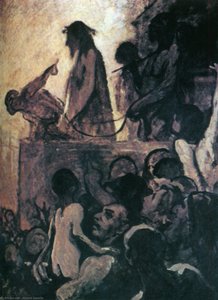
Nous voulons Barabbas (Ecce Homo) (1852) (1889) -ja Honoré Daumier

Nous voulons Barabbas (Ecce Homo)

1852 · Olajfestmény vászonon · Museum Folkwang, Essen

Az emberi szenvedés és a társadalmi igazságosság erőteljes ábrázolása Ez a lenyűgöző műalkotás egy megható bibliai jelenetet örökít meg, amely mélyen rezonál a kegyelem, az igazságtalanság és a társadalmi kritikák témaköreivel. A nyers, kifejező stílusban megformált jelenet arra hívja a nézőt, hogy merüljön el a kollektív érzelmek és morális önreflexió pillanatában. Az alakok, melyeket azonnali, gesztikus pontossággal ábrázoltak, sürgetésérzetet és emberi sebezhetőséget ébresztenek, ezzel is mély üzenetet közvetítve a társadalmi…

2
The Third-class Carriage (1860) (1889) -ja Honoré Daumier

The Third-class Carriage

1860 · Oil On Canvas · Metropolitan Művészeti Múzeum, New York

In the crowded, dimly lit confines of a mid-19th-century railway carriage, Honoré Daumier captures more than just a moment in transit; he captures the very essence of human endurance. The Third-class Carriage serves as a profound window into the burgeoning urban reality of France during the Second Empire. As the industrial revolution reshaped the landscape of Europe, Daumier turned his gaze away from the gilded salons of the aristocracy and…

3
Unknown, maybe Hippolyte Lucien-Joseph Lucas (1807-1878), a Journalist, maybe P.Mendez de Vigo (1790-1860) a Spanish General, but Most Probably the Count Pelet de la Lozere (1785-1871), a Politician (1833) (1889) -ja Honoré Daumier

Unknown, maybe Hippolyte Lucien-Joseph Lucas (1807-1878), a Journalist, maybe P.Mendez de Vigo (1790-1860) a Spanish General, but Most Probably the Count Pelet de la Lozere (1785-1871), a Politician

1833 · Clay / Terracotta · Musée d'Orsay, Párizs

This evocative portrait captures more than just the likeness of an elderly gentleman; it arrests a moment in time, freezing the very essence of 19th-century Parisian intellectual life. The subject, whose identity is suggested by the possibilities of a journalist or politician, possesses a gaze that seems to look past the viewer, into some distant, weighty contemplation. Rendered with the unmistakable hand of Honoré Daumier, the piece transcends mere portraiture;…

4
Ratapoil (front view) (1850) (1889) -ja Honoré Daumier

Ratapoil (front view)

1850 · Bronze · Musée d'Orsay, Párizs

Honoré Daumier's "Ratapoil (front view)," created around 1850, is more than just a bronze sculpture; it’s a potent distillation of 19th-century French social commentary and political critique. This arresting figure, rendered with remarkable dynamism and a touch of unsettling realism, offers a captivating window into the turbulent world of post-Revolutionary France – a world grappling with nascent democracy, imperial ambitions, and the pervasive inequalities of its society. The sculpture’s enduring…

5
Intermission at the Comédie Française (1858) (1889) -ja Honoré Daumier

Intermission at the Comédie Française

1858 · Watercolor · Hermitaeus-múzeum, Szentpétervár

Honoré Daumier's “Intermission at the Comédie Française,” painted in 1858, isn’t merely a depiction of an elderly gathering; it’s a meticulously crafted observation of a specific moment frozen in time – and brimming with unspoken commentary. The artwork immediately draws the viewer into a densely packed scene: rows upon rows of men, their faces etched with age and lined with contemplation, are absorbed in reading newspapers or pamphlets within the…

6
Ratapoil (1850) (1889) -ja Honoré Daumier

Ratapoil

1850 · Bronze · Staatliche Kunsthalle Karlsruhe, Karlsruhe

The photograph captures a pivotal moment – a frozen dance of energy and emotion rendered in the enduring medium of bronze. This exquisite reproduction offers an intimate encounter with "Ratapoil," a sculpture by the visionary artist Honoré Daumier, born in Marseille in 1808 and tragically lost in 1879. More than just a depiction of a figure, it’s a window into the social anxieties and artistic fervor that defined mid-19th century…

7
Ratapoil (rear view) (1850) (1889) -ja Honoré Daumier

Ratapoil (rear view)

1850 · Sculpture · Musée d'Orsay, Párizs

In this rear view of the sculpture Ratapoil, we encounter a figure that seems to embody the very essence of 19th-century Parisian character. The work, dating from 1850, presents a silhouette that is both dynamic and deeply human. There is a certain tension in the posture; the figure leans with one hand on a hip, a cane held in the other, suggesting a man caught in a moment of restless…

8
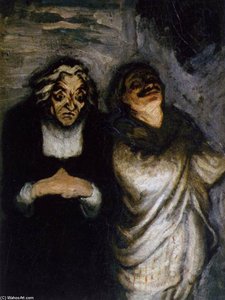
Scene from a Comedy (1858) (1889) -ja Honoré Daumier

Scene from a Comedy

1858 · Oil On Canvas · Musée d'Orsay, Párizs

Honoré Daumier's "Scene from a Comedy," painted in 1858, isn’t merely a depiction of two figures; it’s a meticulously crafted snapshot of Parisian society and the biting social commentary that defined the artist’s career. Housed within the walls of the Musée d’Orsay, this oil on canvas offers a rare glimpse into Daumier's world – a world brimming with observation, critique, and an undeniable sense of humor laced with profound sadness.…

9
Ratapoil (1850) (1889) -ja Honoré Daumier

Ratapoil

1850 · Acrylic On Canvas · Artizon Museum, Tokió

Honoré Daumier's "Ratapoil," created in 1850, isn’t merely a sculpture; it’s a distilled embodiment of the anxieties and frustrations simmering beneath the surface of mid-19th century France. This arresting figure, rendered in cast iron with a deliberate roughness that mirrors its subject matter, captures a moment of profound disillusionment – a silent indictment of societal hypocrisy and the precariousness of human existence. The sculpture’s power lies not just in its…

10
Family on the Barricades in 1848 (1854) (1889) -ja Honoré Daumier

Family on the Barricades in 1848

1854 · Oil · Národní galerie Praha, Prágába

In the heart of Honoré Daumier’s 1854 masterpiece, Family on the Barricades in 1848, we find a moment suspended in the amber of history. This is not merely a painting of a political uprising; it is a profound psychological study of human resilience. As the Second French Revolution tore through the streets of Paris, Daumier captured the very essence of the era's turbulent spirit. The scene presents a family huddled…

A Honoré Daumier válogatás folytatódik: 11 – 100

11A Gyűjtő (1865) (1889) -ja Honoré DaumierA Gyűjtő1865 · Art Institute of Chicago 12The Republic (1848) (1889) -ja Honoré DaumierThe Republic1848 · Musée d'Orsay 13Comedy scene (scene from Molière) (1862) (1889) -ja Honoré DaumierComedy scene (scene from Molière)1862 · Musée d'Orsay 14On a Bridge at Night (1848) (1889) -ja Honoré DaumierOn a Bridge at Night1848 · The Phillips Collection 15Les Gens de Justice: Vous m (1845) (1889) -ja Honoré DaumierLes Gens de Justice: Vous m1845 16Burden (1850) (1889) -ja Honoré DaumierBurden1850 · Hermitaeus-múzeum 17Street Musicians (1855) (1889) -ja Honoré DaumierStreet Musicians1855 · Art Institute of Chicago 18Count Antoine-Maurice-Apollinaire d'Argout (1782-1858), Minister and Peer of France (1832) (1889) -ja Honoré DaumierCount Antoine-Maurice-Apollinaire d'Argout (1782-1858), Minister and Peer of France1832 · Musée d'Orsay 19The Studio (1870) (1889) -ja Honoré DaumierThe Studio1870 · J. Paul Getty Múzeum 20Jean-Marie Fruchard (1788-1872), Deputy (1833) (1889) -ja Honoré DaumierJean-Marie Fruchard (1788-1872), Deputy1833 · Musée d'Orsay 21Load (Washerwoman) (1853) (1889) -ja Honoré DaumierLoad (Washerwoman)1853 · Národní galerie Praha 22Clément-François-Victor-Gabriel Prunelle (1774-1853), Doctor, Major of Lyon and Deputy (1832) (1889) -ja Honoré DaumierClément-François-Victor-Gabriel Prunelle (1774-1853), Doctor, Major of Lyon and Deputy1832 · Musée d'Orsay 23The Intoxication of Silène (1850) (1889) -ja Honoré DaumierThe Intoxication of Silène1850 24Two Lawyers (1860) (1889) -ja Honoré DaumierTwo Lawyers1860 · Art Institute of Chicago 25Outside the Print–Seller's Shop (1860) (1889) -ja Honoré DaumierOutside the Print–Seller's Shop1860 · Dallas Museum of Art 26Exit from the Theater (1863) (1889) -ja Honoré DaumierExit from the Theater1863 · The Nelson-Atkins Museum of Art 27Felix Barthe (1889) -ja Honoré DaumierFelix Barthe 28The Uprising (L (1848) (1889) -ja Honoré DaumierThe Uprising (L1848 · The Phillips Collection 29Le Peintre (The Painter) (1865) (1889) -ja Honoré DaumierLe Peintre (The Painter)1865 · Scottish National Gallery 30The Defender (1865) (1889) -ja Honoré DaumierThe Defender1865 · Musée d'Orsay 31The Good Samaritan (1855) (1889) -ja Honoré DaumierThe Good Samaritan1855 · Burrell Collection 32The Loge (In the Theatre Boxes) (1856) (1889) -ja Honoré DaumierThe Loge (In the Theatre Boxes)1856 · Walters Art Museum 33Susannah and the Elders (1853) (1889) -ja Honoré DaumierSusannah and the Elders1853 · Burrell Collection 34Penelopa's Dream (1842) (1889) -ja Honoré DaumierPenelopa's Dream1842 · Bibliothèque Nationale de France 35Jean-Auguste Chevandier de Valdrome, Parliamentarian (The Fool) (1832) (1889) -ja Honoré DaumierJean-Auguste Chevandier de Valdrome, Parliamentarian (The Fool)1832 · Musée d'Orsay 36The Washerwoman (1863) (1889) -ja Honoré DaumierThe Washerwoman1863 · Musée d'Orsay 37Masks of 1831 (1832) (1889) -ja Honoré DaumierMasks of 18311832 · Minneapolis Institute of Art 38Remembrances of St. Pelagie. (Souvenir de ste Pélagie) (1834) (1889) -ja Honoré DaumierRemembrances of St. Pelagie. (Souvenir de ste Pélagie)1834 39Mr. Joliv (Adolphe Joliv) (1833) (1889) -ja Honoré DaumierMr. Joliv (Adolphe Joliv)1833 · Musée d'art et d'histoire Paul Eluard 40Celebrités du Juste Milieu (1835) (1889) -ja Honoré DaumierCelebrités du Juste Milieu1835 · Zimmerli Art Museum at Rutgers University 41Grand Staircase of the Palace of Justice (1848) (1889) -ja Honoré DaumierGrand Staircase of the Palace of Justice1848 42The Conclusion of a Speech à la Demosthene (1848) (1889) -ja Honoré DaumierThe Conclusion of a Speech à la Demosthene1848 43Neighbourhood gossip (1855) (1889) -ja Honoré DaumierNeighbourhood gossip1855 · The Mesdag Collection 44Une salle d'attente (The Waiting Room) (1851) (1889) -ja Honoré DaumierUne salle d'attente (The Waiting Room)1851 · Buffalo AKG Art Museum 45Second-Class Carriage (1849) (1889) -ja Honoré DaumierSecond-Class Carriage1849 · Rhode Island School of Design Museum of Art 46Mme Pipelet, the Concierge (1849) (1889) -ja Honoré DaumierMme Pipelet, the Concierge1849 · Rhode Island School of Design Museum of Art 47Hunters by the fireside (1850) (1889) -ja Honoré DaumierHunters by the fireside1850 48Head of a Man (1855) (1889) -ja Honoré DaumierHead of a Man1855 · National Museum Cardiff 49The Miller, His Son and the Donkey (1849) (1889) -ja Honoré DaumierThe Miller, His Son and the Donkey1849 · Burrell Collection 50Bathers (1853) (1889) -ja Honoré DaumierBathers1853 51On the Shore (1853) (1889) -ja Honoré DaumierOn the Shore1853 52Return from the Market (1856) (1889) -ja Honoré DaumierReturn from the Market1856 · Museum collection Am Römerholz 53The Confidence or The Kiss of Judas (1859) (1889) -ja Honoré DaumierThe Confidence or The Kiss of Judas1859 · Petit Palais 54Four Heads (1857) (1889) -ja Honoré DaumierFour Heads1857 · Burrell Collection 55Head of an Old Woman (1858) (1889) -ja Honoré DaumierHead of an Old Woman1858 56Painting by Honoré Daumier (1862) (1889) -ja Honoré DaumierPainting by Honoré Daumier1862 57Scapin (1861) (1889) -ja Honoré DaumierScapin1861 · Harvard Art Museums 58Count Auguste-Hilarion de Kératry (1769-1859), Deputy, Peer of France (1832) (1889) -ja Honoré DaumierCount Auguste-Hilarion de Kératry (1769-1859), Deputy, Peer of France1832 · Musée d'Orsay 59The Beautiful Narcissus (1842) (1889) -ja Honoré DaumierThe Beautiful Narcissus1842 · Bibliothèque Nationale de France 60Sancho Panza, Resting Under a Tree (1865) (1889) -ja Honoré DaumierSancho Panza, Resting Under a Tree1865 61The Painter (1867) (1889) -ja Honoré DaumierThe Painter1867 · Musée des Beaux-Arts 62Au Palais de Justice (At the Law Courts) (1865) (1889) -ja Honoré DaumierAu Palais de Justice (At the Law Courts)1865 · Rhode Island School of Design Museum of Art 63The Two Colleagues (Lawyers) (1867) (1889) -ja Honoré DaumierThe Two Colleagues (Lawyers)1867 · Brooklyn Museum 64A Third Class Carriage (1865) (1889) -ja Honoré DaumierA Third Class Carriage1865 · National Museum Cardiff 65François-Pierre-Guillaume Guizot (1787-1874), Deputy, Minister and Historian (1833) (1889) -ja Honoré DaumierFrançois-Pierre-Guillaume Guizot (1787-1874), Deputy, Minister and Historian1833 · Musée d'Orsay 66Two Singers (1889) -ja Honoré DaumierTwo SingersHarvard Art Museums 67Jean-Claude Fulchiron (1774-1859), Deputy, Peer of France, and Poet (1832) (1889) -ja Honoré DaumierJean-Claude Fulchiron (1774-1859), Deputy, Peer of France, and Poet1832 · Musée d'Orsay 68Don Quixote and the Windmills (1850) (1889) -ja Honoré DaumierDon Quixote and the Windmills1850 · Art Institute of Chicago 69The Serenade (1858) (1889) -ja Honoré DaumierThe Serenade1858 · Scottish National Gallery 70The Print Amateur (1855) (1889) -ja Honoré DaumierThe Print Amateur1855 · Harvard Art Museums 71Le Wagon de troisième classe, huile sur toile The Coach of third class, oil on fabric (1889) -ja Honoré DaumierLe Wagon de troisième classe, huile sur toile The Coach of third class, oil on fabric 72Jacques Lefévre (1777-1856), Banker and Deputy (1833) (1889) -ja Honoré DaumierJacques Lefévre (1777-1856), Banker and Deputy1833 · Musée d'Orsay 73The Print Collector (1862) (1889) -ja Honoré DaumierThe Print Collector1862 · Burrell Collection 74Don Quixote and the Dead Mule (1860) (1889) -ja Honoré DaumierDon Quixote and the Dead Mule1860 · Metropolitan Művészeti Múzeum 75The Strong Man (1865) (1889) -ja Honoré DaumierThe Strong Man1865 · The Phillips Collection 76Head of Pasquin (1863) (1889) -ja Honoré DaumierHead of Pasquin1863 · Dallas Museum of Art 77Baron Joseph de Podenas (1782-1851), Deputy (1833) (1889) -ja Honoré DaumierBaron Joseph de Podenas (1782-1851), Deputy1833 · Musée d'Orsay 78Charles Philipon (1800-1861), Journalist and Director of the Magazines Caricature and Charivari (1833) (1889) -ja Honoré DaumierCharles Philipon (1800-1861), Journalist and Director of the Magazines Caricature and Charivari1833 · Musée d'Orsay 79Rue Transnonain, April 15, 1834 (1834) (1889) -ja Honoré DaumierRue Transnonain, April 15, 18341834 · Bibliothèque Nationale de France 80Theater Audience (1856) (1889) -ja Honoré DaumierTheater Audience1856 · Nemzetközi Nyugati Művészeti Múzeum 81Don Quixote Reading (1866) (1889) -ja Honoré DaumierDon Quixote Reading1866 · National Museum Cardiff 82Les Avocats et Les Plaideurs: Enfin! Nous avons obtenu la séparation de biens (1851) (1889) -ja Honoré DaumierLes Avocats et Les Plaideurs: Enfin! Nous avons obtenu la séparation de biens1851 83Le Ventre Legislatif (1834) (1889) -ja Honoré DaumierLe Ventre Legislatif1834 84Avant l (1865) (1889) -ja Honoré DaumierAvant l1865 85Two Drinkers (Les Deux buveurs) (1889) -ja Honoré DaumierTwo Drinkers (Les Deux buveurs)Barnes Foundation 86Two Lawyers (1889) -ja Honoré DaumierTwo Lawyers 87Crispin et Scapin ou Scapin et Sylvestre, huile sur toile Crispin and Scapin or Scapin and Sylvestre, oil on fabric (1889) -ja Honoré DaumierCrispin et Scapin ou Scapin et Sylvestre, huile sur toile Crispin and Scapin or Scapin and Sylvestre, oil on fabric 88Une cause célèbre, crayon et aquarelle A famous cause, pencil and watercolour (1889) -ja Honoré DaumierUne cause célèbre, crayon et aquarelle A famous cause, pencil and watercolour 89Don Quixote and Sancho Panza (1864) (1889) -ja Honoré DaumierDon Quixote and Sancho Panza1864 · Burrell Collection 90Don Quixote and Sancho Panza (1870) (1889) -ja Honoré DaumierDon Quixote and Sancho Panza1870 · Courtauld Gallery 91The Reader (1889) -ja Honoré DaumierThe Reader 92Street Scene (1864) (1889) -ja Honoré DaumierStreet Scene1864 · Museum Boijmans Van Beuningen 93Charles-Léonard Gallois (1774-1851), Publicist and Historian, Republican (1833) (1889) -ja Honoré DaumierCharles-Léonard Gallois (1774-1851), Publicist and Historian, Republican1833 · Musée d'Orsay 94André-Marie-Jean-Jacques Dupin, Also Called Dupin the Elder (1889) -ja Honoré DaumierAndré-Marie-Jean-Jacques Dupin, Also Called Dupin the Elder 95Le Drame, huile sur toile The Drama, oils on fabric (1889) -ja Honoré DaumierLe Drame, huile sur toile The Drama, oils on fabric 96The Hypochondriac (Le Malade imaginaire) (1889) -ja Honoré DaumierThe Hypochondriac (Le Malade imaginaire)Barnes Foundation 97To the Street (1850) (1889) -ja Honoré DaumierTo the Street1850 · The Phillips Collection 98Three Lawyers (1857) (1889) -ja Honoré DaumierThree Lawyers1857 · The Phillips Collection 99Honoré Daumier Le Martyre de saint Sébastien, esquisse, huile sur panneau The Martyrdom of Sebastien saint, draft, oil on panel (1850) (1889) -ja Honoré DaumierHonoré Daumier Le Martyre de saint Sébastien, esquisse, huile sur panneau The Martyrdom of Sebastien saint, draft, oil on panel1850 100Mother (1855) (1889) -ja Honoré DaumierMother1855 · Szerbia Nemzeti Múzeum

Honoré Daumier híres festményei, korszakonként

A témák, amelyek Honoré Daumier figyelmét meghúzták

A négy leggyakorobban előforduló téma ebben az eredeti művekben, mindegyik a legkiválóbb példájával.

A műemlékek, amelyek Honoré Daumier eredeti műveit őrzik

A 8 olyan múzeum, amely a legtöbb ezen az oldalon szereplő festményet őrzi.

Múzeum Város Honoré Daumier művei Ebből a listából származó festmények
Musée d'Orsay, PárizsMusée d'Orsay Párizs 33 Unknown, maybe Hippolyte Lucien-Joseph Lucas (1807-1878), a Journalist, maybe P.Mendez de Vigo (1790-1860) a Spanish General, but Most Probably the Count Pelet de la Lozere (1785-1871), a Politician, Ratapoil (front view), Ratapoil (rear view)
Burrell Collection, GlasgowBurrell Collection Glasgow 9 The Good Samaritan, Susannah and the Elders, The Miller, His Son and the Donkey
The Phillips Collection, Washington, D.C.The Phillips Collection Washington, D.C. 8 On a Bridge at Night, The Uprising (L, The Strong Man
Art Institute of Chicago, ChicagoArt Institute of Chicago Chicago 4 A Gyűjtő, Street Musicians, Two Lawyers
National Museum Cardiff, CardiffNational Museum Cardiff Cardiff 8 Head of a Man, A Third Class Carriage, Don Quixote Reading
Rhode Island School of Design Museum of Art, ProvidenceRhode Island School of Design Museum of Art Providence 4 Second-Class Carriage, Mme Pipelet, the Concierge, Au Palais de Justice (At the Law Courts)
Bibliothèque Nationale de France, PárizsBibliothèque Nationale de France Párizs 3 Penelopa's Dream, The Beautiful Narcissus, Rue Transnonain, April 15, 1834
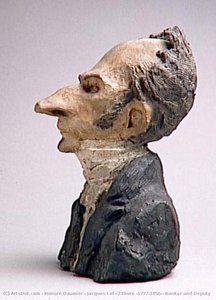
Harvard Art Museums, CambridgeHarvard Art Museums Cambridge 3 Scapin, Two Singers, The Print Amateur

Honoré Daumier évtizede folgtva: az eredeti művek, amelyek meghatározzák az egyes korzakot

Művek évtizedenként

Váassz ki egy évtizedet, hogy megnézhesd az azt meghatározó eredetiműveket.

Gyűjtői kérdések Honoré Daumier festményeivel kapcsolatban

Melyik művel a(z) Honoré Daumier a leghíresebb?Fedje fel a választ

Nous voulons Barabbas (Ecce Homo) (1852), Museum Folkwang, Essen. Ezután The Third-class Carriage (1860) és Unknown, maybe Hippolyte Lucien-Joseph Lucas (1807-1878), a Journalist, maybe P.Mendez de Vigo (1790-1860) a Spanish General, but Most Probably the Count Pelet de la Lozere (1785-1871), a Politician (1833) következik.

Hány éves volt Honoré Daumier, amikor a Nous voulons Barabbas (Ecce Homo) készült?Fedje fel a választ

44 éves: Nous voulons Barabbas (Ecce Homo) 1852-ből származik, Honoré Daumier pedig 1808-ben született.

Melyek a tíz leghíresebb Honoré Daumier festmény?Fedje fel a választ

Nous voulons Barabbas (Ecce Homo), The Third-class Carriage, Unknown, maybe Hippolyte Lucien-Joseph Lucas (1807-1878), a Journalist, maybe P.Mendez de Vigo (1790-1860) a Spanish General, but Most Probably the Count Pelet de la Lozere (1785-1871), a Politician, Ratapoil (front view), Intermission at the Comédie Française, Ratapoil, Ratapoil (rear view), Scene from a Comedy, Ratapoil és Family on the Barricades in 1848. A fenti rangsor a művek évszamarát és a múzeumát jelzi.

Hány festményet hagyott hátra Honoré Daumier?Fedje fel a választ

Katalógusunkban 355 mű található Honoré Daumier alkotótól, 1832 és 1870 év közötti időszakból.

Mely múzeumokban állnak Honoré Daumier remekművei?Fedje fel a választ

Leginkább Musée d'Orsay (Párizs), Burrell Collection (Glasgow) és The Phillips Collection (Washington, D.C.) található. A fenti múzeumi táblázatban mindegyik felsorolásra került.

Mely években festette Honoré Daumier leghíresebb műveit?Fedje fel a választ

1850s alatt: a jelen laphonon található 100 műből 34 készült ebben az időszakban, köztük Nous voulons Barabbas (Ecce Homo).

Mikszétek az első és az utolsó híres eredeti műve a(z) Honoré Daumier alkotótól?Fedje fel a választ

Ezen az oldalon a leghitelesebb Count Antoine-Maurice-Apollinaire d'Argout (1782-1858), Minister and Peer of France (1832), a legutóbbi pedig The Studio (1870).

Milyen témaköröket választott leggyakrabban Honoré Daumier?Fedje fel a választ

People (33), Figures (25) és Man (21), a jelen oldalon található 100 műművészeti alkotás között.

Melyik technikát alkalmazta leggyakrabban Honoré Daumier?Fedje fel a választ

Oil On Canvas, a jelen oldalon található 100 műből 25 darab esetén.

Mely művészeti irányba tartozik Honoré Daumier?Fedje fel a választ

Realism, ezen az oldalon található eredetiek alapján.

Mely Honoré Daumier művei láthatóak a Musée d'Orsay kiállتításán?Fedje fel a választ

Unknown, maybe Hippolyte Lucien-Joseph Lucas (1807-1878), a Journalist, maybe P.Mendez de Vigo (1790-1860) a Spanish General, but Most Probably the Count Pelet de la Lozere (1785-1871), a Politician, Ratapoil (front view) és Ratapoil (rear view): a Musée d'Orsay, Párizs 19 művet őrzi ezen az oldalon.

Honoré Daumier: életmű és életút

A Life Etched in Satire: The World of Honoré Daumier

Honoré-Victorin Daumier’s life unfolded against the backdrop of a rapidly changing France, a nation grappling with revolution and social upheaval. Born in Marseille in 1808, his early years were steeped in the traditions of his family—a lineage of glaziers and artisans—but his spirit yearned for something beyond the confines of his humble beginnings. His father, a poet who had experienced both success and disappointment in Paris, instilled in him a love for literature and a keen awareness of social injustices. This early exposure to the complexities of human experience would profoundly shape Daumier’s artistic vision. The family's move to Paris in 1814 provided young Honoré with access to the vibrant artistic scene of the capital, exposing him to the works of masters like Rubens and Titian through his mentor, Alexandre Lenoir—a painter who also nurtured a deep appreciation for classical sculpture. This foundation laid the groundwork for Daumier’s distinctive style, blending realism with expressive draftsmanship. However, it wasn't merely technical skill that defined him; it was an unwavering commitment to exposing hypocrisy and challenging authority through his art.

The Sharpened Pen: Caricature and Social Commentary

Daumier’s career truly ignited in the tumultuous aftermath of the 1830 Revolution. This pivotal event, which dramatically reshaped French society and politics, provided him with a fertile ground for his burgeoning satirical talent. He quickly established himself as a master lithographer, initially contributing anonymously to various publications—most notably *Le Charivari*, a fiercely independent comic journal founded by Charles Philipon. It was within the pages of *Le Charivari* that Daumier’s genius truly blossomed. His caricatures weren't simply humorous illustrations; they were biting critiques of the bourgeoisie, the legal system, and the political establishment—a deliberate provocation aimed at exposing corruption and challenging the status quo. His unflinching portrayal of King Louis-Philippe, for example, led to his imprisonment in 1832 after a particularly pointed caricature was published. This act of defiance, rather than silencing him, solidified his commitment to using art as a weapon against injustice. The sheer volume of his output during this period is staggering—thousands of lithographs that served as both popular entertainment and potent political statements, capturing the spirit of dissent and offering a critical commentary on the societal ills of his time. The meticulous detail in his work, combined with a sharp wit and keen observation, made him a powerful voice for the marginalized and oppressed.

Beyond Caricature: Painting and Sculptural Visions

While Daumier is overwhelmingly celebrated for his lithography, to reduce his artistic output solely to caricature would be a profound disservice. He was also a dedicated painter and sculptor, though recognition for these works came later in life. His paintings—often depicting scenes of everyday Parisian life—are imbued with a remarkable sense of realism and empathy. He didn’t shy away from portraying the hardships faced by ordinary people: the cramped conditions of third-class carriages, the backbreaking labor of laundresses, the self-importance of lawyers. These works are not idealized representations; they are unflinching depictions of poverty, struggle, and resilience. Daumier masterfully employed loose brushwork and dramatic lighting to convey emotion and atmosphere—techniques that foreshadowed some of the innovations later embraced by the Impressionists. Furthermore, his sculptural work, largely created in clay during his lifetime (many pieces remaining unbaked), reveals a similar commitment to capturing the human form with honesty and emotional depth. These sculptures, rediscovered after his death, demonstrate a remarkable talent for modeling and an ability to convey psychological complexity through physical gesture—a testament to his profound understanding of the human condition.

A Lasting Legacy: Influence and Historical Significance

Honoré Daumier’s impact on art history is undeniable. He bridged the gap between Romanticism and Realism, laying the foundation for future generations of artists who sought to depict the world as it truly was—warts and all. His unflinching social commentary profoundly influenced artists like Gustave Courbet and Édouard Manet, both of whom were deeply affected by his willingness to challenge authority and expose injustice through art. Moreover, Daumier’s innovative use of lithography revolutionized printmaking, transforming it from a primarily decorative medium into a powerful tool for political satire and social critique. His work continues to resonate today, reminding us of the enduring power of art to challenge established norms, expose corruption, and bear witness to the human condition. The Musée d'Orsay in Paris houses a significant collection of his paintings and sculptures, offering visitors a unique opportunity to immerse themselves in the world he so vividly portrayed. His lithographs are widely accessible through collections like those found on OriginalUniqueArt, ensuring that his satirical genius continues to provoke thought and inspire dialogue—a legacy that extends far beyond the confines of the 19th century. Daumier wasn’t merely an artist; he was a chronicler of his time—a visual poet who used his talent to give voice to the voiceless and hold power accountable.

Current Meta Description:

Honoré Daumier (1808-1879), the French master of realism & satire. Explore his powerful lithographs, paintings & sculptures critiquing 19th-century society and influencing modern art.

Current Meta Keywords:

Honoré Daumier, Honore Daumier, French Realism, 19th Century Art, Political Satire, Lithography, Caricature, Parisian Life, Daumier Prints