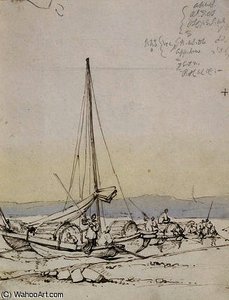
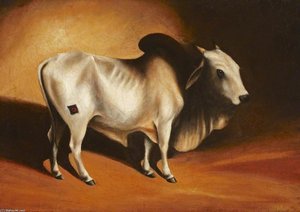
George Chinnery portréja

A 100 legnevesebbebb George Chinnery festmény, mindegyik egyedistens

Frissítve: november 2026 · rangsorolva népszerűségi pontszámunk alapján (minden mű keresései, látogatásai és megrendelései alapján) · 170 mű George Chinnery alkotása a katalógusunkban

Röviden

Portrait of Nathan Dunn (1830) az a George Chinnery festmény, amely a legtöbb tekintetet felvonja; az eredeti mű a Philadelphia Művészeti Múzeum gyűjteményében található, Philadelphia. Ezután a tekintet Self-Portrait (1800) és Portrait of a Gentleman (1800) elemre irányul. A George Chinnery 170 műve közül a katalógusunkban megtalálható 100 legnépesebb alkotás, melyeket az év, a múzeum és az örökévalóságának okai kísérnek.

1774 – 1852, London Romanticism A legtöbb mű: Yale Center for British Art

A galéria szemével: George Chinnery legjobb 10 festménye

1
Portrait of Nathan Dunn (1830) (1889) -ja George Chinnery

Portrait of Nathan Dunn

1830 · Oil · Philadelphia Művészeti Múzeum, Philadelphia

The Portrait of Nathan Dunn emerges from the shadows of the early nineteenth century, a formal oil painting that captures a man of significant presence. Created by the artist George Chinnery, this work dates to about 1830. It presents a moment frozen in time, where the sitter meets the gaze of the observer with a quiet, steady authority. The portrait serves as a visual record of a man whose life…

2
Self-Portrait (1800) (1889) -ja George Chinnery

Self-Portrait

1800 · Oil On Canvas · Yale Center for British Art, New Haven

In this "Self-Portrait" by George Chinnery, the artist presents himself as a young man in a bust-length composition. Created about 1800, the work captures the subject in a moment of quiet contemplation. He is positioned slightly off-center within the frame, creating a sense of weight and presence. While his body is oriented toward the right, his gaze is fixed directly upon the viewer, establishing a steady connection between the subject…

3
Portrait of a Gentleman (1800) (1889) -ja George Chinnery

Portrait of a Gentleman

1800 · Watercolor · Yale Center for British Art, New Haven

The artwork titled Portrait of a Gentleman is a portrait miniature created by the artist George Chinnery. This specific work dates to 1800. It depicts a young man in a three-quarter view, capturing the subject from the head to the shoulders. The scale of the piece is small, measuring 7.6 x 6.0cm.

4
A Man Called W. C. Hunter (1825) (1889) -ja George Chinnery

A Man Called W. C. Hunter

1825 · Oil On Canvas · Yale Center for British Art, New Haven

In this intimate oil on canvas, we encounter A Man Called W. C. Hunter, a portrait executed by George Chinnery. The work captures the likeness of W. C. Hunter, presented in a dignified side profile that invites a quiet, contemplative observation. It is a piece that reflects a specific moment in the artist's career, having been painted after 1825.

5
Portrait of Harriet Low (1833) (1889) -ja George Chinnery

Portrait of Harriet Low

1833 · Oil On Canvas · Peabody Essex Museum, Salem

The oil on canvas portrait depicts Harriet Low in a medium close-up view. She is positioned against a split background where a dark, crimson drapery hangs on the right side, while the left side reveals a hazy, atmospheric landscape. The subject is turned slightly, her gaze directed toward the viewer. She wears a gown of ochre and gold, characterized by voluminous puffed sleeves and soft, fluid lines. Her dark hair…

6
A Man Carrying Faggot (1799) (1889) -ja George Chinnery

A Man Carrying Faggot

1799 · Oil · Yale Center for British Art, New Haven

A Man Carrying Faggot emerges from the brush of George Chinnery, a painter whose life spanned the distance between the bustling streets of London and the coastal reaches of Macau. This work, dating to about 1799, captures a moment of quiet, heavy labor. The artist, born in London, United Kingdom, in 1774, brings a specific, observant eye to this scene of rural toil. One can almost feel the weight of…

7
Self-Portrait (1825) (1889) -ja George Chinnery

Self-Portrait

1825 · Oil On Canvas · Metropolitan Művészeti Múzeum, New York

This work is a Self-Portrait by the artist George Chinnery. It represents a significant moment in his career, painted during his time in China between 1825 and 1828. Among the dozen self-portraits Chinnery produced throughout his life, this particular likeness is noted for being his most intimate and engaging. It offers a rare, personal glimpse into the character of a man known for his wit and his volatile, eccentric nature.

8
Chinese Scene with figures playing a game (1835) (1889) -ja George Chinnery

Chinese Scene with figures playing a game

1835 · Watercolor · Birmingham Museum and Art Gallery, Birmingham

This delicate watercolor and ink drawing, titled Chinese Scene with figures playing a game, offers a quiet glimpse into a moment of domestic life. Created by George Chinnery around 1835, the work captures a specific social interaction through a soft, observational lens. It is a piece that prioritizes the subtle rhythms of everyday existence over grand historical narratives.

9
Chinese Shore Scene - Two Fishermen with Skate (1835) (1889) -ja George Chinnery

Chinese Shore Scene - Two Fishermen with Skate

1835 · Watercolor · Birmingham Museum and Art Gallery, Birmingham

The scene unfolds in "Chinese Shore Scene - Two Fishermen with Skate," a work that captures a quiet moment along a rugged coastline in China. George Chinnery places the viewer directly upon the shore, where the salt air seems to linger around the dark, weathered boulders. Two fishermen work near a small boat, their presence grounding the vastness of the maritime landscape. It is a glimpse into a specific, lived…

10
An English Family in Macao (1835) (1889) -ja George Chinnery

An English Family in Macao

1835 · Oil On Canvas · Yale Center for British Art, New Haven

In this formal 19th-century group portrait, titled An English Family in Macao, we encounter the quiet dignity of a family settled far from their origins. The work was painted by George Chinnery about 1835. It captures a specific moment of colonial life, presenting a man, a woman, and their three children in a composed, structured arrangement. The subjects are positioned in a pyramidal structure, a choice that provides a sense…

George Chinnery híres festményei, 11 és 100 között

11Portrait of a Man Playing a Guitar (1835) (1889) -ja George ChinneryPortrait of a Man Playing a Guitar1835 · Yale Center for British Art 12Chinese Gambler (1840) (1889) -ja George ChinneryChinese Gambler1840 · Yale Center for British Art 13M. Durand (1847) (1889) -ja George ChinneryM. Durand1847 · New York Historical Society 14Gilbert Elliot, 1st Earl of Minto (1751-1814), Viceroy of British India and Governor General of the Dutch East Indies (1812-14), George Chinnery, 1812 - 1847 (1847) (1889) -ja George ChinneryGilbert Elliot, 1st Earl of Minto (1751-1814), Viceroy of British India and Governor General of the Dutch East Indies (1812-14), George Chinnery, 1812 - 18471847 · Rijksmuseum 15John Lyon (1812) (1889) -ja George ChinneryJohn Lyon1812 · Yale Center for British Art 16An Unknown Man (1835) (1889) -ja George ChinneryAn Unknown Man1835 · Yale Center for British Art 17Portrait of a young Eurasian lady (1889) -ja George ChinneryPortrait of a young Eurasian lady 18Houqua (1843) (1889) -ja George ChinneryHouqua1843 · Metropolitan Művészeti Múzeum 19The Hongs at Canton (1889) -ja George ChinneryThe Hongs at Canton 20Portrait Of A Lady, Small Full-length, In A White Dress And A Blue Shawl, Holding A Basket Standing In A Garden (1889) -ja George ChinneryPortrait Of A Lady, Small Full-length, In A White Dress And A Blue Shawl, Holding A Basket Standing In A Garden 21Chinese Barber Outside The American Factory In Canton (1889) -ja George ChinneryChinese Barber Outside The American Factory In CantonColeton Fishacre 22Portrait of a Gentleman Called Michael Thomas Sadler (1889) -ja George ChinneryPortrait of a Gentleman Called Michael Thomas SadlerYale Center for British Art 23Hindu Temple, near Benares, India (1813) (1889) -ja George ChinneryHindu Temple, near Benares, India1813 · Birmingham Museum and Art Gallery 24Indian Watering Place with Women and Cattle in a Stream (1813) (1889) -ja George ChinneryIndian Watering Place with Women and Cattle in a Stream1813 · Birmingham Museum and Art Gallery 25Indian Scene With Rivers and Mountains (1813) (1889) -ja George ChinneryIndian Scene With Rivers and Mountains1813 · Birmingham Museum and Art Gallery 26Indian river scene with men bathing (1813) (1889) -ja George ChinneryIndian river scene with men bathing1813 · Birmingham Museum and Art Gallery 27Indian Landscape with Temple (1815) (1889) -ja George ChinneryIndian Landscape with Temple1815 · Yale Center for British Art 28Coolies Round The Food Vendor's Stall, After (1825) (1889) -ja George ChinneryCoolies Round The Food Vendor's Stall, After1825 · Yale Center for British Art 29The Praya Grande, Macao, from the south, with St Peter's Fort to the left (1837) (1889) -ja George ChinneryThe Praya Grande, Macao, from the south, with St Peter's Fort to the left1837 · Birmingham Museum and Art Gallery 30Dent's verandah, macao, (1842) (1889) -ja George ChinneryDent's verandah, macao,1842 31Chinese Junks, 1850 (1850) (1889) -ja George ChinneryChinese Junks, 18501850 · National Maritime Museum 32A goat sitting in a mountainous river landscape with cattle beyond (1850) (1889) -ja George ChinneryA goat sitting in a mountainous river landscape with cattle beyond1850 33A Gentleman with Auburn Hair (1889) -ja George ChinneryA Gentleman with Auburn HairYale Center for British Art 34Portrait of Mrs Eustace (1889) -ja George ChinneryPortrait of Mrs EustaceNational Gallery of Ireland 35Portrait of Mrs Conyngham (1889) -ja George ChinneryPortrait of Mrs ConynghamNational Gallery of Ireland 36Portrait of a Mandarin (1889) -ja George ChinneryPortrait of a MandarinNational Gallery of Ireland 37Chinese Scene, Women Making Tea (1889) -ja George ChinneryChinese Scene, Women Making TeaNational Gallery of Ireland 38Chinese Scene, Fishermen (1889) -ja George ChinneryChinese Scene, FishermenNational Gallery of Ireland 39Unknown Man (1889) -ja George ChinneryUnknown ManNationalmuseum 40Portraits of Mrs Katherine Ann Neish (1889) -ja George ChinneryPortraits of Mrs Katherine Ann Neish 41Portrait of Captain James Neish (1889) -ja George ChinneryPortrait of Captain James Neish 42Oriental Figures Before A Cart (1889) -ja George ChinneryOriental Figures Before A Cart 43The Honorable Sir Henry Russel, Bart. (1889) -ja George ChinneryThe Honorable Sir Henry Russel, Bart. 44A Market In Front Of São Domingos Church, Macao (1889) -ja George ChinneryA Market In Front Of São Domingos Church, Macao 45A Family Group Around A Piano (1889) -ja George ChinneryA Family Group Around A Piano 46A Chinese Barber At Work And A Study Of A Pig (1889) -ja George ChinneryA Chinese Barber At Work And A Study Of A Pig 47The Praya Grande From The South-west, Looking Towards The Town; And A Street Scene, Macao (1889) -ja George ChinneryThe Praya Grande From The South-west, Looking Towards The Town; And A Street Scene, Macao 48Study Of Cattle And A Figure Walking With A Parasol; And Study Of A Hat (1889) -ja George ChinneryStudy Of Cattle And A Figure Walking With A Parasol; And Study Of A Hat 49Mr And Mrs Richmond Thackeray And Their Son (1889) -ja George ChinneryMr And Mrs Richmond Thackeray And Their Son 50Portrait Of John And Agatha Humphreys (1889) -ja George ChinneryPortrait Of John And Agatha Humphreys 51Women Seated Outside The Gate Of A House; And A Street Scene, Macao (1889) -ja George ChinneryWomen Seated Outside The Gate Of A House; And A Street Scene, Macao 52A Tomb Or Part Of A Temple_2 (1889) -ja George ChinneryA Tomb Or Part Of A Temple_2 53Tanka Boats on the Shore, (1889) -ja George ChinneryTanka Boats on the Shore, 54Fishing Boats, Macao (1889) -ja George ChinneryFishing Boats, Macao 55The Pool (1889) -ja George ChinneryThe Pool 56A Young Boy, Full Face In Blue Coat With Gold Buttons (1889) -ja George ChinneryA Young Boy, Full Face In Blue Coat With Gold Buttons 57A Tanka Woman With Her Child On A Boat (1889) -ja George ChinneryA Tanka Woman With Her Child On A Boat 58Two women and a cow before an indian village (1889) -ja George ChinneryTwo women and a cow before an indian village 59Macao (1889) -ja George ChinneryMacao 60Brisco Owen (1889) -ja George ChinneryBrisco Owen 61Self Portrait (1889) -ja George ChinnerySelf Portrait 62Portrait Studies Of Six Figures (1889) -ja George ChinneryPortrait Studies Of Six Figures 63A Young Girl, Facing Right In White Dress, Brown Curling Hair; Sky And Cloud Background (1889) -ja George ChinneryA Young Girl, Facing Right In White Dress, Brown Curling Hair; Sky And Cloud Background 64Portrait Of A Lady (1889) -ja George ChinneryPortrait Of A LadyNational Portrait Gallery of Sweden 65View In Southern India, With A Warrior Outside (1889) -ja George ChinneryView In Southern India, With A Warrior OutsideYale Center for British Art 66Chinese Gaming At A Table, A Pagoda On A Hill Beyond (1889) -ja George ChinneryChinese Gaming At A Table, A Pagoda On A Hill Beyond 67Portrait Of Lady Elizabeth Stanley With Her Dog, Half-length, Seated (1889) -ja George ChinneryPortrait Of Lady Elizabeth Stanley With Her Dog, Half-length, Seated 68A geisha girl (1889) -ja George ChinneryA geisha girl 69Bengal Village Scene (1889) -ja George ChinneryBengal Village SceneBirmingham Museum and Art Gallery 70A Brahminy Bull (1889) -ja George ChinneryA Brahminy Bull 71Untitled (1889) -ja George ChinneryUntitledNational Portrait Gallery 72The young huntsman (1889) -ja George ChinneryThe young huntsman 73View of Praia Grande - Macau (1800) (1889) -ja George ChinneryView of Praia Grande - Macau1800 74Egy kínai sampan lány (1889) -ja George ChinneryEgy kínai sampan lányHong Kong Museum of Art 75Chinese Scene, Boats by Lake (1889) -ja George ChinneryChinese Scene, Boats by LakeNational Gallery of Ireland 76A Macchan Or Watch Tower (1889) -ja George ChinneryA Macchan Or Watch Tower 77View of Macao, China (1889) -ja George ChinneryView of Macao, China 78Tanka Boats Off The He'-ang Shan, China (1889) -ja George ChinneryTanka Boats Off The He'-ang Shan, China 79Goats On An Outcrop In The Himalayan Foothills (1889) -ja George ChinneryGoats On An Outcrop In The Himalayan Foothills 80Coast Scene With Figures Near A Wall (1889) -ja George ChinneryCoast Scene With Figures Near A Wall 81Near midnapore, bengal (1889) -ja George ChinneryNear midnapore, bengal 82A View Of St Joseph's Church From The Quayside (1889) -ja George ChinneryA View Of St Joseph's Church From The Quayside 83Street In Macao, China (1889) -ja George ChinneryStreet In Macao, China 84Portrait Of A Lady, Standing On A Balcony (1889) -ja George ChinneryPortrait Of A Lady, Standing On A Balcony 85Peasants and Oxen (1889) -ja George ChinneryPeasants and Oxen 86A riverside encampment, china (1889) -ja George ChinneryA riverside encampment, china 87Study of Figures (1889) -ja George ChinneryStudy of Figures 88Shipping on a Chinese River (1889) -ja George ChinneryShipping on a Chinese River 89Boat with Yellow Sail, China (1889) -ja George ChinneryBoat with Yellow Sail, China 90Study Of Two Oriental Men (1889) -ja George ChinneryStudy Of Two Oriental Men 91Ruined Tomb With Hindu Ablutions (1889) -ja George ChinneryRuined Tomb With Hindu Ablutions 92Study of goats (1889) -ja George ChinneryStudy of goats 93Une Figure Assise Avec Une Vache Au Bord D'un Réservoir (1889) -ja George ChinneryUne Figure Assise Avec Une Vache Au Bord D'un Réservoir 94Two Huts Beside A River, Probably Bengal (1889) -ja George ChinneryTwo Huts Beside A River, Probably Bengal 95Dhaka, bangladesh (1889) -ja George ChinneryDhaka, bangladesh 96Sampans And Junks On A Chinese River (1889) -ja George ChinnerySampans And Junks On A Chinese River 97A Chinaman With Goats On A Riverbank (1889) -ja George ChinneryA Chinaman With Goats On A Riverbank 98Water Carriers And Other Indian Figures, Beneath A Bridge; And Indian Figures And Cattle Outside A Hut (1889) -ja George ChinneryWater Carriers And Other Indian Figures, Beneath A Bridge; And Indian Figures And Cattle Outside A Hut 99Charlotte And Henrietta Edmonstone (1889) -ja George ChinneryCharlotte And Henrietta Edmonstone 100Indian Figures With A Recumbent Brahmin Bull (1889) -ja George ChinneryIndian Figures With A Recumbent Brahmin Bull

George Chinnery híres festményei, korszakonként

A témák, amelyek George Chinnery figyelmét meghúzták

A négy leggyakorobban előforduló téma ebben az eredeti művekben, mindegyik a legkiválóbb példájával.

A műemlékek, amelyek George Chinnery eredeti műveit őrzik

A 8 olyan múzeum, amely a legtöbb ezen az oldalon szereplő festményet őrzi.

Múzeum Város George Chinnery művei Ebből a listából származó festmények
Yale Center for British Art, New HavenYale Center for British Art New Haven 14 Self-Portrait, Portrait of a Gentleman, A Man Called W. C. Hunter
Birmingham Museum and Art Gallery, BirminghamBirmingham Museum and Art Gallery Birmingham 8 Chinese Scene with figures playing a game, Chinese Shore Scene - Two Fishermen with Skate, Hindu Temple, near Benares, India
National Gallery of Ireland, DublinNational Gallery of Ireland Dublin 6 Portrait of Mrs Eustace, Portrait of Mrs Conyngham, Portrait of a Mandarin
Metropolitan Művészeti Múzeum, New YorkMetropolitan Művészeti Múzeum New York 3 Self-Portrait, Houqua
National Portrait Gallery, LondonNational Portrait Gallery London 2 Untitled
Philadelphia Művészeti Múzeum, PhiladelphiaPhiladelphia Művészeti Múzeum Philadelphia 1 Portrait of Nathan Dunn
Peabody Essex Museum, SalemPeabody Essex Museum Salem 1 Portrait of Harriet Low
New York Historical Society, New YorkNew York Historical Society New York 1 M. Durand

George Chinnery évtizedekig: egy egyedi eredeti mű minden évtizedben

Művek évtizedenként

Váassz ki egy évtizedet, hogy megnézhesd az azt meghatározó eredetiműveket.

George Chinnery festményei: kérdések a galériának

Mi a leghíresebb műve George Chinnerynek?Fedje fel a választ

Portrait of Nathan Dunn (1830), Philadelphia Művészeti Múzeum, Philadelphia. Ezután Self-Portrait (1800) és Portrait of a Gentleman (1800) következik.

Milyen életkorában alkotta meg George Chinnery a(z) Portrait of Nathan Dunn műszt?Fedje fel a választ

56 éves: Portrait of Nathan Dunn 1830-ből származik, George Chinnery pedig 1774-ben született.

Melyik tíz festménye George Chinnery a leghíresebb?Fedje fel a választ

Portrait of Nathan Dunn, Self-Portrait, Portrait of a Gentleman, A Man Called W. C. Hunter, Portrait of Harriet Low, A Man Carrying Faggot, Self-Portrait, Chinese Scene with figures playing a game, Chinese Shore Scene - Two Fishermen with Skate és An English Family in Macao. A fenti rangsor a művek évszamarát és a múzeumát jelzi.

Hány mű alkotása ismert George Chinnery nevében?Fedje fel a választ

Katalógusunkban 170 mű található George Chinnery alkotótól, 1799 és 1850 év közötti időszakból.

Hol tekinthetők meg a leghíresebb George Chinnery eredetijeit?Fedje fel a választ

Leginkább Yale Center for British Art (New Haven), Birmingham Museum and Art Gallery (Birmingham) és National Gallery of Ireland (Dublin) található. A fenti múzeumi táblázatban mindegyik felsorolásra került.

Melyik időszakban alkotta George Chinnery a leghíresebb festményeit?Fedje fel a választ

1830s alatt: a jelen laphonon található 100 műből 8 készült ebben az időszakban, köztük Portrait of Nathan Dunn.

Melyik híres George Chinnery festmény a legkorábbi, és melyik a legutóbb készült?Fedje fel a választ

Ezen az oldalon a leghitelesebb A Man Carrying Faggot (1799), a legutóbbi pedig Chinese Junks, 1850 (1850).

Milyen témakörket kedvelt George Chinnery?Fedje fel a választ

Portrait (17), Man (12) és British art (9), a jelen oldalon található 100 műművészeti alkotás között.

Milyen anyagokkal festett leggyakrabban George Chinnery?Fedje fel a választ

Oil On Canvas, a jelen oldalon található 100 műből 11 darab esetén.

Mely művészeti irányba tartozik George Chinnery műve?Fedje fel a választ

Romanticism, ezen az oldalon található eredetiek alapján.

Milyen George Chinnery eredeti műveket láthatok a Yale Center for British Art kiállításaiban?Fedje fel a választ

Self-Portrait, Portrait of a Gentleman és A Man Called W. C. Hunter: a Yale Center for British Art, New Haven 14 művet őrzi ezen az oldalon.

George Chinnery: a művész portréja

Early Life and Training (1774-1801)

George Chinnery, a name synonymous with the vibrant landscapes and captivating portraits of 19th-century India and China, was born in London on January 5, 1774. His early life was steeped in a unique artistic lineage; his father, a skilled craftsman, had pioneered the Gurney system of shorthand – a revolutionary method for rapid note-taking that would profoundly influence Chinnery’s own approach to art. This meticulous attention to detail and desire to capture fleeting moments became hallmarks of his oeuvre. Following in his father's footsteps, Chinnery received formal training at the Royal Academy Schools in London, where he honed the foundational techniques of classical painting – mastering perspective, anatomy, and color theory. However, it was not merely a pursuit of academic rigor that drove him; a keen desire to experience the world beyond the confines of England fueled his ambition.

Move to India and Rise as a Calcutta Artist (1802-1825)

In 1802, Chinnery embarked on a transformative journey eastward, sailing to Madras (now Chennai), India. This marked a pivotal moment in his career, establishing him as one of the leading Western artists within the British community. Madras quickly became his base of operations, and he swiftly gained recognition for his ability to capture the essence of Indian life – from bustling marketplaces to serene temple complexes. He was particularly sought after for his portraits, skillfully portraying prominent figures like Colonel James Achilles Kirkpatrick and his family, offering a fascinating glimpse into colonial society and familial relationships. The Calcutta Residency, where Chinnery spent much of this period, proved to be an exceptionally fertile ground for artistic development; he became the preeminent painter within the British community in Kolkata (Calcutta), documenting the city’s rich cultural tapestry with remarkable sensitivity.

Macau and the Influence of Lam Qua (1825-1846)

As mounting debts threatened his financial stability, Chinnery made a strategic move to Macau in 1825. This relocation proved remarkably fruitful, as he quickly established himself as a highly sought-after portraitist among European merchants and Chinese residents alike. His style during this period was closely imitated by the Cantonese artist Lam Qua – a testament to Chinnery’s considerable influence on the local artistic scene. The techniques of Lam Qua were essentially copies of Chinnery's, highlighting the latter's skill and popularity. Interestingly, Chinnery’s time in Macau coincided with his visit to Hong Kong in 1846, where he meticulously documented the newly established colony through a series of detailed studies – capturing its rapid growth and unique atmosphere.

Artistic Style and Techniques

Chinnery's artistic style is characterized by a captivating blend of Orientalist influences and meticulous realism. While undeniably influenced by European traditions, his work possesses an undeniable empathy and observational acuity that transcends simple exoticization. He was particularly adept at capturing the nuances of Asian subjects – their clothing, expressions, and surroundings – with remarkable detail and sensitivity. Chinnery primarily worked in oil paint and watercolor, often employing a combination of both mediums to achieve desired effects. Perhaps most notably, he utilized a modified version of the Gurney shorthand system to quickly jot down notes on his sketches, providing invaluable contextual information about his subjects and observations – a technique that reveals his dedication to capturing not just appearances but also the essence of what he witnessed.

Legacy and Historical Significance

George Chinnery’s legacy extends far beyond his individual artistic achievements. He stands as a unique chronicler of 19th-century India and China, documenting a period of profound transformation and cultural exchange. His paintings offer invaluable historical insights into British colonial life, the interactions between Europeans and Asians, and the daily lives of ordinary people. He was the only Western painter residing in southern China during this era, making him an unparalleled witness to a rapidly changing world. Furthermore, his influence can be seen in the work of local artists like Lam Qua, demonstrating his profound impact on the artistic landscape of the region. His depictions of everyday life – from bustling marketplaces to serene temple complexes – provide a rare and intimate glimpse into the past. Notably, his story has been brought to wider attention through James Clavell’s novel Tai-pan, where he is portrayed as Aristotle Quance, a fascinating figure in the narrative. Today, substantial collections of his drawings are held in museums across Europe and America, ensuring that his remarkable artistic legacy continues to be appreciated and studied.