Francesco Guardi portréja

Francesco Guardi festményei: A 100 leghíresebb alkotás, egy galéria szemével

Frissítve: november 2026 · rangsorolva népszerűségi pontszámunk alapján (minden mű keresései, látogatásai és megrendelései alapján) · 439 mű Francesco Guardi alkotása a katalógusunkban

Röviden

A galéria szerint Francesco Guardi leghíresebb festménye a Santa Maria della Salute (1760), amelynek eredeti példája a Metropolitan Művészeti Múzeum múzeumában található, New York városában. LE PALAIS DES DOGES DE VENISE VU DU BASSIN DE SAN MARCO és The Doge's Palace and the Molo kiegészítik azt a triót, amelyet minden szem felismer. A katalógusunkban szereplő 439 művész Francesco Guardi alkotásából a galéria az alábbi 100 leghíresebbet mutatja be, amelyek mind egyedi originális művek, a készítés évszámával, a múzeum megnevezésével és a különlegességük leírásával.

1712 – 1793, Velence Rococo A legtöbb mű: Metropolitan Művészeti Múzeum

A galéria top 10 Francesco Guardi festménye

1
Santa Maria della Salute (1760) (1889) -ja Francesco Guardi

Santa Maria della Salute

1760 · Painting · Metropolitan Művészeti Múzeum, New York

Santa Maria della Salute: A Venetian Masterpiece Francesco Guardi’s “Santa Maria della Salute” transcends mere depiction; it embodies the very soul of Venice at the cusp of its golden age, capturing an ethereal beauty that continues to inspire awe centuries later. Painted in 1760, this monumental veduta—a panoramic cityscape view—represents not just a building but a profound meditation on faith and resilience amidst turbulent times. Guardi’s masterful use of sfumato,…

2
LE PALAIS DES DOGES DE VENISE VU DU BASSIN DE SAN MARCO (1889) -ja Francesco Guardi

LE PALAIS DES DOGES DE VENISE VU DU BASSIN DE SAN MARCO

Oil On Canvas · Louvre Múzeum, Párizs

In the heart of the eighteenth century, as the sun began its slow descent over the fading grandeur of the Venetian Republic, Francesco Lazzaro Guardi captured a moment that transcends mere geography. Le Palais des Doges de Venise Vu Du Bassin De San Marco is not simply a panoramic view of architectural splendor; it is an evocative embodiment of a city caught in a beautiful, melancholic transition. Through his masterful…

3
The Doge's Palace and the Molo (1889) -ja Francesco Guardi

The Doge's Palace and the Molo

Oil · National Gallery, London

The painting The Doge's Palace and the Molo by Francesco Lazzaro Guardi is a beautiful representation of Venice, Italy with its iconic buildings and waterways. The scene features several boats floating on the water near the shore, including a large boat in the foreground and smaller ones scattered throughout the image. There are also numerous people visible in the painting, some standing or walking along the shoreline, while others can…

4
Venice The Arsenal (1755) (1889) -ja Francesco Guardi

Venice The Arsenal

1755 · Oil On Canvas · National Gallery, London

We are looking at Venice The Arsenal, an oil on canvas painting by Francesco Guardi. This work was executed between 1755 and 1760, a period during which the artist was active in Venice. Guardi, who lived from 1712 to 1793, captured the specific atmosphere of the city during the mid-eighteenth century.

5
LE COURONNEMENT DU DOGE DE VENISE SUR L'ESCALIER DES GEANTS AU PALAIS DUCAL DE VENISE (1889) -ja Francesco Guardi

LE COURONNEMENT DU DOGE DE VENISE SUR L'ESCALIER DES GEANTS AU PALAIS DUCAL DE VENISE

Acrylic On Canvas · Louvre Múzeum, Párizs

A Venetian Twilight: Exploring Francesco Guardi’s “Le Couronnement du Doge” Francesco Lazzaro Guardi (1712-1793), born into a family steeped in artistic tradition on October 5, 1712, stands as a poignant figure at the close of the illustrious Venetian School. His life mirrored the fading grandeur of Venice itself—a city once a vibrant hub of commerce and culture, slowly yielding to political decline and economic hardship. Guardi wasn’t merely a painter;…

6
Tobias and the Angel (1754) (1889) -ja Francesco Guardi

Tobias and the Angel

1754 · Oil · Cleveland Museum of Art, Cleveland

This evocative oil painting depicts the biblical scene of Tobias and the Angel through a dramatic chiaroscuro effect, where light is emphasized against a dark, turbulent landscape. The composition is asymmetrical, creating a sense of movement and tension as the figures are positioned on the right and center-left. An angel, characterized by large, sweeping wings, leans over a large stone block and points toward Tobias. Tobias is seated near a…

7
Capriccio with the Archway of the Torre dell'Orologio (1780) (1889) -ja Francesco Guardi

Capriccio with the Archway of the Torre dell'Orologio

1780 · Oil On Canvas · Wallace Collection, London

To gaze upon this Capriccio with the Archway of the Torre dell'Orologio is to step directly into a sun-drenched moment of Venetian history, a scene imbued with the gentle rhythm of daily life. Francesco Lazzaro Guardi, master chronicler of a fading era, has gifted us more than just a painting; he offers an atmospheric memory. The composition unfolds like a beloved postcard from a bygone age, capturing the vibrant pulse…

9
Allegory of Abundance (1747) (1889) -ja Francesco Guardi

Allegory of Abundance

This mid-18th century allegorical oil painting presents a personification of abundance set within a romanticized landscape. The composition is vertically oriented, centering on a female figure positioned in the foreground and midground, slightly off-center to the left. She is depicted holding sheaves of wheat, a symbol of fertility and harvest. The scene is set against a backdrop featuring a receding shoreline and a distant horizon where the sea meets the…

10
Abraham Welcoming the Three Angels (1754) (1889) -ja Francesco Guardi

Abraham Welcoming the Three Angels

1754 · Oil · Cleveland Museum of Art, Cleveland

The scene unfolds in Abraham Welcoming the Three Angels, a work that captures a profound biblical moment through the hand of Francesco Guardi. Created in 1754, this oil painting brings a sacred narrative to life, centering on the intimate encounter between a patriarch and the divine. The air seems to hold its breath as the figures gather, caught in a moment of profound recognition and hospitality.

Francesco Guardi festményei, 11. helyezéstől 100. helyezésig

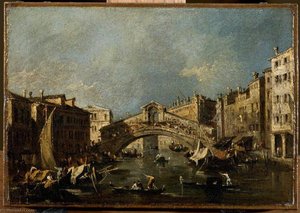
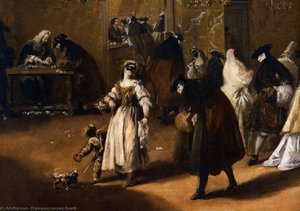
11The Angels Appearing to Abraham (1754) (1889) -ja Francesco GuardiThe Angels Appearing to Abraham1754 · Cleveland Museum of Art 12Godfrey of Boulogne Summons His Chiefs to Council (1755) (1889) -ja Francesco GuardiGodfrey of Boulogne Summons His Chiefs to Council1755 · Norton Simon Múzeum 13The diplomatic convent (1753) (1889) -ja Francesco GuardiThe diplomatic convent1753 · Ca' Rezzonico – a 18. századi velencei művészet múzeuma 14View of the Riva degli Schiavoni and the Piazzetta (1760) (1889) -ja Francesco GuardiView of the Riva degli Schiavoni and the Piazzetta1760 · Isabella Stewart Gardner Museum 15Venice The Grand Canal with Palazzo Pesaro (1755) (1889) -ja Francesco GuardiVenice The Grand Canal with Palazzo Pesaro1755 16Venice The Piazzetta di San Marco (1760) (1889) -ja Francesco GuardiVenice The Piazzetta di San Marco1760 17The Feast of the Ascension (1770) (1889) -ja Francesco GuardiThe Feast of the Ascension1770 18A View near Venice ( ) (1775) (1889) -ja Francesco GuardiA View near Venice ( )1775 · National Gallery 19A Caprice with Ruins on the Seashore (1775) (1889) -ja Francesco GuardiA Caprice with Ruins on the Seashore1775 · National Gallery 20An Architectural Caprice (1770) (1889) -ja Francesco GuardiAn Architectural Caprice1770 21The Piazza San Marco, Venice (1775) (1889) -ja Francesco GuardiThe Piazza San Marco, Venice1775 · Scottish National Gallery 22San Giorgio Maggiore, Venice (1770) (1889) -ja Francesco GuardiSan Giorgio Maggiore, Venice1770 · Scottish National Gallery 23Villa del Timpano Arcuato at Paese (1782) (1889) -ja Francesco GuardiVilla del Timpano Arcuato at Paese1782 · National Gallery 24Capriccio with an Island, a Tower, and Houses (701) (1889) -ja Francesco GuardiCapriccio with an Island, a Tower, and Houses701 25Capriccio with the Courtyard of the Doge's Palace (1770) (1889) -ja Francesco GuardiCapriccio with the Courtyard of the Doge's Palace1770 · Wallace Collection 26Pope Pius VI blessing the Crowd at Campo SS Giovanni e Paolo, Venice (1782) (1889) -ja Francesco GuardiPope Pius VI blessing the Crowd at Campo SS Giovanni e Paolo, Venice1782 · The Ashmolean Museum of Art and Archaeology 27Fantastic Landscape (1765) (1889) -ja Francesco GuardiFantastic Landscape1765 · Metropolitan Művészeti Múzeum 28The Lagoon from the Fondamenta Nuove (1889) -ja Francesco GuardiThe Lagoon from the Fondamenta Nuove 29Fantastic Landscape (1765) (1889) -ja Francesco GuardiFantastic Landscape1765 · Metropolitan Művészeti Múzeum 30A Regatta on the Grand Canal, Venice (1785) (1889) -ja Francesco GuardiA Regatta on the Grand Canal, Venice1785 · The Barber Institute of Fine Arts 31Capriccio: The Lagoon (1782) (1889) -ja Francesco GuardiCapriccio: The Lagoon1782 · Art Institute of Chicago 32Venice the Dogana with Santa Maria della Salute (1770) (1889) -ja Francesco GuardiVenice the Dogana with Santa Maria della Salute1770 · Wallace Collection 33L'EGLISE SAN GIORGIO MAGGIORE A VENISE (1889) -ja Francesco GuardiL'EGLISE SAN GIORGIO MAGGIORE A VENISELouvre Múzeum 34Venice San Giorgio Maggiore with the Giudecca (1770) (1889) -ja Francesco GuardiVenice San Giorgio Maggiore with the Giudecca1770 · Wallace Collection 35The lock at Dolo on the Brenta: Capriccio (1780) (1889) -ja Francesco GuardiThe lock at Dolo on the Brenta: Capriccio1780 · National Gallery of Victoria 36View of the Island of Sant'Elena, Venice (1780) (1889) -ja Francesco GuardiView of the Island of Sant'Elena, Venice1780 37LE DEPART DU BUCENTAURE VERS LE LIDO DE VENISE, LE JOUR DE L'ASCENSION (1889) -ja Francesco GuardiLE DEPART DU BUCENTAURE VERS LE LIDO DE VENISE, LE JOUR DE L'ASCENSIONLouvre Múzeum 38View through an Archway (1767) (1889) -ja Francesco GuardiView through an Archway1767 · Bavári Állami Festırménygyűjtemények 39Venice the Dogana with the Giudecca (1770) (1889) -ja Francesco GuardiVenice the Dogana with the Giudecca1770 · Wallace Collection 40Rio dei Mendicanti (1889) -ja Francesco GuardiRio dei Mendicanti 41An Architectural Caprice (1774) (1889) -ja Francesco GuardiAn Architectural Caprice1774 · National Gallery 42An architectural capriccio (1750) (1889) -ja Francesco GuardiAn architectural capriccio1750 · Art Gallery of South Australia 43Piazza San Marco (1768) (1889) -ja Francesco GuardiPiazza San Marco1768 · Metropolitan Művészeti Múzeum 44LE PONT DU RIALTO A VENISE (1889) -ja Francesco GuardiLE PONT DU RIALTO A VENISELouvre Múzeum 45Venetian Capriccio: View of a Square and a Palace (1750) (1889) -ja Francesco GuardiVenetian Capriccio: View of a Square and a Palace1750 · Hermitaeus-múzeum 46Venice, the Church of Santa Lucia on the Grand Canal (1755) (1889) -ja Francesco GuardiVenice, the Church of Santa Lucia on the Grand Canal1755 · English Heritage 47The Canale Grande in Venice, with San Simeone Piccolo (1730) (1889) -ja Francesco GuardiThe Canale Grande in Venice, with San Simeone Piccolo1730 48Triumphal Arch in Venice (1737) (1889) -ja Francesco GuardiTriumphal Arch in Venice1737 · Antwerpeni Királyi Szépművészeti Múzeum 49Palace-ruins venus at the beach (1737) (1889) -ja Francesco GuardiPalace-ruins venus at the beach1737 50Views at the Canale Grande in Venice (1737) (1889) -ja Francesco GuardiViews at the Canale Grande in Venice1737 51Caprice, with Ruined Arch and Fishermen's Houses (1750) (1889) -ja Francesco GuardiCaprice, with Ruined Arch and Fishermen's Houses1750 · Musée Cognacq-Jay 52St. Mark's Square in Venice with View towards Campanile and Doge's Palace (1752) (1889) -ja Francesco GuardiSt. Mark's Square in Venice with View towards Campanile and Doge's Palace1752 · Bavári Állami Festırménygyűjtemények 53Piazzetta with View of Santa Maria della Salute (1752) (1889) -ja Francesco GuardiPiazzetta with View of Santa Maria della Salute1752 · Bavári Állami Festırménygyűjtemények 54View of San Simeone Piccolo in Venice (1750) (1889) -ja Francesco GuardiView of San Simeone Piccolo in Venice1750 · Musée Des Beaux 55The Guidecca in Venice (1750) (1889) -ja Francesco GuardiThe Guidecca in Venice1750 · Musée Des Beaux 56Allegory of Hope (1747) (1889) -ja Francesco GuardiAllegory of Hope1747 · John és Mable Ringling Művészeti Múzeum 57Lagoon Landscape (1750) (1889) -ja Francesco GuardiLagoon Landscape1750 · Städel Múzeum 58A View of the Molo and the Riva degli Schiavone in Venice (1750) (1889) -ja Francesco GuardiA View of the Molo and the Riva degli Schiavone in Venice1750 · Yale University Art Gallery 59Capriccio of a Ruined Arch (1750) (1889) -ja Francesco GuardiCapriccio of a Ruined Arch1750 60Bucintoro-festen i Venedig (1750) (1889) -ja Francesco GuardiBucintoro-festen i Venedig1750 · Statens Museum for Kunst 61Cloister in Venice (1750) (1889) -ja Francesco GuardiCloister in Venice1750 · Accademia Carrara 62Fantastic Landscape (1750) (1889) -ja Francesco GuardiFantastic Landscape1750 · Metropolitan Művészeti Múzeum 63Capriccio with Venetian Themes (1750) (1889) -ja Francesco GuardiCapriccio with Venetian Themes1750 64Capriccio (1750) (1889) -ja Francesco GuardiCapriccio1750 65Capriccio (1750) (1889) -ja Francesco GuardiCapriccio1750 66Capriccio (1750) (1889) -ja Francesco GuardiCapriccio1750 67Ruins with Staffage (1750) (1889) -ja Francesco GuardiRuins with Staffage1750 · Museum Kunsthaus Heylshof 68The Arsenal, Venice (1750) (1889) -ja Francesco GuardiThe Arsenal, Venice1750 · Walters Art Museum 69A View on the Grand Canal with the Rialto Bridge (1754) (1889) -ja Francesco GuardiA View on the Grand Canal with the Rialto Bridge1754 70Piazzetta of S. Marco, Venice (1750) (1889) -ja Francesco GuardiPiazzetta of S. Marco, Venice1750 · Gemäldegalerie 71Erminia and the Shepherds (1755) (1889) -ja Francesco GuardiErminia and the Shepherds1755 · National Gallery of Art 72LE DOGE DE VENISE ASSISTE AUX FETES DU JEUDI GRAS SUR LA PIAZZETTA (1889) -ja Francesco GuardiLE DOGE DE VENISE ASSISTE AUX FETES DU JEUDI GRAS SUR LA PIAZZETTALouvre Múzeum 73Il ridotto (detail) (1750) (1889) -ja Francesco GuardiIl ridotto (detail)1750 74View of Saint Mark's Square, in Venice (1760) (1889) -ja Francesco GuardiView of Saint Mark's Square, in Venice1760 · Musée Cognacq-Jay 75Grand Canal near San Geremia (1760) (1889) -ja Francesco GuardiGrand Canal near San Geremia1760 · Bavári Állami Festırménygyűjtemények 76The Entrance of the Canal Grande with the Santa Maria della Salu (1765) (1889) -ja Francesco GuardiThe Entrance of the Canal Grande with the Santa Maria della Salu1765 · Museum Boijmans Van Beuningen 77The Piazzetta Towards Isola San Giorgio (1760) (1889) -ja Francesco GuardiThe Piazzetta Towards Isola San Giorgio1760 78Ancient Ruins with Two Figures (1760) (1889) -ja Francesco GuardiAncient Ruins with Two Figures1760 79View of the island of San Cristoforo di Murano (1764) (1889) -ja Francesco GuardiView of the island of San Cristoforo di Murano1764 · Musée Cognacq-Jay 80Main Salon in the Ridotto, Venice (1765) (1889) -ja Francesco GuardiMain Salon in the Ridotto, Venice1765 · Rhode Island School of Design Museum of Art 81Landscape-Capriccio (1765) (1889) -ja Francesco GuardiLandscape-Capriccio1765 · Museum Boijmans Van Beuningen 82Figure Studies (1765) (1889) -ja Francesco GuardiFigure Studies1765 · Metropolitan Művészeti Múzeum 83Caprice with Ruins of an Arch and a Villa in the Background, Fantasy View (1765) (1889) -ja Francesco GuardiCaprice with Ruins of an Arch and a Villa in the Background, Fantasy View1765 · David Owsley Museum of Art Ball State University 84The Entrance of the Canal Grande with the Santa Maria della Salute (1765) (1889) -ja Francesco GuardiThe Entrance of the Canal Grande with the Santa Maria della Salute1765 · Museum Boijmans Van Beuningen 85Capriccio (1780) (1889) -ja Francesco GuardiCapriccio1780 · Metropolitan Művészeti Múzeum 86The Grand Canal above the Rialto (1760) (1889) -ja Francesco GuardiThe Grand Canal above the Rialto1760 · Metropolitan Művészeti Múzeum 87View of the Giudecca Canal and the Zattere (1757) (1889) -ja Francesco GuardiView of the Giudecca Canal and the Zattere1757 · Thyssen-Bornemisza Múzeum 88View of San Giorgio Maggiore (1760) (1889) -ja Francesco GuardiView of San Giorgio Maggiore1760 · Kelvingrove Art Gallery and Museum 89View over the Giudecca Canal to the northwest with the Zattere (1765) (1889) -ja Francesco GuardiView over the Giudecca Canal to the northwest with the Zattere1765 · Gemäldegalerie 90The Doge at the Basilica of La Salute (1760) (1889) -ja Francesco GuardiThe Doge at the Basilica of La Salute1760 91Audience Granted by the Doge (1760) (1889) -ja Francesco GuardiAudience Granted by the Doge1760 92The Bacino di San Marco with the Molo and the Doge's Palace, Venice (1760) (1889) -ja Francesco GuardiThe Bacino di San Marco with the Molo and the Doge's Palace, Venice1760 93The Bacino di San Marco with the Churches of San Giorgio Maggiore and Santa Maria della Salute, Venice (1760) (1889) -ja Francesco GuardiThe Bacino di San Marco with the Churches of San Giorgio Maggiore and Santa Maria della Salute, Venice1760 94Landscape – Capriccio (1780) (1889) -ja Francesco GuardiLandscape – Capriccio1780 · Courtauld Gallery 95The Island of San Michele, Venice (1774) (1889) -ja Francesco GuardiThe Island of San Michele, Venice1774 · Metropolitan Művészeti Múzeum 96A view of the Grand Canal, Venice, with the church of Santa Maria della Salute (1770) (1889) -ja Francesco GuardiA view of the Grand Canal, Venice, with the church of Santa Maria della Salute1770 97View of the Piazzetta Looking toward San Giorgio Maggiore, Venice (1770) (1889) -ja Francesco GuardiView of the Piazzetta Looking toward San Giorgio Maggiore, Venice1770 · Wadsworth Atheneum 98The Torre dell’Orologio in Piazza San Marco (1775) (1889) -ja Francesco GuardiThe Torre dell’Orologio in Piazza San Marco1775 · Bavári Állami Festırménygyűjtemények 99View of the Canale della Giudecca, Venice (1770) (1889) -ja Francesco GuardiView of the Canale della Giudecca, Venice1770 · Museum Boijmans Van Beuningen 100Regatta at the Rialto Bridge (1770) (1889) -ja Francesco GuardiRegatta at the Rialto Bridge1770 · Museum of Fine Arts, Houston

Francesco Guardi híres festményei, korszakonként

A témák, amelyek Francesco Guardi figyelmét meghúzták

A négy leggyakorobban előforduló téma ebben az eredeti művekben, mindegyik a legkiválóbb példájával.

A műemlékek, amelyek Francesco Guardi eredeti műveit őrzik

A 8 olyan múzeum, amely a legtöbb ezen az oldalon szereplő festményet őrzi.

Múzeum Város Francesco Guardi művei Ebből a listából származó festmények
Metropolitan Művészeti Múzeum, New YorkMetropolitan Művészeti Múzeum New York 15 Santa Maria della Salute, Fantastic Landscape, Fantastic Landscape
National Gallery, LondonNational Gallery London 23 The Doge's Palace and the Molo, Venice The Arsenal, A View near Venice ( )
Louvre Múzeum, PárizsLouvre Múzeum Párizs 12 LE PALAIS DES DOGES DE VENISE VU DU BASSIN DE SAN MARCO, LE COURONNEMENT DU DOGE DE VENISE SUR L'ESCALIER DES GEANTS AU PALAIS DUCAL DE VENISE, L'EGLISE SAN GIORGIO MAGGIORE A VENISE
Bavári Állami Festırménygyűjtemények, MunchenBavári Állami Festırménygyűjtemények Munchen 10 View through an Archway, St. Mark's Square in Venice with View towards Campanile and Doge's Palace, Piazzetta with View of Santa Maria della Salute
Wallace Collection, LondonWallace Collection London 9 Capriccio with the Archway of the Torre dell'Orologio, Capriccio with the Courtyard of the Doge's Palace, Venice the Dogana with Santa Maria della Salute
Museum Boijmans Van Beuningen, RotterdamMuseum Boijmans Van Beuningen Rotterdam 6 The Entrance of the Canal Grande with the Santa Maria della Salu, Landscape-Capriccio, The Entrance of the Canal Grande with the Santa Maria della Salute
Musée Cognacq-Jay, ParisMusée Cognacq-Jay Paris 8 Caprice, with Ruined Arch and Fishermen's Houses, View of Saint Mark's Square, in Venice, View of the island of San Cristoforo di Murano
Cleveland Museum of Art, ClevelandCleveland Museum of Art Cleveland 6 Tobias and the Angel, Abraham Welcoming the Three Angels, The Angels Appearing to Abraham

Francesco Guardi, egy aláírott festmény évtizedenként

Művek évtizedenként

Váassz ki egy évtizedet, hogy megnézhesd az azt meghatározó eredetiműveket.

Francesco Guardi festményei: a galéria válaszai

Melyik Francesco Guardi festmény a leghíresebb?Fedje fel a választ

Santa Maria della Salute (1760), Metropolitan Művészeti Múzeum, New York. Ezután LE PALAIS DES DOGES DE VENISE VU DU BASSIN DE SAN MARCO és The Doge's Palace and the Molo következik.

Hány éves volt Francesco Guardi, amikor elkészítette a(t): Santa Maria della Salute?Fedje fel a választ

48 éves: Santa Maria della Salute 1760-ből származik, Francesco Guardi pedig 1712-ben született.

Melyek Francesco Guardi top 10 festménye?Fedje fel a választ

Santa Maria della Salute, LE PALAIS DES DOGES DE VENISE VU DU BASSIN DE SAN MARCO, The Doge's Palace and the Molo, Venice The Arsenal, LE COURONNEMENT DU DOGE DE VENISE SUR L'ESCALIER DES GEANTS AU PALAIS DUCAL DE VENISE, Tobias and the Angel, Capriccio with the Archway of the Torre dell'Orologio, ecstasy of two monks; Allegorie des Glaubens und der Liebe, Allegory of Abundance és Abraham Welcoming the Three Angels. A fenti rangsor a művek évszamarát és a múzeumát jelzi.

Hány műve született Francesco Guardi nevére?Fedje fel a választ

Katalógusunkban 439 mű található Francesco Guardi alkotótól, 1730 és 1785 év közötti időszakból.

Hol találhatóak Francesco Guardi leghíresebb eredeti művei?Fedje fel a választ

Leginkább Metropolitan Művészeti Múzeum (New York), National Gallery (London) és Louvre Múzeum (Párizs) található. A fenti múzeumi táblázatban mindegyik felsorolásra került.

Mikor festette Francesco Guardi le leghíresebb műveit?Fedje fel a választ

1750s alatt: a jelen laphonon található 100 műből 32 készült ebben az időszakban, köztük Venice The Arsenal.

Melyek Francesco Guardi legkorábbi és legutóbbi híres művei?Fedje fel a választ

Ezen az oldalon a leghitelesebb The Canale Grande in Venice, with San Simeone Piccolo (1730), a legutóbbi pedig A Regatta on the Grand Canal, Venice (1785).

Mely témakörökkel foglaltaszkodott a legtöbbször Francesco Guardi?Fedje fel a választ

Architecture (22), Sky (16) és Water (11), a jelen oldalon található 100 műművészeti alkotás között.

Melyik technikával foglalt leginkább Francesco Guardi?Fedje fel a választ

Oil On Canvas, a jelen oldalon található 100 műből 33 darab esetén.

Mely művészeti irányhoz tartozik Francesco Guardi?Fedje fel a választ

Rococo, ezen az oldalon található eredetiek alapján.

Mely Francesco Guardi eredeti műveit őrzi a Metropolitan Művészeti Múzeum?Fedje fel a választ

Santa Maria della Salute, Fantastic Landscape és Fantastic Landscape: a Metropolitan Művészeti Múzeum, New York 9 művet őrzi ezen az oldalon.

Francesco Guardi: a művész

A Venetian Twilight: The Life and Art of Francesco Guardi

Francesco Lazzaro Guardi, született 1712. október 5-én Velencében, egy művészeti családban, nem csupán festő volt, hanem a Velencei Kori Szkolának utolsó nagy alakja is – egy olyan korszak dokumentumait és hangulatát ábrázolta, amely lassan elhalványulóban volt. Élete tükrözte Velence magányos szépségét és a hanyattal való zuhant város politikai és gazdasági nehézségeit. Guardi nem csak egy festő volt; ő egy kronista is volt ennek a gyűlöltre esett világot, melynek atmoszféráját és rezdüléseit egyedülálló érzékenységgel fogadta meg, ami később mélyen resonált az impresszionisták körében. A Guardi család műtermeként működő workshopja, amelyet fapapa, Domenico alapított, egy forrongó művészeti központ volt, ahol Francesco eleinte kollaborálva öccsével, Gian Antonio-val készített vallásos képeket. Ez az korai együttműködés biztosította a technikában való alapokat, de Gian Antonio halála után, 1760-ban Francesco megtalálta igazán hangját, és figyelmét a *vedute* műfalkorára fordította – a város tájképeinek vonzó képére, melyekkel később világszerte ismertté vált.

A Kollaborációból Az Egyedi Vizuális Stílushoz

Guardi munkái eleinte egyértelműen befolyásolták Canaletto-t, a Velencei *vedute* művészetének fő képviselőjét. Mindkét festő a város csatornáit, palotáit és zsúfolt piazzait részletesen ábrázolta. Azonban míg Canaletto hangsúlyozta a topográfiai pontosságot, Guardi fokozatosan egy kifejezőbb és képzelőbb megközelítést vett fel. Nem volt számára fontos a fotó-realisztikus megjelenítés; inkább arra törekedett, hogy Velence *érzését* fejezze ki – annak csillogását, az atmoszféráját és a változás elkerülhetetlenségének érzését, ami áthatotta szépségét. Ez a váltás látható a lazább festészeti technikájában, mely dinamikus vonalakból és szabadon képzelt épületi részletekből állt. A jeho égbolt különösen kiemelkedő volt, gyakran drámai felhőkkel teli, amelyek elkövetkező változásokat jeleztek. Ez a szigorú reprezentációtól való eltérés nem volt Canaletto készségének elutasítása, hanem egy fejlődési folyamat, mely egy személyesebb és érzelmileg gazdagabb stílust eredményezett. A család öröksége is jelentős szerepet játszott: édesanyja, Maria Cecilia özjegye, Giovanni Battista Tiepolo, a Velencei Akadémia vezetője, hozzájárult a művész kapcsolatrendszeréhez, ösztönözve az ötletek és befolyások cseréjét.

A Doge’s Feasts és a *Pittura di Tocco*

Guardi legambiciózusabb vállalkozása 1763-ban történt, amikor a Velencei Kormányzó (Doge) ünnepeinek sorozata megrendelésére kapott feladatot. A sorozat tizenkét monumentális vászonból állt, melyek a Velencei Köztársaság ünnepségeit és a város mindennapjait ábrázolták. Ezek a képek nem csupán dokumentumok voltak; nagyszerű színházi előadások, tele emberekkel és élénk részletekkel. Guardi mesterségét és képességét a Velencei város élet energiájának és zsúfoltságának ábrázolására használták. Éppen ebben az időszakban a *pittura di tocco* (érintés festészet) stílusa teljessé vált. Ez a technika apró, törött vonalak alkalmazását jelentette, melyek vibráló felületet alkottak, ami úgy tűnt, hogy világít és mozog. Az effekt nem volt pontos részletesség, hanem egy impresszionisztikus megjelenítés formákból és atmoszférából. Ez az innovatív megközelítés különította ki őt a kortársaitól és előrejelzte a későbbi francia művészeti forradalmakat.

A Hangulatok Mestere és A Hagyományok Ötvözete

Francesco Guardi 1793. január 1-jén, Campiello de la Madonna, Velencében halt meg. Művei ma is lenyűgözik a közönséget, nem csupán a város ábrázolásukon túl, hanem az atmoszférájukon is – egy múltbeli nosztalgia érzését és a szépség elvészhetőségének tudatosságát. Érdekességképpen megemlíthető, hogy Guardi eltért Canaletto-tól, aki gyakran Velencét napfényben ábrázolta, Guardi pedig gyakran a felhők alatt vagy gyülekezetben megjelenő városokat festett, hangsúlyozva annak szomorú szépségét. Ez az atmoszférikus minőség vonzta be a francia impresszionistákat, mint Claude Monet és Edgar Degas művészeket, akik felismerve őrnél hasonló lelkesedést találtak a fényben, színben és atmoszférában. Művészetük befolyása látható a saját kutatásaikban is.

A Megtalálkozás: A Velencei Kori Szkola Utolsó Látványos Művésze

Bár Guardi nem ért el az élete során Canaletto famegymezőjének hírnevét, művei évszázadok során folyamatosan értékeltek. Ma őt tekintik a Velencei Kori Szkola kulcsfontosságú alakjává – egy mesterfényné, aki összekötte a klasszikus hagyományokat és a modern érzéketlenséget. Művei egyedülálló keverékét alkotják pontossággal és képzelőkészséggel, atmoszférikus megjelenítésükkel és a város változás szélén álló jelenetének szívélyes ábrázolásával. A művészetük nem csupán Velence 18. századi ábrázolása, hanem egy élmény – egy utalás a múltra és az örök érvényességre.