Fra Filippo Lippi portréja

A 100 legnevesebbebb Fra Filippo Lippi festmény, mindegyik egyedistens

Frissítve: október 2026 · rangsorolva népszerűségi pontszámunk alapján (minden mű keresései, látogatásai és megrendelései alapján) · 277 mű Fra Filippo Lippi alkotása a katalógusunkban

Röviden

Madonna gyermekkel és angyalokkal (1460) az a Fra Filippo Lippi festmény, amely a legtöbb tekintetet felvonja. Ezután a tekintet Adoration of the Magi (1445) és The Annunciation (1435) elemre irányul. A Fra Filippo Lippi 277 műve közül a katalógusunkban megtalálható 100 legnépesebb alkotás, melyeket az év, a múzeum és az örökévalóságának okai kísérnek.

1406 – 1469, Firenze Korai reneszánsz A legtöbb mű: Duomo

A galéria szemével: Fra Filippo Lippi legjobb 10 festménye

1
Madonna gyermekkel és angyalokkal (1460) szerzője Fra Filippo Lippi

Madonna gyermekkel és angyalokkal

1460 · Olajfesték

A művész és stílusa tekintetében Fra Filippo Lippi egy karaculista pap és rendkívül képzett festő volt, aki számos tanítványt teremtett, köztük Fra Filippo Lippi műtermét is. Stílusát a lágy, visszafogott színek jellemzik, amelyek az idő hatásával antikvált megjelenést kölcsönöznek festményeinek. A Madonna gyermekkel és angyalokkal művész alkotásainak par excellence példája, amely remekül bemutatja képességeit a bonyolult részletek megalkotásában és témái esszenciájának megörökítésében.

2
Adoration of the Magi (1445) szerzője Fra Filippo Lippi

Adoration of the Magi

1445 · Tempera On Panel · National Gallery of Art, Washington

In the heart of the Florentine Renaissance, a masterpiece emerged that would bridge the gap between the ethereal spirituality of the Middle Ages and the burgeoning humanism of a new era. The Adoration of the Magi is not merely a painting; it is a breathtaking visual symphony, a circular tondo that captures the very moment the divine intersects with the earthly. As your eyes wander through this complex composition, you…

3
The Annunciation (1435) szerzője Fra Filippo Lippi

The Annunciation

1435 · Oil · National Gallery of Art, Washington

Fra Filippo Lippi's 1435 tempera painting, “The Annunciation,” is more than just a depiction of a pivotal biblical moment; it’s a profound exploration of faith, humility, and the burgeoning humanism of the early Renaissance. Housed within the National Gallery of Art in Washington D.C., this work transcends its historical context to resonate with viewers centuries later, offering a glimpse into the artist's exceptional skill and deeply considered vision.

4
The Annunciation - tempera on wood - (1440) szerzője Fra Filippo Lippi

The Annunciation - tempera on wood -

1440 · Tempera

The Divine Encounter: An Exploration of Lippi's Annunciation To stand before The Annunciation by Fra Filippo Lippi is to step across the threshold of time and into a moment suspended between the earthly and the divine. This exquisite work, executed in 1440 using the delicate medium of tempera on wood, captures the pivotal instant when the Archangel Gabriel announces to Mary that she shall conceive the Son of God. It…

5
Madonna and Child Enthroned with Saints (detail) (1430) szerzője Fra Filippo Lippi

Madonna and Child Enthroned with Saints (detail)

1430 · Oil On Canvas · Museo della Collegiata, Empoli

To gaze upon this detail from Filippo di Tommaso Lippi’s Madonna and Child Enthroned with Saints is to step directly into the luminous heart of the early Renaissance. The scene unfolds with an almost palpable sense of reverence, drawing the viewer into a sacred moment captured in oil paint. At the core, the Virgin Mary presides with serene majesty, her presence anchoring the entire composition. Before her kneels a figure,…

6
Madonna della Cintola (detail) (1455) szerzője Fra Filippo Lippi

Madonna della Cintola (detail)

1455 · Oil On Panel · Museo Civico, Prato

To stand before a detail from Filippo di Tommaso Lippi’s Madonna della Cintola is to step directly into the luminous, deeply spiritual atmosphere of the early Italian Renaissance. This painting, executed around 1455, is not merely a depiction of sacred figures; it is a profound meditation on faith, lineage, and divine grace. The composition immediately draws the eye to the central grouping—the venerable male figure holding his staff, flanked by…

7
Coronation of the Virgin (detail) (18) (1467) szerzője Fra Filippo Lippi

Coronation of the Virgin (detail) (18)

1467 · Acrylic On Canvas · Duomo, Spoleto

Filippo di Tommaso Lippi's “Coronation of the Virgin,” painted in 1467, isn’t merely a depiction of a religious scene; it’s an immersive experience, a window into the heart of Renaissance Florence and the fervent spirituality of its artists. This exquisite fresco, currently housed within the Uffizi Gallery in Florence, captures a pivotal moment – Mary's divine coronation – with a breathtaking blend of realism, symbolic richness, and masterful technique. Lippi,…

8
Coronation of the Virgin (detail) (1441) szerzője Fra Filippo Lippi

Coronation of the Virgin (detail)

1441 · Tempera On Panel · Galleria degli Uffizi, Taruna

The Coronation of the Virgin is a renowned painting by the Italian artist Fra Filippo Lippi, created in 1441. This tempera on panel artwork is housed at the Galleria degli Uffizi in Florence, Italy, and is considered one of the most significant works of the Early Renaissance. The Painting's Composition and Style The painting depicts a religious scene with a group of figures dressed in medieval clothing, including angels, saints,…

9
Funeral of St Jerome (1460) szerzője Fra Filippo Lippi

Funeral of St Jerome

1460 · Tempera · Duomo, Prato

To stand before Fra Filippo Lippi’s Funeral of St. Jerome is to step across the threshold of time and into a moment suspended by profound reverence. This monumental canvas, executed in 1460, does more than merely depict a funeral; it captures the very essence of spiritual transition—the solemn passage from earthly life to eternal rest. The scene unfolds with an almost palpable weight, drawing the viewer into the hushed gathering…

10
Madonna Enthroned with Saints (detail) (1445) szerzője Fra Filippo Lippi

Madonna Enthroned with Saints (detail)

1445 · Tempera On Panel · Galleria degli Uffizi, Taruna

In this detail from the 1445 panel, the Virgin Mary occupies the central space, seated upon a monumental throne. Her face is rendered with a soft, rounded form, and she holds the infant Jesus against her chest. Behind her, two men are positioned in a vertical arrangement. One figure stands closely behind the throne, while another man appears further back, creating a sense of layered depth within the religious scene.…

Fra Filippo Lippi híres festményei, 11 és 100 között

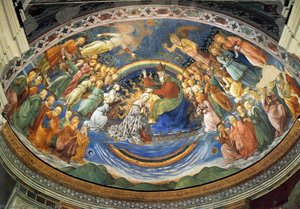
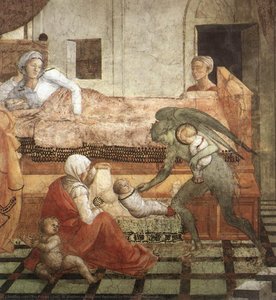
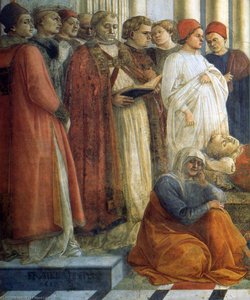
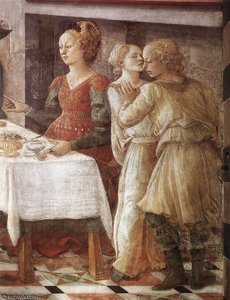
11Madonna Enthroned with Saints (detail) (1445) szerzője Fra Filippo LippiMadonna Enthroned with Saints (detail)1445 · Galleria degli Uffizi 12Annunciation (detail) (1443) szerzője Fra Filippo LippiAnnunciation (detail)1443 · Alte Pinakothek 13The Beheading of John the Baptist (1452) szerzője Fra Filippo LippiThe Beheading of John the Baptist1452 · Duomo 14Adoration of the Magi (detail) (1445) szerzője Fra Filippo LippiAdoration of the Magi (detail)1445 · National Gallery of Art 15Madonna with Child and Two Angels (1465) szerzője Fra Filippo LippiMadonna with Child and Two Angels1465 · Galleria degli Uffizi 16Coronation of the Virgin (detail) (13) (1441) szerzője Fra Filippo LippiCoronation of the Virgin (detail) (13)1441 · Galleria degli Uffizi 17Madonna Enthroned (1437) szerzője Fra Filippo LippiMadonna Enthroned1437 · Galleria Nazionale d'Arte Antica 18St Michael (detail) (1456) szerzője Fra Filippo LippiSt Michael (detail)1456 · Cleveland Museum of Art 19Coronation of the Virgin (detail) (15) (1441) szerzője Fra Filippo LippiCoronation of the Virgin (detail) (15)1441 · Galleria degli Uffizi 20Annunciation (1445) szerzője Fra Filippo LippiAnnunciation1445 · San Lorenzo Bazilikája 21Madonna and Child (detail) (1440) szerzője Fra Filippo LippiMadonna and Child (detail)1440 · National Gallery of Art 22Madonna and Child Enthroned with Two Angels (detail) (1437) szerzője Fra Filippo LippiMadonna and Child Enthroned with Two Angels (detail)1437 · Metropolitan Művészeti Múzeum 23Coronation of the Virgin (detail) (11) (1441) szerzője Fra Filippo LippiCoronation of the Virgin (detail) (11)1441 · Galleria degli Uffizi 24Szűlő Virág Coronation (1467) szerzője Fra Filippo LippiSzűlő Virág Coronation1467 · Duomo 25Madonna Enthroned with Saints (detail) (1445) szerzője Fra Filippo LippiMadonna Enthroned with Saints (detail)1445 · Galleria degli Uffizi 26Virgin and Child Surrounded by Angels with St. Frediano and St. Augustine (The Barbadori Altarpiece) (1437) szerzője Fra Filippo LippiVirgin and Child Surrounded by Angels with St. Frediano and St. Augustine (The Barbadori Altarpiece)1437 · Louvre Múzeum 27Mária és Gyermek Ünnepült Szent Székében két Angéllal (1437) szerzője Fra Filippo LippiMária és Gyermek Ünnepült Szent Székében két Angéllal1437 · Metropolitan Művészeti Múzeum 28Coronation of the Virgin (detail) (17) (1467) szerzője Fra Filippo LippiCoronation of the Virgin (detail) (17)1467 · Duomo 29Annunciation (detail) (14) (1443) szerzője Fra Filippo LippiAnnunciation (detail) (14)1443 · Alte Pinakothek 30Annunciation (detail) (18) (1445) szerzője Fra Filippo LippiAnnunciation (detail) (18)1445 · San Lorenzo Bazilikája 31Annunciation (1445) szerzője Fra Filippo LippiAnnunciation1445 · San Lorenzo Bazilikája 32Death of the Virgin (1467) szerzője Fra Filippo LippiDeath of the Virgin1467 · Duomo 33Coronation of the Virgin (detail) (1441) szerzője Fra Filippo LippiCoronation of the Virgin (detail)1441 · Galleria degli Uffizi 34Spoleto-Coronation of the Virgin (1469) szerzője Fra Filippo LippiSpoleto-Coronation of the Virgin1469 35Vision of St Augustine in his Cell (1438) szerzője Fra Filippo LippiVision of St Augustine in his Cell1438 · Galleria degli Uffizi 36Herod's Banquet (1452) szerzője Fra Filippo LippiHerod's Banquet1452 · Duomo 37Coronation of the Virgin (detail) (16) (1441) szerzője Fra Filippo LippiCoronation of the Virgin (detail) (16)1441 · Galleria degli Uffizi 38of a Man and a Woman (1450) szerzője Fra Filippo Lippiof a Man and a Woman1450 39Madonna with Child, saints and angels, known as (Madonna Trivulzio) (1432) szerzője Fra Filippo LippiMadonna with Child, saints and angels, known as (Madonna Trivulzio)1432 · Sforza-kastély 40Madonna and Child Enthroned with Saints (detail) (1430) szerzője Fra Filippo LippiMadonna and Child Enthroned with Saints (detail)1430 · Museo della Collegiata 41Female Figure (Prophetess.) (1430) szerzője Fra Filippo LippiFemale Figure (Prophetess.)1430 · Harvard Egyetemi Múzeumok 42Sts Augustine and Ambrose (detail) (1437) szerzője Fra Filippo LippiSts Augustine and Ambrose (detail)1437 · Albertina Academy of Fine Arts 43Female Saint with a Flail (Saint Walburga?) (1450) szerzője Fra Filippo LippiFemale Saint with a Flail (Saint Walburga?)1450 · Courtauld Gallery 44Death of the Virgin (detail) (1467) szerzője Fra Filippo LippiDeath of the Virgin (detail)1467 · Duomo 45Virgin and Child with Angels (1460) szerzője Fra Filippo LippiVirgin and Child with Angels1460 · Cleveland Museum of Art 46Panel from a Triptych: St. Anthony Abbot (1458) szerzője Fra Filippo LippiPanel from a Triptych: St. Anthony Abbot1458 · Cleveland Museum of Art 47Saint Dominic (1460) szerzője Fra Filippo LippiSaint Dominic1460 · Courtauld Gallery 48Saint James the Less (1460) szerzője Fra Filippo LippiSaint James the Less1460 · Courtauld Gallery 49Saint Peter (1460) szerzője Fra Filippo LippiSaint Peter1460 · Courtauld Gallery 50The enthroned St. Francis presents the rule of the order to St. Clare (1467) szerzője Fra Filippo LippiThe enthroned St. Francis presents the rule of the order to St. Clare1467 · Gemäldegalerie 51Mary as the Mother of Mercy / Protective Mantle Madonna (1460) szerzője Fra Filippo LippiMary as the Mother of Mercy / Protective Mantle Madonna1460 · Gemäldegalerie 52Saint Jerome in the Desert with Saints John the Baptist and Ansanus (1455) szerzője Fra Filippo LippiSaint Jerome in the Desert with Saints John the Baptist and Ansanus1455 · Harvard Art Museums 53St Alberto of Trapani (1452) szerzője Fra Filippo LippiSt Alberto of Trapani1452 · Duomo 54Disputation in the Synagogue (detail) (1452) szerzője Fra Filippo LippiDisputation in the Synagogue (detail)1452 · Duomo 55The Funeral of St Stephen (1460) szerzője Fra Filippo LippiThe Funeral of St Stephen1460 · Duomo 56Funeral of St Jerome (detail) (1460) szerzője Fra Filippo LippiFuneral of St Jerome (detail)1460 · Duomo 57St Stephen is Born and Replaced by Another Child (detail) (1452) szerzője Fra Filippo LippiSt Stephen is Born and Replaced by Another Child (detail)1452 · Duomo 58The Funeral of St Stephen (detail) (1460) szerzője Fra Filippo LippiThe Funeral of St Stephen (detail)1460 · Duomo 59Madonna della Cintola (detail) (1455) szerzője Fra Filippo LippiMadonna della Cintola (detail)1455 · Museo Civico 60Madonna és gyermek Szent Fredianus és Szent Ágoston (1437) szerzője Fra Filippo LippiMadonna és gyermek Szent Fredianus és Szent Ágoston1437 · Louvre Múzeum 61Adoration of the Magi (detail) (1445) szerzője Fra Filippo LippiAdoration of the Magi (detail)1445 · National Gallery of Art 62Tester bed (601) szerzője Fra Filippo LippiTester bed601 63Annunciation (detail) (17) (1445) szerzője Fra Filippo LippiAnnunciation (detail) (17)1445 · San Lorenzo Bazilikája 64Funeral of St Jerome (detail) (1460) szerzője Fra Filippo LippiFuneral of St Jerome (detail)1460 · Duomo 65Madonna with the Child and Scenes from the Life of St Anne (1452) szerzője Fra Filippo LippiMadonna with the Child and Scenes from the Life of St Anne1452 66Madonna and Child Enthroned with Saints (1430) szerzője Fra Filippo LippiMadonna and Child Enthroned with Saints1430 · Museo della Collegiata 67Szent György és Jeromos részlete (1437) szerzője Fra Filippo LippiSzent György és Jeromos részlete1437 · Albertina Academy of Fine Arts 68Disputation in the Synagogue (detail) (8) (1452) szerzője Fra Filippo LippiDisputation in the Synagogue (detail) (8)1452 · Duomo 69Madonna della Cintola (detail) (1455) szerzője Fra Filippo LippiMadonna della Cintola (detail)1455 · Museo Civico 70Head of a Woman (1452) szerzője Fra Filippo LippiHead of a Woman1452 · Galleria degli Uffizi 71Herod's Banquet (detail) (1452) szerzője Fra Filippo LippiHerod's Banquet (detail)1452 · Duomo 72Figure study (1452) szerzője Fra Filippo LippiFigure study1452 · Galleria degli Uffizi 73Confirmation of the Carmelite Rule (detail) (1432) szerzője Fra Filippo LippiConfirmation of the Carmelite Rule (detail)1432 · Museo di Santa Maria del Carmine 74The Nativity (1445) szerzője Fra Filippo LippiThe Nativity1445 75of the Virgin (detail) (1440) szerzője Fra Filippo Lippiof the Virgin (detail)1440 76Saints (1440) szerzője Fra Filippo LippiSaints1440 77The Adoration of the Magi (1445) szerzője Fra Filippo LippiThe Adoration of the Magi1445 78Virgin and Child (1445) szerzője Fra Filippo LippiVirgin and Child1445 79the annunciation - - (1440) szerzője Fra Filippo Lippithe annunciation - -1440 80The Funeral of St Stephen (detail) (9) (1460) szerzője Fra Filippo LippiThe Funeral of St Stephen (detail) (9)1460 · Duomo 81Prato-The Saint's Funeral (1466) szerzője Fra Filippo LippiPrato-The Saint's Funeral1466 82Prato-Birth and Naming St John (1466) szerzője Fra Filippo LippiPrato-Birth and Naming St John1466 83Prato-St Stephen is Born and Replaced by Another Child (1466) szerzője Fra Filippo LippiPrato-St Stephen is Born and Replaced by Another Child1466 84St Alberto of Trapani (1452) szerzője Fra Filippo LippiSt Alberto of Trapani1452 · Duomo 85Prato-Disputation in the Synagogue (detail) (1466) szerzője Fra Filippo LippiPrato-Disputation in the Synagogue (detail)1466 86Prato-Herod's Banquet (1466) szerzője Fra Filippo LippiPrato-Herod's Banquet1466 87Madonna and Child with Angels - - (1465) szerzője Fra Filippo LippiMadonna and Child with Angels - -1465 88Herod's Banquet (detail) (1452) szerzője Fra Filippo LippiHerod's Banquet (detail)1452 · Duomo 89Prato-View of the fresco cycle (1466) szerzője Fra Filippo LippiPrato-View of the fresco cycle1466 90Prato-Herod's Banquet (detail)3 (1466) szerzője Fra Filippo LippiPrato-Herod's Banquet (detail)31466 91The Funeral of St Stephen (detail) (1460) szerzője Fra Filippo LippiThe Funeral of St Stephen (detail)1460 · Duomo 92Prato-Herod's Banquet (detail) (1466) szerzője Fra Filippo LippiPrato-Herod's Banquet (detail)1466 93St John Taking Leave of His Parents (1452) szerzője Fra Filippo LippiSt John Taking Leave of His Parents1452 · Duomo 94View of the Apse of the Cathedral (1467) szerzője Fra Filippo LippiView of the Apse of the Cathedral1467 · Cathedral 95Birth and Naming St John (detail) (1452) szerzője Fra Filippo LippiBirth and Naming St John (detail)1452 · Duomo 96View of the left (north) wall of the main chapel (1452) szerzője Fra Filippo LippiView of the left (north) wall of the main chapel1452 · Duomo 97The Martyrdom of St Stephen (1460) szerzője Fra Filippo LippiThe Martyrdom of St Stephen1460 · Duomo 98Prato-Disputation in the Synagogue (detail)2 (1466) szerzője Fra Filippo LippiPrato-Disputation in the Synagogue (detail)21466 99St John Taking Leave of his Parents (detail) (1452) szerzője Fra Filippo LippiSt John Taking Leave of his Parents (detail)1452 · Duomo 100Madonna with the Child and Scenes from the Life of St Anne (detail) (1452) szerzője Fra Filippo LippiMadonna with the Child and Scenes from the Life of St Anne (detail)1452

Fra Filippo Lippi híres festményei, korszakonként

A témák, amelyek Fra Filippo Lippi figyelmét meghúzták

A négy leggyakorobban előforduló téma ebben az eredeti művekben, mindegyik a legkiválóbb példájával.

A műemlékek, amelyek Fra Filippo Lippi eredeti műveit őrzik

A 8 olyan múzeum, amely a legtöbb ezen az oldalon szereplő festményet őrzi.

Múzeumok Város Fra Filippo Lippi művei Ebből a listából származó festmények
Duomo, PratoDuomo Prato 34 Funeral of St Jerome, The Beheading of John the Baptist, Herod's Banquet
Galleria degli Uffizi, TarunaGalleria degli Uffizi Taruna 17 Coronation of the Virgin (detail), Madonna Enthroned with Saints (detail), Madonna Enthroned with Saints (detail)
National Gallery of Art, WashingtonNational Gallery of Art Washington 8 Adoration of the Magi, The Annunciation, Adoration of the Magi (detail)
Duomo, SpoletoDuomo Spoleto 8 Coronation of the Virgin (detail) (18), Szűlő Virág Coronation, Coronation of the Virgin (detail) (17)
San Lorenzo Bazilikája, FlorenciaSan Lorenzo Bazilikája Florencia 5 Annunciation, Annunciation (detail) (18), Annunciation
Courtauld Gallery, LondonCourtauld Gallery London 4 Female Saint with a Flail (Saint Walburga?), Saint Dominic, Saint James the Less
Museo Civico, PratoMuseo Civico Prato 7 Madonna della Cintola (detail), Madonna della Cintola (detail), Madonna della Cintola (detail)
Cleveland Museum of Art, ClevelandCleveland Museum of Art Cleveland 5 St Michael (detail), Virgin and Child with Angels, Panel from a Triptych: St. Anthony Abbot

Fra Filippo Lippi évtizedekig: egy egyedi eredeti mű minden évtizedben

Művek évtizedenként

Váassz ki egy évtizedet, hogy megnézhesd az azt meghatározó eredetiműveket.

Fra Filippo Lippi festményei: kérdések a galériának

Mi a leghíresebb műve Fra Filippo Lippinek?Fedje fel a választ

Madonna gyermekkel és angyalokkal (1460). Ezt követi Adoration of the Magi (1445) és The Annunciation (1435).

Milyen életkorában alkotta meg Fra Filippo Lippi a(z) Madonna gyermekkel és angyalokkal műszt?Fedje fel a választ

54 éves: Madonna gyermekkel és angyalokkal 1460-ből származik, Fra Filippo Lippi pedig 1406-ben született.

Melyik tíz festménye Fra Filippo Lippi a leghíresebb?Fedje fel a választ

Madonna gyermekkel és angyalokkal, Adoration of the Magi, The Annunciation, The Annunciation - tempera on wood -, Madonna and Child Enthroned with Saints (detail), Madonna della Cintola (detail), Coronation of the Virgin (detail) (18), Coronation of the Virgin (detail), Funeral of St Jerome és Madonna Enthroned with Saints (detail). A fenti rangsor a művek évszamarát és a múzeumát jelzi.

Hány mű alkotása ismert Fra Filippo Lippi nevében?Fedje fel a választ

Katalógusunkban 277 mű található Fra Filippo Lippi alkotótól, 1430 és 1469 év közötti időszakból.

Hol tekinthetők meg a leghíresebb Fra Filippo Lippi eredetijeit?Fedje fel a választ

Leginkább Duomo (Prato), Galleria degli Uffizi (Taruna) és National Gallery of Art (Washington) található. A fenti múzeumi táblázatban mindegyik felsorolásra került.

Melyik időszakban alkotta Fra Filippo Lippi a leghíresebb festményeit?Fedje fel a választ

1460s alatt: a jelen laphonon található 100 műből 33 készült ebben az időszakban, köztük Madonna gyermekkel és angyalokkal.

Melyik híres Fra Filippo Lippi festmény a legkorábbi, és melyik a legutóbb készült?Fedje fel a választ

Ezen az oldalon a leghitelesebb Madonna and Child Enthroned with Saints (detail) (1430), a legutóbbi pedig Spoleto-Coronation of the Virgin (1469).

Milyen témakörket kedvelt Fra Filippo Lippi?Fedje fel a választ

Virgin mary (22), Renaissance (21) és Renaissance art (16), a jelen oldalon található 100 műművészeti alkotás között.

Milyen anyagokkal festett leggyakrabban Fra Filippo Lippi?Fedje fel a választ

Tempera On Panel, a jelen oldalon található 100 műből 29 darab esetén.

Mely művészeti irányba tartozik Fra Filippo Lippi műve?Fedje fel a választ

Korai reneszánsz, ezen az oldalon található eredetiek alapján.

Milyen Fra Filippo Lippi eredeti műveket láthatok a Duomo kiállításaiban?Fedje fel a választ

Funeral of St Jerome, The Beheading of John the Baptist és Herod's Banquet: a Duomo, Prato 21 művet őrzi ezen az oldalon.

Fra Filippo Lippi: a művész portréja

A Florentine Rebel: The Life and Art of Filippo Lippi

Filippo di Tommaso Lippi, a name forever intertwined with both artistic brilliance and scandalous intrigue, stands as one of the most compelling figures of the Italian Renaissance. Born in Florence around 1406 to a butcher father and a mother who tragically died shortly after his birth, young Filippo’s early life was marked by profound loss and an unusual upbringing. He was entrusted to the care of his aunt, Mona Lapaccia, a woman whose unconventional methods – including reportedly sending him out to beg for discarded grapes – shaped his early experiences and perhaps contributed to his later rebellious spirit. At the tender age of eight, he entered the Carmelite convent, a decision that would profoundly influence both his artistic development and the trajectory of his life.

From Religious Vows to Artistic Innovation

The cloistered walls of the Carmelite priory provided Filippo with an education far beyond the typical monastic routine. He quickly demonstrated a remarkable aptitude for learning, though not necessarily in traditional subjects; accounts suggest he spent much of his time filling books with caricatures rather than studying scripture. However, it was within this environment that his passion for painting truly ignited. Giorgio Vasari, the renowned art historian, recounts how Lippi became utterly captivated by Masaccio’s groundbreaking frescoes in the Brancacci Chapel – an encounter that served as a pivotal catalyst for his artistic evolution. Masaccio's innovative use of light, perspective, and naturalism profoundly impacted Lippi, leading him to abandon the more rigid conventions of earlier devotional art. His early works, such as the *Tarquinia Madonna*, reveal this nascent influence: a newfound realism begins to emerge, subtly challenging established norms. Yet, Lippi was not merely an imitator; he quickly developed his own distinctive style – characterized by lyrical grace, delicate coloring, and a remarkable ability to infuse religious scenes with a sense of intimacy and human connection.

A Master of Composition and Controversy

Lippi’s artistic career flourished in Florence, where he gained recognition for his skill and garnered commissions from prominent families, including the powerful Medici clan. His works during this period – such as *The Annunciation and the Seven Saints* – demonstrate a mastery of composition, incorporating intricate symbolism and elegant detail. The *Coronation of the Virgin*, completed in 1441 for the nuns of Sant’Ambrogio, stands out as particularly significant; it features a half-length figure that many scholars believe to be a self-portrait of Lippi himself – a bold declaration of artistic identity within a context where religious art often prioritized anonymity. However, Lippi's life was far from serene. He frequently faced financial difficulties, legal disputes, and accusations of forgery, fueled by his unconventional lifestyle and rumored indiscretions. The most sensational episode involved his abduction of Lucrezia Buti, a nun from Prato, with whom he eventually married after years of scandal and controversy – an act that defied societal expectations and cemented his reputation as a rebellious figure.

The Scandalous Marriage and Artistic Flourishing

Despite the turmoil surrounding his personal life, Lippi continued to produce some of the most beautiful and celebrated works of the Florentine Renaissance. His workshop became a breeding ground for future masters, including Sandro Botticelli and Francesco di Pesello (Pesellino), both of whom benefited from Lippi’s tutelage and went on to achieve significant acclaim in their own right. His influence can be seen throughout Florentine painting during the late Quattrocento – a period marked by a shift towards greater emotional expression and a more humanistic approach to religious subjects. Works like *The Annunciation* showcase his ability to blend spiritual piety with worldly realism, creating images that are both deeply moving and visually stunning. Lippi’s technical skill was exceptional; he possessed an unparalleled mastery of color, composition, and detail, earning him the admiration of contemporaries such as Giorgio Vasari, who described his work as “astonishingly graceful” and “finely composed.”

Legacy and Influence

Filippo Lippi died in Spoleto in 1469, leaving behind a legacy that continues to fascinate and inspire. His life – a blend of artistic genius, scandalous romance, and unwavering defiance of convention – serves as a potent reminder of the complexities inherent in Renaissance Italy. His art remains a testament to the power of human creativity and the enduring allure of beauty, solidifying his place as one of the most important and captivating figures of the Italian Renaissance. His story is not simply that of a painter; it’s the tale of a man who dared to challenge societal norms, embrace personal happiness, and leave an indelible mark on the art world.