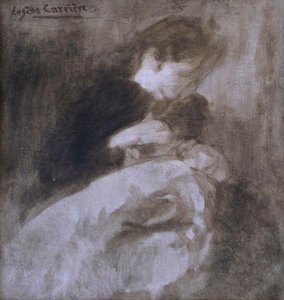
Eugène Carrière portréja

A 100 legnevesebbebb Eugène Carrière festmény, mindegyik egyedistens

Frissítve: november 2026 · rangsorolva népszerűségi pontszámunk alapján (minden mű keresései, látogatásai és megrendelései alapján) · 249 mű Eugène Carrière alkotása a katalógusunkban

Röviden

Portrait of Pablo Casals (1903) az a Eugène Carrière festmény, amely a legtöbb tekintetet felvonja; az eredeti mű a Vil·la Casals-Museu Pau Casals gyűjteményében található, El Vendrell. Ezután a tekintet Nelly Carrière (1903) és Le Docteur Léon Gorodiche et sa famille Portrait de famille (titre ancien) elemre irányul. A Eugène Carrière 249 műve közül a katalógusunkban megtalálható 100 legnépesebb alkotás, melyeket az év, a múzeum és az örökévalóságának okai kísérnek.

1849 – 1906, Gournay-sur-Marne Symbolism A legtöbb mű: Petit Palais

A galéria szemével: Eugène Carrière legjobb 10 festménye

1
Portrait of Pablo Casals (1903) (1889) -ja Eugène Carrière

Portrait of Pablo Casals

1903 · Oil On Canvas · Vil·la Casals-Museu Pau Casals, El Vendrell

Eugène Anatole Carrière’s “Portrait of Pablo Casals,” painted in 1903, is more than just a likeness; it's an intensely felt meditation on contemplation and the weight of artistic experience. This oil on canvas work, currently residing within the Vil·la Casals-Museu Pau Casals in El Vendrell, Spain, offers a rare glimpse into the mind of a man lost in thought – Pablo Casals himself, the renowned cellist – through Carrière’s masterful…

2
Nelly Carrière (1903) (1889) -ja Eugène Carrière

Nelly Carrière

1903 · Oil On Canvas

The air in the room feels heavy and still, thick with the scent of oil paint and the soft, diffused light of a late afternoon. Nelly Carrière sits before us, her presence a gentle weight in the center of the frame. She does not demand attention through movement or bright color; instead, she draws the eye inward through a profound, quiet stillness. Her head tilts slightly, a subtle asymmetry that…

3
Le Docteur Léon Gorodiche et sa famille Portrait de famille (titre ancien) (1889) -ja Eugène Carrière

Le Docteur Léon Gorodiche et sa famille Portrait de famille (titre ancien)

Oil

The canvas presents Le Docteur Léon Gorodiche et sa famille Portrait de famille (titre ancien), a work that brings the presence of Léon Gorodiche into the immediate view. This portrait captures a family moment, pulling the viewer into a quiet, domestic scene. The artist, Eugène Carrière, breathes life into the subjects, rendering them with a sense of profound intimacy. One can almost feel the stillness of the room as the…

4
Portrait of Madame Aline Ménard-Dorian (1905) (1889) -ja Eugène Carrière

Portrait of Madame Aline Ménard-Dorian

1905 · Oil On Canvas · Petit Palais, Paris

The Portrait of Madame Aline Ménard-Dorian is a somber and ethereal portrait of a woman, characterized by a dreamlike, atmospheric quality and a monochromatic, low-key tonal range. The composition features a single female figure, positioned slightly off-center, appearing to emerge from a dark, nebulous background. The color palette is highly restricted, consisting almost entirely of sepia, umber, cream, and deep browns, creating a sense of antiquity and melancholy.

5
Arsène Carriere (1900) (1889) -ja Eugène Carrière

Arsène Carriere

1900 · Oil On Canvas · National Gallery of Art, Washington

Every brushstroke seeks to reach past the skin and into the essence of human experience. The way the light catches the white fabric of the dress against the darker, murky background creates a focal point that is both intimate and profound. This is not a mere depiction of a child, but an exploration of the raw, unvarnished emotions that exist in the earliest stages of life. The work carries a…

6
Femme nue couchée (1889) -ja Eugène Carrière

Femme nue couchée

Oil On Canvas

The composition is centered around the woman's body, which lies diagonally across the canvas in a horizontal format. Her pose is relaxed; one arm is raised above her head while the other rests near her side. A draped fabric partially covers her lower body, creating organic, flowing shapes that follow the curves of her form. To the right of the figure, a small table holds a glass of wine and…

7
Portrait du Dr. Léon Gorodiche Portrait du Dr. X (1889) -ja Eugène Carrière

Portrait du Dr. Léon Gorodiche Portrait du Dr. X

Oil On Canvas

Portrait du Dr. Léon Gorodiche Portrait du Dr. X is a work by the French artist Eugène Carrière. The subject is a man, identified as either Dr. Léon Gorodiche or an individual referred to as Dr. X. Carrière focuses on capturing the sitter's likeness and his psychological state through a muted and somewhat melancholic style.

8
Portrait of a Lady with a Dog (1885) (1889) -ja Eugène Carrière

Portrait of a Lady with a Dog

1885 · Oil On Canvas · Art Institute of Chicago, Chicago

A Study in Shadow and Stillness Portrait of a Lady with a Dog emerges from a dark, indistinct background like a memory surfacing through fog. The composition holds a seated woman, positioned slightly off-center, her form anchored by the small weight of a dog resting in her lap. A soft light source strikes her face, neck, and shoulder, pulling these features from the surrounding gloom. The palette is strictly grayscale,…

10
Self-Portrait (1893) (1889) -ja Eugène Carrière

Self-Portrait

1893 · Oil On Canvas

A man stares directly from the canvas, his gaze fixed and unyielding. Through a veil of hazy brushwork, his features emerge from a dense, monochromatic atmosphere of umber and grey. This 1893 oil on canvas presents a face defined by more than mere anatomy; it is a study of presence through absence. The subject, wearing glasses that catch a faint, spectral light, possesses a mustache and a beard that seem…

Eugène Carrière híres festményei, 11 és 100 között

11The Sleep (1890) (1889) -ja Eugène CarrièreThe Sleep1890 · Städel Múzeum 12Self-Portrait (1893) (1889) -ja Eugène CarrièreSelf-Portrait1893 · Metropolitan Művészeti Múzeum 13Tête de bébé (1878) (1889) -ja Eugène CarrièreTête de bébé1878 · The Hunterian Museum and Art Gallery 14Portrait of Edmond de Goncourt (1822-1896), writer (1880) (1889) -ja Eugène CarrièrePortrait of Edmond de Goncourt (1822-1896), writer1880 · Carnavalet Museum 15Portrait of Auguste Blanqui (1805-1881), Politician (1880) (1889) -ja Eugène CarrièrePortrait of Auguste Blanqui (1805-1881), Politician1880 · Carnavalet Museum 16Portrait of a Man (1879) (1889) -ja Eugène CarrièrePortrait of a Man1879 · Művészeti Múzeum, Boston 17Little d'Artagnan (1882) (1889) -ja Eugène CarrièreLittle d'Artagnan1882 18Sketch for the Salon of Sciences of the Hôtel de Ville de Paris: Physics - Chemistry (1890) (1889) -ja Eugène CarrièreSketch for the Salon of Sciences of the Hôtel de Ville de Paris: Physics - Chemistry1890 · Petit Palais 19Sketch for the Salon of Sciences of the Hôtel de Ville de Paris: Magnetism - Mechanics (1890) (1889) -ja Eugène CarrièreSketch for the Salon of Sciences of the Hôtel de Ville de Paris: Magnetism - Mechanics1890 · Petit Palais 20Sketch for the Salon of Sciences of the Hôtel de Ville de Paris: Mathematics - Mineralogy (1890) (1889) -ja Eugène CarrièreSketch for the Salon of Sciences of the Hôtel de Ville de Paris: Mathematics - Mineralogy1890 · Petit Palais 21Woman Sewing (1892) (1889) -ja Eugène CarrièreWoman Sewing1892 · Rhode Island School of Design Museum of Art 22Armand Berton (1891) (1889) -ja Eugène CarrièreArmand Berton1891 · Cleveland Museum of Art 23Portrait of Paul Gauguin (1891) (1889) -ja Eugène CarrièrePortrait of Paul Gauguin1891 · Yale University Art Gallery 24Self-portrait, Eugène Carrière (1887) (1889) -ja Eugène CarrièreSelf-portrait, Eugène Carrière1887 · Ghent Művészeti Múzeum (MSK) 25Paul Verlaine (1891) (1889) -ja Eugène CarrièrePaul Verlaine1891 · Művészeti Múzeum, Boston 26Maternity (1892) (1889) -ja Eugène CarrièreMaternity1892 27Portrait of Gustave Geffroy (1891) (1889) -ja Eugène CarrièrePortrait of Gustave Geffroy1891 · Musée Toulouse-Lautrec 28Maternity (1888) (1889) -ja Eugène CarrièreMaternity1888 · National Museum Cardiff 29The Tin Mug (1888) (1889) -ja Eugène CarrièreThe Tin Mug1888 · National Museum Cardiff 30Meditation (1893) (1889) -ja Eugène CarrièreMeditation1893 · Ohara Museum of Art 31The Ages of Life: Young Mothers (1898) (1889) -ja Eugène CarrièreThe Ages of Life: Young Mothers1898 · Petit Palais 32Sketch for the Mairie du 12ème: Youth (1897) (1889) -ja Eugène CarrièreSketch for the Mairie du 12ème: Youth1897 · Petit Palais 33Sketch for the Mairie du 12ème: The Old Men (1897) (1889) -ja Eugène CarrièreSketch for the Mairie du 12ème: The Old Men1897 · Petit Palais 34Reading. (1894) (1889) -ja Eugène CarrièreReading.1894 · The National Museum in Poznań 35Portrait of a Lady (1894) (1889) -ja Eugène CarrièrePortrait of a Lady1894 · Kuba Országos Képzőművészeti Múzeum 36A Family (1893) (1889) -ja Eugène CarrièreA Family1893 · National Museum of Art, Architecture and Design 37Two Women (1895) (1889) -ja Eugène CarrièreTwo Women1895 · Minneapolis Institute of Art 38Portrait of a Woman (Madame Keyser (?)) (1897) (1889) -ja Eugène CarrièrePortrait of a Woman (Madame Keyser (?))1897 · Los Angeles County Museum of Art 39Gabriel Séailles et sa fille (1893) (1889) -ja Eugène CarrièreGabriel Séailles et sa fille1893 · Musée d'Art Moderne et Contemporain de Strasbourg 40Maternity (Suffering) (1897) (1889) -ja Eugène CarrièreMaternity (Suffering)1897 · National Museum Cardiff 41Abandoned Fantine (1903) (1889) -ja Eugène CarrièreAbandoned Fantine1903 · Musée Victor Hugo 42Portrait of Anatole France (1844-1924), writer (1900) (1889) -ja Eugène CarrièrePortrait of Anatole France (1844-1924), writer1900 · Carnavalet Museum 43The Contemplator (1901) (1889) -ja Eugène CarrièreThe Contemplator1901 · Cleveland Museum of Art 44Madame Case (1900) (1889) -ja Eugène CarrièreMadame Case1900 · Cleveland Museum of Art 45Portrait of Elsa Koeberlé (1903) (1889) -ja Eugène CarrièrePortrait of Elsa Koeberlé1903 · Musée d'Art Moderne et Contemporain de Strasbourg 46Bust of a Young Girl (1903) (1889) -ja Eugène CarrièreBust of a Young Girl1903 · Harvard Art Museums 47Méditation (1900) (1889) -ja Eugène CarrièreMéditation1900 · Musée d'Art Moderne et Contemporain de Strasbourg 48Woman Leaning on a Table (1890) (1889) -ja Eugène CarrièreWoman Leaning on a Table1890 · Hermitaeus-múzeum 49L'enfant à la soupière (1889) -ja Eugène CarrièreL'enfant à la soupière 50Maternity (1880) (1889) -ja Eugène CarrièreMaternity1880 · Hill-Stead Museum 51The Pianist (1900) (1889) -ja Eugène CarrièreThe Pianist1900 · Bristol Museum - Art Gallery 52Portrait of Pauline Ménard-Dorian (1890) (1889) -ja Eugène CarrièrePortrait of Pauline Ménard-Dorian1890 · Petit Palais 53Roger Marx (1889) -ja Eugène CarrièreRoger Marx 54The First Communion (1896) (1889) -ja Eugène CarrièreThe First Communion1896 · Metropolitan Művészeti Múzeum 55Still Life (1875) (1889) -ja Eugène CarrièreStill Life1875 · Art Institute of Chicago 56Sketch for the Salon des Sciences of the Hôtel de Ville de Paris: Nude Woman from Behind, Spandrel Figure (1890) (1889) -ja Eugène CarrièreSketch for the Salon des Sciences of the Hôtel de Ville de Paris: Nude Woman from Behind, Spandrel Figure1890 · Petit Palais 57Sketch for the Salon of Sciences of the Hôtel de Ville de Paris: Geography - Geology (1890) (1889) -ja Eugène CarrièreSketch for the Salon of Sciences of the Hôtel de Ville de Paris: Geography - Geology1890 · Petit Palais 58Sketch for the Salon of Sciences of the Hôtel de Ville de Paris: Mathematics and Mineralogy (1890) (1889) -ja Eugène CarrièreSketch for the Salon of Sciences of the Hôtel de Ville de Paris: Mathematics and Mineralogy1890 · Petit Palais 59Sketch for the Salon of Sciences of the Hôtel de Ville de Paris: Botany - Medicine (1889) (1889) -ja Eugène CarrièreSketch for the Salon of Sciences of the Hôtel de Ville de Paris: Botany - Medicine1889 · Petit Palais 60Head of a Child (1891) (1889) -ja Eugène CarrièreHead of a Child1891 · National Gallery 61Winding Wool (Les Dévideuses) (1887) (1889) -ja Eugène CarrièreWinding Wool (Les Dévideuses)1887 · National Gallery 62Female figure (1901) (1889) -ja Eugène CarrièreFemale figure1901 · Vil·la Casals-Museu Pau Casals 63The Footbath (1890) (1889) -ja Eugène CarrièreThe Footbath1890 · National Museum Cardiff 64Mother and Child (1890) (1889) -ja Eugène CarrièreMother and Child1890 · National Museum Cardiff 65Landscape in the Orne (1901) (1889) -ja Eugène CarrièreLandscape in the Orne1901 · Rhode Island School of Design Museum of Art 66Head of a Woman (1900) (1889) -ja Eugène CarrièreHead of a Woman1900 · York Art Gallery 67Interior with a Vase (1896) (1889) -ja Eugène CarrièreInterior with a Vase1896 · Städel Múzeum 68Woman looking (1889) -ja Eugène CarrièreWoman lookingNemzeti Szépművészeti Múzeum 69Artist at His Easel (L'Artiste à son Chevalet) (1889) -ja Eugène CarrièreArtist at His Easel (L'Artiste à son Chevalet)Indianapolis Művészeti Múzeum 70Portrait of a Lady. Study (1889) -ja Eugène CarrièrePortrait of a Lady. StudyNationalmuseum 71Porträt der Mme Arthur Fontaine (1889) -ja Eugène CarrièrePorträt der Mme Arthur FontaineMusée Toulouse-Lautrec 72violin-player (1889) -ja Eugène Carrièreviolin-player 73Head of a Young Girl (1889) -ja Eugène CarrièreHead of a Young Girl 74Portrait d'Henri Rochefort (1889) -ja Eugène CarrièrePortrait d'Henri Rochefort 75Portrait of a Man (1889) -ja Eugène CarrièrePortrait of a Man 76Portrait de femme (Lisbeth) (titre factice) (1889) -ja Eugène CarrièrePortrait de femme (Lisbeth) (titre factice) 77Marguerite Carrière (1889) -ja Eugène CarrièreMarguerite Carrière 78Maternité (1889) -ja Eugène CarrièreMaternité 79Child With A Doll (1889) -ja Eugène CarrièreChild With A Doll 80Femme coupant un tissu (1889) -ja Eugène CarrièreFemme coupant un tissu 81Sealmaiden (1889) -ja Eugène CarrièreSealmaiden 82Le Reveil, Le Baiser A La Mere (1889) -ja Eugène CarrièreLe Reveil, Le Baiser A La Mere 83Maternité (femme et enfant) (1889) -ja Eugène CarrièreMaternité (femme et enfant) 84Souvenir de Lourdes (1889) -ja Eugène CarrièreSouvenir de LourdesAshmolean Museum 85Portrait d'enfant (1889) -ja Eugène CarrièrePortrait d'enfant 86Portrait de Melle Lucienne Bréval (1889) -ja Eugène CarrièrePortrait de Melle Lucienne Bréval 87L'homme et sa destinée (1889) -ja Eugène CarrièreL'homme et sa destinée 88La chemise enlevée (1889) -ja Eugène CarrièreLa chemise enlevée 89Le baiser du soir (1889) -ja Eugène CarrièreLe baiser du soir 90Le fondeur (1889) -ja Eugène CarrièreLe fondeurNancy Szépművészeti Múzeum 91Famille Chausson en grisaille (1889) -ja Eugène CarrièreFamille Chausson en grisaille 92Intimité La grande soeur (autre titre) (1889) -ja Eugène CarrièreIntimité La grande soeur (autre titre)Bavári Állami Festırménygyűjtemények 93Scène d'enterrement médiéval (1889) -ja Eugène CarrièreScène d'enterrement médiéval 94Madame Eugène Carrière en méditation (1889) -ja Eugène CarrièreMadame Eugène Carrière en méditation 95Portrait de René Carrière dessinant (1889) -ja Eugène CarrièrePortrait de René Carrière dessinant 96La famille du peintre (1889) -ja Eugène CarrièreLa famille du peintre 97Sortie d'Eglise (1889) -ja Eugène CarrièreSortie d'Eglise 98Pas pressé de faire connaissance (1889) -ja Eugène CarrièrePas pressé de faire connaissance 99Femme dans un intérieur (1889) -ja Eugène CarrièreFemme dans un intérieur 100Femme assise en buste, les mains croisées (1889) -ja Eugène CarrièreFemme assise en buste, les mains croisées

Eugène Carrière híres festményei, korszakonként

A témák, amelyek Eugène Carrière figyelmét meghúzták

A négy leggyakorobban előforduló téma ebben az eredeti művekben, mindegyik a legkiválóbb példájával.

A műemlékek, amelyek Eugène Carrière eredeti műveit őrzik

A 8 olyan múzeum, amely a legtöbb ezen az oldalon szereplő festményet őrzi.

Múzeum Város Eugène Carrière művei Ebből a listából származó festmények
Petit Palais, ParisPetit Palais Paris 12 Portrait of Madame Aline Ménard-Dorian, Sketch for the Salon of Sciences of the Hôtel de Ville de Paris: Physics - Chemistry, Sketch for the Salon of Sciences of the Hôtel de Ville de Paris: Magnetism - Mechanics
National Museum Cardiff, CardiffNational Museum Cardiff Cardiff 6 Maternity, The Tin Mug, Maternity (Suffering)
Musée d'Art Moderne et Contemporain de Strasbourg, StrasbourgMusée d'Art Moderne et Contemporain de Strasbourg Strasbourg 6 Gabriel Séailles et sa fille, Portrait of Elsa Koeberlé, Méditation
Carnavalet Museum, ParisCarnavalet Museum Paris 3 Portrait of Edmond de Goncourt (1822-1896), writer, Portrait of Auguste Blanqui (1805-1881), Politician, Portrait of Anatole France (1844-1924), writer
Cleveland Museum of Art, ClevelandCleveland Museum of Art Cleveland 3 Armand Berton, The Contemplator, Madame Case
Art Institute of Chicago, ChicagoArt Institute of Chicago Chicago 3 Portrait of a Lady with a Dog, Still Life
Metropolitan Művészeti Múzeum, New YorkMetropolitan Művészeti Múzeum New York 3 Self-Portrait, The First Communion
National Gallery, LondonNational Gallery London 3 Head of a Child, Winding Wool (Les Dévideuses)

Eugène Carrière évtizedekig: egy egyedi eredeti mű minden évtizedben

Művek évtizedenként

Váassz ki egy évtizedet, hogy megnézhesd az azt meghatározó eredetiműveket.

Eugène Carrière festményei: kérdések a galériának

Mi a leghíresebb műve Eugène Carrièrenek?Fedje fel a választ

Portrait of Pablo Casals (1903), Vil·la Casals-Museu Pau Casals, El Vendrell. Ezután Nelly Carrière (1903) és Le Docteur Léon Gorodiche et sa famille Portrait de famille (titre ancien) következik.

Milyen életkorában alkotta meg Eugène Carrière a(z) Portrait of Pablo Casals műszt?Fedje fel a választ

54 éves: Portrait of Pablo Casals 1903-ből származik, Eugène Carrière pedig 1849-ben született.

Melyik tíz festménye Eugène Carrière a leghíresebb?Fedje fel a választ

Portrait of Pablo Casals, Nelly Carrière, Le Docteur Léon Gorodiche et sa famille Portrait de famille (titre ancien), Portrait of Madame Aline Ménard-Dorian, Arsène Carriere, Femme nue couchée, Portrait du Dr. Léon Gorodiche Portrait du Dr. X, Portrait of a Lady with a Dog, The Artist with his Wife and their Son Jean-René és Self-Portrait. A fenti rangsor a művek évszamarát és a múzeumát jelzi.

Hány mű alkotása ismert Eugène Carrière nevében?Fedje fel a választ

Katalógusunkban 249 mű található Eugène Carrière alkotótól, 1875 és 1905 év közötti időszakból.

Hol tekinthetők meg a leghíresebb Eugène Carrière eredetijeit?Fedje fel a választ

Leginkább Petit Palais (Paris), National Museum Cardiff (Cardiff) és Musée d'Art Moderne et Contemporain de Strasbourg (Strasbourg) található. A fenti múzeumi táblázatban mindegyik felsorolásra került.

Melyik időszakban alkotta Eugène Carrière a leghíresebb festményeit?Fedje fel a választ

1890s alatt: a jelen laphonon található 100 műből 34 készült ebben az időszakban, köztük The Artist with his Wife and their Son Jean-René.

Melyik híres Eugène Carrière festmény a legkorábbi, és melyik a legutóbb készült?Fedje fel a választ

Ezen az oldalon a leghitelesebb Still Life (1875), a legutóbbi pedig Portrait of Madame Aline Ménard-Dorian (1905).

Milyen témakörket kedvelt Eugène Carrière?Fedje fel a választ

Woman (27), Face (21) és Portrait (18), a jelen oldalon található 100 műművészeti alkotás között.

Milyen anyagokkal festett leggyakrabban Eugène Carrière?Fedje fel a választ

Oil On Canvas, a jelen oldalon található 100 műből 38 darab esetén.

Mely művészeti irányba tartozik Eugène Carrière műve?Fedje fel a választ

Symbolism, ezen az oldalon található eredetiek alapján.

Milyen Eugène Carrière eredeti műveket láthatok a Petit Palais kiállításaiban?Fedje fel a választ

Portrait of Madame Aline Ménard-Dorian, Sketch for the Salon of Sciences of the Hôtel de Ville de Paris: Physics - Chemistry és Sketch for the Salon of Sciences of the Hôtel de Ville de Paris: Magnetism - Mechanics: a Petit Palais, Paris 12 művet őrzi ezen az oldalon.

Eugène Carrière: a művész portréja

Korai élet, család és képzés

Eugène Carrière 1849. január 16-án érkezett el e világba, Gournay-sur-Marne településen, Seine-Saint-Denis megyében. Egy biztosítósági ügynök kilenc gyermekéből ő volt a nyolcadik. Korai éveit Strasbourgban töltötte, ahol meglegdtek művészi készségének alapjai. Első művészeti oktatását az Ecole Municipale de Dessin intézményében szerezte, miközben a kereskedelmi litográfia mesteri gyakorlatán keresztül finomította technikai tudását.

Élete iránya 1868-ban vált alapjaiban megváltozóvá. Bár rövid ideig litográfusként volt foglalkoztatva, egy párizsi látogatás mindent megváltoztatott számára. A város különleges atmoszférája és művészeti életének vibrálása egy újabb utat kínált számára. Elhatározta, hogy művész lesz, ez a döntés pedig a párizsi École des Beaux-Arts kapuihoz vezetette őt. Ott, Cabanel irányítása alatt csiszolta stílusát, elmozdulva a litográfia üzleti precizitásától a finomművészetek komplexitása, mélysége felé.

Technika és művészeti stílus

A vászon gyakran egy sűrű, ködös, barna atmoszféra alá merül, amely különleges világot teremt. Eugène Carrière elszakad a kortársai vizuális pillanatainak ኣብszolódó fényétől, és egy visszafogottabb palettát választ, amely a vizuális élmény helyett a pszichológiai mélységet helyezi a fókuszba. Művészete a clair-obscur monokrómra épül, ahol a barna és a szürke árnyalatai dominálnak a kompozícióban. Ez a megközelítés a külső világ megtisztítására törekszik, hogy elérje a tárgyak felszínén rejtőzködő spirituális rezonanciákat és belső állapotokat.

Festési technikája haptikus és tudatos. Egy olyan művészies stílust alkalmaz, amely gyakran a grattage módszert utilizesi – a pigmentet a pensel nyelével karcolja fel, hogy textúrát és fényt alakítson ki. Az anyag ilyen fizikai manipulálása hozzájárul képeim eterikus, álomszerű minőségéhez. Az így kialakuló felületek nem csupán egy jelenetet ábrázolnak; a fény és az árnyék mögött az emberi tapasztalás legmédegesebb esszenciáját próbálják felidézni.

Kulcsfontosságú művek és emlékezetes festmények

Művészete során a fókuszpont a családi élet intim szférájára és a spirituális dimenzióra helyeződött át, amit leginkább ismert témái tükröztek. 1885-ben, Párizsben alkotta meg A beteg gyermek című művét, amely ma már a Musée d’Orsay gyűjteményében kap helyet. Az 1890-es évek fordulóján az anyaság témája reached a csúcspontot az Anyaság című alkotással, amely egy nőt ábrázolja, miközben gyermeke egy lágy, éterikus fényben öleli magát. Ebben az időszakban született meg a 1891-es Paul Verlaine-portré is Luxembourgban, amely egy korábbi, 1890-as párizsi változat után készült. Ezek a művek a visszafogott, monokróm hangulat révén próbálják kiemelni a motívumok belső, pszichológiai mélységét.

Karrierje haladása során a formák mögött rejlő contempláció, azaz a mély elmélyülés képessége egyre hangsúlyosabbá vált. 1896-ban fejezte be Az Első Kommunió című alkotását, amely tökéletesen példázza azt a képességet, amellyel képes volt megörökíteni a csendes, szellemi pillanatokat. Később, 1903-ban a híres csellist, Pablo Casals portréja felé fordult, az Portrait of Pablo Casals című művében. Ez a festmény a művészeti tapasztalás súlyán való gondolkodásként funkcionál, ahol a barna tónusok mély monokróm palettája komoly szentségességet és tiszteletet áraszt.

Környezet, társaságok és tanítványok

Carrière a fin de siècle Párizsának intellektuális áramlataiban mozog, ahol mély barátságok kötötték hozzá a kor legjelentősebb alkotóihoz. Szoros kapcsolatot ápolt a szobrász Auguste Rodinnal, amely kapcsolódás segít neki a változó művészeti táj részek közé beépülni. Hatása a irodalmi szférába is elszállt, ahol olyan kiemelt írókkal tartotta fenn kapcsoladatait, mint Paul Verlaine, Stéphane Mallarmé vagy Charles Morice. Ezek a kapcsolatok áthidalják a vizuális és az írott szó közötti szakadékot, mélyen beágyazva művészetét a szélesebb szimbolista mozgalomba.

Intitúciós jelenléte hasonlóan meghatározó volt. A Société Nationale des Beaux-Arts alapító tagjaként segített kialakítani a francia művészeti világ szerkezeti hátterét. Hatását tovább erősítette az involvement a Salon d’Automne-val, ahol végül tiszteletbeli elnözként szolgált. Ezek a szerepek a francia művészet jelentős kiállításaival és szervezeti átalakulásaival összefüggő események közé helyezik őt. A szalonok mellett a következő művészgenerációt is alakította tanításával az Académie de La Palette képviselőjeként. Pedagógiai hatása a diákján keresztül érhető el, köztük Charles Edmond Kayser nevében is.

Örökség és hatása a modern művészetre

Carrière monokróm esztétikájának árnyéka átnyúl a XX. század művészetének alapvető változásaiig. A visszafogott, barna tónusú palettája és ködös, álomszerű hangulata látható nyomot hagyott a modernizmus fejlődésében. Különösen egyedülálló stílusának nyomai rajta csillanganak a Pablo Picasso művészetében, különösen az artista kék periódusa alatt. Ez a kapcsolat arra utal, hogy Carrière színek hiányánálakozó felfedezései a lelki mélységek felé, segítették elő azután a későbbi művészeti irányzatokban megfigyelhető érzelmi intenzitást.

Életének végső szakaszát csendes, mégis személyesen megélendő intenzitás kísérte. 1906. március 27-én torokrákkal hunyt el. Utolsó pillanatait gyermekei által rögzített rövid, megható üzenete markolta meg: „Aimez-vous avec frénésie”. Ez az utolsó gondolat, amely arra szól, hogy „Szeressétek egymást vágyian”, a „lélek festésének” iránti elhivatottsággal teli pályafutásának utolsó, érezhető hangsávja marad.