Domenico Beccafumi portréja

A 100 legnevesebbebb Domenico Beccafumi festmény, mindegyik egyedistens

Frissítve: november 2026 · rangsorolva népszerűségi pontszámunk alapján (minden mű keresései, látogatásai és megrendelései alapján) · 126 mű Domenico Beccafumi alkotása a katalógusunkban

Röviden

St. Michael Scaccia and The Rebel Angels az a Domenico Beccafumi festmény, amely a legtöbb tekintetet felvonja. Ezután a tekintet Saint Catherine Receiving the Stigmata (1545) és St Lucy (1521) elemre irányul. A Domenico Beccafumi 126 műve közül a katalógusunkban megtalálható 100 legnépesebb alkotás, melyeket az év, a múzeum és az örökévalóságának okai kísérnek.

1484 – 1551, Castelnuovo Berardenga Italian mannerism A legtöbb mű: Pinacoteca Nazionale

A galéria szemével: Domenico Beccafumi legjobb 10 festménye

1
St. Michael Scaccia and The Rebel Angels (1889) -ja Domenico Beccafumi

St. Michael Scaccia and The Rebel Angels

Oil On Panel

The air in the painting feels heavy, thick with the weight of a sudden, violent descent. St. Michael Scaccia occupies the center, his arms raised in a gesture that anchors the chaos. Around him, the sky is not a void but a crowded arena of motion. Fourteen figures collide in a swirling vortex, caught in the precise moment where the order of heaven meets the rebellion of the fallen. There…

2
Saint Catherine Receiving the Stigmata (1545) (1889) -ja Domenico Beccafumi

Saint Catherine Receiving the Stigmata

1545 · Oil On Panel · Museum Boijmans Van Beuningen, Rotterdam

Domenico Beccafumi painted Saint Catherine Receiving the Stigmata in 1545. The work captures a singular moment of spiritual collision. Saint Catherine is caught in a state of religious ecstasy, her body reacting to the divine arrival of the stigmata. It is a scene of profound, quiet transformation.

3
St Lucy (1521) (1889) -ja Domenico Beccafumi

St Lucy

1521 · Oil On Canvas · Pinacoteca Nazionale, Siena

Domenico di Pace Beccafumi's 1521 painting, *St Lucy*, is not merely a portrait; it’s an enigmatic encounter. This captivating work, depicting a woman with flowing hair and a serene gaze, immediately draws the viewer into a world of quiet contemplation. The subject, identified as Saint Lucy – a figure renowned for her martyrdom and association with light and vision – presents a compelling study in restrained elegance and burgeoning Mannerist…

4
Saint Ignatius of Antioch Disemboweled by Trajan's Torturers (1525) (1889) -ja Domenico Beccafumi

Saint Ignatius of Antioch Disemboweled by Trajan's Torturers

1525 · Oil On Panel · Art Institute of Chicago, Chicago

A circular wooden panel holds a scene of visceral tension. Within this tondo, the pale, muscular body of Saint Ignatius of Antioch is caught in a moment of extreme physical undoing. Two executioners flank him, their forms pressed into a tight, triangular arrangement that fills the frame. The central horror is precise: the saint's entrails are being wound upon two spindles. This gruesome detail refers to an apocryphal account from…

6
Stigmatization of St Catherine of Siena (1515) (1889) -ja Domenico Beccafumi

Stigmatization of St Catherine of Siena

1515 · Oil On Canvas · Pinacoteca Nazionale, Siena

In the heart of the Italian Renaissance, where the boundaries between the earthly and the divine often blurred, Domenico Di Pace Beccafumi captured a moment of profound spiritual transformation. His masterpiece, Stigmatization of St Catherine of Siena, is not merely a painting but a window into a celestial event. Completed in 1515, this monumental work serves as a breathtaking example of Sienese Mannerism, a style that moved away from the…

7
The Miraculous Communion of Saint Catherine of Siena (1513) (1889) -ja Domenico Beccafumi

The Miraculous Communion of Saint Catherine of Siena

1513 · Oil On Panel · J. Paul Getty Múzeum, Los Angeles

The Miraculous Communion of Saint Catherine of Siena emerges from the brush of Domenico Beccafumi as a profound window into a moment of divine intervention. Painted about 1513, this work captures a sacred episode from the life of the Dominican tertiary and mystic, Saint Catherine of Siena. The scene unfolds with a quiet intensity, focusing on the spiritual connection between the earthly and the celestial. It is a work that…

8
Trinity Tryptych (detail) (1513) (1889) -ja Domenico Beccafumi

Trinity Tryptych (detail)

1513 · Oil

This close-up fragment from the 1513 Trinity Tryptych reveals the intimate, fleshy presence of angelic figures or putti. The composition focuses on the physical weight of these celestial beings, emphasizing their musculature and the soft, organic curves of the human form. Light descends from an unseen source above and to the left, casting the upper surfaces of the faces into relief while allowing the lower portions to recede into deep…

9
The Appearance of St. Michael on the Castel Sant'Angelo to Pope Gregory the Great (1526) (1889) -ja Domenico Beccafumi

The Appearance of St. Michael on the Castel Sant'Angelo to Pope Gregory the Great

1526 · Oil · Carnegie Museum of Art, Pittsburgh

A dramatic religious encounter unfolds within this Renaissance-style oil painting, capturing the moment St. Michael appears atop the Castel Sant'Angelo to Pope Gregory the Great. The composition utilizes an asymmetrical arrangement, placing a group of figures in the left foreground who gaze toward a distant, hazy landscape. On the right, a smaller figure provides a sense of scale against the architectural structure. The scene is defined by a deep perspective,…

10
The Miracle of St. Michael on Mt. Gargano (1526) (1889) -ja Domenico Beccafumi

The Miracle of St. Michael on Mt. Gargano

1526 · Tempera On Panel · Carnegie Museum of Art, Pittsburgh

A rugged, mountainous landscape under a dark, atmospheric sky provides the stage for this dramatic religious encounter. The composition is asymmetrical, concentrating heavy figures on the right while a solitary figure and livestock occupy the left. Luminous white robes of the central figures contrast against a palette of deep browns, mossy greens, and ochre. A pale, misty light illuminates the foreground, casting a soft glow on the white-clad figures while…

Domenico Beccafumi híres festményei, 11 és 100 között

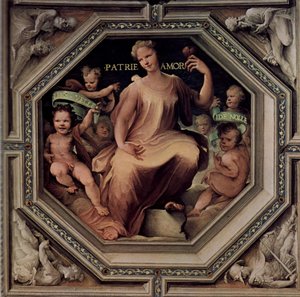
11The Martyrdom of Saint Sigismond and his Family (1520) (1889) -ja Domenico BeccafumiThe Martyrdom of Saint Sigismond and his Family1520 · Művészeti Múzeum, Boston 12Saint Dominic and the Burning of the Heretical Books (1520) (1889) -ja Domenico BeccafumiSaint Dominic and the Burning of the Heretical Books1520 · Művészeti Múzeum, Boston 13The Annunciation (1545) (1889) -ja Domenico BeccafumiThe Annunciation1545 14Descent of Christ to Limbo (detail, Eva) (1535) (1889) -ja Domenico BeccafumiDescent of Christ to Limbo (detail, Eva)1535 15Saint Markus (1538) (1889) -ja Domenico BeccafumiSaint Markus1538 16Justizia (Detail) (1535) (1889) -ja Domenico BeccafumiJustizia (Detail)1535 17Justizia (1535) (1889) -ja Domenico BeccafumiJustizia1535 18Concordia (1535) (1889) -ja Domenico BeccafumiConcordia1535 19Venus and Cupid with Vulcan (1530) (1889) -ja Domenico BeccafumiVenus and Cupid with Vulcan1530 · New Orleans Museum of Art 20The Flight into Egypt. (1550) (1889) -ja Domenico BeccafumiThe Flight into Egypt.1550 · Musée des beaux-arts de Chambéry 21The Holy Family with Young Saint John (1523) (1889) -ja Domenico BeccafumiThe Holy Family with Young Saint John1523 · Thyssen-Bornemisza Múzeum 22Birth of the Virgin (1543) (1889) -ja Domenico BeccafumiBirth of the Virgin1543 · Accademia 23Frescoes in the Oratory of St. Benedict in Siena (Italy), Scene: Marriage of Mary with Joseph (1889) -ja Domenico BeccafumiFrescoes in the Oratory of St. Benedict in Siena (Italy), Scene: Marriage of Mary with Joseph 24Coronation of Mary (detail) (1540) (1889) -ja Domenico BeccafumiCoronation of Mary (detail)1540 25Madonna and Child with Infant John the Baptist (1542) (1889) -ja Domenico BeccafumiMadonna and Child with Infant John the Baptist1542 · Art Gallery of New South Wales 26Frescoes in the Oratory of St. Benedict in Siena (Italy), Scene: Marriage of Mary with Joseph (1518) (1889) -ja Domenico BeccafumiFrescoes in the Oratory of St. Benedict in Siena (Italy), Scene: Marriage of Mary with Joseph1518 · Oratory of San Bernardino 27Caritas (1535) (1889) -ja Domenico BeccafumiCaritas1535 28The Continence of Scipio Africanus (1525) (1889) -ja Domenico BeccafumiThe Continence of Scipio Africanus1525 · Museo Nazionale di Palazzo Mansi 29Saint Catherine of Siena receiving the stigmata between Saints Benedict and Jerome (detail) (1517) (1889) -ja Domenico BeccafumiSaint Catherine of Siena receiving the stigmata between Saints Benedict and Jerome (detail)1517 30Saint Catherine of Siena receiving the stigmata between Saints Benedict and Jerome (detail) (1517) (1889) -ja Domenico BeccafumiSaint Catherine of Siena receiving the stigmata between Saints Benedict and Jerome (detail)1517 31Saint Catherine of Siena receiving the stigmata between Saints Benedict and Jerome (detail) (1517) (1889) -ja Domenico BeccafumiSaint Catherine of Siena receiving the stigmata between Saints Benedict and Jerome (detail)1517 32Saint Catherine of Siena receiving the stigmata between Saints Benedict and Jerome (detail) (1517) (1889) -ja Domenico BeccafumiSaint Catherine of Siena receiving the stigmata between Saints Benedict and Jerome (detail)1517 33Saint Catherine of Siena receiving the stigmata between Saints Benedict and Jerome (detail) (1517) (1889) -ja Domenico BeccafumiSaint Catherine of Siena receiving the stigmata between Saints Benedict and Jerome (detail)1517 34Gaius Servilius Ahala presents the body of Spurius Maelius to Cincinnatus (1535) (1889) -ja Domenico BeccafumiGaius Servilius Ahala presents the body of Spurius Maelius to Cincinnatus1535 35Das Opfer Des Seleukus Von Lokris (Detail) (1535) (1889) -ja Domenico BeccafumiDas Opfer Des Seleukus Von Lokris (Detail)1535 36Birth of the Virgin (detail) (1540) (1889) -ja Domenico BeccafumiBirth of the Virgin (detail)1540 37Birth of the Virgin (detail) (1540) (1889) -ja Domenico BeccafumiBirth of the Virgin (detail)1540 38Descent of Christ to Limbo (detail) (1535) (1889) -ja Domenico BeccafumiDescent of Christ to Limbo (detail)1535 39Carundas Von Tiro Und Celius Praetor (1535) (1889) -ja Domenico BeccafumiCarundas Von Tiro Und Celius Praetor1535 40Postumius Tiburzius Tötet Seinen Sohn (Detail) (1535) (1889) -ja Domenico BeccafumiPostumius Tiburzius Tötet Seinen Sohn (Detail)1535 41The Annunciation (1545) (1889) -ja Domenico BeccafumiThe Annunciation1545 42The Holy Family with Angels (1550) (1889) -ja Domenico BeccafumiThe Holy Family with Angels1550 · National Gallery of Art 43The Reconciliation of Marcus Emilius Lepidus and Fulvius Flaccus (1529) (1889) -ja Domenico BeccafumiThe Reconciliation of Marcus Emilius Lepidus and Fulvius Flaccus1529 · Palazzo Pubblico 44Mystical Marriage of St Catherine (1521) (1889) -ja Domenico BeccafumiMystical Marriage of St Catherine1521 · Hermitaeus-múzeum 45Patriotism (1889) -ja Domenico BeccafumiPatriotism 46Saint Catherine of Siena Receiving the Stigmata (1513) (1889) -ja Domenico BeccafumiSaint Catherine of Siena Receiving the Stigmata1513 · J. Paul Getty Múzeum 47Trinity (detail) (1513) (1889) -ja Domenico BeccafumiTrinity (detail)1513 · Pinacoteca Nazionale 48Penelope (1514) (1889) -ja Domenico BeccafumiPenelope1514 · Seminario Patriarcale 49The Holy Family with Young Saint John (1530) (1889) -ja Domenico BeccafumiThe Holy Family with Young Saint John1530 · Galleria degli Uffizi 50Allegory of Justice (1889) -ja Domenico BeccafumiAllegory of JusticePalais des Beaux-Arts de Lille 51Panel painting "The Commission in the Temple" on wood by a follower of Domenico Beccafumi, second half 16th century (1889) -ja Domenico BeccafumiPanel painting "The Commission in the Temple" on wood by a follower of Domenico Beccafumi, second half 16th century 52Holy Family (1889) -ja Domenico BeccafumiHoly Family 53Three Male Nudes (1889) -ja Domenico BeccafumiThree Male Nudes 54TWO MALE NUDES IN A LANDSCAPE (1889) -ja Domenico BeccafumiTWO MALE NUDES IN A LANDSCAPE 55Saint Peter (1889) -ja Domenico BeccafumiSaint Peter 56Tranaquil (1889) -ja Domenico BeccafumiTranaquil 57HEAD OF A BEARDED MAN IN PROFILE (1889) -ja Domenico BeccafumiHEAD OF A BEARDED MAN IN PROFILE 58Fall of the Rebellious Angels (1889) -ja Domenico BeccafumiFall of the Rebellious Angels 59San Antonio and the miracle of the mule (1889) -ja Domenico BeccafumiSan Antonio and the miracle of the mule 60St. Francis receiving the stigmata (1889) -ja Domenico BeccafumiSt. Francis receiving the stigmata 61St Bernard of Siena praying (1889) -ja Domenico BeccafumiSt Bernard of Siena praying 62An Unidentified Scene (1889) -ja Domenico BeccafumiAn Unidentified Scene 63St. Cristophor (1889) -ja Domenico BeccafumiSt. Cristophor 64The killing of Spurius Melius (1889) -ja Domenico BeccafumiThe killing of Spurius Melius 65Reconciliation of Lepidus and Flacco (1889) -ja Domenico BeccafumiReconciliation of Lepidus and FlaccoPalazzo Pubblico 66The Punishment of Heavenly Fire (1889) -ja Domenico BeccafumiThe Punishment of Heavenly Fire 67San Marco (1889) -ja Domenico BeccafumiSan Marco 68Altarpiece of the Stigmata of St. Catherine 2 (1889) -ja Domenico BeccafumiAltarpiece of the Stigmata of St. Catherine 2 69Altarpiece of the Stigmata St. Catherine (1889) -ja Domenico BeccafumiAltarpiece of the Stigmata St. Catherine 70Pennacchio with the Flood (1889) -ja Domenico BeccafumiPennacchio with the Flood 71The sacrifice of Seleucus of Locri 1 (1889) -ja Domenico BeccafumiThe sacrifice of Seleucus of Locri 1 72Altarpiece of the Stigmata of St. Catherine 1 (1889) -ja Domenico BeccafumiAltarpiece of the Stigmata of St. Catherine 1 73Moses breaking the table of the ammendments (1889) -ja Domenico BeccafumiMoses breaking the table of the ammendments 74The suicide of Cato Utica (1889) -ja Domenico BeccafumiThe suicide of Cato Utica 75Precipitated by Marcus Manilius Campoglio (1889) -ja Domenico BeccafumiPrecipitated by Marcus Manilius Campoglio 76The beheading of Spurius Cassius (1889) -ja Domenico BeccafumiThe beheading of Spurius Cassius 77Postumius Tiburcio killing his son (1889) -ja Domenico BeccafumiPostumius Tiburcio killing his son 78Pennacchio with the contest between Minerva Neptune (1889) -ja Domenico BeccafumiPennacchio with the contest between Minerva Neptune 79The tribune Publius Muzio sent to the fire his colleagues (1889) -ja Domenico BeccafumiThe tribune Publius Muzio sent to the fire his colleagues 80The sacrifice of Codrus, King of Athens (1889) -ja Domenico BeccafumiThe sacrifice of Codrus, King of Athens 81Adoration of the golden calf (1889) -ja Domenico BeccafumiAdoration of the golden calfPinacoteca Nazionale 82St. Paul on the Throne (1889) -ja Domenico BeccafumiSt. Paul on the Throne 83The puncturing of the Jews by the Levites (1889) -ja Domenico BeccafumiThe puncturing of the Jews by the Levites 84The sacrifice of Seleucus of Locri (1889) -ja Domenico BeccafumiThe sacrifice of Seleucus of Locri 85Courage of the macedon who witnessed the sacrifice of Alexander (1889) -ja Domenico BeccafumiCourage of the macedon who witnessed the sacrifice of Alexander 86Madonna and Child with St. John (1889) -ja Domenico BeccafumiMadonna and Child with St. John 87Continence of Scipio (1889) -ja Domenico BeccafumiContinence of Scipio 88Scipio appointed tribune of the soldiers (1889) -ja Domenico BeccafumiScipio appointed tribune of the soldiers 89Speusippus Tegeate (1889) -ja Domenico BeccafumiSpeusippus Tegeate 90Caronda shooting (1889) -ja Domenico BeccafumiCaronda shooting 91Annunciation (1889) -ja Domenico BeccafumiAnnunciation 92Transit of the Virgin (1889) -ja Domenico BeccafumiTransit of the Virgin 93Madonna and Child with St John the Baptist (1889) -ja Domenico BeccafumiMadonna and Child with St John the Baptist 94The courage of children who witnessed the sacrifice of Macedonian Alexander (1889) -ja Domenico BeccafumiThe courage of children who witnessed the sacrifice of Macedonian Alexander 95Zeuxis painted the portrait of Helen for the temple of Hera at Croton (1889) -ja Domenico BeccafumiZeuxis painted the portrait of Helen for the temple of Hera at Croton 96Madonna and Child Enthroned with Six Saints and Angels (1889) -ja Domenico BeccafumiMadonna and Child Enthroned with Six Saints and Angels 97The Mutual Benevolence (1889) -ja Domenico BeccafumiThe Mutual Benevolence 98Head of a Youth Seen in Profile (1889) -ja Domenico BeccafumiHead of a Youth Seen in Profile 99St Paul (1515) (1889) -ja Domenico BeccafumiSt Paul1515 · Museo dell'Opera della Metropolitana 100Judith with the Head of Holofernes (1510) (1889) -ja Domenico BeccafumiJudith with the Head of Holofernes1510 · Wallace Collection

Domenico Beccafumi híres festményei, korszakonként

A témák, amelyek Domenico Beccafumi figyelmét meghúzták

A négy leggyakorobban előforduló téma ebben az eredeti művekben, mindegyik a legkiválóbb példájával.

A műemlékek, amelyek Domenico Beccafumi eredeti műveit őrzik

A 8 olyan múzeum, amely a legtöbb ezen az oldalon szereplő festményet őrzi.

Múzeum Város Domenico Beccafumi művei Ebből a listából származó festmények
Pinacoteca Nazionale, SienaPinacoteca Nazionale Siena 11 St Lucy, Stigmatization of St Catherine of Siena, Trinity (detail)
J. Paul Getty Múzeum, Los AngelesJ. Paul Getty Múzeum Los Angeles 2 The Miraculous Communion of Saint Catherine of Siena, Saint Catherine of Siena Receiving the Stigmata
Carnegie Museum of Art, PittsburghCarnegie Museum of Art Pittsburgh 2 The Appearance of St. Michael on the Castel Sant'Angelo to Pope Gregory the Great, The Miracle of St. Michael on Mt. Gargano
Művészeti Múzeum, Boston, BostonMűvészeti Múzeum, Boston Boston 2 The Martyrdom of Saint Sigismond and his Family, Saint Dominic and the Burning of the Heretical Books
Palazzo Pubblico, SienaPalazzo Pubblico Siena 2 The Reconciliation of Marcus Emilius Lepidus and Fulvius Flaccus, Reconciliation of Lepidus and Flacco
Museum Boijmans Van Beuningen, RotterdamMuseum Boijmans Van Beuningen Rotterdam 1 Saint Catherine Receiving the Stigmata
Art Institute of Chicago, ChicagoArt Institute of Chicago Chicago 1 Saint Ignatius of Antioch Disemboweled by Trajan's Torturers
Victoria and Albert Museum, LondonVictoria and Albert Museum London 1 Charity Surrounded by Children Playing with Dogs and Hobby Horses

Domenico Beccafumi évtizedekig: egy egyedi eredeti mű minden évtizedben

Művek évtizedenként

Váassz ki egy évtizedet, hogy megnézhesd az azt meghatározó eredetiműveket.

Domenico Beccafumi festményei: kérdések a galériának

Mi a leghíresebb műve Domenico Beccafuminek?Fedje fel a választ

St. Michael Scaccia and The Rebel Angels. Ezt követi Saint Catherine Receiving the Stigmata (1545) és St Lucy (1521).

Melyik tíz festménye Domenico Beccafumi a leghíresebb?Fedje fel a választ

St. Michael Scaccia and The Rebel Angels, Saint Catherine Receiving the Stigmata, St Lucy, Saint Ignatius of Antioch Disemboweled by Trajan's Torturers, Charity Surrounded by Children Playing with Dogs and Hobby Horses, Stigmatization of St Catherine of Siena, The Miraculous Communion of Saint Catherine of Siena, Trinity Tryptych (detail), The Appearance of St. Michael on the Castel Sant'Angelo to Pope Gregory the Great és The Miracle of St. Michael on Mt. Gargano. A fenti rangsor a művek évszamarát és a múzeumát jelzi.

Hány mű alkotása ismert Domenico Beccafumi nevében?Fedje fel a választ

Katalógusunkban 126 mű található Domenico Beccafumi alkotótól, 1510 és 1550 év közötti időszakból.

Hol tekinthetők meg a leghíresebb Domenico Beccafumi eredetijeit?Fedje fel a választ

Leginkább Pinacoteca Nazionale (Siena), J. Paul Getty Múzeum (Los Angeles) és Carnegie Museum of Art (Pittsburgh) található. A fenti múzeumi táblázatban mindegyik felsorolásra került.

Melyik időszakban alkotta Domenico Beccafumi a leghíresebb festményeit?Fedje fel a választ

1510s alatt: a jelen laphonon található 100 műből 14 készült ebben az időszakban, köztük Stigmatization of St Catherine of Siena.

Melyik híres Domenico Beccafumi festmény a legkorábbi, és melyik a legutóbb készült?Fedje fel a választ

Ezen az oldalon a leghitelesebb Judith with the Head of Holofernes (1510), a legutóbbi pedig The Flight into Egypt. (1550).

Milyen témakörket kedvelt Domenico Beccafumi?Fedje fel a választ

Woman (22), Man (12) és Renaissance (11), a jelen oldalon található 100 műművészeti alkotás között.

Milyen anyagokkal festett leggyakrabban Domenico Beccafumi?Fedje fel a választ

Oil On Panel, a jelen oldalon található 100 műből 18 darab esetén.

Mely művészeti irányba tartozik Domenico Beccafumi műve?Fedje fel a választ

Italian mannerism, ezen az oldalon található eredetiek alapján.

Milyen Domenico Beccafumi eredeti műveket láthatok a Pinacoteca Nazionale kiállításaiban?Fedje fel a választ

St Lucy, Stigmatization of St Catherine of Siena és Trinity (detail): a Pinacoteca Nazionale, Siena 4 művet őrzi ezen az oldalon.

Domenico Beccafumi: a művész portréja

A sienai vízionári: Domenico Beccafumi életútja és művészete

Domenico di Pace Beccafumi neve, bár kevésbé rétegzi azonnal, mint fiorentini kortársaié, nonetheless központi helyet foglal el az olasz reneszánsz művészet történetében. Siena közelében, Montaperto kis toszkai településén született körülbelül 1486-ban; Beccafumi művészi pályája a lenyűgöző fejlődés története volt, amely egy olyan stílus kialakulásához vezetett, amely áthidalta a magasan reneszánszi korszak és a manettista stílus felkelő, összetett világát. Története nem csupán a technikai tudásról szól; mélyen egyedi vízió erről, egy olyan érzékiségről, amely szoros kapcsolatban állt sienai örökségének hagyományaival, mégis bátran nyúlt a 새로운 kifejeztési lehetőségek felé. Eredetei szerények voltak: egy paraszt fiaként, Giacomo di Pace fiaként született, tehetségét azonban Lorenzo Beccafumi felismerte, aki felvette őt magának, és biztosította első művészati képzését Mechero-val, egy helyi sienai művészzel. Ez a korai alapozás a sienai iskolában meghatározóvá vált, még akkor is, amikor a művész túlmutatott az ottani étabbelőtt hagyományokon. A sienai hagyomány, amely már ekkor is eltérő úton járt, mint az olbrália máshol elfogadott klasszik់ klasszikus ideálok, olyan környezetet teremtett, ahol az érzelmi intenzitást és a dekoratív részletgazdagságot nagyra értékelték – ezek a tulajdonságok pedig Beccafumi egyedülálló stílusának jellegzetességeivé váltak.

Róma és egy egyedi stílus kovácsolása

Beccafumi körülbelül 1509-ben Rómába utazott, ami egy transzformatív pillanat volt számára, hiszen megismerhette a pápalai város művészeti vibrálását. Találkozott Raphael és Michelangelo úttörő műveivel, magába szívva kompozíciós, anatómiai és drámai kifejezésmódjuk innovációit. Azonban, ellentétben sok olyan művészzel, aki e mesterek közvetlen utánzására törekedett, Beccafumi ezeket a hatásokat saját, egyedi lencséjén keresztül szintézisálta. Nem egyszerűen csak másolta a római stílust; átszűrte azt egy már meglévő sienai esztétikán keresztül – amelyre jellemző volt egyfajta provinciális jelleg, a dekoratív részletek hangsúlyozása és egy maradék középkori érzékenység. Sienába való visszatérése után ez az ötvözet egy egyre sajátosabb stílusként kezdett megnyilvánulni. Ez egy olyan stílus volt, amelyet az irrationális jelleg, az érzelmi feszültség és a lenyűgöző vizuális élmény határozott meg, amelyet éles, egymással zavaró színek és hallucinatózus környezetek hoztak létre. Festményei nem csupán a valóság ábrázolásai voltak; belső állapotok felfedezései, bizonytalanság érzésével és pszichológiai mélységgel átárasztva. Ez a távozást jelentette a magasan reneszánszi ideálok harmonikus egyensúlyától, jelezve manettista irányú elköteleződését, bár ő maradékosan különállt a szélesebb körに terjedő trendektől is.

Remekművek és művészeti innovációk

Beccafálló művészi tevékenysége sokszínű volt, magában foglalva festészetet, szobrászatot, mozaiktervezést és grafikát. Legünnepeltebb alkotásai közé tartoznak a sienai Szent Benedek-orakulum freskói, amelyek tanúbizonyságát szolgáltatják narratív képességeinek és kifejező erejének. A sienai Pinacoteca Nazionale-ban található Szentháromság-triptich bemutatja olajfestészet mesteri tudását és képességét, hogy a vallásos ájtátosságot egyszerre közvetítse a fenség és az intimitás erejével. Szintén a Pinacoteca Nazionale-ban található Behívás példámlja egyedi színhasználatát és kompozícióját, olyan jelenetet alkotva, amely egyszerre békés és finoman nyugtalanító. Talán legambiciózusabb vállalkozása azonban a sienai dóm padlózatának irányítása volt 1517 és 1544 között. Ez a monumentális projekt bonyolult, márványból és mozaikból kidolgozott mintákat tartalmazott, amelyek bibliai történeteket ábrázoltak – olyan alakokat, mint Ahab, Éliás, Melkizedek, Ábrahám és Moyses. Beccafumi nemcsak ezeket a jeleneteket tervezte meg, hanem innovációt is hozott a létrehozásukban használt technikai folyamatokba, bizonyítva rendkívüli sokoldalúságát művészként és håndvesztőként egyaránt. Készsége kiterjedt a grafikára is, ahol a metszésben és a faágyúrásban is kiváló volt, tovább bővítve művészeti hatókörét. Ezek a grafikák lehetővé tették stílusának és ötleteinek szélesebb terjedését, befolyásolva a művészeket Siena határain kívül is.

Örökség: A sienai iskola utolsó képviselője

Domenico Beccafumi 1551-ben halt meg Sienában, ami szimbolikus véget jelentett a város hosszú és tekintélyes festészeti hagyományának. Őt joggal tekintik a sienai iskola utolsó jelentős képviselőjének, aki megőrizte annak egyedülálló esztétikai minőségeit, miközben egyidejűleg előреvetette a manettista stílus fejlődését. Művészete elkülönül a magasan reneszánszi korszak harmonikusabb kompozícióitól; helyette az érzelmi feszültséget, a stabilitás hiányát és a kifejező torzítást fogadta be. Ennek a konvencionális normák kihívására való hajlamára a későbbi művészeti trendek előrejelzését jelentette, újító technikáival és pszichológiai mélységével befolyásolva a következő generációkat. Beccafumi öröksége nem csupán egy festőé, hanem egy olyan vízionáriéé, aki merész tekintettel fedezte fel a művészi kifejezés határait, és olyan alkotások halmát hagyta hátra, amelyeket a nézők ma is lenyűgöznek és megkeresnek. Lenyűgöző alak maradt, amely tanúbizonyság a művészettörténet szélesebb áramlataiban az egyéni látásmód maradandó erejének.
  • Beccafumi stílusának kulcsfontosságú jellemzői:
  • Pamacsos, nem lineáris jelleg: Festményei gyakran rendelkeznek égi minőségű, eteres jellegű adottságokkal, ahol a formák úgy tűnik, szétoldódnak egy ködös légkörbe.
  • style="font-weight: normal;">Szaggatott vonalak és ősi koloráció: Beccafumi a éles, szögletes vonalakat és a merész, szokatlan színhasználatot részesítette előnyben, amely eltér a kortársai egyensúlyozottabb palettáitól.
  • Érzelmi feszültség és instabilitás: Műveit átjárja a bizonytalanság és a pszichológiai összetettség érzése, ami a klasszikus harmónia és arányosság ideáljától való távozást tükrözi.
  • Sienai hagyomány manettista hatásokkal: Képes volt mesterien ötvözni a sienai iskola dekoratív elemeit és érzelmi intenzitását a manettista stílus megjelenő jellemzőivel.