Dirck Van Delen portréja

Dirck Van Delen festményei: A 57 leghíresebb alkotás, egy galéria szemével

Frissítve: november 2026 · rangsorolva népszerűségi pontszámunk alapján (minden mű keresései, látogatásai és megrendelései alapján) · 57 mű Dirck Van Delen alkotása a katalógusunkban

Röviden

A galéria szerint Dirck Van Delen leghíresebb festménye a A musical company in a Renaissance hall (1636), amelynek eredeti példája a Museum Boijmans Van Beuningen múzeumában található, Rotterdam városában. Iconoclasm in a Church (1630) és A colonnade. Part of a seven-part deorative sequence (1630) kiegészítik azt a triót, amelyet minden szem felismer. A katalógusunkban szereplő 57 művész Dirck Van Delen alkotásából a galéria az alábbi 57 leghíresebbet mutatja be, amelyek mind egyedi originális művek, a készítés évszámával, a múzeum megnevezésével és a különlegességük leírásával.

1605 – 1671, Heusden Baroque A legtöbb mű: Rijksmuseum

A galéria top 10 Dirck Van Delen festménye

1
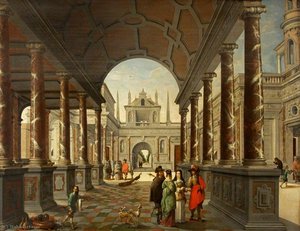
A musical company in a Renaissance hall (1636) (1889) -ja Dirck Van Delen

A musical company in a Renaissance hall

1636 · Oil On Canvas · Museum Boijmans Van Beuningen, Rotterdam

A checkered floor of stone and shadow stretches toward a distant, imagined horizon. In this Renaissance hall, the geometry of the room dictates the movement of the soul. Light spills from unseen windows on the left, catching the sharp edge of a lace collar and the heavy sheen of satin. The air feels still, held in place by massive columns and the weight of dark, polished wood. Figures gather in…

2
Iconoclasm in a Church (1630) (1889) -ja Dirck Van Delen

Iconoclasm in a Church

1630 · Oil On Panel · Rijksmuseum, Amsterdam

Dirck van Delen painted Iconoclasm in a Church in 1630. The work presents an imagined scene of iconoclasm within a church interior. It captures a moment of religious upheaval, focusing on the destruction of sacred objects and the disruption of ecclesiastical order.

3
A colonnade. Part of a seven-part deorative sequence (1630) (1889) -ja Dirck Van Delen

A colonnade. Part of a seven-part deorative sequence

1630 · Oil On Canvas · Rijksmuseum, Amsterdam

A colonnade. Part of a seven-part deorative sequence is an oil on canvas by Dirck van Delen. The work is dated 1630. It is also known by the title Gallery of a Palace with Ornamental Architecture and Columns. This painting was designed to function as part of a larger whole, serving as one piece of a seven-part wall decoration intended for a room in a palace.

4
The tomb of a Lord from the Van Tuyll van Serooskerken-family (1634) (1889) -ja Dirck Van Delen

The tomb of a Lord from the Van Tuyll van Serooskerken-family

1634 · Oil On Panel · Staatliche Kunsthalle Karlsruhe, Karlsruhe

In this 1634 work, we find ourselves standing within a space that feels both profoundly real and entirely imagined. Dirck van Delen, a painter who specialized in the construction of architectural fantasies, has crafted a monumental funerary monument for a member of the Van Tuyll van Serooskerken family. The scene is defined by a rigorous linear perspective that draws the eye deep into a grand, silent interior. A sense of…

5
An Architectural Fantasy (1634) (1889) -ja Dirck Van Delen

An Architectural Fantasy

1634 · Oil · National Gallery, London

The scene unfolds within An Architectural Fantasy, a work painted by Dirck van Delen in 1634. This composition presents an idealised city square, where the mathematical precision of perspective and proportion meets the shifting play of light and shade. The space feels vast and structured, inviting the eye to wander through a world of imagined grandeur and architectural order.

6
The Real Tennis Players (1626) (1889) -ja Dirck Van Delen

The Real Tennis Players

1626 · Oil On Panel

The Real Tennis Players is a work by Dirck van Delen, an artist who emerged from Heusden, Netherlands. This particular piece dates to about 1626, a period during which the artist was establishing his presence within the Dutch Golden Age. Van Delen, who lived from 1605 to 1671, focused his attention on the intricate details of architectural spaces and the social life contained within them.

7
Architectural Fantasy with Figures (1633) (1889) -ja Dirck Van Delen

Architectural Fantasy with Figures

1633 · Oil · Noordbrabants Museum, 's-Hertogenbosch

Architectural Fantasy with Figures emerges from the mind of Dirck van Delen, a painter who crafts grand, imagined spaces that challenge the boundaries of reality. This work invites the viewer into a structured world of palatial scale and mathematical precision. The artist, born in Heusden, Netherlands, in 1605, spent his life building these illusions of stone and light. He remains a significant figure of the Dutch Golden Age, having lived…

8
Gallant Scene in a Palace (1633) (1889) -ja Dirck Van Delen

Gallant Scene in a Palace

1633 · Oil On Panel · Petit Palais, Paris

Gallant Scene in a Palace is a work by Dirck van Delen, executed in 1633. The artist, born in Heusden, Netherlands, in 1605, spent his life crafting the geometry of imagined spaces. He died in 1671, leaving behind a legacy of structured illusions and precise perspectives.

9
An Interior with Ladies and Cavaliers (1629) (1889) -ja Dirck Van Delen

An Interior with Ladies and Cavaliers

1629 · Oil On Canvas · National Gallery of Ireland, Dublin

In the quiet, structured world of 1629, An Interior with Ladies and Cavaliers emerges from the brush of Dirck van Delen. This work invites the viewer into an intimate interior where genre scenes unfold amidst the grandeur of a private space. The scene captures a moment of social grace, pulling us into a setting where the architecture itself feels like a silent participant in the gathering.

10
Architectural Interior at Night with the Priests of Bel (1628) (1889) -ja Dirck Van Delen

Architectural Interior at Night with the Priests of Bel

1628 · Oil On Canvas · Rhode Island School of Design Museum of Art, Providence

Architectural Interior at Night with the Priests of Bel by Dirck van Delen depicts a gathering of priests or religious figures within a large interior at night. The composition is structured around a deep linear perspective that directs the viewer's gaze through a series of receding classical arches and colonnades. These architectural elements lead toward a distant, dimly lit interior. The use of lines is rigorous throughout the scene, with…

Dirck Van Delen festményei, 11. helyezéstől 57. helyezésig

11Architectural Scene: A Palace Court (1627) (1889) -ja Dirck Van DelenArchitectural Scene: A Palace Court1627 · Rhode Island School of Design Museum of Art 12Allegory on the suppression of religious freedom in the Netherlands under the Duke of Alva; the 17 Dutch provincial virgins kneeling for Alva, Granvelle and the pope, in the background the decapitation of Egmond and Hoorne on the market in Brussels (1629) (1889) -ja Dirck Van DelenAllegory on the suppression of religious freedom in the Netherlands under the Duke of Alva; the 17 Dutch provincial virgins kneeling for Alva, Granvelle and the pope, in the background the decapitation of Egmond and Hoorne on the market in Brussels1629 · Museum Catharijneconvent 13Architectural fantasy with figures (1633) (1889) -ja Dirck Van DelenArchitectural fantasy with figures1633 14Fantasy architecture with an elegant couple (1627) (1889) -ja Dirck Van DelenFantasy architecture with an elegant couple1627 · Noordbrabants Museum 15Fantasy architecture with two elegant couples (1633) (1889) -ja Dirck Van DelenFantasy architecture with two elegant couples1633 · Noordbrabants Museum 16Interior of Church (1635) (1889) -ja Dirck Van DelenInterior of Church1635 · Antwerpeni Királyi Szépművészeti Múzeum 17Distinguished Dinner Company in an Interior (1631) (1889) -ja Dirck Van DelenDistinguished Dinner Company in an Interior1631 · Nationalmuseum 18A palatial interior with ladies and gentleman feasting, entertained by Carnival mummers (1632) (1889) -ja Dirck Van DelenA palatial interior with ladies and gentleman feasting, entertained by Carnival mummers1632 19Fantasy architecture with four elegantly dressed women on the steps of a ramp (1627) (1889) -ja Dirck Van DelenFantasy architecture with four elegantly dressed women on the steps of a ramp1627 · New York Historical Society 20A Seven-Part Decorative Sequence: An Interior, Dirck van Delen, 1630 - 1632 (1632) (1889) -ja Dirck Van DelenA Seven-Part Decorative Sequence: An Interior, Dirck van Delen, 1630 - 16321632 · Rijksmuseum 21Colonnade with people and playing children (1637) (1889) -ja Dirck Van DelenColonnade with people and playing children1637 22Conversation outside a Palace (1636) (1889) -ja Dirck Van DelenConversation outside a Palace1636 · Statens Museum for Kunst 23Company at a Palace (1645) (1889) -ja Dirck Van DelenCompany at a Palace1645 · Statens Museum for Kunst 24Christ Healing at the Pool of Bethesda (1637) (1889) -ja Dirck Van DelenChrist Healing at the Pool of Bethesda1637 · Statens Museum for Kunst 25Elegant Company in Front of a Palace (1644) (1889) -ja Dirck Van DelenElegant Company in Front of a Palace1644 · Statens Museum for Kunst 26Susanna and the two elders (1640) (1889) -ja Dirck Van DelenSusanna and the two elders1640 · Museum Boijmans Van Beuningen 27A Family beside the Tomb of Prince William I in the Nieuwe Kerk, Delft (1645) (1889) -ja Dirck Van DelenA Family beside the Tomb of Prince William I in the Nieuwe Kerk, Delft1645 · Rijksmuseum 28Baroque church interior with a friar and peasants (1645) (1889) -ja Dirck Van DelenBaroque church interior with a friar and peasants1645 29Courtyard of a palace (1636) (1889) -ja Dirck Van DelenCourtyard of a palace1636 · Staatliche Kunsthalle Karlsruhe 30Church Interior with the Parable of the Pharisee and the Publican (Luke 18:9-14) (1653) (1889) -ja Dirck Van DelenChurch Interior with the Parable of the Pharisee and the Publican (Luke 18:9-14)1653 31Interior of a Gothic Church, Dirck van Delen, 1641 (1641) (1889) -ja Dirck Van DelenInterior of a Gothic Church, Dirck van Delen, 16411641 · Rijksmuseum 32The Great Hall of the Binnenhof in The Hague (1651) (1889) -ja Dirck Van DelenThe Great Hall of the Binnenhof in The Hague1651 · Rijksmuseum 33Great Garden Palace (1640) (1889) -ja Dirck Van DelenGreat Garden Palace1640 · Kunsthistorisches Museum 34A Seven-Part Decorative Sequence: An Outdoor Stairway, Dirck van Delen, 1630 - 1632 (1632) (1889) -ja Dirck Van DelenA Seven-Part Decorative Sequence: An Outdoor Stairway, Dirck van Delen, 1630 - 16321632 · Rijksmuseum 35A Seven-Part Decorative Sequence: An Outdoor Stairway, Dirck van Delen, 1630 - 1632 (1632) (1889) -ja Dirck Van DelenA Seven-Part Decorative Sequence: An Outdoor Stairway, Dirck van Delen, 1630 - 16321632 · Rijksmuseum 36A Seven-Part Decorative Sequence: An Outdoor Stairway, Dirck van Delen, 1630 - 1632 (1632) (1889) -ja Dirck Van DelenA Seven-Part Decorative Sequence: An Outdoor Stairway, Dirck van Delen, 1630 - 16321632 · Rijksmuseum 37A Seven-Part Decorative Sequence: An Outdoor Stairway, Dirck van Delen, 1630 - 1632 (1632) (1889) -ja Dirck Van DelenA Seven-Part Decorative Sequence: An Outdoor Stairway, Dirck van Delen, 1630 - 16321632 · Rijksmuseum 38A Seven-Part Decorative Sequence: A Gallery, Dirck van Delen, 1630 - 1632 (1632) (1889) -ja Dirck Van DelenA Seven-Part Decorative Sequence: A Gallery, Dirck van Delen, 1630 - 16321632 · Rijksmuseum 39Architectural Capriccio with Jephthah and His Daughter (1633) (1889) -ja Dirck Van DelenArchitectural Capriccio with Jephthah and His Daughter1633 40Palace Courtyard with Figures (1635) (1889) -ja Dirck Van DelenPalace Courtyard with Figures1635 · Philip Hahn Collection 41Elegant Figures in a Loggia (1635) (1889) -ja Dirck Van DelenElegant Figures in a Loggia1635 42An Interior with Ladies and Gentlemen Dining (1629) (1889) -ja Dirck Van DelenAn Interior with Ladies and Gentlemen Dining1629 43Tulip in a Wanli Kendi (1637) (1889) -ja Dirck Van DelenTulip in a Wanli Kendi1637 44A church interior (1642) (1889) -ja Dirck Van DelenA church interior1642 · Finnish National Gallery 45Fantasy architecture with steps and columns (1655) (1889) -ja Dirck Van DelenFantasy architecture with steps and columns1655 · Kunsthistorisches Museum 46Conversation outside a Castle (1636) (1889) -ja Dirck Van DelenConversation outside a Castle1636 · Statens Museum for Kunst 47Perspective Fantasy of a Palace, with Elegant Figures (1889) -ja Dirck Van DelenPerspective Fantasy of a Palace, with Elegant Figures 48An architectural fantasy (1889) -ja Dirck Van DelenAn architectural fantasy 49An Imaginary Church Interior, with a Large Pipe Organ (1889) -ja Dirck Van DelenAn Imaginary Church Interior, with a Large Pipe Organ 50A dutch garden scene (1889) -ja Dirck Van DelenA dutch garden scene 51Jupiter and Alkmene in an Architectural Setting (1889) -ja Dirck Van DelenJupiter and Alkmene in an Architectural Setting 52Interior of a Church (1889) -ja Dirck Van DelenInterior of a ChurchFitzwilliam Museum 53Interior of a Renaissance Church (1889) -ja Dirck Van DelenInterior of a Renaissance Church 54Pool of Bethesda (1889) -ja Dirck Van DelenPool of Bethesda 55Christ and the Woman Taken in Adultery (1889) -ja Dirck Van DelenChrist and the Woman Taken in Adultery 56A Conversation in a Palace Courtyard (1889) -ja Dirck Van DelenA Conversation in a Palace CourtyardScottish National Gallery 57The Entrance to a Palace (1889) -ja Dirck Van DelenThe Entrance to a PalaceDulwich Picture Gallery

Dirck Van Delen híres festményei, korszakonként

A témák, amelyek Dirck Van Delen figyelmét meghúzták

A négy leggyakorobban előforduló téma ebben az eredeti művekben, mindegyik a legkiválóbb példájával.

A műemlékek, amelyek Dirck Van Delen eredeti műveit őrzik

A 8 olyan múzeum, amely a legtöbb ezen az oldalon szereplő festményet őrzi.

Múzeum Város Dirck Van Delen művei Ebből a listából származó festmények
Rijksmuseum, AmsterdamRijksmuseum Amsterdam 11 Iconoclasm in a Church, A colonnade. Part of a seven-part deorative sequence, A Seven-Part Decorative Sequence: An Interior, Dirck van Delen, 1630 - 1632
Statens Museum for Kunst, KoppenhágaStatens Museum for Kunst Koppenhága 5 Conversation outside a Palace, Company at a Palace, Christ Healing at the Pool of Bethesda
Noordbrabants Museum, 's-HertogenboschNoordbrabants Museum 's-Hertogenbosch 3 Architectural Fantasy with Figures, Fantasy architecture with an elegant couple, Fantasy architecture with two elegant couples
Museum Boijmans Van Beuningen, RotterdamMuseum Boijmans Van Beuningen Rotterdam 2 A musical company in a Renaissance hall, Susanna and the two elders
Staatliche Kunsthalle Karlsruhe, KarlsruheStaatliche Kunsthalle Karlsruhe Karlsruhe 2 The tomb of a Lord from the Van Tuyll van Serooskerken-family, Courtyard of a palace
Rhode Island School of Design Museum of Art, ProvidenceRhode Island School of Design Museum of Art Providence 2 Architectural Interior at Night with the Priests of Bel, Architectural Scene: A Palace Court
Kunsthistorisches Museum, BécsKunsthistorisches Museum Bécs 2 Great Garden Palace, Fantasy architecture with steps and columns
National Gallery, LondonNational Gallery London 1 An Architectural Fantasy

Dirck Van Delen, egy aláírott festmény évtizedenként

Művek évtizedenként

Váassz ki egy évtizedet, hogy megnézhesd az azt meghatározó eredetiműveket.

Dirck Van Delen festményei: a galéria válaszai

Melyik Dirck Van Delen festmény a leghíresebb?Fedje fel a választ

A musical company in a Renaissance hall (1636), Museum Boijmans Van Beuningen, Rotterdam. Ezután Iconoclasm in a Church (1630) és A colonnade. Part of a seven-part deorative sequence (1630) következik.

Hány éves volt Dirck Van Delen, amikor elkészítette a(t): A musical company in a Renaissance hall?Fedje fel a választ

31 éves: A musical company in a Renaissance hall 1636-ből származik, Dirck Van Delen pedig 1605-ben született.

Melyek Dirck Van Delen top 10 festménye?Fedje fel a választ

A musical company in a Renaissance hall, Iconoclasm in a Church, A colonnade. Part of a seven-part deorative sequence, The tomb of a Lord from the Van Tuyll van Serooskerken-family, An Architectural Fantasy, The Real Tennis Players, Architectural Fantasy with Figures, Gallant Scene in a Palace, An Interior with Ladies and Cavaliers és Architectural Interior at Night with the Priests of Bel. A fenti rangsor a művek évszamarát és a múzeumát jelzi.

Hány műve született Dirck Van Delen nevére?Fedje fel a választ

Katalógusunkban 57 mű található Dirck Van Delen alkotótól, 1626 és 1655 év közötti időszakból.

Hol találhatóak Dirck Van Delen leghíresebb eredeti művei?Fedje fel a választ

Leginkább Rijksmuseum (Amsterdam), Statens Museum for Kunst (Koppenhága) és Noordbrabants Museum ('s-Hertogenbosch) található. A fenti múzeumi táblázatban mindegyik felsorolásra került.

Mikor festette Dirck Van Delen le leghíresebb műveit?Fedje fel a választ

1630s alatt: a jelen laphonon található 57 műből 27 készült ebben az időszakban, köztük A musical company in a Renaissance hall.

Melyek Dirck Van Delen legkorábbi és legutóbbi híres művei?Fedje fel a választ

Ezen az oldalon a leghitelesebb The Real Tennis Players (1626), a legutóbbi pedig Fantasy architecture with steps and columns (1655).

Mely témakörökkel foglaltaszkodott a legtöbbször Dirck Van Delen?Fedje fel a választ

Architecture (38), Columns (33) és People (21), a jelen oldalon található 57 műművészeti alkotás között.

Melyik technikával foglalt leginkább Dirck Van Delen?Fedje fel a választ

Oil On Panel, a jelen oldalon található 57 műből 17 darab esetén.

Mely művészeti irányhoz tartozik Dirck Van Delen?Fedje fel a választ

Baroque, ezen az oldalon található eredetiek alapján.

Mely Dirck Van Delen eredeti műveit őrzi a Rijksmuseum?Fedje fel a választ

Iconoclasm in a Church, A colonnade. Part of a seven-part deorative sequence és A Seven-Part Decorative Sequence: An Interior, Dirck van Delen, 1630 - 1632: a Rijksmuseum, Amsterdam 11 művet őrzi ezen az oldalon.

Dirck Van Delen: a művész

Dirck van Delen: A Master of Illusion in the Dutch Golden Age

A holnap a művészet, ma a luxus. A holnapi luxus a holnap a művészet. Ez a gondolat vezérelte Dirck van Delen (1605-1671) munkáit, egy olyan festőművészt, aki nem a portrék vagy tájképkészletek világába lépett, hanem az illúzió építésjébe. Van Delen nem csupán egy festő volt, hanem egy építészeti illúziók mestere, aki szorgalmasan alkotta meg a lehetetlen palotákat és lenyűgöző templomi belsejeit, melyek a valóságot meghaladóak voltak. Munkái, amelyek nagy része az építészeti fantáziákra korlátozódott, egyedülálló betekintést nyújtanak a 17-es századi Európa álmaiba és művészi érzékelésébe – egy korszakba, amely a pompázatos megjelenítésen, a perspektíván és a nagyságon ápolta a szépséget.

Van Delen 1605-ben született Heusden városban, Hollandiában. Életének korai időszakára vonatkozó információk azonban gyökeresen hiányoznak. A pontos munkabarátsza körülményei vitatottak, és művészettörténészek spekulációba merülnek: egyesek szerint Frans Hals és Hendrick Aerts volt a lehetséges mestere, de valószínűbb, hogy tanulmányozta Pieter van Bronckhorst és Bartholomeus van Bassen munkáit Delftben. Ez az érintettség jelentős, hiszen utal egy korai kihatásomra a holland művészeti trendekre – különösen Jan van Londerseel precíz rajzolására és építészeti pontosságaire.

Van Delen karrierje Arnemuidenban kezdődött, ahol tollházmesterként dolgozott, majd később fontos pozíciót szerzett a város tanácsában. Ez a polgári szerepe biztosította számára a stabilitást, miközben lehetőséget adott arra, hogy elmélyüljön művészetében. Háromszor nősült, és bár nem volt ismert gyermekei, akik túléltek az infánt korban, örökségét továbbvitatott tanítványi köre – Daniël de Blieck és Hans Jurriaensz van Baden – akik megőrizgették egyedi stílusát.

The Architect’s Palette: Style and Technique

Van Delen művészi identitása szorosan kapcsolódik a barokk korszakhoz, de egyedülálló módon fejlesztette azt. Művei jellemzőek az almost obsessive figyelmedmény a részletekre, melyek minden oszlopot, cornices és díszes elemet pontosan ábrázolnak a képzett építészeti térben. Ellentétben sok társával szemben, akik portrék vagy tájképkészletek világába léptek, Van Delen művei kizárólag önálló témákra összpontosítottak – nagyszerű palotákat és lenyűgöző templomi belsejeit, melyek a néző számára meghaladóak voltak.

Palettája meglehetősen konzisztens maradt karrierje során, egy visszafogott, de kifinomult színtartományra összpontosítva: hűs kék és zöld kontrasztolt forró sárga és vörös árnyalatokkal, gyakran csillogó aranyozással. Képes volt fényeket és árnyakat manipulálni a mélység és tér illúziójának megteremtésére, a flemish mestertől vett technikákat alkalmazva, de egyedi érzékelésével gazdagítva.

A legfontosabb vonás Van Delen munkájában az volt, hogy gyakran együttműködött más művészekkel, elsősorban Gonzales Coques és Pieter Codde-val. A pontos természetű ezeknek a szövetségeknek vitatott, de úgy tűnik, Van Delen főként a figurák festésére összpontosított, miközben mások végrehajtották az építészeti elemeket. Ez a munkaosztás egy pragmatikus művészi megközelítése volt – ami lehetővé tette számára, hogy fókuszáljon erősségére: lenyűgöző és hiteles illúziók létrehozására.

Imaginary Realms: Themes and Symbolism

Van Delen építészeti fantáziái nem csupán díszes gyakorlatok, hanem szimbólumokkal teli. Palotáik, gyakran bonyolult szobrok és gazdag berendezésekkel díszítve a vagyon, hatalom és Isten erejének ideáljait képviselik – tulajdonságok, amelyek nagyra becsültek voltak a holland aranykorszakban. A figurák bevonása ezekbe a területekbe – gyakran udvari tevékenységekben vagy vallási ünnepélyeskedésben – azt sugallja, hogy egy kapcsolatot szeretne megépíteni az emberi ambíció és a spirituális törekvés között.

Templomi belsejei is ugyanolyan lenyűgözőek a nagyságukban és részletességükben. Ezek pontosan ábrázolt területek, melyek magasarkon, fafaragásokkal díszített ablakokon és bonyolult díszítésekkel vannak tele, ami a nézőt vonja be az építészeti tér szívébe.

Van Delen munkájának egy érdekes aspektusa a gyakori bevonása a still life-ok – különösen egy virágcsokor – melyek kontrasztosak az elsősorban építészeti témákkal szemben. Ezek intim jelenetek betekintést engednek Van Delen személyesebb oldalába, ami azt sugallja, hogy vonzódik a szépséghez és a természetes formákhoz.

Legacy and Influence

Bár művei nem nyertek népszerűséget élete során, Dirck van Delen munkája az utóbbi időben egyre nagyobb elismertséget élvez. Illúzióminőségű építészeti fantáziái továbbra is vonzzák a nézők figyelmét és a 17-es századi Hollandia képének lenyűgöző ábrázolását.

Van Delen munkássága kulcsfontosságú szerepet töltött be a holland barokk művészet fejlődésében, különösen az illuzionista technikáiban és képességében, hogy hiteles illúziókat teremtsen térről. Művei öröksége egyértelmű bizonyíték arra, hogy a művészi fantáziaméret erősebb, mint gondolnánk.