Cornelis Troost portréja

Cornelis Troost festményei: A 81 leghíresebb alkotás, egy galéria szemével

Frissítve: november 2026 · rangsorolva népszerűségi pontszámunk alapján (minden mű keresései, látogatásai és megrendelései alapján) · 82 mű Cornelis Troost alkotása a katalógusunkban

Röviden

A galéria szerint Cornelis Troost leghíresebb festménye a Inspection of a Cavalry Regiment, perhaps by William of Hesse-Homburg (1742), amelynek eredeti példája a Rijksmuseum múzeumában található, Amsterdam városában. The Regents of the Oudezijds Huiszittenhuis (1740) és A Couple Making Music, Cornelis Troost, 1743 (1743) kiegészítik azt a triót, amelyet minden szem felismer. A katalógusunkban szereplő 82 művész Cornelis Troost alkotásából a galéria az alábbi 81 leghíresebbet mutatja be, amelyek mind egyedi originális művek, a készítés évszámával, a múzeum megnevezésével és a különlegességük leírásával.

1696 – 1750, Amszterdam Rococo A legtöbb mű: Rijksmuseum

A galéria top 10 Cornelis Troost festménye

1
Inspection of a Cavalry Regiment, perhaps by William of Hesse-Homburg (1742) (1889) -ja Cornelis Troost

Inspection of a Cavalry Regiment, perhaps by William of Hesse-Homburg

1742 · Oil · Rijksmuseum, Amsterdam

In this expansive oil painting from 1742, we find ourselves amidst a grand military ceremony set within a wooded landscape. The scene captures a formal inspection of a cavalry regiment, where the rigid structure of military hierarchy meets the organic textures of the natural world. A procession of mounted soldiers and infantry moves through the scene, their presence creating a sense of rhythmic movement across the wide horizontal plane. The…

2
The Regents of the Oudezijds Huiszittenhuis (1740) (1889) -ja Cornelis Troost

The Regents of the Oudezijds Huiszittenhuis

1740 · Oil On Canvas · Amsterdam Museum, Amsterdam

In this oil on canvas composition from 1740, five men are arranged within a structured interior. The group is positioned around a central table, forming a pyramidal configuration that directs the eye through the assembly. The men are dressed in 18th-century attire, featuring heavy fabrics such as silk and velvet. Their garments appear in shades of black, grey, and brown, though one central figure wears a coat of warm ochre.…

3
A Couple Making Music, Cornelis Troost, 1743 (1743) (1889) -ja Cornelis Troost

A Couple Making Music, Cornelis Troost, 1743

1743 · Oil On Panel · Rijksmuseum, Amsterdam

Step closer and observe the intimacy of this 1743 interior. We find ourselves in a private room where the air seems to hold the soft notes of a melody. A man stands to the right, his posture relaxed as he breathes life into a recorder. Beside him, his wife sits in a moment of quiet concentration, her fingers poised to turn the corner of a page in a music book.…

4
Scene in a Coffee Shop (1750) (1889) -ja Cornelis Troost

Scene in a Coffee Shop

1750 · Oil On Canvas · Hermitaeus-múzeum, Szentpétervár

The air in the room feels heavy with the scent of roasted beans and the low hum of conversation. Light pours through large windows on the left, slicing through the dimness to strike the edges of ceramic cups and the folds of heavy fabric. It is a wide, expansive space where the architecture of grand arches meets the intimate clutter of social life. A large, ornate medallion on the ceiling,…

5
The Organ Grinder (1743) (1889) -ja Cornelis Troost

The Organ Grinder

1743 · Oil On Canvas · Mauritshuis, Haag

A Moment Captured on an Amsterdam Street The air feels heavy with the soft light of an overcast day as a small crowd gathers in this mid-18th century street scene. In the foreground, a man dressed in dark clothing sits quietly, his gaze fixed upon a woman who cradles a baby in her arms. Beside them, another woman stands near a child, their figures part of a loose, naturalistic grouping…

6
Harlequin, Magician and Barber: The Rivals Exposed (1738) (1889) -ja Cornelis Troost

Harlequin, Magician and Barber: The Rivals Exposed

1738 · Oil On Canvas · Mauritshuis, Haag

Cornelis Troost's “Harlequin, Magician and Barber: The Rivals Exposed,” painted in 1738, isn’t merely a depiction of a bustling street scene; it’s a meticulously crafted window into the social fabric and subtle anxieties of 18th-century Amsterdam. This Baroque masterpiece, now housed within the Mauritshuis museum in The Hague, pulsates with life—a vibrant tableau of commerce, class distinctions, and perhaps even a touch of subversive commentary. Troost, a former actor who…

7
Double portrait of an unknown man and a boy (1722) (1889) -ja Cornelis Troost

Double portrait of an unknown man and a boy

1722 · Print · Rijksmuseum Twenthe, Enschede

In this 1722 portrait, we find ourselves in a private, monochromatic world where the weight of lineage is felt through a subtle, sepia-toned atmosphere. An older man sits with a quiet, regal dignity, his presence anchoring the composition. Beside him, a young boy stands, creating a gentle diagonal that draws the eye through the space. There is a profound sense of stillness here, as if we have interrupted a private…

8
Aeneas and Dido Set Out for the Hunt (1731) (1889) -ja Cornelis Troost

Aeneas and Dido Set Out for the Hunt

1731 · Oil On Canvas · Bavári Állami Festırménygyűjtemények, Munchen

The oil painting titled Aeneas and Dido Set Out for the Hunt was created by the Dutch artist Cornelis Troost. This work dates to about 1731. It captures a moment of high drama within an ancient urban setting, where the figures of Aeneas and Dido move amidst a large, bustling entourage. The scene is framed by monumental architecture and the heavy presence of a central golden statue.

9
Triptych depicting the peasants' court from the comedy "Beslikte Swaantje" (1727) (1889) -ja Cornelis Troost

Triptych depicting the peasants' court from the comedy "Beslikte Swaantje"

1727 · Oil On Panel · Amsterdam Museum, Amsterdam

This triptych painting, created in 1727, presents a dramatic scene from the comedy "Beslikte Swaantje", depicting a peasants' court. The composition is organized into three vertical panels, establishing a stage-like setting that offers a wide, panoramic view of a group of characters gathered within an interior. The scene is characterized by a frontal perspective, placing the viewer directly before the unfolding narrative, which enhances the overall theatrical atmosphere of the…

10
Triptych depicting the peasants' court from the comedy "Beslikte Swaantje" (center panel of triptych) (1727) (1889) -ja Cornelis Troost

Triptych depicting the peasants' court from the comedy "Beslikte Swaantje" (center panel of triptych)

1727 · Oil · Amsterdam Museum, Amsterdam

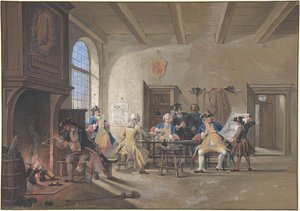
This 1727 oil painting captures a moment of dramatic tension from the comedy Beslikte Swaantje. The scene is set within a domestic interior, where a group of figures is gathered around a fireplace. A prominent character on the left, wearing a large, dark hat and a long cloak, gestures toward the assembly, driving the narrative forward. The composition relies on layered planes to create depth, with a smaller framed painting…

Cornelis Troost festményei, 11. helyezéstől 81. helyezésig

11Triptych depicting the peasants' court from the comedy "Beslikte Swaantje" (right panel of triptych) (1727) (1889) -ja Cornelis TroostTriptych depicting the peasants' court from the comedy "Beslikte Swaantje" (right panel of triptych)1727 · Amsterdam Museum 12Triptych depicting the peasants' court from the comedy "Beslikte Swaantje" (left panel of triptych) (1727) (1889) -ja Cornelis TroostTriptych depicting the peasants' court from the comedy "Beslikte Swaantje" (left panel of triptych)1727 · Amsterdam Museum 13Portrait of two men in an interior (1727) (1889) -ja Cornelis TroostPortrait of two men in an interior1727 · Rijksmuseum Twenthe 14Portrait of Gerrit Sichterman ( -1730) (1726) (1889) -ja Cornelis TroostPortrait of Gerrit Sichterman ( -1730)1726 · Groninger Museum 15Portrait of an unknown man (1732) (1889) -ja Cornelis TroostPortrait of an unknown man1732 · Amsterdam Museum 16Portrait of een persoon genaamd Willem Roell (1700-1775) (1729) (1889) -ja Cornelis TroostPortrait of een persoon genaamd Willem Roell (1700-1775)1729 · Amsterdam Museum 17Portrait of een persoon genaamd Elisabeth de Famars (1715-1780) (1724) (1889) -ja Cornelis TroostPortrait of een persoon genaamd Elisabeth de Famars (1715-1780)1724 · Amsterdam Museum 18Inspectors of the Collegium Medicum in Amsterdam, 1724 (1724) (1889) -ja Cornelis TroostInspectors of the Collegium Medicum in Amsterdam, 17241724 · Rijksmuseum 19Portrait of Maria de Lange (1696-1744), wife of Cornelius Ascanius van Sypesteyn, with her three young children (1727) (1889) -ja Cornelis TroostPortrait of Maria de Lange (1696-1744), wife of Cornelius Ascanius van Sypesteyn, with her three young children1727 · Kasteel-Museum Sypesteyn 20Depart for hunting with monumental architecture (1731) (1889) -ja Cornelis TroostDepart for hunting with monumental architecture1731 21Portrait of the Inspectors of the Collegium Medicum, Cornelis Troost, 1724 (1724) (1889) -ja Cornelis TroostPortrait of the Inspectors of the Collegium Medicum, Cornelis Troost, 17241724 22Herman Boerhaave (1668-1738) (1740) (1889) -ja Cornelis TroostHerman Boerhaave (1668-1738)1740 · Amsterdam Museum 23Portrait of Jeronimus Tonneman and his Son Jeronimus (1736) (1889) -ja Cornelis TroostPortrait of Jeronimus Tonneman and his Son Jeronimus1736 · National Gallery of Ireland 24Anna Homout b. Horneman (1740) (1889) -ja Cornelis TroostAnna Homout b. Horneman1740 25Dutch delivery room (1741) (1889) -ja Cornelis TroostDutch delivery room1741 · Museum Boijmans Van Beuningen 26Het beslikte Zwaentje or the court house at Puyterveen (1741) (1889) -ja Cornelis TroostHet beslikte Zwaentje or the court house at Puyterveen1741 · Museum Boijmans Van Beuningen 27Portrait of Herman Boerhaave, teacher of medicine in Leiden (1736) (1889) -ja Cornelis TroostPortrait of Herman Boerhaave, teacher of medicine in Leiden1736 28Portrait of the Tolling Family (1742) (1889) -ja Cornelis TroostPortrait of the Tolling Family1742 · Museum de Fundatie 29Guardroom Scene (1744) (1889) -ja Cornelis TroostGuardroom Scene1744 30Portrait of a Man (1730) (1889) -ja Cornelis TroostPortrait of a Man1730 · Mauritshuis 31The Delivery Room (1748) (1889) -ja Cornelis TroostThe Delivery Room1748 · Rijksmuseum 32The Doctor's Visit (1750) (1889) -ja Cornelis TroostThe Doctor's Visit1750 33Nursery Visit (1750) (1889) -ja Cornelis TroostNursery Visit1750 34Portrait of Louise Christina Trip, Wife of Gerrit Sichterman (1725) (1889) -ja Cornelis TroostPortrait of Louise Christina Trip, Wife of Gerrit Sichterman1725 · Rijksmuseum 35Reinier Adriaansz (1737) (1889) -ja Cornelis TroostReinier Adriaansz1737 · Mauritshuis 36Lady with Cupid and a Songbook (1745) (1889) -ja Cornelis TroostLady with Cupid and a Songbook1745 · Mauritshuis 37Love Scene (1736) (1889) -ja Cornelis TroostLove Scene1736 · Rijksmuseum 38Rumor erat in casa (1740) (1889) -ja Cornelis TroostRumor erat in casa1740 · Mauritshuis 39Guardroom Scene;Allegory on the War with France in 1747 (1747) (1889) -ja Cornelis TroostGuardroom Scene;Allegory on the War with France in 17471747 · Mauritshuis 40False Virtue Discovered: The Discovery of Volkert in the Laundry Basket (1739) (1889) -ja Cornelis TroostFalse Virtue Discovered: The Discovery of Volkert in the Laundry Basket1739 · Mauritshuis 41The Mathematicians or the Young Lady Who Fled: The Dispute between Doctors Raasbollius and Urinaal (1741) (1889) -ja Cornelis TroostThe Mathematicians or the Young Lady Who Fled: The Dispute between Doctors Raasbollius and Urinaal1741 · Mauritshuis 42Nemo Loquebatur (1740) (1889) -ja Cornelis TroostNemo Loquebatur1740 · Mauritshuis 43Portrait of Maria Magdalena Stavenisse, Wife of Jacob de Witte of Elkerzee, Councilor of Zierikzee, Cornelis Troost, c. 1726 (1726) (1889) -ja Cornelis TroostPortrait of Maria Magdalena Stavenisse, Wife of Jacob de Witte of Elkerzee, Councilor of Zierikzee, Cornelis Troost, c. 17261726 · Rijksmuseum 44Regents of the Aalmoezeniersweeshuis Orphanage in Amsterdam, 1729, Cornelis Troost, 1729 (1729) (1889) -ja Cornelis TroostRegents of the Aalmoezeniersweeshuis Orphanage in Amsterdam, 1729, Cornelis Troost, 17291729 · Rijksmuseum 45Pefroen and the Sheep (1739) (1889) -ja Cornelis TroostPefroen and the Sheep1739 · Mauritshuis 46Erat Sermo inter Fratres (1740) (1889) -ja Cornelis TroostErat Sermo inter Fratres1740 · Mauritshuis 47Three Governors of the Surgeons Guild, Amsterdam (1731) (1889) -ja Cornelis TroostThree Governors of the Surgeons Guild, Amsterdam1731 · Rijksmuseum 48Self-Portrait (1745) (1889) -ja Cornelis TroostSelf-Portrait1745 · Mauritshuis 49Rumor erat in Casa (There was a Commotion in the House) (1740) (1889) -ja Cornelis TroostRumor erat in Casa (There was a Commotion in the House)1740 · Mauritshuis 50Captain Ulrich or Greed Thwarted: Disguised, Godefroy and his Servant Put Captain Ulrich to Flight (1738) (1889) -ja Cornelis TroostCaptain Ulrich or Greed Thwarted: Disguised, Godefroy and his Servant Put Captain Ulrich to Flight1738 · Mauritshuis 51Portrait of a Gentleman (1716) (1889) -ja Cornelis TroostPortrait of a Gentleman1716 52Portrait of a Man, Cornelis Troost, 1723 (1723) (1889) -ja Cornelis TroostPortrait of a Man, Cornelis Troost, 17231723 · Rijksmuseum 53Portrait of the Physician Herman Boerhaave, Professor at the University of Leiden, Cornelis Troost, 1735 (1735) (1889) -ja Cornelis TroostPortrait of the Physician Herman Boerhaave, Professor at the University of Leiden, Cornelis Troost, 17351735 · Rijksmuseum 54Alexander the Great at the Battle of the Granicus against the Persians, Cornelis Troost, 1737 (1737) (1889) -ja Cornelis TroostAlexander the Great at the Battle of the Granicus against the Persians, Cornelis Troost, 17371737 · Rijksmuseum 55Portrait of Isaac Sweers, Chief Officer of Amsterdam and Governor of the Dutch East India Company, Cornelis Troost, 1730 - 1740 (1740) (1889) -ja Cornelis TroostPortrait of Isaac Sweers, Chief Officer of Amsterdam and Governor of the Dutch East India Company, Cornelis Troost, 1730 - 17401740 · Rijksmuseum 56Jeronimus Tonneman and his Son (1736) (1889) -ja Cornelis TroostJeronimus Tonneman and his Son1736 57The Phoenix, Cornelis Troost, 1720 - 1750 (1750) (1889) -ja Cornelis TroostThe Phoenix, Cornelis Troost, 1720 - 17501750 · Rijksmuseum 58Portrait of Ludolf Backhuysen II, Painter and Dragoon, Grandson of the Marine Painter Ludolf Backhuysen I, Cornelis Troost, 1735 - 1750 (1750) (1889) -ja Cornelis TroostPortrait of Ludolf Backhuysen II, Painter and Dragoon, Grandson of the Marine Painter Ludolf Backhuysen I, Cornelis Troost, 1735 - 17501750 · Rijksmuseum 59An Amsterdam Canal House Garden, Cornelis Troost, c. 1740 - 1745 (1745) (1889) -ja Cornelis TroostAn Amsterdam Canal House Garden, Cornelis Troost, c. 1740 - 17451745 · Rijksmuseum 60The Discovery of Jan Claasz (1738) (1889) -ja Cornelis TroostThe Discovery of Jan Claasz1738 · Mauritshuis 61the consultation (1889) -ja Cornelis Troostthe consultation 62motherhood (1889) -ja Cornelis Troostmotherhood 63Saartje Jans is Asked for her Hand in Marriage (1738) (1889) -ja Cornelis TroostSaartje Jans is Asked for her Hand in Marriage1738 · Mauritshuis 64Ibant qui poterant, qui non potuere cadebant (1739) (1889) -ja Cornelis TroostIbant qui poterant, qui non potuere cadebant1739 · Mauritshuis 65Loquebantur Omnes (1740) (1889) -ja Cornelis TroostLoquebantur Omnes1740 · Mauritshuis 66Self-Portrait, Cornelis Troost, 1715 - 1730 (1730) (1889) -ja Cornelis TroostSelf-Portrait, Cornelis Troost, 1715 - 17301730 · Yale Center for British Art 67Regents of the Aalmoezeniersweeshuis Orphanage in Amsterdam, 1729, Cornelis Troost, 1729 (1729) (1889) -ja Cornelis TroostRegents of the Aalmoezeniersweeshuis Orphanage in Amsterdam, 1729, Cornelis Troost, 17291729 · Rijksmuseum 68Gerrit Sichterman (1688-1730). Quartermaster-General of the Cavalry, Colonel of the Oranje-Groningen Infantry Regiment, Commandant of Grave, Cornelis Troost, c. 1725 (1725) (1889) -ja Cornelis TroostGerrit Sichterman (1688-1730). Quartermaster-General of the Cavalry, Colonel of the Oranje-Groningen Infantry Regiment, Commandant of Grave, Cornelis Troost, c. 17251725 · Rijksmuseum 69Gerrit Sichterman (1688-1730). Quartermaster-General of the Cavalry, Colonel of the Oranje-Groningen Infantry Regiment, Commandant of Grave, Cornelis Troost, 1725 (1725) (1889) -ja Cornelis TroostGerrit Sichterman (1688-1730). Quartermaster-General of the Cavalry, Colonel of the Oranje-Groningen Infantry Regiment, Commandant of Grave, Cornelis Troost, 17251725 · Rijksmuseum 70Self-portrait, Cornelis Troost, 1739 (1739) (1889) -ja Cornelis TroostSelf-portrait, Cornelis Troost, 17391739 · Rijksmuseum 71Self portrait (1889) -ja Cornelis TroostSelf portrait 72Jan lepeltak (1889) -ja Cornelis TroostJan lepeltakRijksmuseum 73The Ambassador of the Rascals Exposes himself from the Window of 't Bokki Tavern in the Haarlemmerhout (1889) -ja Cornelis TroostThe Ambassador of the Rascals Exposes himself from the Window of 't Bokki Tavern in the HaarlemmerhoutRijksmuseum 74Family group at a harpsichord. (1889) -ja Cornelis TroostFamily group at a harpsichord.Rijksmuseum 75The feigned sadness first company, eleventh stage of the comedy The discovered apparent virtue (1889) -ja Cornelis TroostThe feigned sadness first company, eleventh stage of the comedy The discovered apparent virtue 76The Spendthrift or the Wasteful Woman, act III, scene V, from the Play by Thomas Asselijn (Joanna and the Polish Jewish Traders) (1889) -ja Cornelis TroostThe Spendthrift or the Wasteful Woman, act III, scene V, from the Play by Thomas Asselijn (Joanna and the Polish Jewish Traders)Rijksmuseum 77The Wedding of Kloris and Roosje (1889) -ja Cornelis TroostThe Wedding of Kloris and RoosjeMauritshuis 78Singing Round the Star on Twelfth Night (1889) -ja Cornelis TroostSinging Round the Star on Twelfth NightMauritshuis 79Blindman's buff (1740) (1889) -ja Cornelis TroostBlindman's buff1740 · Museum Boijmans Van Beuningen 80The anatomy of Dr Willem Roell (1889) -ja Cornelis TroostThe anatomy of Dr Willem RoellAmsterdam Museum 81Portrait of a Music Lover (1736) (1889) -ja Cornelis TroostPortrait of a Music Lover1736 · Rijksmuseum

Cornelis Troost híres festményei, korszakonként

A témák, amelyek Cornelis Troost figyelmét meghúzták

A négy leggyakorobban előforduló téma ebben az eredeti művekben, mindegyik a legkiválóbb példájával.

A műemlékek, amelyek Cornelis Troost eredeti műveit őrzik

A 8 olyan múzeum, amely a legtöbb ezen az oldalon szereplő festményet őrzi.

Múzeum Város Cornelis Troost művei Ebből a listából származó festmények
Rijksmuseum, AmsterdamRijksmuseum Amsterdam 25 Inspection of a Cavalry Regiment, perhaps by William of Hesse-Homburg, A Couple Making Music, Cornelis Troost, 1743, Inspectors of the Collegium Medicum in Amsterdam, 1724
Mauritshuis, HaagMauritshuis Haag 21 The Organ Grinder, Harlequin, Magician and Barber: The Rivals Exposed, Portrait of a Man
Amsterdam Museum, AmsterdamAmsterdam Museum Amsterdam 10 The Regents of the Oudezijds Huiszittenhuis, Triptych depicting the peasants' court from the comedy "Beslikte Swaantje", Triptych depicting the peasants' court from the comedy "Beslikte Swaantje" (center panel of triptych)
Museum Boijmans Van Beuningen, RotterdamMuseum Boijmans Van Beuningen Rotterdam 3 Dutch delivery room, Het beslikte Zwaentje or the court house at Puyterveen, Blindman's buff
Rijksmuseum Twenthe, EnschedeRijksmuseum Twenthe Enschede 2 Double portrait of an unknown man and a boy, Portrait of two men in an interior
Hermitaeus-múzeum, SzentpétervárHermitaeus-múzeum Szentpétervár 1 Scene in a Coffee Shop
Bavári Állami Festırménygyűjtemények, MunchenBavári Állami Festırménygyűjtemények Munchen 1 Aeneas and Dido Set Out for the Hunt
Groninger Museum, GroningenGroninger Museum Groningen 1 Portrait of Gerrit Sichterman ( -1730)

Cornelis Troost, egy aláírott festmény évtizedenként

Művek évtizedenként

Váassz ki egy évtizedet, hogy megnézhesd az azt meghatározó eredetiműveket.

Cornelis Troost festményei: a galéria válaszai

Melyik Cornelis Troost festmény a leghíresebb?Fedje fel a választ

Inspection of a Cavalry Regiment, perhaps by William of Hesse-Homburg (1742), Rijksmuseum, Amsterdam. Ezután The Regents of the Oudezijds Huiszittenhuis (1740) és A Couple Making Music, Cornelis Troost, 1743 (1743) következik.

Hány éves volt Cornelis Troost, amikor elkészítette a(t): Inspection of a Cavalry Regiment, perhaps by William of Hesse-Homburg?Fedje fel a választ

46 éves: Inspection of a Cavalry Regiment, perhaps by William of Hesse-Homburg 1742-ből származik, Cornelis Troost pedig 1696-ben született.

Melyek Cornelis Troost top 10 festménye?Fedje fel a választ

Inspection of a Cavalry Regiment, perhaps by William of Hesse-Homburg, The Regents of the Oudezijds Huiszittenhuis, A Couple Making Music, Cornelis Troost, 1743, Scene in a Coffee Shop, The Organ Grinder, Harlequin, Magician and Barber: The Rivals Exposed, Double portrait of an unknown man and a boy, Aeneas and Dido Set Out for the Hunt, Triptych depicting the peasants' court from the comedy "Beslikte Swaantje" és Triptych depicting the peasants' court from the comedy "Beslikte Swaantje" (center panel of triptych). A fenti rangsor a művek évszamarát és a múzeumát jelzi.

Hány műve született Cornelis Troost nevére?Fedje fel a választ

Katalógusunkban 82 mű található Cornelis Troost alkotótól, 1716 és 1750 év közötti időszakból.

Hol találhatóak Cornelis Troost leghíresebb eredeti művei?Fedje fel a választ

Leginkább Rijksmuseum (Amsterdam), Mauritshuis (Haag) és Amsterdam Museum (Amsterdam) található. A fenti múzeumi táblázatban mindegyik felsorolásra került.

Mikor festette Cornelis Troost le leghíresebb műveit?Fedje fel a választ

1740s alatt: a jelen laphonon található 81 műből 23 készült ebben az időszakban, köztük Inspection of a Cavalry Regiment, perhaps by William of Hesse-Homburg.

Melyek Cornelis Troost legkorábbi és legutóbbi híres művei?Fedje fel a választ

Ezen az oldalon a leghitelesebb Portrait of a Gentleman (1716), a legutóbbi pedig Scene in a Coffee Shop (1750).

Mely témakörökkel foglaltaszkodott a legtöbbször Cornelis Troost?Fedje fel a választ

Man (18), Woman (13) és 18th century (13), a jelen oldalon található 81 műművészeti alkotás között.

Melyik technikával foglalt leginkább Cornelis Troost?Fedje fel a választ

Oil On Canvas, a jelen oldalon található 81 műből 29 darab esetén.

Mely művészeti irányhoz tartozik Cornelis Troost?Fedje fel a választ

Rococo, ezen az oldalon található eredetiek alapján.

Mely Cornelis Troost eredeti műveit őrzi a Rijksmuseum?Fedje fel a választ

Inspection of a Cavalry Regiment, perhaps by William of Hesse-Homburg, A Couple Making Music, Cornelis Troost, 1743 és Inspectors of the Collegium Medicum in Amsterdam, 1724: a Rijksmuseum, Amsterdam 25 művet őrzi ezen az oldalon.

Cornelis Troost: a művész

A Kapu Amsterdam Aranykorához

Cornelis Troost neve elválaszthatatlanul kapcsolódik az 18. századi Amsterdam vibráló szövetéhez; ő nem csupán egy művész volt, hanem korának éles megfigyelője és mesteri feljegyzője is. 1696. október 8-án született Amsterdam szívében, a Holland Köztársaság közepén, és útvonalas pályája – az ambiciózus színésztől a hírhedt festőig – a művészeti szenvedélyek és a személyes átalakulás lenyűgöző találkozását mutatja be. Bár kezdetben a színpadon, a performer szerepében képeztek be, valódi hívatását nem a taps és a dráma közepén, hanem a festészet apró részleteiben és finom árnyalataiban találta meg. Életútját egy tudatos váltás jegyezi: a reflektorfényt felváltotta az ecsetvonások csendes kontemplációjára, ami végül arra vezetett, hogy a holland rokokó művészet egyik legjelentősebb alakjává váljon.

Troost művészi oktatása Arnold Boonen tanítványként kezdődött, egy tisztelt portréfestő mellett, aki felismerte diákja veleszületett tehetségét. Ez a lärcolás létfontosságú alapot teremtett számára, de az első rajzai voltak azok, amelyek valóban megmutatták egyedi stílusát – különösen egy 1708-as alkotása, amely S Savoyai Edeky princét és a félelmetes könyveskereskedőt, Louis Renard-t ábrázolja titkos események során egy luxus amsterdami bordélyban. Ez az éles és izgalmas mű már akkor jelezte azokat a témákat, amelyeket később ilyen lenyűgöző képességgel fedezett fel: a társas élet összetettségét, a az öröm csábítását és a tisztességes megjelenés mögött rejtőzködő titkos áramlatokat.

A rokokó eleganciája és a társadalmi narratíva

Pályafutása érettévé válásával Troost mesterévé vált a mulatságosság és a kifinomultság közötti törékeny egyensúly megörökítésében. Művészete kétségtelenül hatottak a korának domináns irányzatai, köztük William Hogarth drámai kompozíciói – London társadalmának szatirikus ábrázolásáról ismert szerző – valamint a francia mesterek, mint Watteau, Boucher és Lancret elegáns finomsága. A holland realizmus és a francia rokokó elegancia ezen szintézise lehetővé tette számára, hogy olyan alkotásokat hozzon létre, amelyek egyszerre mélyen gyökereznek a helyi valóságban és rendkívül kifinomultak.

Repertoárja rendkívül sokszínű volt, az intimebb portréktól a monumentális csoportkompozíciókig terjedt. Művészetének néhány maradandó öröksége közé tartozik:

  • A Collegium Medicum ellenőrjeinek portréja (1724): Egy lenyűgöző rokokó olajfestmény, amely a 18. századi holland művészet és az institutionális elegancia csúcspontját mutatja be.
  • Maria Magdalena Stavenisse portréja (kb. 1726): Egy barokk remekmű, amely kifinomult részletességgel mutatja be az arisztokrata gazdagságot és státuszt.
  • Az Aalmoezeniersweeshuis árpalatáncoló képviselői (1729): Egy monumentális csoportportré, amely ablakot nyit Amsterdam társadalmi szerkezetébe, drámai fényhasználattal és pompás környezettel közvetítve a polgári fontosság érzését.

A mesteri megfigyelő öröksége

Cornelis Troost jelentősége abban rejlik, hogy képes volt vizuális történelmévé válni egy átmeneti korszaknak. Bár a nagy holland aranykor művészeinek kora már elmúlt, Troost új életet lehelty a holland hagyományba, beárasztva azt a rokokó mozgalom vidámságával és dekoratív bájával. Festményei nem csupán arcokat ábrázolnak; képesek megörökíteni egy kor szellemét – a selyem zúgását, a gyertyafény lobogását és Amsterdam felső osztályának finom társadalmi hierarchiáját.

Éles portréin és lenyűgöző kortárs jelenetein keresztül Troost olyan örökséget hagyott hátra, amely ma is varázsolja a nézőket. Egy kulcsfontosságú alak maradt ő, aki áthidalta a szakadékot a 17. század nehézkes, drámai hagyományai és a 18. század könnyed, kegyes esztétikája között, biztosítva, hogy kedvelt Amsterdam társadalmi árnyalatai pigmentben megőrizve maradjanom a következő generációk számára is.